Your medical cannabis journey simplified: find partnered dispensaries, explore pricing options, earn rewards, and get answers to FAQs, all in one spot.
The world feels tense right now, and not for the first time. Future generations will one day look back on this time as highly pressurized and marked by volatility. Amongst the rising tensions in the U.S. and beyond, it can sometimes feel like we’re regressing to a time before our ancestors fought for their rights.
In fact, those ancestors can teach us a thing or two about remaining firm in demanding our liberties. From tumultuous moments and active figures in our history, we can gain the tools and perspective needed to work toward a better future. And one era feels particularly relevant: the 1960s and 70s, when Americans opposed the Vietnam War, embraced rising subcultures, and witnessed the government declare its war on drugs.
Rising Tensions and the War on Drugs
Ask anyone who lived through it, and they’ll probably tell you that the ‘60s were a powerful time: socially, culturally, and politically. The Civil Rights Movement was in full swing, public protests against the Vietnam War were ongoing, and countercultures were growing. Media about this era’s civil unrest feels eerily familiar to the present-day energy across the globe.
As subcultures and political groups like the hippies, the Freak Scene, the Chicano Movement, and the Black Panthers gained strength, activism rose. A new culture began to take hold, rooted in speaking truth to power, rejecting authority, and questioning government.
The U.S. government began to lose the trust of its citizens.
At the same time, marijuana and psychedelics were gaining popularity across the country. In 1971, amidst unrest across the country, Nixon declared an official “war on drugs.” And although the government has long used drugs to target specific communities, Nixon’s declaration of drugs as “public enemy number one” introduced a new level of stigma, legally enforceable and built on longstanding prejudice.
Decades later, Nixon’s former domestic policy chief John Ehrlichman revealed the motives behind the movement in an interview with journalist Dan Baum: “The Nixon campaign in 1968, and the Nixon White House after that, had two enemies: the antiwar left and black people. You understand what I’m saying? We knew we couldn’t make it illegal to be either against the war or black, but by getting the public to associate the hippies with marijuana and blacks with heroin, and then criminalizing both heavily, we could disrupt those communities. We could arrest their leaders, raid their homes, break up their meetings, and vilify them night after night on the evening news. Did we know we were lying about the drugs? Of course we did.”
Nixon’s war was, in other words, a last-ditch effort to shut down anti-war activists and shift the country’s anger away from the government and toward a new villain: Black and Brown Americans. To this day, we don’t know how many people are in jail for cannabis offenses, though some rough estimates are as high as 32,000.
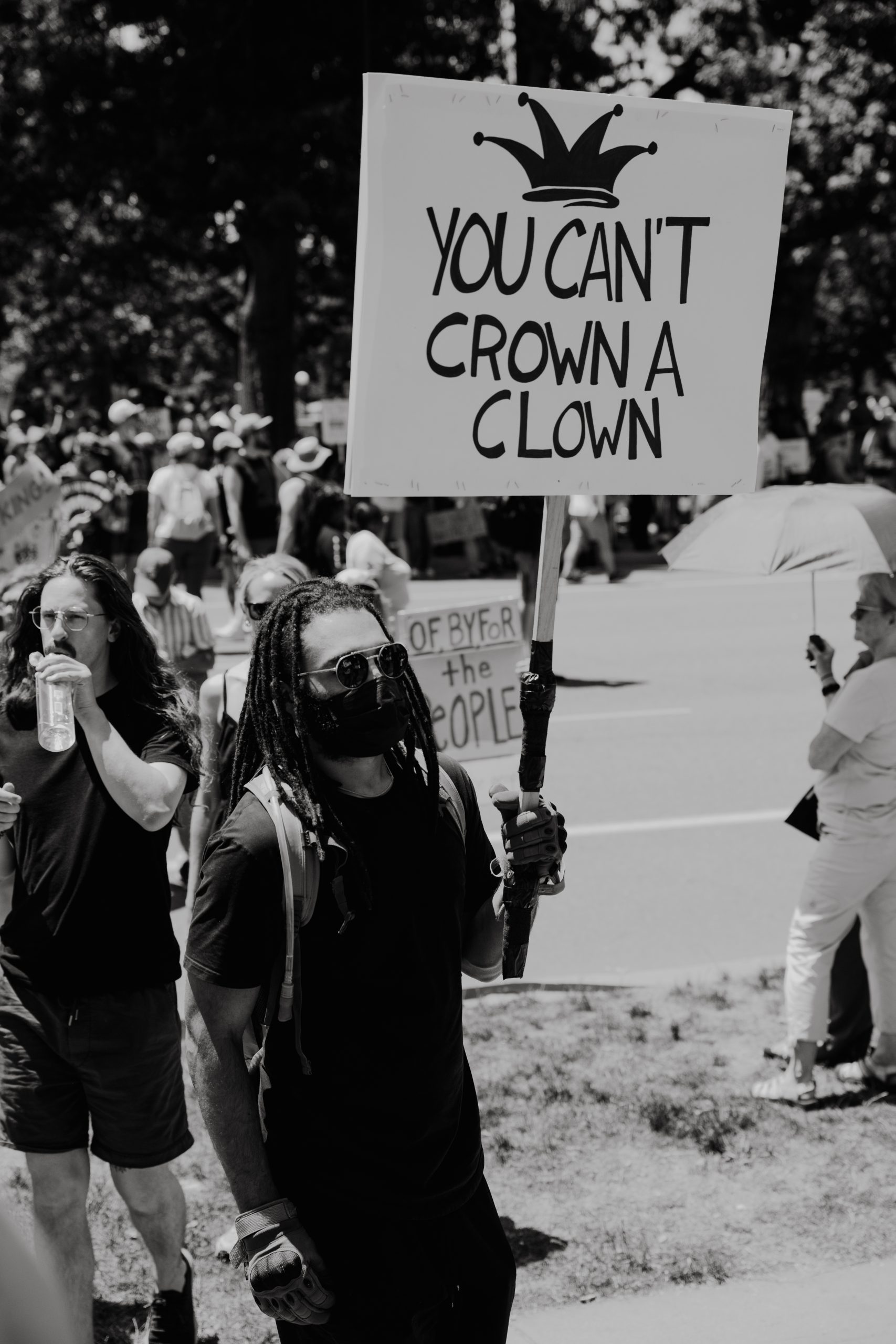
No Kings Protest in Denver, CO, 2025 | Photo by Brooke Austin
Here we are more than 50 years later, still feeling its impacts. Stduents were arrested for engaging in pro-Palestinian demonstrations on college campuses in 2025 (despite constitutional protection from the First Amendment). And in 2026, the Trump administration has elevated persecution from multiple directions: sending the National Guard to combat protestors and simultaneously deploying Immigration and Customs Enforcement (ICE) across the country.
As of February 2026, an estimated 68,289 individuals are held in detention by ICE, according to Syracuse University’s Transactional Records Access Clearinghouse (TRAC). Given that approximately 74% of those individuals have no criminal conviction on record (about 50,500 individuals), these detainments don’t appear to be driven by legal motives. Instead, ICE’s actions seem to be largely motivated by racial profiling against communities of Latin American heritage, amongst other non-white communities.
But if United States lawmakers are building on ancient foundation, we can too — and we can start by looking to the revolutionaries who fought back decades ago.
What Can We Learn From Our Activist Ancestors?
Countless acts of defiance define the civil rights movement and the Vietnam War era. The following activists are just four examples of how individuals challenges authority and redefined what protest could look like.
See If You Qualify For Medical Marijuana -Select Your State!
Select Your State
Alabama
Alaska
Arizona
Arkansas
California
Colorado
Connecticut
Delaware
Florida
Georgia
Hawaii
Idaho
Illinois
Indiana
Iowa
Kansas
Kentucky
Louisiana
Maine
Maryland
Massachusetts
Michigan
Minnesota
Mississippi
Missouri
Montana
Nebraska
Nevada
New Hampshire
New Jersey
New Mexico
New York
North Carolina
North Dakota
Ohio
Oklahoma
Oregon
Pennsylvania
Rhode Island
South Carolina
South Dakota
Tennessee
Texas
Utah
Vermont
Virginia
Washington
West Virginia
Wisconsin
Wyoming
Never miss a post
Get updates on cannabis culture, new research, and expert insights
Teach-Ins Prove The Power In Sharing Knowledge
In March 1965, fifty-eight University of Michigan professors pulled an all-nighter to stage an experiment in activism: an open forum on the Vietnam War. Students, journalists, activists, and curious community members crowded in to debate, swap stories, and hear guest lecturers unpack the conflict in ways the mainstream media never would. Within these teach-ins, classrooms became incubators for grassroots intellectual resistance, and young people started to recognize their place in democracy.
What can we learn? Classrooms can be catalysts for change, and curious conversation is a powerful tool that cannot be taken away from communities.
Abbie Hoffman Teaches Us To Leverage Absurdity
Abbie Hoffman’s protest performance art threw fistfuls of dollars on the NYSE Trading Floor and nominated a 145-pound pig named Pigasus for President. In fact, it was his counter-conventions and radical outlandishness that found him at the center of one of the most famous court cases in American history, the trial of the Chicago 7. Hoffman’s satirical clownery caught anger from authority — and the primetime spot on the evening news countless times. As a result, protest for civil rights was always at the forefront of the American hive.
What can we learn? Spectacle and satire can be just as impactful as speeches or marches in challenging authority and keeping injustice in the public eye.
David Halberstam, Catherine Leroy, and The Journalists Who Teach Us To Tell The Truth
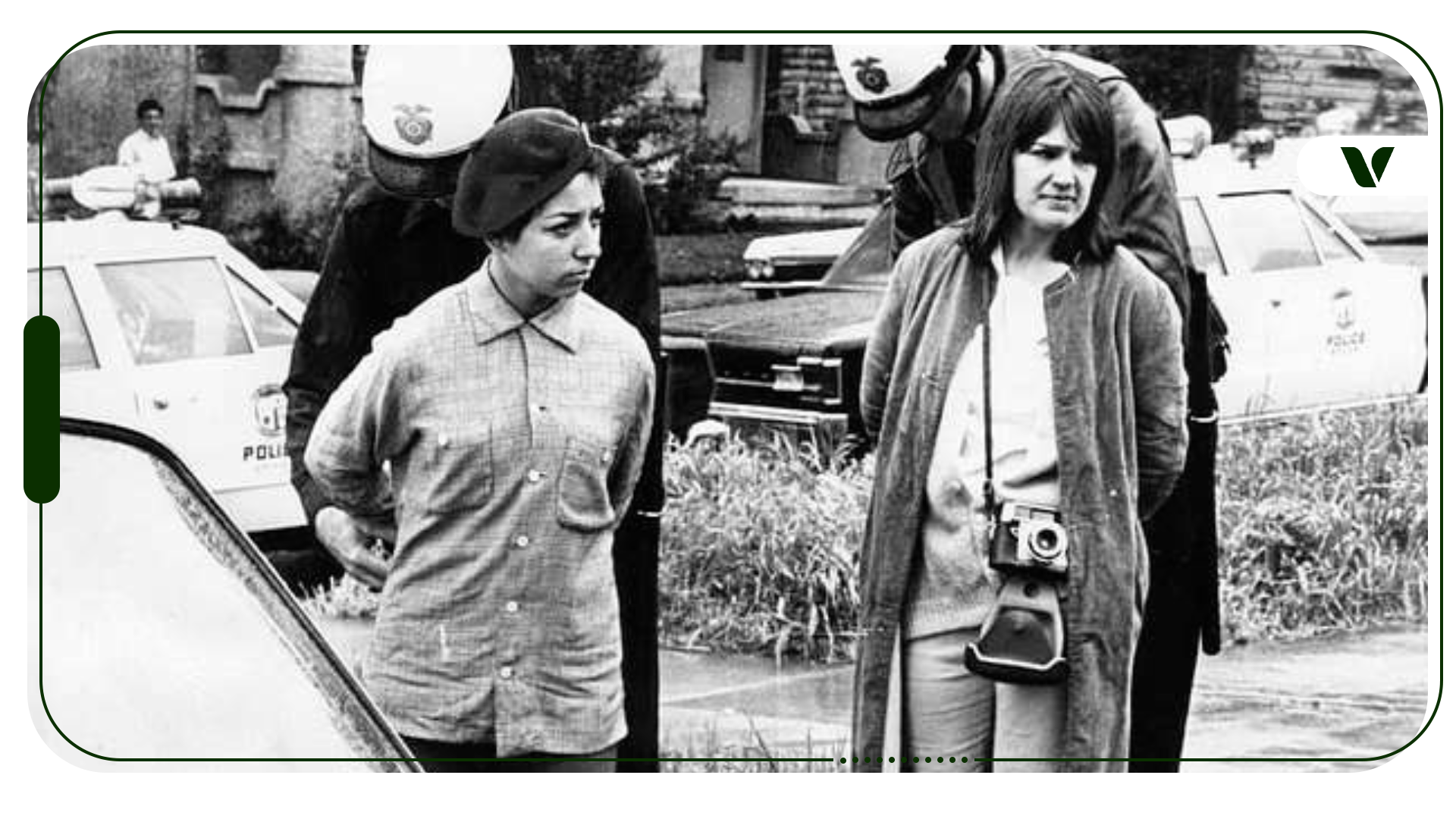
Journalists like David Halberstam and Catherine Leroy covered the Vietnam War with unflinching truth: exposing lies, missteps, and the human cost of combat. Halberstam’s investigative reporting for The New York Times exposed the gap between U.S. government claims and reality. Leroy’s frontline photography captured the raw brutality of the war, making it impossible for the public to ignore the human consequences of the conflict. Together with other journalists, their fearless truthtelling eroded public confidence in official strategy and governance, contributing directly to the rise of anti war activism, influencing policy debates, and establishing the standards for modern investigative journalism.
What can we learn? Speaking truth can expose what others try to hide and help turn outrage into action.
The Chicano Movement’s East L.A. Walkouts Show the Power of Collective Action
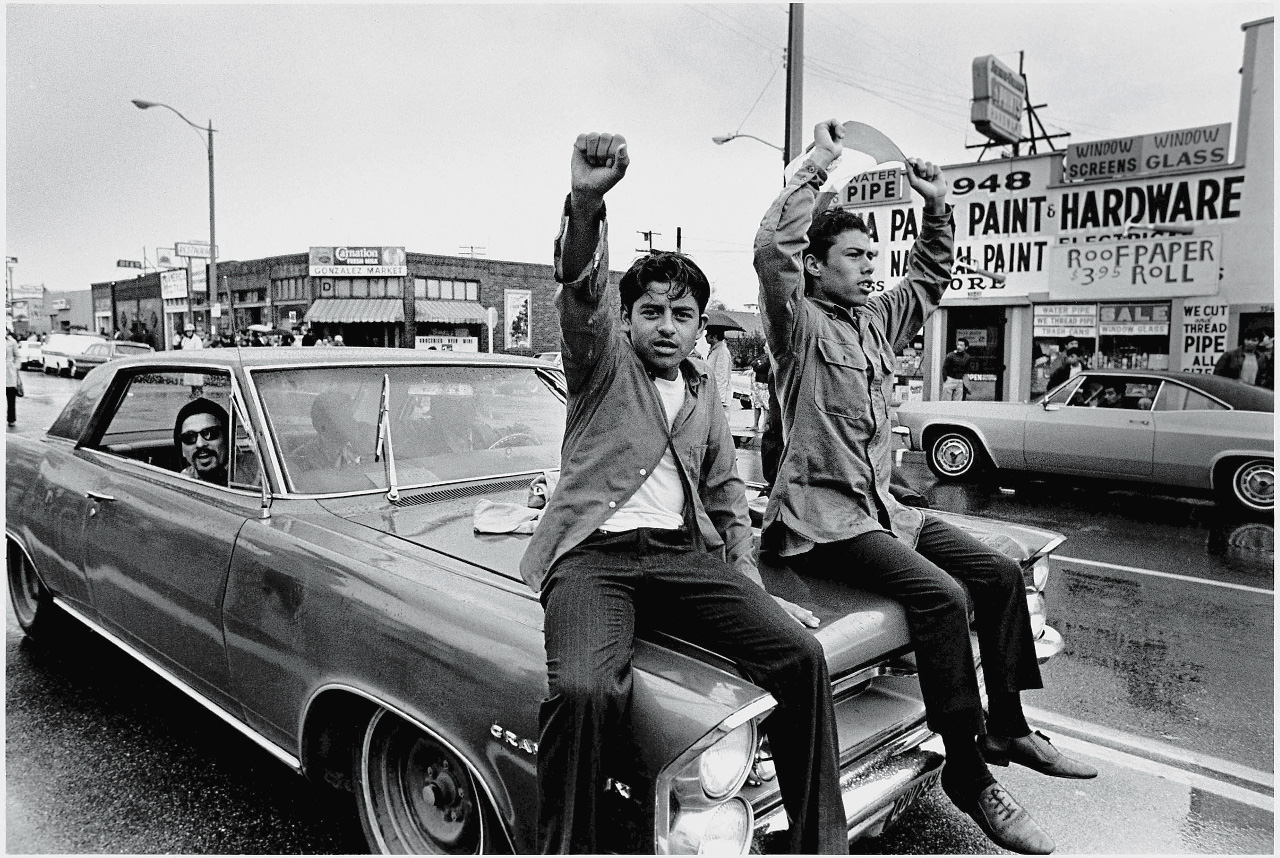
In 1968, thousands of Mexican American high schoolers in East Los Angeles walked out of their classrooms and onto the streets, demanding an end to overcrowded schools, discriminatory tracking, and the erasure of their culture from the curriculum. Their bold defiance, known as the “Blowouts,” landed student leaders in handcuffs and landed their struggles in national headlines. By refusing to stay silent, these teenagers pushed Chicano identity and educational justice to the center of America’s civil rights conversation.
What can we learn? Collective courage and community action can force institutions to pay attention.
Each of these moments show that resistance doesn’t have a single shape: it appears in classroom debates, flashes of satire, unflinching reporting, mass walkouts, and any other brave act of protest that forces authority to pay attention. Together, they remind us that dissent, when voiced with conviction, has the power to reshape society.
While this ending may feel as naively optimistic as the beginning, as we face our own era of unrest, their example offers a reminder that change is possible, and it starts with remembering our power and refusing to stay silent.
Macey is a freelance writer from Seattle. She's covered the cannabis industry extensively, emphasizing the economic opportunities for Indigenous entrepreneurs. Her writing focuses on the people, stories, and labors of love behind every venture.
In the confusing landscape of state-by-state medical marijuana legalization and federal prohibition lies a patient’s pursuit of a better quality of life, balanced with an unrestricted financial livelihood. In workplaces across many different medical marijuana legal states, no law guarantees that a valid, card-carrying MMJ patient status exempts an employee from termination or discrimination stemming…
It feels like every other day, a fresh slang term pops up in the cannabis lexicon, and today, we’re looking at an entry that’s all over TikTok and Reddit – Yart! Spoiler alert: it has everything to do with the humble vape cart (and how challenging it is to talk about cannabis on social media). …
The final stage of life often brings profound challenges for both patients and their families. For patients in hospice and palliative care, common symptoms not only affect the physical body but also their mental well-being. While traditional medications may dull pain, they often come with heavy sedation, confusion, and loss of clarity. Fortunately, medical cannabis…
The old “lazy stoner” stereotype is quickly fading. We now see bodybuilder moms using cannabis for better sleep, runners getting in the zone with the help of weed, and many other examples of cannabis being used in ways that counter the unmotivated stereotypes of the past. As legal access to the plant increases, more people…
If you’re planning to get a medical marijuana card in 2026, you might be wondering whether you need to meet with a certified cannabis doctor—either online or in person. Still, finding a qualified medical marijuana doctor near you can feel overwhelming and confusing if you’re not sure where to start. This guide shows you exactly…
The statements made regarding cannabis products on this website have not been evaluated by the Food and Drug Administration (FDA). Cannabis is not an FDA-approved substance and is still illegal under federal law. The information provided on this website is intended for educational purposes only and is not intended to diagnose, treat, cure, or prevent any disease. It is not intended as medical advice and should not be considered as a substitute for advice from a healthcare professional. We strongly recommend that you consult with a physician or other qualified healthcare provider before using any cannabis products. The use of any information provided on this website is solely at your own risk.