1-855-452-6224 (Customer Support Available 24/7)

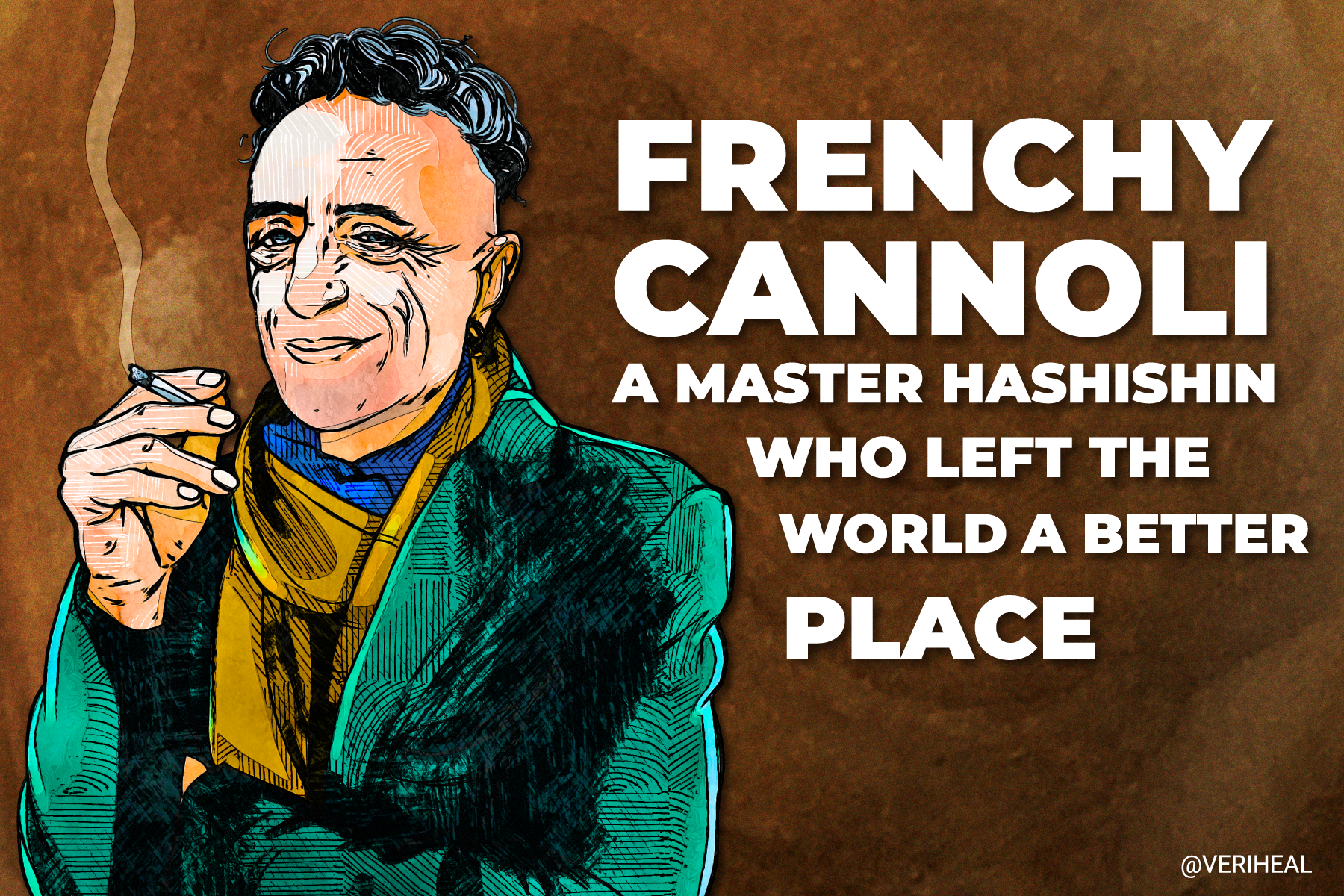
Frenchy Cannoli spent 18 years traveling the hash-producing regions of the world before most people knew his name, and the knowledge he gathered during that time became the foundation for a craft hash revival that continues after his death. His story is not just about cannabis. It is about a lost art, a lifelong obsession, and a teacher who gave everything he learned away freely.
Frenchy Cannoli was born Didier Camilleri in Nice, France, in 1956. He first encountered hashish at 17, and the experience set the course of his life. At 18, he left home and began what would become an 18-year journey through the world’s great hash-producing countries, learning the craft where it had been practiced for generations.
He traveled to Morocco, Afghanistan, Lebanon, Pakistan, and India’s Parvati Valley, living among traditional hashish makers and absorbing techniques that had never been formally documented for Western audiences. These were not brief visits. Frenchy immersed himself in the culture of each region, studying how local farmers worked with cannabis resin and understanding why each place produced hash with such a distinct character.
By the time he returned to settle in California, he carried a depth of first-hand knowledge that no book could have given him. Those 18 years in the hash lands of the world made him something genuinely rare: a Western practitioner who had learned the old ways from the people who invented them.
After relocating to California with his wife Kimberly Hooks, Frenchy entered the legal cannabis industry at a pivotal moment. The state’s emerging craft cannabis scene gave him a platform, and he used it to become one of the most influential educators the hash world had ever seen. His wife later described his life in three phases: traveler, father, and teacher. The California years were defined entirely by that third phase.
He launched a YouTube channel, wrote extensively on his website frenchycannoli.com, and held workshops and seminars that drew serious practitioners from across the country. The craft hash community took note. His willingness to share techniques that most artisans kept private set him apart, and his reputation grew steadily through the years leading up to his death.
Frenchy Cannoli died on July 18, 2021, at the age of 64, from complications following surgery. His wife Kimberly shared the news with the cannabis community in a statement that reflected the life her husband had lived. “He was on his way back to you,” she wrote, “with new stories, knowledge, and hash to share.” The response from the cannabis world was immediate and genuine, a testament to how deeply his teaching had reached into a community that rarely pauses to mourn its own.
No competitor article has explained what actually made Frenchy a master rather than simply calling him one. The answer lives in his methods, and specifically in his lifelong argument that traditional solventless techniques preserve what modern extraction destroys.
Charas is hash made by rubbing living cannabis plants with bare hands, collecting the resin that accumulates on the skin, and pressing it into small balls or slabs. It is among the oldest forms of concentrate in the world, and Frenchy’s time in India’s Parvati Valley gave him direct experience with the practice at its source.
He described the process as intimate in a way that mechanical extraction could never replicate, because the collector works directly with the living plant’s resin structures rather than processed material, in a manner consistent with cannabis trichome morphology and resin secretion as described in peer-reviewed botanical literature.
What Frenchy took from Parvati Valley was not just a technique. He took a philosophy: that the quality of hashish is inseparable from the integrity of the resin at the moment of collection. Working with a living plant, he argued, preserved aromatic compounds that begin degrading the moment the plant is cut. That conviction shaped everything he taught afterward.
Dry-sift is a mechanical process that separates cannabis trichomes from plant material by passing dried flower across fine micron screens. No solvents are involved. The resulting material can be pressed into traditional hash using heat and pressure alone. Frenchy was a committed advocate for this approach, and he was public about why.
He argued that solvent-based methods, including butane hash oil and CO2 extraction, introduced heat and chemical interaction at stages where terpene loss was essentially unavoidable. Dry-sift, done correctly with properly cured material and the right screen progression, produced a concentrate where the plant’s aromatic profile remained largely intact. This was not a nostalgic preference. He framed it as a quality argument rooted in what the final product actually contained.
Cannabis resin contains volatile aromatic compounds called terpenes, which are sensitive to heat, oxygen, and solvent exposure, a characteristic documented in cannabis terpene volatility and degradation during extraction as reviewed in Frontiers in Plant Science.
Frenchy believed that traditional cold-press and live-collection methods were designed, even if unconsciously by their originators, to protect these compounds at every stage of production. That belief underpinned his entire public advocacy for traditional hash-making.
It is worth being precise about what he argued and what the science supports. Frenchy’s position was his documented view, not a peer-reviewed finding, and terpene research in cannabis is still developing, with results that typically vary by extraction method, temperature, and starting material conditions.
What made his argument compelling was not that it was proven but that it was coherent, specific, and grounded in decades of hands-on experience across multiple hash-producing traditions. The craft hash community found that combination persuasive, and it still does.
Hashish has been produced and consumed across Central Asia, the Middle East, and North Africa for centuries, making it among the oldest concentrated forms of cannabis in the world. Understanding that history explains why Frenchy’s 18 years of travel mattered: he was not learning from contemporary artisans but from living descendants of a tradition that stretches back far longer than any Western cannabis culture.
The word “hashish” itself originates in Arabic, and the practices Frenchy studied in Morocco, Pakistan, and Afghanistan were regional expressions of techniques refined across generations of farming families. Each country produced hash with a distinct character shaped by local cannabis genetics, climate, and method.
Moroccan hash pressed from dry-sifted kief was different in character from the hand-rubbed charas of the Indian subcontinent, and Frenchy could speak to both from experience rather than research.
What he brought back to California was the understanding that hashish is not a monolithic product. It is a family of traditional concentrates, each with its own logic, and treating them all as interchangeable was, in his view, a failure to understand what made any of them worth making. That perspective became the lens through which a new generation of American craft hash makers began to see their work.
The broader craft cannabis movement has since built on this foundation, with solventless extraction methods gaining significant traction among producers who share Frenchy’s preference for preserving the plant’s natural terpene profile without chemical intervention, a trend reflected in EMCDDA reporting on cannabis resin and concentrate market developments in Europe.
The question of what Frenchy Cannoli left behind is not rhetorical. He built an educational infrastructure that outlasted him, and the people who carry his work forward have been deliberate about keeping it accessible.
“Frenchy Dreams of Hashish” is a documentary film that follows Frenchy through his travels and his craft, capturing both his hash-making methods and the philosophy behind them on film. For anyone who wants to understand how he worked rather than simply read about it, the documentary is the most direct resource available. It shows the process, the geography, and the man himself in a way that written accounts cannot fully replicate.
Frenchy was well known in the craft hash community for his use of specific micron-screen filter bags for dry-sift production, and he documented his preferred setups publicly through his YouTube channel and the tutorials on frenchycannoli.com. His bag recommendations became a reference point for practitioners learning the craft, partly because he explained not just which screens to use but why each micron size served a specific purpose in the separation process.
His website and YouTube channel remain accessible, and his tutorials continue to guide new practitioners years after his death.
What Frenchy built in California was not just a personal reputation. He helped legitimize craft hash-making as a serious discipline within the legal cannabis industry, at a time when the concentrate market was dominated by solvent-based products and traditional hash was treated as a relic. His workshops, seminars, and online tutorials drew a community of practitioners who shared his commitment to solventless methods and his respect for the traditions he had learned abroad.
After his death, Madame Cannoli and collaborators have continued to steward his educational resources, keeping his tutorials and writing available to a new generation of hash makers. The craft hash movement he influenced has continued to grow, and interest in solventless concentrates has expanded significantly in the years since his death, and the language practitioners use to discuss terpene preservation and traditional technique carries his influence clearly.
Frenchy Cannoli did not just make exceptional hash. He documented what he knew, shared it without gatekeeping, and trusted that the craft would survive him. It has.
If you want to explore cannabis products, concentrates, or your options within the legal cannabis system, connect with a medical cannabis provider who can help you understand what is available in your state.
Note: The content on this page is for informational purposes only and is not intended to be professional medical advice. Do not attempt to self-diagnose or prescribe treatment based on the information provided. Always consult a physician before making any decision on the treatment of a medical condition.
Note: Veriheal does not support illegally consuming therapeutic substances such as cannabis but acknowledges that it transpires because of the current illicit status, which we strive to change by advocating for research, legal access, and responsible consumption. Always consult a physician before attempting alternative therapies.
Frenchy Cannoli was born Didier Camilleri in Nice, France, in 1956. He left home at 18 and spent 18 years traveling the world’s hash-producing regions before settling in California, where he became a widely respected educator and advocate for traditional solventless hash-making.
Frenchy Cannoli died on July 18, 2021, at the age of 64, from complications following surgery. His wife Kimberly Hooks announced his passing to the cannabis community with a tribute describing him as a traveler, father, and teacher whose work continues through the resources he left behind.
“Frenchy Dreams of Hashish” is a documentary film that follows Frenchy Cannoli through his travels and hash-making practice, capturing his methods and philosophy on film. It is the most direct visual record of his craft and remains a recommended resource for anyone wanting to understand his approach beyond written accounts.
Frenchy Cannoli was known for using specific micron-screen filter bags for dry-sift hash production, and he documented his preferred bag setups and the reasoning behind each screen size through his YouTube channel and tutorials on frenchycannoli.com. His recommendations became a standard reference in the craft hash community.
A master hashishin is a practitioner who has achieved deep expertise in the traditional art of hashish production, typically through direct study of old-world methods across multiple hash-producing cultures. Frenchy Cannoli earned the title through 18 years of travel and hands-on learning in Morocco, Afghanistan, India, Lebanon, and Pakistan before teaching those traditions to a new generation of cannabis artisans.
Hey there! Who did the artwork on this? Looks great!
Sign up for our newsletter
Learn the process in your state
All Rights Reserved Veriheal Inc. ©
Terms Privacy Policy Advertising Agreement Content Disclamer


Get your medical marijuana card today
Sign up in under 5 minutes
Start By Selecting Your State
 Alabama
Alaska
Arizona
Arkansas
California
Colorado
Connecticut
Delaware
Florida
Georgia
Hawaii
Idaho
Illinois
Indiana
Iowa
Kansas
Kentucky
Louisiana
Maine
Maryland
Massachusetts
Michigan
Minnesota
Mississippi
Missouri
Montana
Nebraska
Nevada
New Hampshire
New Jersey
New Mexico
New York
North Carolina
North Dakota
Ohio
Oklahoma
Oregon
Pennsylvania
Rhode Island
South Carolina
South Dakota
Tennessee
Texas
Utah
Vermont
Virginia
Washington
West Virginia
Wisconsin
Wyoming
Puerto Rico
Alabama
Alaska
Arizona
Arkansas
California
Colorado
Connecticut
Delaware
Florida
Georgia
Hawaii
Idaho
Illinois
Indiana
Iowa
Kansas
Kentucky
Louisiana
Maine
Maryland
Massachusetts
Michigan
Minnesota
Mississippi
Missouri
Montana
Nebraska
Nevada
New Hampshire
New Jersey
New Mexico
New York
North Carolina
North Dakota
Ohio
Oklahoma
Oregon
Pennsylvania
Rhode Island
South Carolina
South Dakota
Tennessee
Texas
Utah
Vermont
Virginia
Washington
West Virginia
Wisconsin
Wyoming
Puerto Rico