Laboratory studies on THC and CBD have found antiviral and anti-inflammatory activity in cell cultures. That’s generated interest in cannabis as a possible complementary approach to herpes simplex virus (HSV) management. It’s worth being clear about what this research does and doesn’t show, though. Lab findings on viral replication don’t establish that cannabis reduces outbreak frequency, severity, or healing time in actual patients. No cannabis product is a substitute for established antiviral treatment.
The herpes simplex virus affects over 500 million people worldwide, causing painful outbreaks that can significantly impact quality of life. Traditional antiviral medications like acyclovir help manage symptoms, but many patients seek additional relief through alternative approaches.
This guide explores the current research on cannabis for herpes treatment, specific consumption methods, and safety considerations for patients considering this approach.
THC and CBD Research for Herpes Treatment
Laboratory studies have looked at how cannabinoids might affect herpes simplex virus in cell cultures. Delta-9 THC has shown an ability to reduce viral replication in these lab conditions. CBD has broad anti-inflammatory properties in general research. Neither finding has been shown to translate into reduced outbreak severity in actual patients.
A study from the 1990s found that THC could inhibit herpes virus replication in laboratory conditions, with type 1 herpes showing more sensitivity than type 2. That’s a useful starting point for further research. It’s a cell-culture finding, though, not evidence that cannabis affects outbreaks, transmission, or healing time in people.
How THC Affects Viral Replication
In vitro research shows that THC can decrease viral concentration in infected cells by interfering with replication processes, and that it binds to receptors involved in immune function. Those are cell-culture findings, though. They aren’t evidence of what happens in a person’s body during an actual outbreak.
Some in vitro research found the antiviral effect most pronounced early in viral replication. That’s led to speculation that cannabis might work best as prevention rather than during active outbreaks. It’s a hypothesis based on lab conditions, not something shown in patients, and it shouldn’t be read as guidance on when cannabis helps most with HSV.
CBD’s Anti-Inflammatory Benefits for Herpes
CBD has general anti-inflammatory properties, studied outside the context of herpes specifically. Since inflammation contributes to the pain and swelling of an outbreak, it’s reasonable to wonder whether that general effect could help. This hasn’t been studied in HSV patients directly, though, so it’s a hypothesis rather than a demonstrated benefit.
Research suggesting CBD reduces inflammatory markers shows it can suppress cytokine production in other contexts. Whether that means less painful outbreaks or faster healing specifically for herpes patients hasn’t been established.
You may also see claims that full-spectrum products work better than isolated compounds because of an “entourage effect.” For HSV specifically, that idea is speculative. There isn’t herpes-specific evidence showing full-spectrum products outperform isolated cannabinoids here.
| Cannabinoid |
What Lab Research Has Looked At |
Research Status |
| THC |
Viral replication in cell cultures |
Preclinical only; not tested in HSV patients |
| CBD |
Anti-inflammatory activity in general research |
Not studied specifically in HSV patients |
| Full-spectrum |
Theorized “entourage” interaction |
Speculative for HSV; no direct evidence |
Cannabis Strains and Products for Herpes Symptom Management
There isn’t clinical evidence that any particular strain or cannabinoid ratio manages herpes specifically better than another. What follows is general information about how products vary, not a recommendation for treating HSV. High-CBD products tend to produce minimal psychoactive effects, which is why some people prefer them day to day. “Most therapeutic benefit” for HSV specifically hasn’t been established.
Balanced THC:CBD products fall between high-CBD and high-THC options in psychoactive effect. Any suggestion that they offer “viral suppression” during outbreaks goes beyond what current evidence supports.
High-CBD Strains for Inflammation
CBD-dominant products, typically CBD:THC ratios of 20:1 or higher, contain minimal THC and produce little to no impairment. Charlotte’s Web, ACDC, and Harlequin are commonly available examples, though none have HSV-specific research behind them.
These products also contain terpenes like myrcene, linalool, and pinene, which have general relaxing, calming, or alertness-related associations in broader cannabis research. None of this is specific to herpes symptom relief, and terpene content varies considerably between individual products regardless of strain name.
Balanced THC:CBD Ratios for Symptom Management
Products with 1:1 or 2:1 CBD:THC ratios produce more noticeable psychoactive effects than high-CBD options. Cannatonic, Pennywise, and Dancehall are commonly available examples. Any framing of these as providing “viral suppression” isn’t supported by current evidence.
Some people prefer balanced products in the evening. THC’s sedating effects may help with sleep during a painful outbreak, and CBD’s general anti-inflammatory properties continue working overnight. This is a general pattern people report, not an established HSV treatment approach.
| Strain Type |
CBD:THC Ratio |
General Characteristics |
| High-CBD |
20:1 or higher |
Minimal psychoactive effect; broad anti-inflammatory properties in general research |
| Balanced |
1:1 to 2:1 |
More noticeable psychoactive effect |
| Topical products |
Variable |
Applied to skin; see the note on genital and mucosal use below |
Consumption Methods for Herpes Treatment
Cannabis consumption methods differ in onset, duration, and how localized or systemic their effects are, the same general differences that apply to any cannabis use. None of this is HSV-specific treatment guidance, since no method has been shown to prevent outbreaks or suppress the virus.
Fast-acting methods like sublingual tinctures produce effects sooner than slower-onset methods like edibles. Which one someone prefers usually comes down to personal preference, not a herpes-specific protocol.
Topical Applications for Outbreak Relief
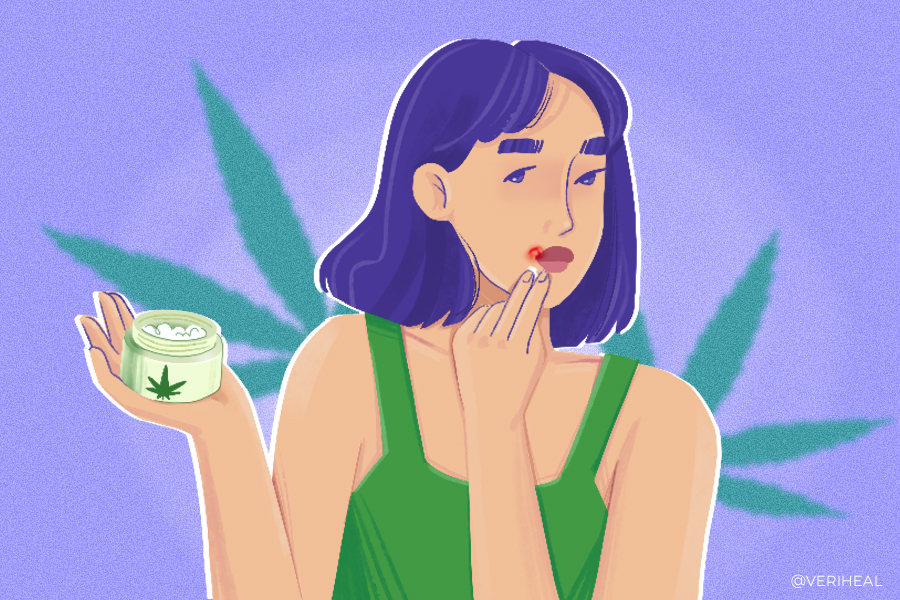
Cannabis-infused topicals are applied to the skin and don’t produce psychoactive effects, since they aren’t absorbed into the bloodstream the way inhaled or ingested cannabis is. They typically contain THC and CBD in a carrier oil or balm.
Product formulations vary quite a bit. Many aren’t formulated or tested for genital skin, mucosal surfaces, or open lesions, which is exactly where herpes outbreaks occur. Because of that, using a cannabis topical on an active outbreak site isn’t something to try without checking with a healthcare provider first, both on whether that specific product is appropriate and on proper wound care during an active lesion.
If you’re interested in cannabis topicals generally, a pharmacist or your prescribing provider can help you understand what a given product is actually formulated and tested for.
Systemic Methods for Immune Support
Sublingual tinctures absorb through blood vessels under the tongue, with effects typically starting within 15-30 minutes. That’s a general characteristic of the method, not a herpes-specific benefit. It hasn’t been shown to support immune function or reduce outbreak likelihood.
Vaporization offers quick onset and lets you adjust your dose based on how you feel in the moment. If your outbreaks seem to track with stressful periods, that’s worth discussing with a healthcare provider. Stress management overall, not a specific cannabis method, is the more established angle there.
Edibles and capsules last longer than inhaled or sublingual methods, generally 4-8 hours, with onset around 30-90 minutes. That’s a general property of how the body processes edibles. It hasn’t been shown to produce “sustained viral suppression” or function as HSV prevention.
Dosing Guidelines for Cannabis and Herpes
There’s no clinically established dosing protocol for using cannabis specifically to manage herpes, whether for prevention or during an active outbreak. Because of that, this article doesn’t provide cannabinoid ratios, frequencies, or milligram amounts tied to outbreak status. Doing so would suggest a treatment regimen that hasn’t actually been validated in HSV patients.
If you use cannabis for general wellness reasons and also manage HSV, standard cannabis dosing guidance, starting low and going slow with whatever product and method you’ve chosen, still applies. That’s general cannabis guidance, though, not an HSV protocol. A healthcare provider familiar with both cannabis and your health history is the right person to help you figure out what’s appropriate for you.
Safety Considerations and Drug Interactions
If you take antiviral medication for HSV and are considering cannabis too, that combination is worth discussing with your prescribing provider or pharmacist rather than assuming it’s fine based on general information here.
Common antiviral medications like acyclovir, valacyclovir, and famciclovir are processed through the liver, as many cannabinoids are, which raises the possibility of an interaction. Reliable clinical data confirming exactly how cannabis and these antivirals interact is limited. Treat this as an open question for your provider, not an established interaction with a known direction or magnitude.
The importance of product quality cannot be overstated when using cannabis medicinally. Illicit market products may contain contaminants, pesticides, or incorrect cannabinoid concentrations that could compromise treatment effectiveness or introduce additional health risks.
Drug interaction considerations:
- Acyclovir and valacyclovir: a possible interaction with THC has been suggested, though solid supporting evidence is limited. Ask your provider before combining them.
- Blood pressure medications: cannabis can affect blood pressure and may interact with these medications.
- Immune-suppressing drugs: cannabis’s effects on immune function warrant extra caution and a conversation with your prescribing provider.
- Sedating medications: combining with THC can increase drowsiness.
Contraindications and precautions:
- Pregnancy and breastfeeding require avoiding THC-containing products
- History of substance abuse may make THC inadvisable
- Severe liver disease could affect cannabinoid metabolism
- Certain heart conditions may be aggravated by THC’s cardiovascular effects
If you’re managing HSV, established antiviral therapy, whether suppressive or episodic, remains the evidence-based approach. That’s worth discussing with your healthcare provider regardless of whether you also use cannabis. Cannabis isn’t a substitute for that treatment. Any interest in cannabinoids alongside it is worth raising directly with your provider so they can weigh it against your specific medications and health history.
If you do use a cannabis product, choosing one with a certificate of analysis from a licensed dispensary, showing cannabinoid content, pesticide screening, and microbial testing, is a reasonable way to reduce contamination risk. That’s a separate question from whether cannabis helps with herpes specifically.
Ready to explore medical cannabis for herpes symptom management? Find a qualified doctor who can evaluate your specific situation and provide personalized treatment recommendations based on your medical history and current medications.
Note: The content on this page is for informational purposes only and is not intended to be professional medical advice. Do not attempt to self-diagnose or prescribe treatment based on the information provided. Always consult a physician before making any decision on the treatment of a medical condition.
Note: Veriheal does not support illegally consuming therapeutic substances such as cannabis but acknowledges that it transpires because of the current illicit status, which we strive to change by advocating for research, legal access, and responsible consumption. Always consult a physician before attempting alternative therapies.
Frequently Asked Questions
Can cannabis cure herpes completely?
No. Cannabis cannot cure herpes. Laboratory research has looked at how THC and CBD behave in cell cultures exposed to the virus, but this hasn’t been shown to reduce outbreak frequency or severity in actual patients. It isn’t an established complementary treatment for HSV.
What’s the difference between using CBD and THC for herpes?
CBD has general anti-inflammatory properties, and THC has shown antiviral activity in lab cell cultures. Neither effect has been demonstrated specifically in HSV patients, and there isn’t clinical evidence that any particular ratio works best for herpes.
Is it safe to use cannabis topicals on genital herpes lesions?
This depends on the specific product. Check with a healthcare provider before applying any cannabis topical to genital skin, especially near an active lesion or broken skin, since many topical formulations aren’t tested for mucosal tissue or open sores.
How long does it take to see results from cannabis herpes treatment?
There isn’t established evidence on this, since no cannabis treatment protocol has been clinically validated for HSV. Any comfort from a topical or systemic product would reflect a general effect of that product type, not a measured herpes outcome.
Can I use cannabis for herpes while taking prescription antivirals?
Possibly, though evidence on this specific interaction is limited. Cannabis and antivirals like acyclovir and valacyclovir are both processed through the liver. Check with your prescribing provider before combining them rather than assuming it’s safe.
Author, Share & Comments