1-855-452-6224 (Customer Support Available 24/7)

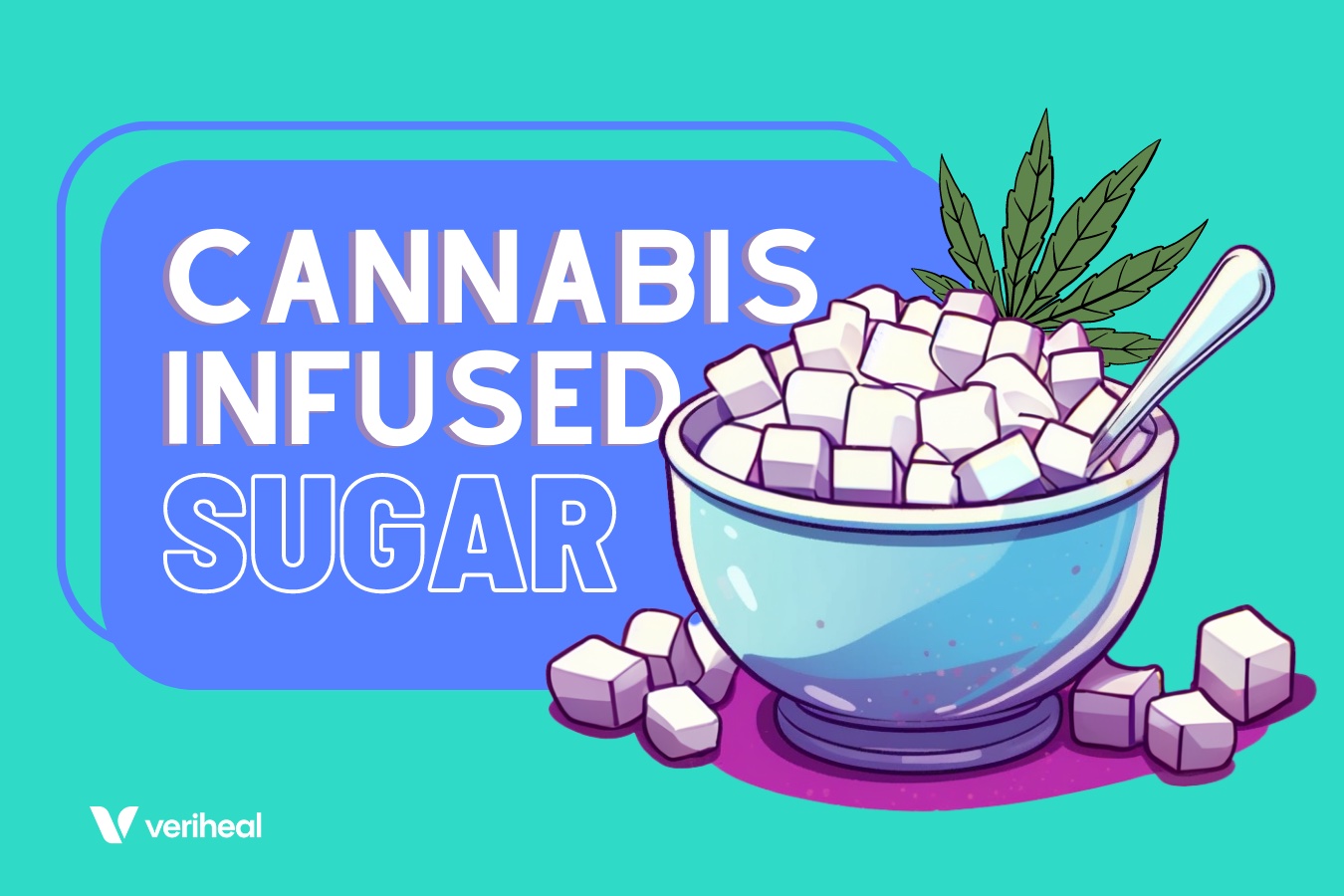
Making cannabis-infused sugar and salt at home is simpler than most people expect, and the results give you two of the most versatile infused edibles you can keep in your kitchen. Both use the same tincture-based method, and once you understand the process, you can dose and flavour each one exactly the way you want.
A cannabis tincture is a concentrated cannabis extract made by soaking decarboxylated cannabis flower in high-proof alcohol, which draws out tetrahydrocannabinol (THC), cannabidiol (CBD), and other cannabinoids into a liquid form. The alcohol acts as a solvent, pulling those compounds out of the plant material and into a solution you can measure and use precisely.
Tinctures are the preferred base for cannabis-infused sugar and cannabis-infused salt because they distribute cannabinoids through dry, crystalline ingredients far more evenly than oil or butter can. Oil does not fully absorb into sugar or salt crystals, which creates hot spots where some portions of your finished condiment contain far more THC or CBD than others. Tinctures coat the crystals during the evaporation process and leave cannabinoids distributed more consistently across the batch.
The alcohol you use matters. You need a high-proof grain alcohol such as Everclear 190-proof, not rubbing alcohol, wine, or vodka. Lower-proof spirits do not extract cannabinoids efficiently and leave too much residual moisture, which can cause your finished sugar or salt to clump or spoil.
If you want to make your own tincture from scratch before starting either recipe, the green dragon tincture recipe walks through the full process. Pre-made cannabis tinctures from a licensed dispensary work equally well and save significant preparation time.
Cannabis-infused sugar, often called cannasugar, is made by combining a cannabis tincture with granulated sugar and then allowing the alcohol to evaporate through low and slow drying in the oven. The result is a fine, lightly golden sugar that carries THC and CBD from the original tincture, ready to dissolve into drinks, baked goods, or anything else you would sweeten normally.
Understanding decarboxylation before you start helps confirm your cannabis flower has been properly activated before the tincture is made.
Ingredients
Instructions
Store your cannasugar in an airtight container kept in a cool, dark place away from direct light and heat. Under these conditions, cannabis-infused sugar typically retains its potency for up to two to three months. Moisture is the main risk. Any humidity that gets into the container will cause the sugar to harden into a solid mass, so a glass jar with a tight-fitting lid works better than a loosely sealed bag. Label the container with the date and your estimated THC or CBD content per teaspoon so you always know what you are working with.
Cannabis-infused salt follows the same tincture-and-evaporation method as the sugar recipe, with one practical adjustment: salt crystals are denser and less absorbent than sugar, so the drying step can take slightly longer. The same high-proof grain alcohol tincture is used, and the same low and slow drying approach applies.
Fine sea salt produces the smoothest finished texture and works well in most culinary applications. Kosher salt is a good middle-ground choice for cooking. Flaky finishing salt gives you a more dramatic visual result and a pleasant texture for garnishing, though the irregular crystals can take longer to dry evenly.
Ingredients
Instructions
One of the easiest ways to expand your culinary cannabis pantry is to blend dried herbs, spices, or aromatics into the base cannabis salt recipe after drying. These finishing salt variations take almost no extra effort and dramatically broaden what you can do with a single batch.
Store cannabis-infused salt in an airtight container away from heat and humidity. Salt is a natural preservative, which means cannasalt typically holds its potency longer than cannasugar under equivalent conditions, often three to six months when stored correctly. Avoid storing near the stovetop or in cabinets that experience temperature swings, as repeated heat exposure can gradually degrade the cannabinoids in your infused edibles.
Knowing how food affects your cannabis experience helps you get more from these condiments and plan your doses around meals. Once you have a batch ready, the applications go well beyond basic cooking.
Sweet applications
Savory applications
Dosing is where most beginner cannabis-infused recipes fall short, and condiment formats require a little more thought than standard edibles because the active ingredient is distributed across many individual servings rather than baked into a single portion. The math, however, is straightforward once you know your tincture’s concentration.
Here is a worked example. If your tincture contains 10 mg of THC per milliliter, and you added 5 mL of tincture to one cup of sugar (approximately 48 teaspoons), the total THC in the batch is 50 mg. Divided across 48 teaspoons, each teaspoon contains roughly 1 mg of THC. At 20 mg/mL tincture with the same ratio, each teaspoon carries approximately 2 mg. These are estimates.
Crystal distribution is never perfectly uniform, so some teaspoons will carry slightly more and others slightly less. Starting with a small measured amount and waiting before adding more is always the right approach. This same calculation applies to cannabis-infused salt, using pinches or measured portions rather than teaspoons as your serving unit.
The table below shows estimated milligrams per serving across common tincture concentrations for one cup of sugar or salt, using 5 mL of tincture as the recipe quantity.
| Tincture Concentration | Total THC in Batch | Approx. mg per Teaspoon |
| 10 mg/mL | 50 mg | ~1 mg |
| 20 mg/mL | 100 mg | ~2 mg |
| 33 mg/mL | 165 mg | ~3.4 mg |
| 50 mg/mL | 250 mg | ~5.2 mg |
Because these condiments are consumed in small amounts, how long edibles last is worth understanding before you start. Onset time for infused edibles typically ranges from 30 minutes to two hours depending on metabolism, body weight, and whether you have eaten recently.
Start low, especially if you are new to culinary cannabis or to dosing your own cannabis-infused recipes, and give the effects time to develop before adding more. Responsible consumption with homemade infused condiments means treating each serving as a dose, not a seasoning to apply without measuring.
State cannabis regulations vary widely. Always confirm that making and consuming cannabis-infused products is legal in your state before proceeding. If you are working with a cannabis coconut oil recipe or another fat-based infusion alongside these condiment recipes, apply the same dosage discipline across all formats.
For a deeper understanding of THC and CBD absorption, a 2022 PMC review on cannabinoid pharmacokinetics in oral cannabis products provides a thorough breakdown of how dosing and potency interact with individual biology. Research on decarboxylation efficiency and cannabinoid yield in cannabis preparations also illustrates why proper decarboxylation of cannabis flower before tincture-making is critical for accurate dosing.
Ready to explore more cannabis-infused recipes and get the guidance you need to use cannabis safely and legally? Find a medical marijuana doctor near you to connect with a licensed provider and get your medical cannabis card.
Note: The content on this page is for informational purposes only and is not intended to be professional medical advice. Do not attempt to self-diagnose or prescribe treatment based on the information provided. Always consult a physician before making any decision on the treatment of a medical condition.
Note: Veriheal does not support illegally consuming therapeutic substances such as cannabis but acknowledges that it transpires because of the current illicit status, which we strive to change by advocating for research, legal access, and responsible consumption. Always consult a physician before attempting alternative therapies.
Cannabis-infused sugar, sometimes called cannasugar, is granulated sugar that has been coated with a cannabis tincture and dried in a low-temperature oven until the alcohol evaporates. The process leaves THC, CBD, or both distributed across the sugar crystals. It can be used in beverages, baked goods, or anywhere regular sugar is called for.
A cannabis tincture for infused condiments requires high-proof grain alcohol such as Everclear 190-proof. Lower-proof spirits like vodka do not extract cannabinoids efficiently and leave excess moisture that can cause the finished sugar or salt to clump. Rubbing alcohol is never safe for consumption and must not be used.
To estimate milligrams per serving, multiply your tincture’s concentration (in mg/mL) by the number of milliliters used, then divide by the number of servings in the batch. For one cup of sugar (roughly 48 teaspoons) made with 5 mL of a 10 mg/mL tincture, each teaspoon contains approximately 1 mg of THC. Distribution is not perfectly uniform, so start with a small amount and assess the effects before consuming more.
Cannabis-infused sugar typically retains its potency for two to three months when stored in an airtight container in a cool, dark environment. Heat, light, and moisture are the main factors that accelerate cannabinoid degradation. Labeling your container with the preparation date and estimated dose helps you track freshness accurately.
Cannabis-infused salt works well as a finishing salt applied after cooking, as a cocktail rim salt, in dry rubs, and as a topping for savory dishes. For cooking applications, adding it after the main heat source is removed helps preserve cannabinoid content, since sustained high heat can degrade THC and CBD. As with any infused edible, measure your serving rather than applying freely.
Sign up for our newsletter
Learn the process in your state
All Rights Reserved Veriheal Inc. ©
Terms Privacy Policy Advertising Agreement Content Disclamer


Get your medical marijuana card today
Sign up in under 5 minutes
Start By Selecting Your State
 Alabama
Alaska
Arizona
Arkansas
California
Colorado
Connecticut
Delaware
Florida
Georgia
Hawaii
Idaho
Illinois
Indiana
Iowa
Kansas
Kentucky
Louisiana
Maine
Maryland
Massachusetts
Michigan
Minnesota
Mississippi
Missouri
Montana
Nebraska
Nevada
New Hampshire
New Jersey
New Mexico
New York
North Carolina
North Dakota
Ohio
Oklahoma
Oregon
Pennsylvania
Rhode Island
South Carolina
South Dakota
Tennessee
Texas
Utah
Vermont
Virginia
Washington
West Virginia
Wisconsin
Wyoming
Puerto Rico
Alabama
Alaska
Arizona
Arkansas
California
Colorado
Connecticut
Delaware
Florida
Georgia
Hawaii
Idaho
Illinois
Indiana
Iowa
Kansas
Kentucky
Louisiana
Maine
Maryland
Massachusetts
Michigan
Minnesota
Mississippi
Missouri
Montana
Nebraska
Nevada
New Hampshire
New Jersey
New Mexico
New York
North Carolina
North Dakota
Ohio
Oklahoma
Oregon
Pennsylvania
Rhode Island
South Carolina
South Dakota
Tennessee
Texas
Utah
Vermont
Virginia
Washington
West Virginia
Wisconsin
Wyoming
Puerto Rico