THC powder is a water-soluble form of cannabis that dissolves in liquids, blends into dry ingredients, and delivers a faster onset than cannabutter or cannabis oil. If you have been curious about making it yourself, the process is more straightforward than most edibles recipes, and the results give you a level of precise dosing that oil-based infusions rarely match.
You will learn what THC powder is, how it is made at the molecular level, how to produce it at home with two simple ingredients, and how to use it across a range of edible recipes with accurate per-serving milligram calculations.
What Is THC Powder?
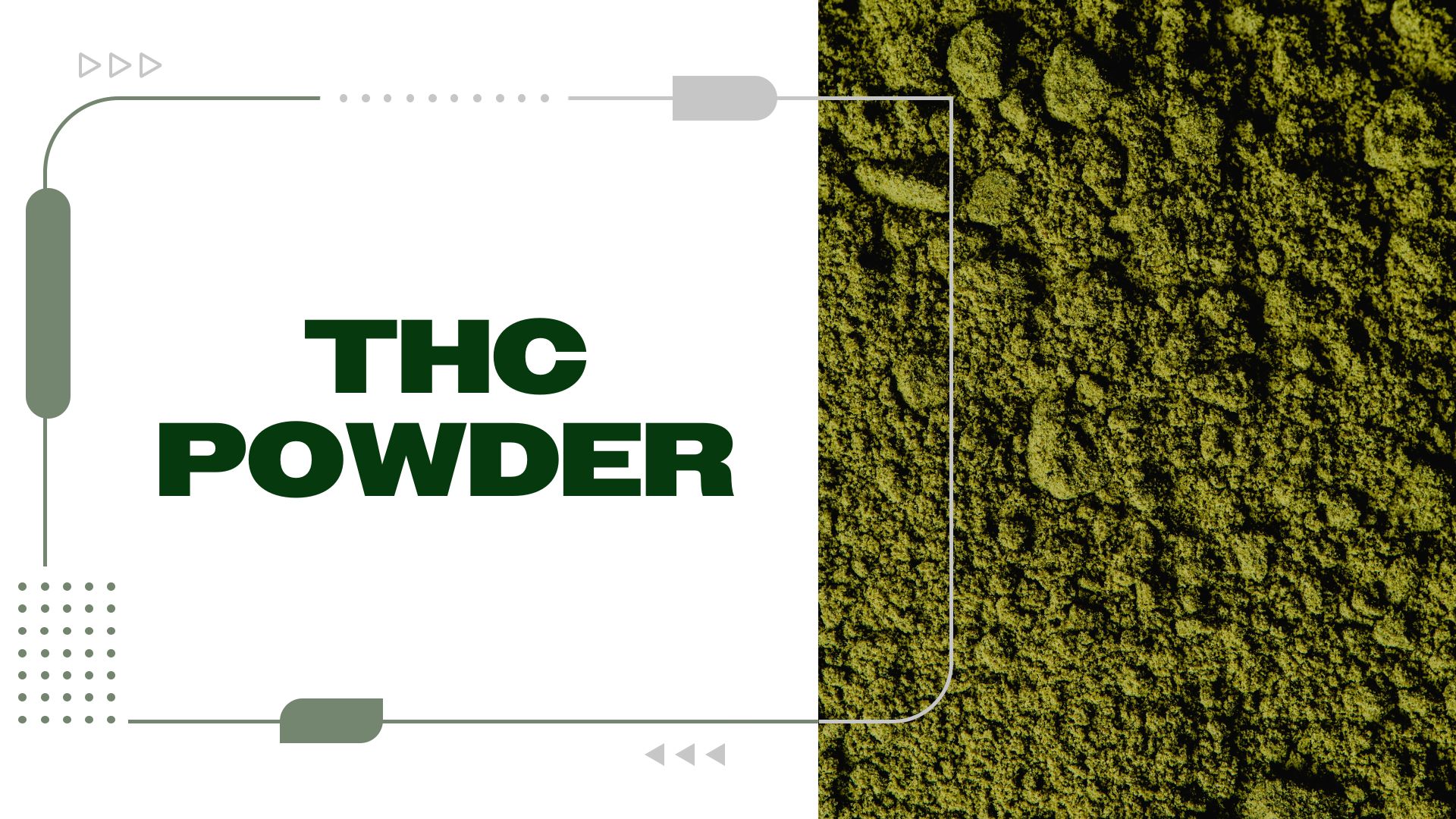
THC powder, sometimes called powdered cannabis, is a fine, water-dispersible powder that contains tetrahydrocannabinol (THC) as its active compound. Unlike kief, which is the trichome-rich residue collected at the bottom of a grinder, THC powder is a processed product created by binding a cannabis concentrate to a carrier molecule or powder base. The result is a substance that behaves more like a food-grade ingredient than a traditional cannabis product.
The key distinction between THC powder and other infusion methods is solubility. Cannabinoids are naturally oil-soluble, which is why cannabutter and cannabis oil work the way they do. THC powder uses a processing technique to make the THC behave as if it were water-soluble, which changes how it mixes into food and how your body absorbs it.
Two main manufacturing approaches produce commercial water-soluble THC products. The first is cyclodextrin encapsulation, where THC molecules are wrapped inside a ring-shaped sugar molecule called cyclodextrin, which allows them to disperse evenly in water. The second is nanoemulsion technology, where ultrasonic or high-pressure equipment breaks THC droplets down to nano-scale size, making them small enough to suspend in water without separating. Home producers typically use a simpler method involving tapioca maltodextrin, which achieves a comparable powder texture without specialized equipment.
How THC Powder Is Made
The Science Behind the Process
Before THC powder can be made, the cannabis must go through decarboxylation. Raw cannabis contains tetrahydrocannabinolic acid (THCA), which is the inactive precursor to THC. Heat converts THCA to THC by releasing a carbon dioxide molecule, and without this step, the powder will not produce psychoactive effects. The full process is covered in the cannabis decarboxylation guide.
Once the cannabis is decarboxylated, the active THC in the resulting concentrate or distillate is bound to a carrier. In commercial products, cyclodextrin encapsulation surrounds each THC molecule with a hydrophilic outer shell, allowing it to disperse in water. This encapsulation also affects bioavailability: because the THC no longer needs to be broken down through the fat-digestion pathway, it can be absorbed more directly through the gastrointestinal lining.
A 2020 PMC review on strategies to improve cannabinoid delivery has examined how cyclodextrin complexation alters absorption rates compared to lipid-based delivery. That difference in absorption is what shortens onset time compared to cannabutter-based edibles.
At home, tapioca maltodextrin performs a similar function by physically absorbing the cannabis oil and holding it in a dry, powdered form. The powder does not achieve true molecular encapsulation the way cyclodextrin does, but it distributes the THC evenly enough for practical edible use.
How to Make THC Powder at Home
What You Need
Gather these ingredients and tools before you start:
Ingredients:
- Decarboxylated cannabis oil, distillate, or isolate (start with 10g for a manageable first batch)
- Tapioca maltodextrin (typically 60g per 40g of cannabis oil, though the ratio varies by oil viscosity and desired consistency)
- Sunflower lecithin powder, optional (a lecithin emulsifier is useful when converting a thick oil, but is generally not needed if using a pre-encapsulated water-soluble THC product, since the carrier molecule handles emulsification)
Equipment:
- Mixing bowl
- Fine-mesh sieve or food-safe strainer
- Airtight glass jar or container for storage
- Kitchen scale accurate to 0.1g
Step-by-Step Process
- Decarboxylate your starting material if you are beginning with flower or a non-activated concentrate. Follow the cannabis decarboxylation guide above for time and temperature guidance. Skip this step if using pre-activated distillate or isolate.
- Measure your cannabis oil and maltodextrin by weight. For a starting batch, 6g of oil to 10g of maltodextrin is a manageable ratio that produces a workable powder without excessive clumping.
- Add the maltodextrin to the bowl first, then slowly drip the oil over it while stirring. Continue mixing until the oil is fully absorbed and the mixture resembles a dry, crumbly powder. Homogeneous mixing is the goal here: no wet patches, no dry clumps of pure maltodextrin.
- Pass the mixture through a fine-mesh sieve to break up any remaining clumps and produce a uniform texture.
- Taste a very small, low-dose amount and wait the full onset window before assessing potency. Water-soluble THC typically acts faster than oil-based edibles, but individual metabolism still varies.
How to Store THC Powder
Humidity is the primary threat to THC powder. Moisture causes the powder to clump, and it can degrade potency over time by breaking down the oil-carrier bond. Store your finished powder in an airtight glass jar in a cool, dry location away from direct light. A pantry shelf or a drawer away from the stove works well.
Under proper conditions, THC powder typically retains most of its potency for several months, though shelf life and storage duration will vary depending on the quality of the starting material and how tightly the container is sealed.
How to Dose THC Powder in Edibles
Precise dosing is one of the main reasons home producers choose THC powder over oil or butter, but getting the math right requires a few deliberate steps. The starting point is always the total milligrams of THC in your batch, which you can calculate from the lab-tested potency of your starting material and the gram weight you used.
Once you know the total milligrams of THC in the batch, divide that number by the number of servings your recipe yields. If you infused 100mg of THC into a batch of brownies that produces 10 pieces, each piece contains approximately 10mg. That is the calculation in its simplest form, and it is far more reliable than estimating potency from an oil-based infusion where the THC may not have distributed evenly.
Baking introduces one complication. THC begins to degrade at temperatures above 392°F (200°C), and research suggesting that THC undergoes significant thermal degradation at elevated processing temperatures is relevant to baked applications. This is where sustained heat above 200°C accelerates cannabinoid breakdown into CBN and other by-products, leading to reduced effective potency.
In practice, baking losses typically range from 10 to 30% depending on temperature, duration, and the encapsulation method used, which means the effective dose per serving may be somewhat lower than your calculated figure. Applying the guidance at THC degrading temperatures can help you keep oven temperatures in a range that minimizes potency loss.
For new consumers, most people find 5 to 10mg per serving a manageable starting point. Wait the full onset window before deciding whether to take a second serving. If you have had inconsistent results with edibles before, our article on why edibles sometimes don’t work explains the most common reasons.
Worked example: You use a cannabis concentrate lab-tested at 80% THC and add 1g (1,000mg) to your batch, giving you 800mg of THC total. Your recipe yields 40 cookies. Each cookie contains approximately 20mg before any baking loss, or roughly 14 to 18mg after accounting for typical heat degradation. Start with half a cookie if you are new to edibles.
Why Choose THC Powder Over Cannabutter or Oil?
The appeal of THC powder comes down to three practical differences: onset time, taste, and dosing control. Understanding where it outperforms oil-based methods, and where it does not, helps you decide when to reach for the powder and when to stick with cannabutter.
| Attribute |
THC Powder |
Cannabutter |
Cannabis Oil |
| Onset time |
Typically 15 to 45 minutes |
Typically 45 to 90 minutes |
Typically 30 to 90 minutes |
| Taste impact |
Effectively flavorless |
Distinctive cannabis flavor |
Mild to moderate cannabis flavor |
| Caloric addition |
Minimal |
Significant (butter fat) |
Moderate (oil calories) |
| Dosing precision |
High (measured by weight) |
Moderate (uneven distribution risk) |
Moderate (uneven distribution risk) |
| Best use case |
Beverages, light baked goods, savory dishes |
Rich baked goods where fat enhances texture |
Recipes where liquid fat is an ingredient |
The faster onset time with THC powder is related to how the body absorbs it. Oil-based cannabis edibles require fat digestion before THC can pass through the intestinal wall, which is part of why understanding how edibles are metabolized helps set realistic expectations for timing and intensity.
Cannabutter remains the better choice for dense, high-fat baked goods like shortbread or pound cake, where the fat content is a structural part of the recipe and fat-soluble absorption may actually increase overall bioavailability. THC powder is not a universal replacement. It is the right tool when you want a flavorless, low-calorie option with faster onset and reliable dosing and potency control across a large batch.
How to Use THC Powder in Food and Drinks
THC powder’s water-soluble nature opens up applications that oil or butter cannot reach without emulsification steps or a greasy texture. The four most practical use cases each have a slightly different technique.
In Beverages
Stir THC powder directly into any hot or cold liquid: coffee, tea, juice, sparkling water, or a smoothie. Because the powder disperses without separating, you do not need to blend aggressively or add a fat to prevent an oily surface film. A quick stir for 10 to 15 seconds is enough.
Keep in mind that how food intake affects cannabis effects also applies here: consuming cannabis-infused beverages on an empty stomach will produce a different onset curve than consuming them alongside a meal.
In Baked Goods
Add THC powder to your dry ingredients before mixing, the same way you would add a spice or leavening agent. This method promotes even distribution throughout the batter, which improves dosing consistency across every portion. Since the powder carries no fat and very little moisture, it does not change the texture or structure of most baked goods. Refer to the dosing section above for how to calculate milligrams of THC per serving across your full recipe yield.
In Savory Recipes
Fold THC powder into sauces, salad dressings, soups, or marinades at the end of the cooking process. Adding it late minimizes heat exposure, which helps preserve the potency of your infused beverages and baked goods alike. A cream sauce, a vinaigrette, or a finishing drizzle all work well. The powder’s neutral flavor means it disappears into the dish entirely.
In Capsules
Press the finished powder into empty gelatin or vegetarian capsules for a consistent, discreet dose with no taste at all. This method suits medical cannabis users who need repeatable milligram accuracy across multiple days.
- Measure each capsule fill by weight on a kitchen scale for the most accurate dosing
- Standard “00” capsules hold approximately 500mg to 800mg of powder, so calculate your milligrams of THC per gram of powder first
- Store filled capsules in the same airtight, cool, dry conditions as the loose powder
This approach turns your homemade THC powder into something close to a lab-tested cannabis product in terms of consistency, particularly when your starting material was a verified distillate or isolate with a known potency percentage.
The Bottom Line
THC powder gives home edibles producers something that cannabutter and cannabis oil have historically made difficult: a flavorless, water-dispersible cannabis ingredient with predictable dosing and faster onset. Making it at home requires only decarboxylated cannabis concentrate and tapioca maltodextrin, and the process takes less time than a traditional cannabutter infusion.
The most important step is knowing your starting material. Lab-tested cannabis products with a verified THC percentage are the foundation of accurate per-serving dosing. Without that number, the math in the dosing section is an estimate rather than a calculation.
If you are new to cannabis edibles, start with a low dose, wait longer than you think you need to, and adjust from there. Understanding how long an edible high lasts will help you calibrate your expectations before your first batch. State cannabis regulations vary on home infusion and personal possession, so verify the rules in your state before you begin.
If you are looking for guidance on medical cannabis use and want to speak with a licensed provider in your state, find a medical marijuana doctor near you.
Note: The content on this page is for informational purposes only and is not intended to be professional medical advice. Do not attempt to self-diagnose or prescribe treatment based on the information provided. Always consult a physician before making any decision on the treatment of a medical condition.
Note: Veriheal does not support illegally consuming therapeutic substances such as cannabis but acknowledges that it transpires because of the current illicit status, which we strive to change by advocating for research, legal access, and responsible consumption. Always consult a physician before attempting alternative therapies.
Frequently Asked Questions
What is THC powder made of?
THC powder is made by binding a decarboxylated cannabis concentrate, distillate, or isolate to a carrier powder such as tapioca maltodextrin. Commercial versions may use cyclodextrin encapsulation or nanoemulsion technology to achieve true water solubility at the molecular level. The result is a fine powder that disperses in liquids and can be used in place of cannabis oil or cannabutter in most recipes.
How do you use THC powder in edibles?
THC powder can be added to the dry ingredient mix in baked goods, stirred directly into beverages, folded into sauces or dressings at the end of cooking, or pressed into capsules for precise dosing. Because it is water-soluble, it distributes more evenly than oil-based infusions and does not require fat to incorporate into most recipes.
How much THC powder should I use per serving?
Divide the total milligrams of THC in your batch by the number of servings your recipe yields to find the milligrams per serving. For new users, most people find 5 to 10mg per serving a manageable starting point. Account for baking losses of roughly 10 to 30% if your recipe requires significant oven time at high temperatures.
Is water-soluble THC powder better than cannabutter for edibles?
Water-soluble THC powder offers faster onset, no added fat or flavor, and more consistent dosing than cannabutter. Cannabutter remains preferable in rich, high-fat baked goods where butter fat contributes to texture and structure. The right choice depends on the recipe and what you want from the finished product.
How long does THC powder last?
THC powder typically retains its potency for several months when stored in an airtight container in a cool, dry location away from direct light. Humidity is the main factor that degrades powder quality, as moisture causes clumping and can break down the oil-carrier bond over time.
Do you need lecithin to make THC powder?
A lecithin emulsifier is optional when making THC powder at home. It can help when converting a thick cannabis oil to powder form, but it is generally not necessary if you are using a pre-encapsulated water-soluble THC product or a thin distillate that absorbs readily into tapioca maltodextrin.
Author, Share & Comments