Your medical cannabis journey simplified: find partnered dispensaries, explore pricing options, earn rewards, and get answers to FAQs, all in one spot.
Scroll through TikTok today, and you might stumble upon some surreal clips of people giggling after inhaling from a metal canister or balloon, seeming to momentarily disconnect blissfully from reality. A growing trend has brought anesthetic nitrous oxide—also known as laughing gas or “whippets”—back into public attention for recreational use, making such scenes more than just strange content from niche corners of the internet.
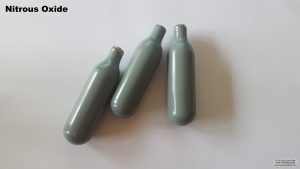
Formerly only featuring in backstage parties at music festivals, whipped cream canisters, or in dentist offices, nitrous oxide (N₂O) has found new popularity online. With hashtags like #galaxygas and #whippets attracting millions of views, the gas is experiencing an increase in cultural attention, particularly among young people. Users take nitrous oxide recreationally to produce a brief, euphoric high that is cheap, accessible, and often perceived, although sometimes mistakenly, as harmless.
In the United States, misuse of the anesthetic gas called nitrous oxide (known commonly as just “nitrous”, “whippets”, or “poppers”) has been steadily rising since 2010, with a 58% increase in intentional nitrous oxide exposure reported b etween 2023 and 2024, and over 13 million Americans report having misused nitrous in their lifetime. Unlike cannabis, nitrous oxide use can be potentially fatal by asphyxiation or cardiac arrhythmia. While rare, related deaths rose 110% between 2019 and 2023, according to the CDC.
Photo Credit: Wikimedia Commons
The substance is legal to use in medical settings, but it is not legal for use as a recreational drug. Today, manufacturers commercially sell canisters in various flavors, unofficially intended for recreational inhalation, under names like Galaxy Gas. These products raise concerns about potential health risks, as sellers offer them with minimal regulation, and experts continue to question the overall safety of using nitrous recreationally.
The new wave of recreational nitrous use reflects growing mainstream interest in psychedelics and altered states of consciousness, highlighting the public’s increasing curiosity about and acceptance of mind-altering substances. What is driving this increased fascination with psychedelia? What special experiences do these dissociative highs offer? Moreover, what is the history of nitrous use, and is it dangerous? This article provides a deep investigation of the nitrous fad, tracing its recreational use back to the Victorian era and proceeding to the present day with a critical examination of the drug’s safety and its resurgence in popularity within modern mainstream recreational drug culture.
What is Nitrous Oxide?
Commonly known as “laughing gas,” nitrous oxide contains two nitrogen atoms and one oxygen atom, giving it a colorless appearance and slightly sweet smell. People have used it for various purposes, including as an anesthetic in medicine and dentistry, a propellant in whipped cream canisters, and even fuel for rocket engines.
When inhaled, nitrous acts primarily on the brain’s N-methyl-d-aspartate (NMDA) receptors, and it acts similarly to ketamine to disrupt communication between neurons, producing novel dissociative experiences. It also acts pain-wise like morphine, increasing endogenous opioids that also contribute to possibly fatal respiratory depression, as opioids do. Nitrous also works like antianxiety medications (i.e., benzodiazepines) by activating GABA receptors.
People inhale the drug recreationally to produce brief euphoric and sometimes psychedelic effects. The high can last as short as 5-20 seconds, or up to 30 seconds to 5 minutes. Driving after consumption can still be dangerous for at least 30 minutes after use. Users report experiencing effects including fits of laughter and even sensations of floating and metaphysical insight.
Generally, the drug is fast-acting, and users return to a normal headspace relatively rapidly. Some effects of the drug’s activity in the body include:
Euphoria and giggling
A sense of calm
Dissociation
Feelings of excitement
Dizziness
Confusion
Tingling or heavy bodily sensations
In the medical field, nitrous oxide is considered one of the safest and shortest-acting anesthetic agents when administered in controlled settings. The substance doesn’t suppress as much pain or consciousness to the same degree as stronger anesthetics, and its effects wear off quickly after use, but it may cause nausea and vomiting. However, the relative safety of nitrous use in medical environments does not automatically translate to low risk.
Risks of Recreational Nitrous Use
One of the most serious health concerns associated with frequent or heavy nitrous use is vitamin B12 inactivation. Nitrous interferes with the body’s ability to absorb and use vitamin B12, which is essential for maintaining healthy nerve cells, blood cells, and producing DNA. Thus, prolonged exposure to nitrous without careful attention to B12 supplementation can lead to nerve damage, anemia, and cognitive symptoms like balance issues, memory impairment, difficulty focusing, slowed mental processing, and in severe cases or pregnancy, irreversible brain damage or spinal cord degeneration.
Another major risk of nitrous overuse is respiratory depression and hypoxia, otherwise known as oxygen deprivation. Because nitrous displaces oxygen in the lungs, inhaling the gas in large quantities or poorly ventilated areas can produce low oxygen levels in the brain and body. It can also lower breathing rate, especially dangerous if combined with opioids or sedatives. Such effects can result in fainting, brain injury, or even death by asphyxiation. Using nitrous from pressurized tanks or directly from canisters increases this risk.
While nitrous oxide is not as physically addictive in the way that opioids or alcohol are, there is nevertheless concern that habitual use of the gas can lead to psychological dependence. The drug’s quick onset and short duration make it tempting to use repeatedly in a single session, which compounds the aforementioned physical risks.
Additional dangers include injuries from falls during intoxication, burns from improper handling of canisters, and the uninformed use of industrial-grade nitrous, which may contain contaminants not safe for human inhalation.
In short, while occasional nitrous use in moderation is unlikely to cause lasting harm or addiction in healthy individuals, excessive or careless use comes with serious risks, particularly regarding neurological health, safe oxygenation, and physical injury.
See If You Qualify For Medical Marijuana -Select Your State!
Select Your State
Alabama
Alaska
Arizona
Arkansas
California
Colorado
Connecticut
Delaware
Florida
Georgia
Hawaii
Idaho
Illinois
Indiana
Iowa
Kansas
Kentucky
Louisiana
Maine
Maryland
Massachusetts
Michigan
Minnesota
Mississippi
Missouri
Montana
Nebraska
Nevada
New Hampshire
New Jersey
New Mexico
New York
North Carolina
North Dakota
Ohio
Oklahoma
Oregon
Pennsylvania
Rhode Island
South Carolina
South Dakota
Tennessee
Texas
Utah
Vermont
Virginia
Washington
West Virginia
Wisconsin
Wyoming
Never miss a post
Get updates on cannabis culture, new research, and expert insights
Is Nitrous a Psychedelic?
Unlike psilocybin (“magic mushrooms”) or LSD (lysergic acid diethylamide), nitrous isn’t a classic psychedelic; it’s a dissociative psychedelic. Nitrous does not interact with serotonin receptors or produce prolonged visual hallucinations because it does not act upon the brain in the same way as traditional psychedelics. However, the drug’s ability to induce experiences of dissociation—the floating, almost mystical separation of mind from body—provides insights and sensations that some users find meaningful.
Modern advocates for the responsible use of psychedelics have begun exploring the value of short-acting agents like ketamine and DMT (N, N-Dimethyltryptamine) for mental health therapies and individual existential insight. Nitrous, which similarly operates on NMDA receptors, can be said to belong in this family of dissociative psychedelic drugs.
Yet, the brevity and unpredictability of nitrous highs make the drug arguably more difficult to harness for therapeutic application. This transience is part of the substance’s appeal, but it is also a limitation regarding making use of these highs.
A Brief High with Long-term Historical Roots
Today, the nitrous high’s legality and accessibility have propelled the gas into a curious niche. Nitrous used to be a popular club drug, yet it is not quite a psychedelic, but people seem to take the gas for both purposes, or to enhance sexual experiences, as people have since the 60s. Nitrous is common at festivals, backstage at concerts, and—more recently—on social media, where videos of people huffing whippets stack up millions of views.
However, none of this is entirely new.
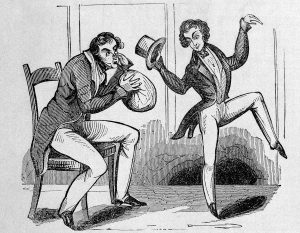
Nitrous oxide was first synthesized in 1772 by British chemist Joseph Priestley, but it wasn’t until 1799 that experimenters began to explore the drug’s recreational psychedelic effects. At the Pneumatic Institution in Bristol, a young chemist named Humphry Davy began inhaling the gas in experimental binges, where he sealed himself in a box to trap the gas and inhale it in high concentration for an hour. When he stepped out (after inhaling even more nitrous from a silk bag for good measure), his mind reportedly peeled away from his body, and Davy “lost touch with all external things,” recording sensations of “extreme pleasure,” metaphysical reflection, and flashes of insight.
Soon, poets, scientists, and philosophers joined Davy in these experiments, turning the laboratory into a late-night hotspot for gas-induced euphoria and metaphysical speculation. One friend of Davy’s, the poet Robert Southey, described nitrous as “a new pleasure for which language has no name.” Others, like philosopher Benjamin Blood, and later William James, took these insights seriously, framing them as evidence that altered chemical states could reveal profound truths about the nature of existence, perception, and selfhood—a foundational notion in today’s psychedelic renaissance.
Photo Credit: Wikimedia Commons
By the early 1800s, nitrous had become a theatrical novelty. In cities like Philadelphia, audiences packed lecture halls to enjoy entertaining antics from volunteers selected to inhale the gas. Chaos would ensue, with participants stumbling, singing, or even sparring in mock fencing duels. These “laughing gas shows” spread across the US and UK, eventually becoming traveling acts. One such show, run by inventor Samuel Colt (famed for the revolver), reportedly dosed 20,000 volunteers from Canada to Maryland.
In many ways, such enjoyment of drug-induced spectacles echoes through today’s TikTok whippet clips, where nitrous use is viewed and consumed for entertainment, rather than for metaphysical contemplation or introspection.
Nitrous eventually did earn a place in medicine in 1844 when a dentist named Horace Wells watched a teen injure himself during a nitrous show without registering pain. Wells was then inspired to use the gas during an extraction of one of his teeth, during which he found that the gas made the procedure pain-free. While his public demonstration of nitrous’ anesthetic potential was a failure (the gas wore off mid-procedure), over time, nitrous found lasting use in dentistry and surgery, where it is still used to calm and numb patients with relative safety today.
Recreationally, though, nitrous fell out of style. Then, the drug later resurfaced at jazz clubs in the 1920s, Grateful Dead shows in the 1960s, and raves in the 1990s. Today, it’s back again, possibly inspired by a combination of pandemic boredom, influencer culture, and the rising acceptance of medicinal and recreational psychedelic drug use.
Concluding Reflections: Nitrous in the Psychedelic Renaissance
The timing of the revival of recreational nitrous use might not be completely random. In the past decade, psychedelics have shifted from a place of countercultural taboo to the realm of serious medicine. Psilocybin shows promise for treating depression, MDMA might provide relief for individuals with PTSD, and ketamine has recently been approved in the form of a nasal spray by the US Food and Drug Administration (FDA) to address treatment-resistant depression. From Australia’s revolutionary legalization of MDMA and psilocybin in clinical settings to the rise of microdosing among Silicon Valley execs, in today’s cultural climate, nitrous doesn’t seem so unusual in its mainstream popularity.
Behind the balloons and viral videos lies a layered story of conflicting perspectives on the use of the drug outside medical settings. This strange and storied history stretches back centuries, starting with Enlightenment-era experiments, the metaphysical reflections of philosophers, Victorian stage shows, and failed medical demonstrations, culminating in today’s potentially risky popularization of recreational nitrous use on the internet.
The re-emergence of nitrous in today’s culture may have deeper connections to the human experience than just acting as amusement for millions of viewers in our current digital atmosphere. It is interesting to take a look at what more profound meanings lie behind the way this oddly enduring gas continues to tread the edge between medicine, entertainment, and revelatory altered consciousness.
As with all mind-altering substances, how we interpret and use a drug depends as much on culture as chemistry. Historically, nitrous helped popularize the idea that altered states of mind deserve serious exploration, rather than moral condemnation. Whether nitrous becomes the next psychedelic pursued for its potential clinical benefits or simply another short-lived trend, this gas’s strange persistence may suggest something interesting about the way our culture has shifted its attitude toward psychedelic use, as generations of people persistently return to nitrous for entertainment, for relief, and for revelation.
Sheldon Sommer is a Southern Californian philosopher with a lifelong interest in the biological world. She is enthusiastic to contribute her fascination with philosophy, natural history, psychology, botany, biochemistry and other related topics to providing cannabis education for the similarly curious. Outside of writing, she enjoys painting, singing opera and Taylor Swift songs, as well as spending quality time with a certain beloved orange kitty cat.
Oklahoma’s medical-only dispensary market gives licensed patients access to a wide range of cannabis products, but every purchase must follow OMMA rules. This guide explains how to find licensed dispensaries, what identification to bring, purchase and possession limits, product testing, pricing, and what to expect during a visit.
Oklahoma’s advertised $25 medical marijuana card renewal covers the physician evaluation, but patients must also pay a separate OMMA license fee. This guide explains the full renewal cost, reduced-fee eligibility, required documents, online renewal steps, processing times, and the new physician recommendation requirement.
An Oklahoma medical marijuana card provides legal protection under state law, but it can still affect employment, commercial driving, firearms, privacy, and federally regulated situations. This guide explains the main consequences to consider before applying, including workplace drug testing, CDL rules, insurance, housing, and registry privacy.
Getting a medical marijuana card in Oklahoma can be completed online, with no specific qualifying condition required for adult applicants. This guide covers eligibility, telehealth evaluations, required documents, OMMA application steps, fees, processing times, and what patients can do once approved.
A same-day telehealth appointment in Oklahoma can get you a physician recommendation quickly, but OMMA still needs to process your medical marijuana license application. This guide explains the timeline, required documents, costs, and when you can legally visit a dispensary while waiting for the physical card.
The statements made regarding cannabis products on this website have not been evaluated by the Food and Drug Administration (FDA). Cannabis is not an FDA-approved substance and is still illegal under federal law. The information provided on this website is intended for educational purposes only and is not intended to diagnose, treat, cure, or prevent any disease. It is not intended as medical advice and should not be considered as a substitute for advice from a healthcare professional. We strongly recommend that you consult with a physician or other qualified healthcare provider before using any cannabis products. The use of any information provided on this website is solely at your own risk.