Your medical cannabis journey simplified: find partnered dispensaries, explore pricing options, earn rewards, and get answers to FAQs, all in one spot.
Cannabis remains a divisive topic in many climes, including in the U.S., despite legalization in several states. However, in certain countries, the stigma surrounding cannabis waxes especially strong, thanks to unfriendly cannabis laws and outdated beliefs. This is the case in Kenya, where much of the older generation, who also happen to hold most of the country’s political power and wealth, consider cannabis taboo.
Younger Kenyans, specifically Gen Z (those born between 1997 and 2012), are challenging or simply ignoring these stereotypes. According to Kenya’sNarcotics and Psychotropic Substances Control Act of 1994, possessing or consuming cannabis, locally known as “bhang,” is illegal. Yet, it’s one of the most popular recreational substances among Kenya’s youth.
According to a 2022 report by the National Agency for the Campaign Against Drug Abuse (NACADA), one in every 37 Kenyans between 15 and 24 years old uses cannabis. Also, the number of Kenyans using cannabis grew by 90% within five years.
WHY ILLEGALITY ISN’T STOPPING YOUNG KENYANS FROM USING CANNABIS
Cannabis use isn’t novel to Kenyans. According to a University of Bristol article, “Cannabis consumption in Kenya has a long history, particularly in western Kenya where smoking cannabis has particular cultural significance as a social activity and where it also has medicinal uses.”
Former generations of Kenyans may have been more subtle with their cannabis use to avoid clashing with the law. But in typical Gen Z fashion, younger Kenyans are a bit bolder, challenging what they believe are restrictive and outdated laws. Leading the charge is the country’s Rastafarian community, calling for cannabis legalization through legal appeals, media rounds, and public gatherings.
Social media has also played a significant role in normalizing cannabis use among Kenya’s youth. On platforms like TikTok and X, young users find and post memes, personal stories, and other content that celebrate cannabis. Pop culture influence is another driver, with afrobeats, reggae, and hip-hop from local and international artistes often referencing or celebrating cannabis.
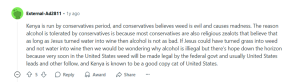
Here are some takes posted by young Kenyans on the Reddit thread, “Why is weed illegal?”
External-Ad2811: “Kenya is run by conservatives, period, and conservatives believe weed is evil and causes madness. The reason alcohol is tolerated by conservatives is because most conservatives are also religious zealots that believe that as long as Jesus turned water into wine then alcohol is not as bad. If Jesus could have turned grass into weed and not water into wine then we would be wondering why alcohol is illiegal but there’s hope down the horizon because very soon in the United States weed will be made legal by the federal govt and usually United States leads and other follow, and Kenya is known to be a good copy cat of United States.”
mm of m: “Our leaders were influenced by a puritanical form of Christianity which frowned on some things like drugs and alcohol hence you see how they overreact to the alcohol problem while never really addressing anything. It’s why changing marijuana laws would be so difficult in Kenya, not because the legislators don’t want to, but because the religious organizations are so powerful that they would never let it happen. Same with lgbtq and abortion. The legislators are too afraid of the wrath of religious organizations to dare ease laws on that trio.”
As Kenya’s Gen Z becomes more connected to global youth culture, their views on cannabis are widening. Many now see it as acceptable for both recreation and wellness, challenging local taboos and pushing back against outdated societal and legal restrictions. One clear sign of this shift is the growing presence of cannabis in matatu culture.
Photo Credit: Reddit.com
THE RISE OF THE MATATU IN KENYA’S CANNABIS SUBCULTURE
Visit any urban part of Kenya, especially Nairobi and other major cities, and you will see vibrantly painted buses prowling the streets. These colorful buses, known as matatus, are Kenya’s most popular form of public transportation.
See If You Qualify For Medical Marijuana -Select Your State!
Select Your State
Alabama
Alaska
Arizona
Arkansas
California
Colorado
Connecticut
Delaware
Florida
Georgia
Hawaii
Idaho
Illinois
Indiana
Iowa
Kansas
Kentucky
Louisiana
Maine
Maryland
Massachusetts
Michigan
Minnesota
Mississippi
Missouri
Montana
Nebraska
Nevada
New Hampshire
New Jersey
New Mexico
New York
North Carolina
North Dakota
Ohio
Oklahoma
Oregon
Pennsylvania
Rhode Island
South Carolina
South Dakota
Tennessee
Texas
Utah
Vermont
Virginia
Washington
West Virginia
Wisconsin
Wyoming
Never miss a post
Get updates on cannabis culture, new research, and expert insights
The typical matatu is a mini- or mid-sized bus blaring music that’s almost as loud as its elaborate paint job. Each bus is basically a mobile billboard covered with eclectic artwork that showcases the owner’s tastes or promotes brands. In fact, several businesses in the telecommunications and consumer goods sectors rely on matatu advertising to reach working Kenyans.
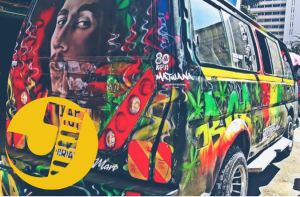
These days, you can find matatu buses covered in cannabis-themed art, honoring the herb or iconic canna-personalities like Bob Marley and other well-known Rastafarians. Braver matatu owners have gone as far as painting their buses with murals showcasing cannabis brands and products.
But isn’t this illegal? While Kenya’s laws prohibit all forms of cannabis marketing, matatus have become a creative workaround. The artwork on some of these buses uses coded messages and cultural symbolism to speak to those “in the know” without crossing into overt advertising. Some people also use cannabis imagery on matatus for personal branding or to promote music and other offerings.
Matatus started in the 1960s to meet the public transportation needs of Kenya’s growing population, especially in Nairobi and other urban areas. Their popularity soared in the 1990s, and by the 2000s, they had evolved from mere public buses into mobile billboards for music, fashion, politics, and artistic expression.
Not long after, subtle cannabis marketing began creeping into the artwork on matatus, birthing a new and creative type of advertising. A younger generation of Kenyan designers, drivers, and riders powered this shift. These Gen Z creatives, inspired by music and digital art trends from around the world, began blending local culture with global cannabis symbolism. Most of their matatu artwork features Rastafarian color schemes, marijuana leaves, and portraits of iconic stoners like Bob Marley.
Photo Credit: Wikimedia Commons
DO OTHER COUNTRIES USE SIMILAR CANNABIS MARKETING?
Matatus showcase unique art styles, but buses promoting cannabis products appear on streets far beyond Kenya. In New York, you can find brands like Weed World and Uncle Budd using this marketing strategy to their advantage and taking it a step further.
For instance, besides drumming up awareness for their brand and products with painted buses, Weed World allows curious customers to buy edibles on the spot. It’s like an ice cream or food truck, but for canna-sweets. In Asia, cannabis brands like Tongjay in Thailand have similar cannabis-themed trucks that promote products and serve as mobile dispensaries.
It’s an effective branding and publicity strategy that connects with more people in more locations than standard billboards. Also, it ensures awareness doesn’t go to waste, as canna-curious people can buy products on the spot, turning interest into immediate action.
However, marketing cannabis products with painted vehicles isn’t legal in all parts of the U.S. States like Connecticut, Washington, and Massachusetts, where cannabis is fully legal, prohibit cannabis marketing on all public and private vehicles. In Illinois and New York, you can advertise with private vehicles, but not on public transit vehicles or shelters.
Tobi Moyela is an avid cannabis enthusiast who enjoys creating helpful, educational content that helps others better understand cannabis, especially its potential uses and benefits. When he's not researching or writing for brands, you can find him watching anime, cooking, or reading his latest fiction finds.
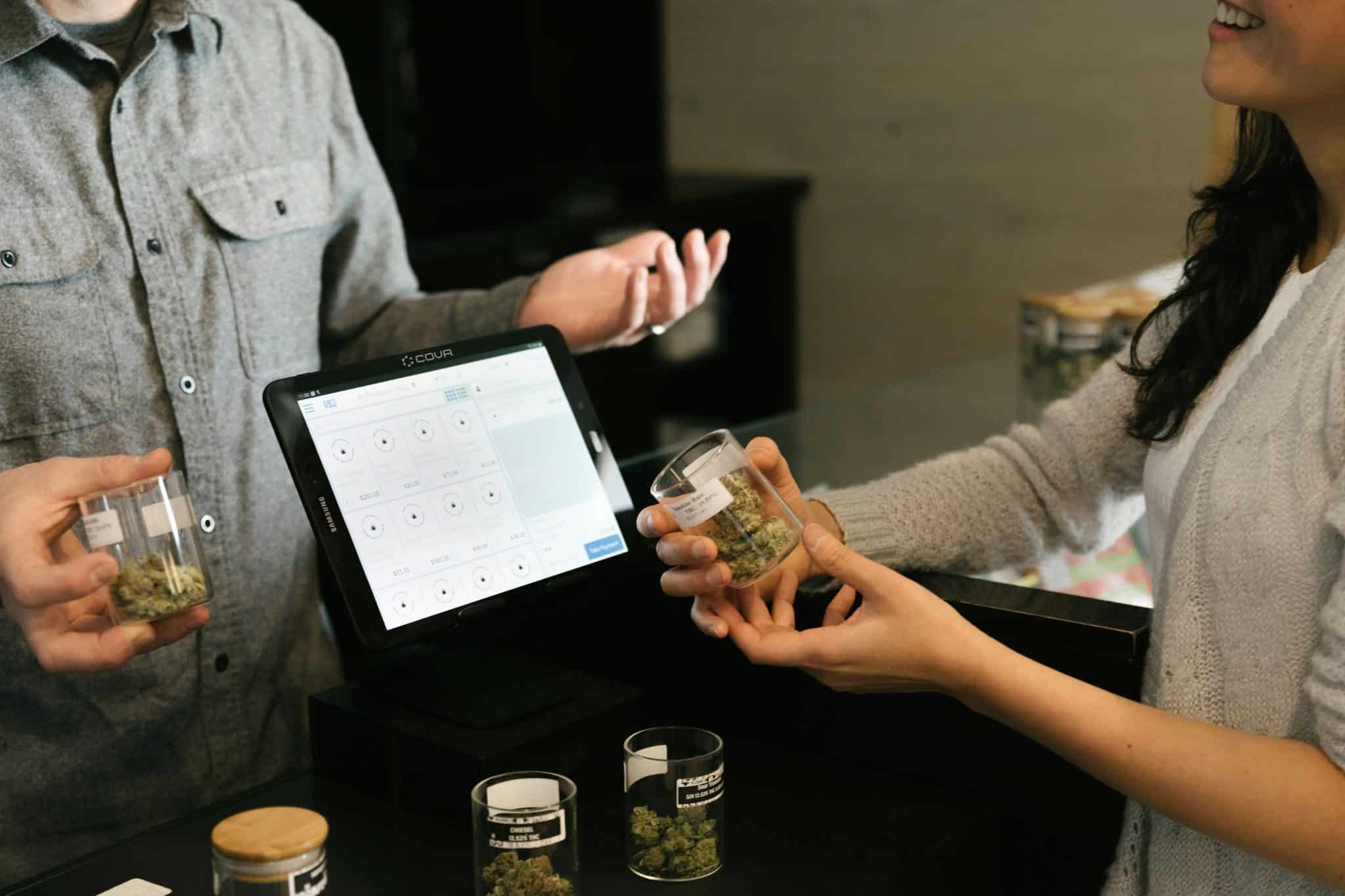
Oklahoma’s medical-only dispensary market gives licensed patients access to a wide range of cannabis products, but every purchase must follow OMMA rules. This guide explains how to find licensed dispensaries, what identification to bring, purchase and possession limits, product testing, pricing, and what to expect during a visit.
Oklahoma’s advertised $25 medical marijuana card renewal covers the physician evaluation, but patients must also pay a separate OMMA license fee. This guide explains the full renewal cost, reduced-fee eligibility, required documents, online renewal steps, processing times, and the new physician recommendation requirement.
An Oklahoma medical marijuana card provides legal protection under state law, but it can still affect employment, commercial driving, firearms, privacy, and federally regulated situations. This guide explains the main consequences to consider before applying, including workplace drug testing, CDL rules, insurance, housing, and registry privacy.
Getting a medical marijuana card in Oklahoma can be completed online, with no specific qualifying condition required for adult applicants. This guide covers eligibility, telehealth evaluations, required documents, OMMA application steps, fees, processing times, and what patients can do once approved.
A same-day telehealth appointment in Oklahoma can get you a physician recommendation quickly, but OMMA still needs to process your medical marijuana license application. This guide explains the timeline, required documents, costs, and when you can legally visit a dispensary while waiting for the physical card.
The statements made regarding cannabis products on this website have not been evaluated by the Food and Drug Administration (FDA). Cannabis is not an FDA-approved substance and is still illegal under federal law. The information provided on this website is intended for educational purposes only and is not intended to diagnose, treat, cure, or prevent any disease. It is not intended as medical advice and should not be considered as a substitute for advice from a healthcare professional. We strongly recommend that you consult with a physician or other qualified healthcare provider before using any cannabis products. The use of any information provided on this website is solely at your own risk.