1-855-452-6224 (Customer Support Available 24/7)

If you know at least 10 women in the world, there’s a good statistical chance you know someone with endometriosis. Many might not even know it, given that the condition takes an average of seven to 9 years to diagnose. The symptoms can be crippling, with intense pelvic pain, heavy bleeding, bloating, and fatigue, to name just a few. Between 30 and 50% of women with endometriosis are infertile, too.
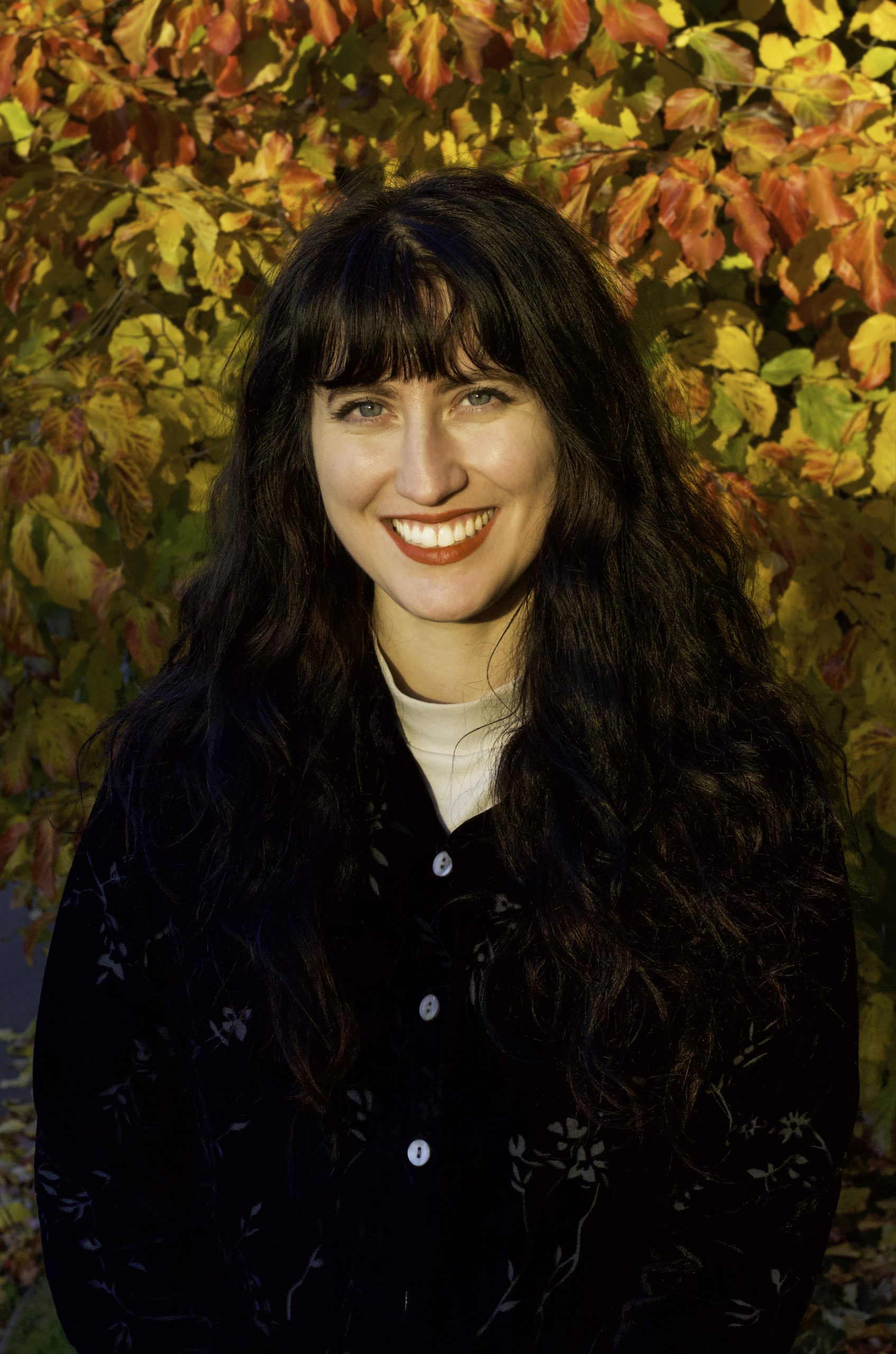
But this isn’t news to Jessie Bunk, a Maryland-based artist and advocate who received a late diagnosis for a host of conditions starting in 2020. In the last five years, Bunk has discovered that she has premenstrual dysphoric disorder (PMDD), a severe type of premenstrual syndrome that causes disruptive mood and physical changes; stage 3 endometriosis, characterized by endometrial-like tissue that has developed into large and deep implants and can impact the ovaries, fallopian tubes, and uterus; and adenomyosis, a condition where endometrial tissue grows into the muscular wall of the uterus.
“I had been struggling with my symptoms for 13 years,” she explains. “They had all been documented and dismissed.”
It’s an unfortunate truth that women’s conditions are often neglected in the healthcare system. Women and minorities weren’t required to be included in clinical trials until 1993, and even today, women are 50% more likely to be misdiagnosed with a heart attack, even though they carry the same risks as men. Researchers have known for over two decades that women present different heart attack symptoms, yet many healthcare professionals still treat both genders the same.
These statistics underscore how so many women end up waiting up to a decade to receive an endometriosis diagnosis, despite years of doctor visits and pain. Bunk endured painful symptoms for 13 years before she finally sought the professional help she needed.
That help came from Mercy Medical Center, a women-founded health center with an excellent reputation for women’s healthcare.
“I had been told I was just too stressed for upwards of 10 years of my life,” explains Bunk. When she finally went to Mercy Medical Center, she had 55 pages of records from her gynecologist showing a host of things that were ‘wrong’ with her, without any identified cause. “The nurses and doctors were terrified for me. They said there’s something very wrong with me, and it’s just been dismissed for a very, very, very long time.”
The late diagnosis led Bunk to lose her uterus and cervix, as well as both of her fallopian tubes. By 27, she had a full hysterectomy. The diagnosis wasn’t the end of the journey–it was just another step in the right direction. Bunk still lives with pain; she just has a clearer picture of what’s happening with her body and how to ease the symptoms. That’s where cannabis comes in.
Bunk was well aware of how cannabis can help manage pain long before her diagnosis. She worked in the medical cannabis industry and had already been using the plant to help with her heavy periods and pain.
“I’ve had a lot of surgeries and procedures, and CBD and THC together are one of the only things that have helped me get through them,” she says. “Living with these things is so debilitating and challenging. But having a way to combat the constant pain I have and try to be functional—I really advocate for that.”
Bunk finds lubricants and topicals to be especially helpful for her conditions. Though many products are marketed for sex, they also allow for targeted relief in the areas that need it most. She also uses tinctures, gummies, and other widely available products–though she notes that smoking is now more of a special occasion activity, rather than part of her medicine.
“Before I was diagnosed, I was overconsuming cannabis because I was in a lot of pain and didn’t know what was going on,” she explains. “Once I got diagnosed, I learned how to help myself better by going slow, going low, and being mindful.”
Cannabis has played a huge role in Bunk’s journey and helped her connect with her community in new ways. Along the way, she’s discovered that art can have a similar impact.
READ: Using Medical Cannabis for Endometriosis Management and Relief
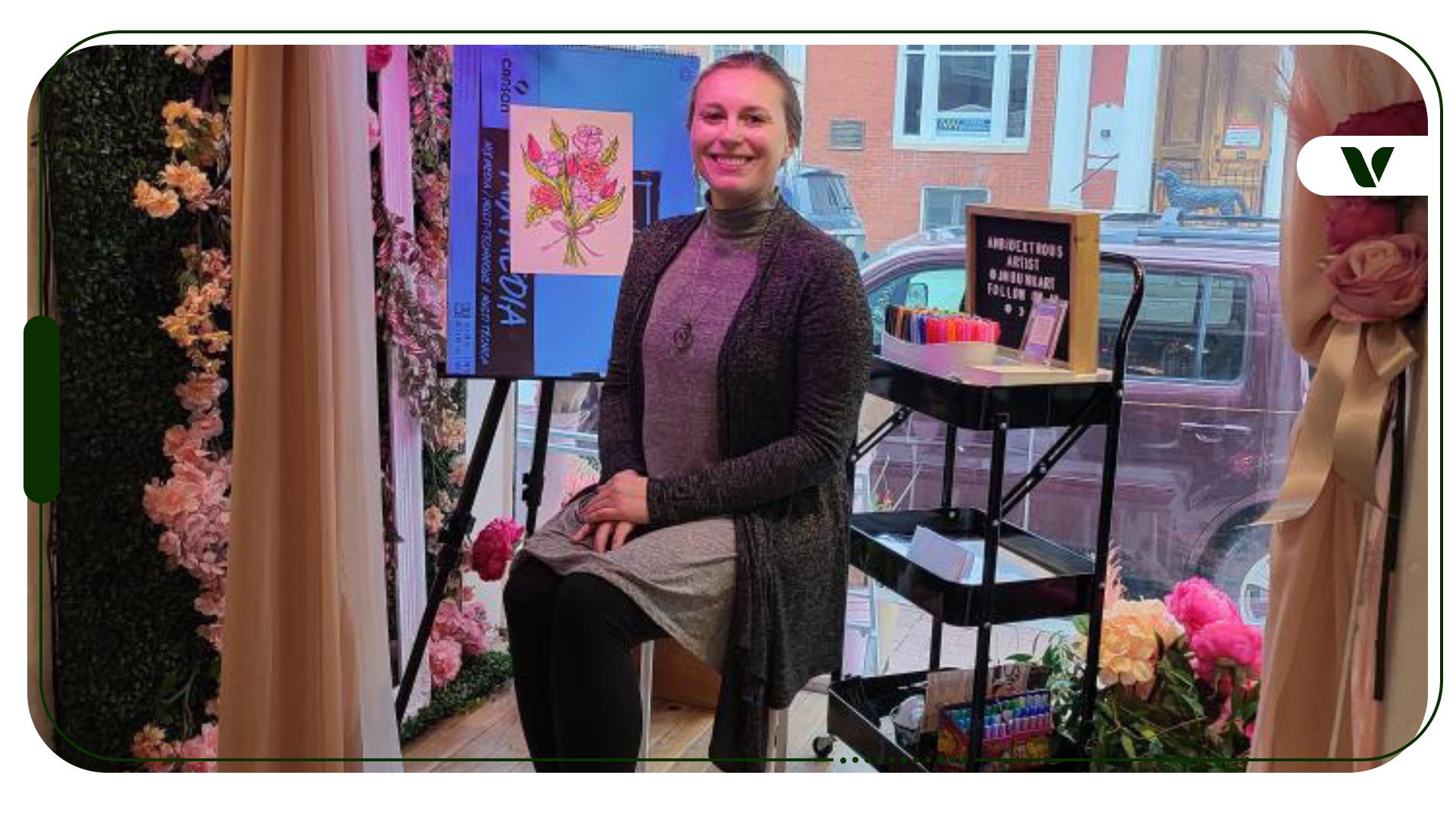
Before her multiple diagnoses, Bunk rediscovered her ability to draw with either hand (a skill that a teacher had told her not to utilize as a young child.) This started a wave of creating ambidextrous artwork, which has helped Bunk through the healing process in many ways.
“It was the best distraction ever,” she says. “I was drawing with both my hands at the same time. I was stuck at home all the time and just drawing nonstop.”
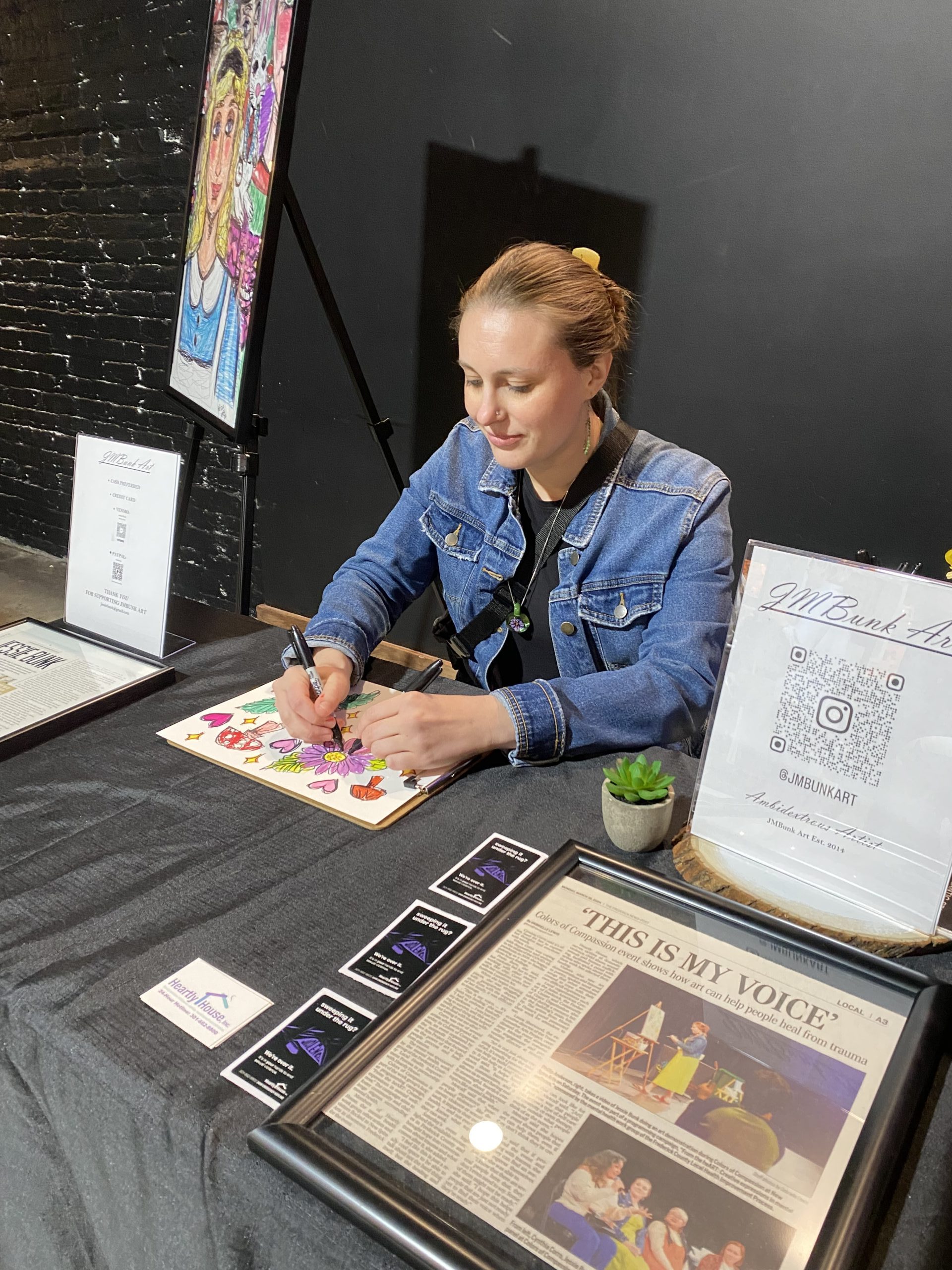
Bunk is a multimedia artist who stays busy creating magnets, embroidering, performing live chalk art, and more—all in addition to her ambidextrous artwork. She taught herself everything she knows, and her work has been showcased across the state. Sharpie Markers noticed her talent, shared her art on Instagram, and even sent her free supplies.
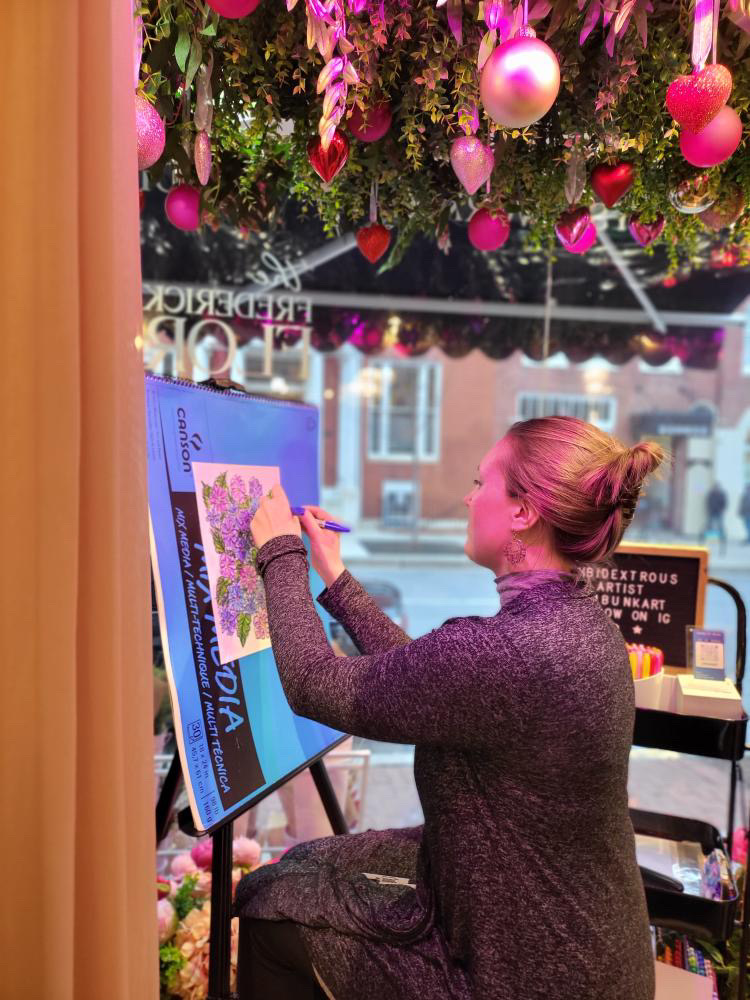
“I’ve been able to make a connection with the community, with other people, and within myself to just draw and to doodle and have fun. And that’s really what I’m trying to do with my art now,” she says.
Through her artwork and advocacy, Bunk has found and amplified her voice. She also speaks publicly as a survivor of intimate partner violence. Between the public speaking, the art popups and teachings, and the conversations about cannabis and women’s health, she has regularly, she’s been able to bring many overlooked topics to light with compassion and honesty.
She’s seen the impacts that open conversations and education can have in her own community.
“You see everybody at the dispensary,” she says with a laugh. “You see, teachers, nurses, doctors, lawyers—everybody is at the dispensary. You see people from church and your mom’s friend. That’s how it should be.”
Sign up for our newsletter
Learn the process in your state
All Rights Reserved Veriheal Inc. ©
Terms Privacy Policy Advertising Agreement Content Disclamer

Get your medical marijuana card today
Sign up in under 5 minutes
Start By Selecting Your State
 Alabama
Alaska
Arizona
Arkansas
California
Colorado
Connecticut
Delaware
Florida
Georgia
Hawaii
Idaho
Illinois
Indiana
Iowa
Kansas
Kentucky
Louisiana
Maine
Maryland
Massachusetts
Michigan
Minnesota
Mississippi
Missouri
Montana
Nebraska
Nevada
New Hampshire
New Jersey
New Mexico
New York
North Carolina
North Dakota
Ohio
Oklahoma
Oregon
Pennsylvania
Rhode Island
South Carolina
South Dakota
Tennessee
Texas
Utah
Vermont
Virginia
Washington
West Virginia
Wisconsin
Wyoming
Puerto Rico
Alabama
Alaska
Arizona
Arkansas
California
Colorado
Connecticut
Delaware
Florida
Georgia
Hawaii
Idaho
Illinois
Indiana
Iowa
Kansas
Kentucky
Louisiana
Maine
Maryland
Massachusetts
Michigan
Minnesota
Mississippi
Missouri
Montana
Nebraska
Nevada
New Hampshire
New Jersey
New Mexico
New York
North Carolina
North Dakota
Ohio
Oklahoma
Oregon
Pennsylvania
Rhode Island
South Carolina
South Dakota
Tennessee
Texas
Utah
Vermont
Virginia
Washington
West Virginia
Wisconsin
Wyoming
Puerto Rico