Your medical cannabis journey simplified: find partnered dispensaries, explore pricing options, earn rewards, and get answers to FAQs, all in one spot.
February 20, 2026 01:30 pm ETEstimated Read Time: 12 Minutes
Over 9.5M people currently reside in New Jersey, its highest population ever. According to the New Jersey Cannabis Regulatory Commission (CRC), as of November 2025, there are 52,819 medical marijuana patients in the state as well. New Jersey is one of only 2 states with adult-use and medical marijuana programs that don’t allow for homegrow—even for medical marijuana patients.
Why can’t medical marijuana patients in New Jersey grow their own weed? Do state-level political considerations undermine efforts to do so? Where does lobbying come into play?
New Jersey medical marijuana patients and adults 21+ often ask these questions when they look for ways to access weed without paying the higher costs of retail dispensaries or turning to the black market. The state still denies them the freedom to grow the strains they want for both recreational and medicinal value.
Brief Timeline of Medical Marijuana in New Jersey
New Jersey’s timeline to legalization without the right to grow at home has been a rocky one. Despite prohibition, residents of the Garden State remain grateful for the right to possess, purchase, and consume cannabis—all the way from the Delaware Valley, up to the suburbs of New York, and out along the eastern shores.
The state has enshrined those legal rights into practice since 2021 with the institution of New Jersey’s adult-use cannabis legalization program; however, on the medical side of things, it hasn’t been such a no-brainer for everyone to agree on.
New Jersey Compassionate Use Medical Marijuana Act (CUMMA)
New Jersey lawmakers signed the awfully acronymed Compassionate Use Medical Marijuana Act (CUMMA) in 2010 to accommodate its equally awful legal access framework. While NJ residents with complications for Cancer and Crohn’s disease, fortunately, found safe, legal, albeit costly access to medical marijuana via CUMMA, it would be a while until the list of qualifying conditions expanded. The introduction of the Jake Honig Compassionate Use Medical Cannabis Act in 2019 ultimately led to the reform and expansion of the program.
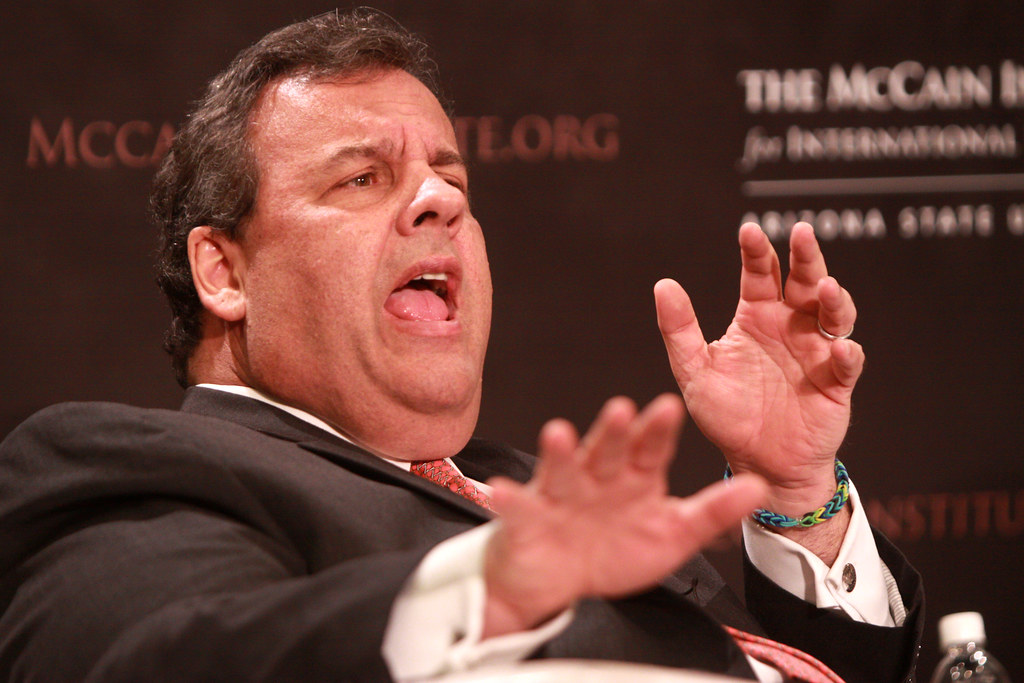
Governor Chris Christie’s Hypocrisy
Governor Chris Christie of New Jersey speaking at an event hosted by The McCain Institute in Phoenix, Arizona | Photo by Gage Skidmore
One of the main hindrances to MMJ expansion in New Jersey from 2010 to 2017 was due to one main antagonist — then-governor Chris Christie. The Republican governor and former U.S. District Attorney — who retrospectively seems mild compared to our modern Trump hellscape — was an outspoken critic of cannabis.
‘Blood Money’ & TV Commercials
Christie compared potential tax revenue from legalizing weed as ‘blood money’, famously comparing it to legalizing access to addictive substances like heroin, cocaine, and even PCP. His extreme views made it clear that any expansion of qualifying conditions for medical marijuana or any adult-use legalization would not happen on his watch.
Interestingly enough, around the time of his ‘blood money’ comments, Christie was airing statewide television commercials regarding his dedication to curbing the opioid addiction epidemic that raged out of control during this time in the U.S.
The irony, of course, is that cannabis is a potentially viable alternative to opioids and those seeking to escape the cycle of addiction. Allowing access to potentially addiction-replacing strains and cannabinoids could’ve perhaps helped a lot of people suffering from real addiction in his state at that time.
Luckily, the state held public testimony hearings during the lame-duck period of Christie’s final term, which influenced the state’s original incarnation of the CRC enough so that ailments like chronic pain joined the list of qualifying conditions. There was still, however, a lot of work to be done.
Jake’s Law & Post-Chris Christie Expansion of MMJ
Democratic governor Phil Murphy ran a platform that supported expanding the state’s MMJ program and legalizing weed in NJ as ‘the California of the East’. Murphy made good on his promises — the Jake Honig Act of 2019 greatly expanded the state’s list of qualifying conditions, while recreational weed became legalized in 2021.
Jake Honig had been diagnosed with cancer, whose symptoms subsided when he consumed cannabinoid rich tincture oil. Jake was limited to only 2 ounces per month, forcing his family to rely on morphine and OxyContin for relief before he sadly passed away at the age of 7.
A Huge Win for Patients, But Still No Home Grow
As a result, Jake’s Law, as it became known, overhauled the CRC while also expanding approved cultivators, manufacturing, and quantity allotments. The state also eventually phased out its controversial sales tax on medical cannabis. The law was a huge win for medical patients in New Jersey; however, there was still one glaring omission — medical marijuana home grow legalization.
MMJ Program Expansion & Adult-Use Legalization, but Still No Homegrow in NJ?
Jake’s Law reinvigorated the New Jersey medical marijuana program on the same level as many other medical states. However, the cost of medical cannabis products being sold at New Jersey dispensaries still manages to be on the steep side.
Dispensaries like Breakwater of Cranbury, NJ — one of New Jersey’s top-ranked independent dispensaries — sell 3.5 grams of flower at acurrent cost of $53.75, while concentrates cost an incredible $100 per gram. These high prices warrant rightful criticism of medical marijuana in the state, but also underscore how much home grow can help patients have a supply of medicine at hand without breaking the bank at places like Breakwater.
Specific strains that can’t be found in stores or are astronomically priced can also be grown by patients, which is another big reason why home grow is so important (alongside easy access for patients with chronic ailments that make traveling to and from the dispensary challenging, if not impossible). So, if the simple fact that homegrown can help patients in the state most beneficially, why hasn’t New Jersey legalized it?
The Anti-Home Grow Lobby
Any New Jersey resident who grows even a single cannabis plant is subject to a felony charge with a maximum of 5 years in prison and some hefty fines, as was the case recently in Blackwood, NJ. SWAT officers with guns drawn raided a hobby grower’s home because of a tip that found one single weed plant on the premises.
See If You Qualify For Medical Marijuana -Select Your State!
Select Your State
Alabama
Alaska
Arizona
Arkansas
California
Colorado
Connecticut
Delaware
Florida
Georgia
Hawaii
Idaho
Illinois
Indiana
Iowa
Kansas
Kentucky
Louisiana
Maine
Maryland
Massachusetts
Michigan
Minnesota
Mississippi
Missouri
Montana
Nebraska
Nevada
New Hampshire
New Jersey
New Mexico
New York
North Carolina
North Dakota
Ohio
Oklahoma
Oregon
Pennsylvania
Rhode Island
South Carolina
South Dakota
Tennessee
Texas
Utah
Vermont
Virginia
Washington
West Virginia
Wisconsin
Wyoming
Never miss a post
Get updates on cannabis culture, new research, and expert insights
Political and social status quos against homegrown in the Garden State persist. New Jersey’s state lawmakers have reputations—fair or not—as ultimately dysfunctional and compromised.
NJ State Senate President Nicholas Scutari
Nicholas Scutari is the current New Jersey State Senate President, a role that comes equipped with various powers to mold state-level legislation and policy, including homegrown. Scutari spearheaded the legalization movement in New Jersey over a decade ago. What was not entirely known at the time was how much publicly traded multi-state operators (MSOs) shaped the legalization framework in their favor for the Senate president.
Scutari Allows MSOs to Run the Show
Scuatri’s efforts have essentially created a corporate cannabis monopoly in NJ. Lobbyists from some cannabis trade associations and dispensary-funded groups donate to Scutari to protect their corporate interests—ie, profitability. Accusations that MSOs also donate to Scutari still continue to persist as well. The very nature of MSOs seeks domination of cannabis sales without patients growing their own, and thereby taking profits away from them.
The Senate president’s dedication to coming through for everybody but medical patients or cannabis consumers in New Jersey culminated in the current adult-use legalization bill that was passed in 2020. Scutari allowed the MSOs incredible influence over the legal and logistical frameworks for the adult-use program in New Jersey. This gave priority to the MSOs over independent breeders, cultivators, and processors. Patients and consumers in New Jersey still contend with a lack of independent, craft-style breeding, which creates less diversity of strains and cannabinoids specific to patient needs.
Home Grow Bills Continue to Die in the State Senate
Scuatari also recently stated that he would support home growing of exactly one plant per patient. While many advocates still view this concession by Scutari as progress, the rest of us can’t help but laugh at the minimal effort in countering the accusations that he’s still potentially compromised by MSO lobbyists. The Senate has repeatedly stalled homegrown bills in the state legislature as a result of Scutari’s lack of support.
NJ Governor Phil Murphy Delivers, But Still, No Homegrown in NJ
New Jerseyans are no doubt grateful for Governor Murphy’s reformation and expansion of New Jersey’s formerly menial medical marijuana program, and especially the legalization of cannabis for people 21 and over. The law no longer treats residents as criminals for consuming cannabis, but as mentioned, growing just one plant in the Garden State can still unfairly land home growers in jail for upwards of 5 years.
Murphy originally maintained that he wanted to see how the adult-use landscape shapes out post-legalization to determine whether there is a need for homegrown for patients and/or all New Jersey residents 21 or over. Remarks by the outgoing governor reflect his desire to punt the issue to the incoming governor, Mikie Sherill, maintaining that the industry needed to get ‘its feet under itself first’.
MSO Lobbies Are a Driving Force Behind Efforts Against Homegrown in New Jersey
The state licenses many of the same companies that grow and sell cannabis, which are also consistently blocking homegrown efforts. These publicly traded MSOs—known for prioritizing profits over people and quality—use various lobbying measures to ensure the homegrown ‘threat’ doesn’t ever affect their profits and share of the overall market.
Homegrown is An Alternative to MSO Weed
MSOs essentially maintain monopolies in many states, controlling both supply and pricing. Homegrown presents an option for consumers and patients to avoid the pitfalls of an MSO-dominated market. Any such alternative would eventually reduce the cost of weed in New Jersey, and for the MSOs, their profits.
Smart Approaches to Marijuana (SAM) & Other Anti-Cannabis Lobbies
Smart Approaches to Marijuana (SAM) typically leads anti-legalization and anti-homegrow lobbying efforts. Their leader, Kevin Sabet, acts as the lobby’s megaphone, spreading fearmongering regarding legal cannabis, including medical marijuana and homegrown.
Is SAM’s Agenda Funded by Dark Money from Competing Industries?
SAM believes monitoring and enforcement of home cultivation still won’t prevent ‘illegal sales’ from home growers, and medical cannabis should only be cannabinoid isolates and pharma-manufactured medications. The funny thing is that no one knows if Sabet and company really believe this stuff or if it’s potentially dark money doing the talking.
The organization’s website says that its funding does NOT come from corporate industries like pharmaceuticals, alcohol, tobacco, or private prisons—all big players with lots of money to ward off the competition from cannabis from their profit margins.
Even though SAM claims to be a ‘non-profit,’ the reality shows that they have yet to disclose a donor list, which leads some to believe that corporate interests drive SAM’s advocacy. Lobbying disclosures in general are hard to find, since corporations want to keep their benefactors private from the public and do so by obfuscation, indirect funding, and a major lack of transparency.
Mikie Sherill & Hope for the Future of Home Cultivation in NJ
The next governor of New Jersey is a former member of the U.S. House of Representatives, democrat Mikie Sherill. The governor-elect has publicly supported homegrown in New Jersey for patients and adults 21 and over, as well as a House member in support of such efforts as federal rescheduling. Sherill has an A rating from the National Organization for the Reformation of Marijuana Laws (NORML).
Legal home grow provisions would require the state legislature to put a bill or amendment on her desk to sign, so the Senate president and the governor would need to reach an agreement. However, the governorship of the Garden State comes with tremendous sway—as evidenced in the ways Christie and Murphy were able to strongarm their contrasting cannabis agendas into action.
Patient-Centric Proposals for Potential Home Grow in NJ in 2026
The incoming Sherill administration in New Jersey should finally get homegrown legalization over the goal line, potentially for medical patients and recreational consumers alike. The hope is that they’ll also enact rules and regulations that have worked for other legal homegrown states—the suggestions below are a few important parameters for lawmakers and the CRC to consider.
Home cultivation permitted without home checks from law enforcement. Growing weed shouldn’t be treated any differently than growing vegetables and herbs.
Allow for gifting of cannabis seeds and clones to encourage networking for home growers and patients to breed seeds of particular lineages, strains, and terpene content specific to their needs, as well as phenohunting for optimal genetics.
Approve clone bars at dispensaries. Home growers like clones as an easy shortcut to cultivation success—a legal framework allows for trusted sales and access.
The Garden State should allow for optimally timed harvests—at least 6 immature plants, and 6 mature plants per person, let some plants flower, harvest, and cure while the next batch are in vegetation, without violating any plant count laws.
Let New Jerseyans grow weed outdoors with mandated fence and plant heights.
The United States currently faces a nasty affordability crisis across the board, and costly medical cannabis—a non-addictive potential therapeutic—may never be covered by insurance in our lifetimes. For now, it’s time for New Jersey to get on board with other legal and medical states and their particular home grow laws, because compassion should always come before profits.
Anthony DiMeo is a Southern New Jersey-based journalist and cannabis advocate whose work and advocacy have been featured in Leafly, DOPE Magazine, and the Philadelphia Inquirer. Hobbies include navigating interdimensional psychedelic energy vortexes and tennis.
Ohio medical marijuana dispensaries offer registered patients benefits such as lower taxes, higher purchase allowances, and access to certain medical-only products. This guide explains how to find licensed dispensaries, verify their credentials, understand purchase limits, prepare for your first visit, and navigate medical versus recreational purchasing rules.
Pennsylvania’s Medical Marijuana Assistance Program (MMAP) helps eligible patients avoid the $50 annual state registration fee through qualifying public assistance programs. This guide explains who qualifies, how to claim the waiver through the patient portal, required documentation, renewal deadlines, additional program benefits, and what to do if an application is rejected.
Getting a medical marijuana card in Virginia involves physician certification costs and potential registration fees, with expenses varying based on eligibility and renewal requirements. This guide breaks down the costs outlined for 2026, available discounts for veterans and qualifying patients, insurance coverage, and the financial benefits of medical certification.
Anxiety is not explicitly listed as a qualifying condition for medical marijuana in Florida, but patients may qualify through the state’s comparable-condition provision. This guide explains physician eligibility assessments, required medical documentation, in-person evaluations, cannabis product considerations, application fees, and potential implications for firearm ownership.
Renewing a Virginia medical marijuana certification requires an annual evaluation with an authorized practitioner, while renewing the state-issued identification card is optional. This guide explains the online renewal process, associated fees, when to renew, what happens if certification expires, and the requirements for caregivers of minor patients.
The statements made regarding cannabis products on this website have not been evaluated by the Food and Drug Administration (FDA). Cannabis is not an FDA-approved substance and is still illegal under federal law. The information provided on this website is intended for educational purposes only and is not intended to diagnose, treat, cure, or prevent any disease. It is not intended as medical advice and should not be considered as a substitute for advice from a healthcare professional. We strongly recommend that you consult with a physician or other qualified healthcare provider before using any cannabis products. The use of any information provided on this website is solely at your own risk.