Your medical cannabis journey simplified: find partnered dispensaries, explore pricing options, earn rewards, and get answers to FAQs, all in one spot.
The methods by which any species or living organism can communicate are especially important in defining interactions with one another and their environments. Evolutionary processes of adaptation continue to shape how messages are sent and received by so much that’s found in nature.
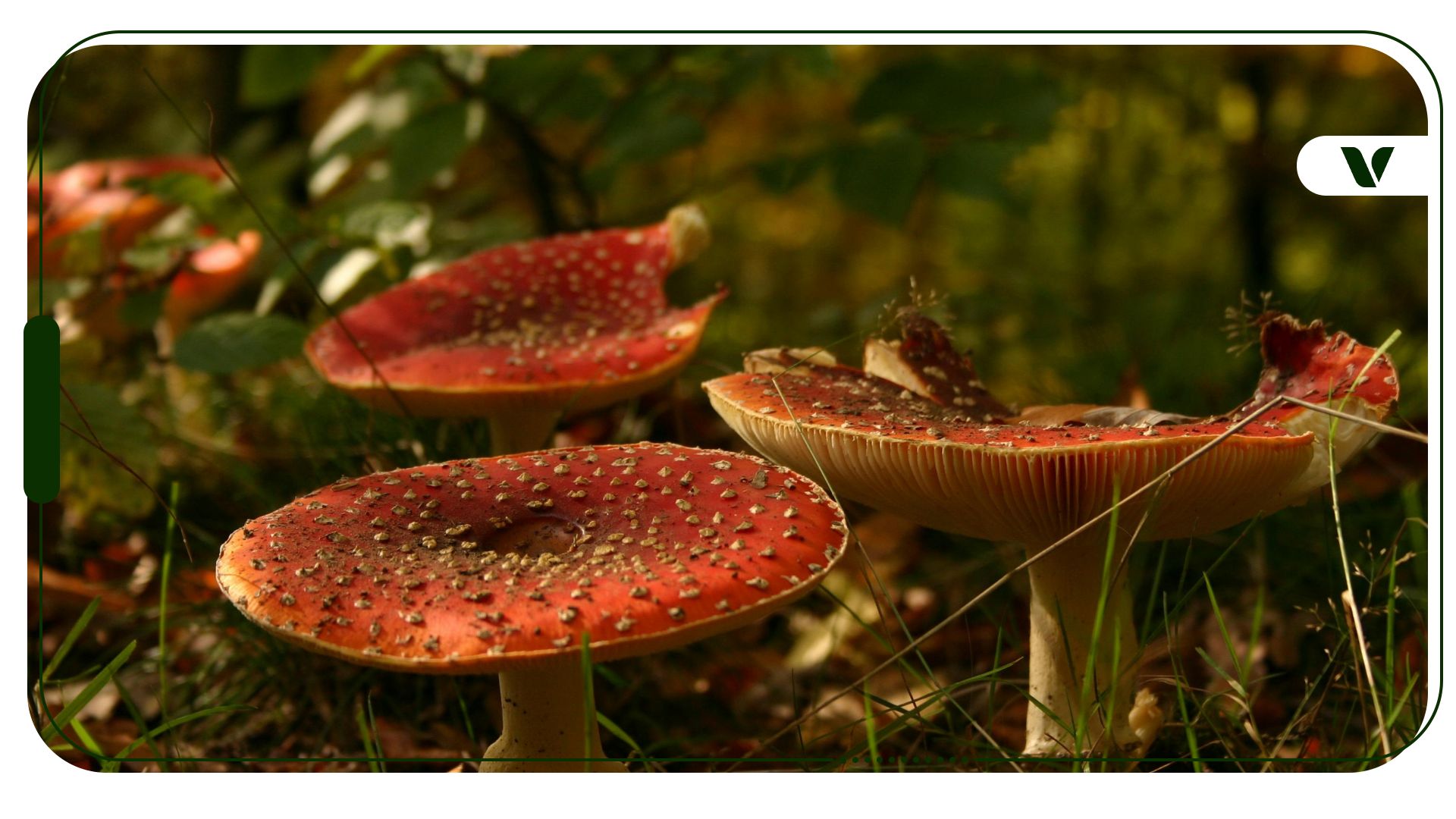
Fruits of fungi–more commonly known as mushrooms–are one of nature’s unique gifts, simultaneously embodying mystery and connection to humankind. Researchers are continually discovering that fungi are capable of some pretty fascinating things. Many people are well aware of the numerous ways mushrooms interact with the body; however, what’s not as obvious is how mushrooms communicate with one another, plants, microbes, and more.
Welcome To The Common Mycorrhizal Network (CMN)
Photo Credit: iStock
Soil-dwelling fungi interact beneficially with other plants, as well as a wide variety of microorganisms–a mutually beneficial relationship known scientifically as mycorrhizae. A network of fungi called mycelium connects with the root systems of multiple plant species to form the common mycorrhizal network (CMN).
Photosynthetic processes in plants produce specific starches that fungi need to survive. Fungi in exchange optimize water and nutrient retention for plants while also warning of disease and stress. This win-win of a deal for all organisms involved means optimal growth and vitality throughout the entire growing process.
Signal Pulses in the CMN Lend Support
The CMN sends signal pulses to allocate essentials like water, nitrogen, carbon, and hydrogen to the species or plants that need them most. In other words, fungi and plants support each other for protection and nutrients via their communication networks. Plant roots and fungi filaments, such as hyphae, arbuscules, and mycelium, can detect environmental changes and send resources and reactions back and forth below the soil.
How Does Mycorrhizae Send Signals Through The Network?
Biologists have studied the symbiotic relationships found in mycorrhizae for quite a while. Studies have shown evolutionary and genetic relationships within pre-vascular plants and fungi dating as far back as over 400 million years ago.
However, not until much more recently this century, symbiotically responsive genes, phytohormones, and proteins were researched microbiologically and hypothesized to produce the signals necessary for mycorrhizae to communicate. This symbiotic communication happens through special plant synapses, resembling those found in our immune systems. The presence of soluble carbohydrates and key enzymes in shared soil spaces may have also helped lay the foundation for this mutual relationship and communication between fungi and plants that keeps both well-nourished.
Possible Sociopolitical Ideologies of Fungi and Plants
One scientific paper from 2009 also theorizes that CMN acts like a superorganism, capable of two distinct personalities that border on political. On one hand is a socialist style of CMN that possibly believes in equal distribution of resources for all organisms involved in the network.
By contrast, another possibility is a capitalist style of resource allocation with a CMN that seeks to privatize control of resources by a select few organisms, while all the others must compete for sustenance. Regardless of which end of the political spectrum mycorrhizal organisms lie, the vastly organized nature of CMN is certainly evident.
See If You Qualify For Medical Marijuana -Select Your State!
Select Your State
Alabama
Alaska
Arizona
Arkansas
California
Colorado
Connecticut
Delaware
Florida
Georgia
Hawaii
Idaho
Illinois
Indiana
Iowa
Kansas
Kentucky
Louisiana
Maine
Maryland
Massachusetts
Michigan
Minnesota
Mississippi
Missouri
Montana
Nebraska
Nevada
New Hampshire
New Jersey
New Mexico
New York
North Carolina
North Dakota
Ohio
Oklahoma
Oregon
Pennsylvania
Rhode Island
South Carolina
South Dakota
Tennessee
Texas
Utah
Vermont
Virginia
Washington
West Virginia
Wisconsin
Wyoming
Never miss a post
Get updates on cannabis culture, new research, and expert insights
Interpreting A Mysterious Fungal Language
In a study released in 2022, researchers argue that the observable electrical pulses that fungi specifically utilize to talk amongst themselves should be considered an advanced form of communication on par with our own. Electrical activities known as “spike trains” were monitored via electrodes on several different species of fungi mycelium during the study, with these trains often observed occurring in groups. These grouped patterns led researchers to correlate such activity to the typical length and cadences of how human beings use words to communicate with one another, as well as process information.
Mushroom and Fungi Vocabulary Tests
This groundbreaking study shows that fungi word lengths correlate with human word lengths, detecting up to about 50 words in total. The vocabulary of mushrooms, fungi, and mycelium averages 15-20 words, often used interchangeably.
Some fungi species even demonstrated a deeper vocabulary in comparison with others. This possibility leads to a question of whether some species of fungi have more functionality than others. There also exists a separate possibility that some species of fungi have a different dialect of their own that conveys the same information, however just a little differently. Another interesting finding the same researchers uncovered is that the average word lengths across all species examined were comparable to those found in human languages such as English and Russian.
What Are Mushrooms And Fungi Saying to Each Other?
Researchers speculated that fungal electrical activity is a manifestation of the information communicated between distant parts of the fungal colonies. What they’re saying exactly is unknown; however, if their network of communication exists similarly to that of mycorrhizae, then an assumption can be that they’re discussing issues of vital importance, like environmental changes and nutrient supply.
However, since researchers are mostly theorizing to make the correlations discussed here, there’s also a possibility that fungi could be saying something completely different. Chances are that fungi aren’t discussing last night’s ballgame, but perhaps even more incredulously, they’re sending salutations and status checks to various checkpoints throughout their networks.
There’s also a good chance they could be saying nothing of substance at all, and these signals are just natural metabolic occurrences within the fungi. Many researchers reasonably believe that spike trains in mycorrhizal networks primarily convey information about environmental changes, stress factors, and nutrient and resource distribution. For these reasons, additional research is critical to expand on these findings and investigate this mysterious language further.
What Can Further Studies Uncover About How Mushrooms and Fungi Communicate?
Since research from the 2022 findings is based mostly on data but also partially on theory, any further studies that come along can only help to either dispel or prove it. The researchers suggest 3 clear directions for future research: interspecies variation, fungal grammar, and coding type.
An establishment of more controls in further studies can help demonstrate how dynamics like physical manipulation or certain environments can produce certain spike trains and syntaxes of words within. Researchers could even go one step further and break down the variations in spike trains and vocabulary on a species-to-species level and their potential communicative interpretations.
The most interesting part about studies like the one from 2022 is the potential for new ground to continue to be broken. What if the research is spot-on and there exists a possibility whereby humans could communicate with other species like fungi and plants to take our interactions to the next level?
Imagine an existence whereby fungi, plants, and humans can coexist courtesy of efficient intercommunication by some strange stroke of science to benefit all. Cannabis researchers are already noting how taking advantage of this network may boost the growth of cannabis plants. Nutrition, health, and medicine would certainly never be the same ever again.
Anthony DiMeo is a Southern New Jersey-based journalist and cannabis advocate whose work and advocacy have been featured in Leafly, DOPE Magazine, and the Philadelphia Inquirer. Hobbies include navigating interdimensional psychedelic energy vortexes and tennis.
Reclaim edibles are re-purposed leftovers. You see that sticky residue sitting in your dab rig? Take a look, it is there. With a teensy bit of creativity, you can actually transform it into something amazing. The downside? Probably won’t hit exactly like fresh cannabis and won’t taste great either. However, if for whatever reason you…
In the school of life, tetrahydrocannabinol (THC), the most popular intoxicating cannabis compound, is like the popular kid everyone knows by name. The center of attention, always getting talked about, and highly sought after. Cannabidiol (CBD), on the other hand, gets a little less love. It’s more like the quiet honor student: low-key, non-intoxicating, rarely…
In the confusing landscape of state-by-state medical marijuana legalization and federal prohibition lies a patient’s pursuit of a better quality of life, balanced with an unrestricted financial livelihood. In workplaces across many different medical marijuana legal states, no law guarantees that a valid, card-carrying MMJ patient status exempts an employee from termination or discrimination stemming…
An alarming trend has recently come to light: more non-smokers are getting lung cancer than ever before. Given that lung cancer is the most common worldwide and the leading cause of cancer death, you may be worried about the implications of your cannabis habits. How much does cannabis contribute to lung cancer risk? According to…
It feels like every other day, a fresh slang term pops up in the cannabis lexicon, and today, we’re looking at an entry that’s all over TikTok and Reddit – Yart! Spoiler alert: it has everything to do with the humble vape cart (and how challenging it is to talk about cannabis on social media). …
The statements made regarding cannabis products on this website have not been evaluated by the Food and Drug Administration (FDA). Cannabis is not an FDA-approved substance and is still illegal under federal law. The information provided on this website is intended for educational purposes only and is not intended to diagnose, treat, cure, or prevent any disease. It is not intended as medical advice and should not be considered as a substitute for advice from a healthcare professional. We strongly recommend that you consult with a physician or other qualified healthcare provider before using any cannabis products. The use of any information provided on this website is solely at your own risk.