1-855-452-6224 (Customer Support Available 24/7)



Medical marijuana card requirements vary by state. Some states allow certain conditions, while others simply don’t. The only real standards nationwide include consultation and approval from a licensed health professional, but even those requirements have changed over the last few years.
Telemedicine grew slowly before COVID-19. Veriheal started in the telehealth MMJ evaluation space back in 2017, but the pandemic quickly accelerated its expansion. The company emerged as a leader in online medical marijuana evaluations in states that allow for it; other states are still warming up to the idea.
COVID-19 halted in-person care, but telehealth quickly filled the gap nationwide. States that previously resisted the idea of virtual doctor’s appointments quickly moved to pass laws for telemedicine in the best interests of their constituents, especially during long periods of sheltering-in-place.
Patients started logging into virtual health platforms on their laptops and cell phones instead of putting themselves and others at risk of contracting and spreading the virus. Doctors evaluated, diagnosed, and recommended treatments online, including medical marijuana (deemed an essential service). Telehealth appointments jumped to 23.6% from March 2020 to June 2020, compared to about 0.3% of telehealth appointments from the same period the previous year.
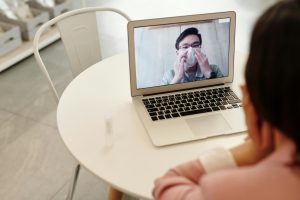
Those numbers declined sharply once restrictions eventually started easing, but the convenience of virtual care showed its potential as a viable option. This potential is especially true for telehealth medical marijuana appointments, where a qualifying condition is needed to obtain a medical marijuana card.
Patients can chill at home in the comfort of their couch without having to drive to a doctor’s office or sit uncomfortably in a waiting room — two major hindrances to patients already dealing with pain and disabilities. Online medical marijuana evaluations get booked relatively quickly, with no long periods of waiting around for the appointment to come (another major bonus).
Telehealth medical marijuana laws keep changing, even in 2025. Some states continue expansion of their programs, making them more accessible to more patients, while others restrict and undo progress for medical marijuana access.
The classification of cannabis as a federally illegal Schedule I drug continues to clash with the sovereignty of states to develop and institute their medical marijuana programs in the ways that they see fit. This factor alone still makes it difficult for patients in 2025 to access compassionate care, depending on the state in which they reside.
Many states still require in-person consultations, while others, like Hawaii, refuse to permit the idea of allowing online medical marijuana evaluations within their borders. The medical marijuana industry still shows no signs of letting up (regardless of any pushback), with sales expected to reach $15.6 billion by 2026.
There are still, somehow, only a select group of states nationwide that let patients utilize the convenience of a telehealth medical marijuana appointment. Let’s take a look at each one’s medical marijuana telehealth rules in 2025.
Alaska allows patients to get a mandatory authorization from a healthcare provider licensed in the state via telemedicine, but only for renewals.
Online medical marijuana certifications are only allowable for renewals, according to the official state of Arkansas website.
Physicians licensed in Arizona can examine and diagnose patients as qualified online as per SB-1319, passed in 2017. Arizona also permits telemedicine medical marijuana renewals.
The medical board of California requires verbal and written consent from patients before they participate in a telemedicine appointment for providing a written recommendation for a qualifying medical marijuana condition. An examination consisting of a self-screening checklist or questionnaire must be established before the recommendation is granted.

A leader in cannabis progression in the U.S., Colorado never renewed its emergency telehealth declaration during COVID. Medical patients must see a practitioner in person for all things medical card-related—telehealth is no longer allowed.
Physicians, physician assistants, and advanced registered nurse practitioners in Connecticut are permitted to utilize teleservices to issue a written certification to a qualified patient, as well as any care afterward. HB-6768 codified these rules into state law in 2023.
Delaware made telehealth appointments into law courtesy of the Telehealth Access Preservation and Modernization Act of 2021. This law allows qualifying evaluations via telehealth appointments.
According to the Office of Medical Marijuana Use—the governing body of Florida’s program— telehealth may only be used for recertifications and not the initial visit to determine eligibility. Patients who change qualified physicians must also do an in-person visit again instead of telemedicine.
The state of Georgia has a strict cannabidiol (CBD), low-tetrahydrocannabinol (THC) program. This program considers conducting a telehealth appointment without a prior in-person physical examination to be “unprofessional.” Telemedicine is, however, available for subsequent visits.
Illinois state law first requires an in-person physical examination for any prospective medical marijuana patient before their card is issued. Telehealth recertification renewals or follow-ups take place after the initial visit. The state exempts veterans from an initial in-person visit, allowing them telehealth access right off the bat.
Iowa’s very restrictive medical marijuana program allows for online medical marijuana evaluations for its CBD-based, low THC program, despite legislative efforts to increase oversight on the online medical marijuana evaluation process.
Certified clinicians in Louisiana can recommend “therapeutic marijuana through telehealth” per state law.
The Maine Medical Use of Cannabis Act allows providers to grant initial and follow-up written certifications for medical marijuana via a telehealth MMJ evaluation.
The state of Maryland considers an already existing medical provider–patient relationship as a “bona fide relationship” that can utilize online medical marijuana evaluations for any visit, including the initial certification. The state rules surrounding telehealth also permit phone calls as an alternative to video.
A waiver must be completed by Massachusetts health providers wishing to utilize telehealth. Once a health provider gets authorized, they can use telehealth for medical marijuana evaluations, including initial patient certifications.
Minnesota Executive Order 20-26 is still in effect in Minnesota. The order from Governor Tim Walz authorizes patient allowance for foregoing an in-person visit and use of “videoconference, telephone, or other remote means” for the initial certification and state-mandated follow-up consultation.
Initial certifications and any necessary follow-up appointments for patients in Missouri seeking a telehealth medical marijuana appointment are allowable by state law. Physicians can perform an online medical marijuana evaluation, provided all certification questions are answered without the need for an in-person visit.
Patients must have a previously established patient–provider relationship before any telehealth appointments take place, according to Montana state law. The initial evaluation, whereby the provider issues a written certification, is no longer done through a telehealth visit. A phone call, videoconference, or any other telecommunication method constitutes an acceptable means of telehealth.

The state of Nevada is an early adopter of telehealth services, with expansion legislation dating back to 2015. Online medical marijuana evaluations and certifications are fully allowable by law in Nevada
State law in New Hampshire mandates that the initial in-person examination of a potential medical marijuana patient for a written certification can’t be conducted through telemedicine. Follow-up visits and recertifications may use online telemedicine services.
The State of New Jersey’s medical cannabis health providers’ frequently asked questions page confirms that providers “may use telemedicine to conduct an evaluation, to make a diagnosis, and to manage the treatment of their patients’ qualifying condition(s).”
Prospective patients in New York State can become certified patients via a telemedicine medical marijuana evaluation. The state has also eliminated its list of qualifying conditions in place of the physician’s personal recommendation.
Recent legislative changes benefit medical marijuana patients residing in North Dakota. Patients may now use telehealth medical marijuana appointments for their initial evaluations, removing the old mandate requiring an in-person visit.
The Ohio Department of Commerce rule for patients seeking a medical card in the state dictates that an in-person or telemedicine visit is required with a healthcare professional once per year at a minimum.
Health providers in Oklahoma are permitted to see patients through an online medical marijuana certification; however, a relationship must be established prior to. This initial “bona fide” relationship establishment is permitted through telehealth as well.
Telemedicine appointments for medical marijuana aren’t permitted for obtaining an initial written certification as per state law.

The State of Pennsylvania’s official government website confirms that telemedicine is available to medical marijuana patients for card certification through teleconference or phone.
An initial written certification in person remains required for obtaining a medical card in Rhode Island due to the physical exam portion of the evaluation, as per state law. Mandatory follow-up appointments remain permissible via a teleconference.
A pre-existing patient-provider relationship remains a prerequisite to using telemedicine in Texas for anything health-related, including medical marijuana. New additions to Texas’s list of qualifying conditions include chronic pain. This new qualifying condition also created a new mandate that the physician doing the evaluation online must document and submit a reason why the visit wasn’t in-person.
Applicants seeking a medical marijuana card in Vermont can use telehealth. Providers must complete a Health Care Professional Verification form as part of the entire application process.
Certified and eligible practitioners in Virginia can conduct telehealth medical marijuana assessments and certifications through “real-time interactive audio-visual technology”.
Washingtonians can only use telemedicine for renewals or any subsequent examinations after the initial certification is completed in person. The law also states a requirement of the burden of proof for why the patient can’t be seen in person for any subsequent examinations.
COVID-era allowances still allow for telemedicine medical marijuana evaluations in Washington, D.C. Patients and physicians must, however, already have a bona fide established relationship beforehand.
Potential patients in West Virginia can still receive their medical card certification courtesy of an online telehealth MMJ evaluation. The West Virginia Office of Medical Cannabis provides a list of telehealth companies on its site, which also includes Veriheal.

Many of the steps for obtaining a telehealth MMJ evaluation are still the same process as they started; however, some states allow for a little bit more leniency for qualifying conditions. The first thing a potential patient must do is establish their eligibility according to the state that they live in’s list of qualifying conditions.
What has changed in this area is that some states now allow it up to the healthcare practitioner’s personal discretion of whether medical marijuana is right for a patient. This discretion isn’t beholden to the state’s list of qualifying conditions. Some states, like New York, have completely eliminated their list of qualifying conditions in place of direct physician discretion to recommend on a patient-by-patient basis.
Consult the list above for states that allow telemedicine, and if allowed, sign up on a state-licensed, HIPAA-compliant telemedicine platform like Veriheal to get started. Appointments include a safe and secure discussion about your medical history and needs, along with what conditions you may have that qualify. Telehealth MMJ evaluations typically don’t take a long time, and don’t get you stuck in traffic on the way home either!
READ: Let’s Talk About Telehealth and the Future of Medical Cannabis
Licensed and registered health practitioners run the risk of losing their licenses should they not uphold the rules and regulations regarding telemedicine in their respective states. Patients must also remain truthful in their history and personal information while not running the risk of violating any of their state’s respective rules and laws concerning telemedicine medical marijuana evaluations.
When it comes to a telehealth practitioner and medical marijuana, another important distinction is using the term “recommended” instead of “prescribed.” Practitioners use “recommendation” as a safe legal term because cannabis remains federally illegal as a Schedule I drug.
Yes, it is still legal in many states to obtain a medical marijuana card online in 2025. Despite many states having individual statutes regarding medical marijuana and telehealth, several states allow for it.
Several states now allow doctors to conduct initial medical marijuana evaluations electronically via telehealth appointments. However, many states still require patients to complete an initial in-person physical evaluation or establish a prior patient–physician relationship before an online medical marijuana evaluation can take place.
Colorado is famous for being the first state in the nation to allow for adult-use cannabis to be legal within its borders. It’s also infamous for removing the emergency declaration for telehealth medical marijuana evaluations it established during COVID back in July of 2021.
Telehealth for medical weed is still legal, but it depends on what state you live in. Consult the list above and see what your state’s current status is regarding telehealth medical marijuana evaluations.
Before COVID, regulators kept everything cannabis-related— including medical marijuana—behind lock and key and under the highest standards and scrutiny.
While that trend and stigmatization continue in many aspects of cannabis culture, medical marijuana is somewhat more accessible during and after COVID. Telehealth evaluations became a normal option for patients, while delivery and curbside pick-up of cannabis remain as convenient options that didn’t exist very much before 2020.
Patients who already have the necessary certifications their respective states demand for a medical card get less pushback when it comes to recertifying their cards through a telemedicine appointment. Many states mandate an existing “bona fide” relationship with a healthcare provider before being certified initially. Renewals for medical marijuana cards in states that allow telemedicine typically aren’t subject to quite as much scrutiny. Check your local state laws to confirm.
Sign up for our newsletter

Learn the process in your state
All Rights Reserved Veriheal Inc. ©
Terms Privacy Policy Advertising Agreement Content Disclamer


Get your medical marijuana card today
Sign up in under 5 minutes
Start By Selecting Your State
 Alabama
Alaska
Arizona
Arkansas
California
Colorado
Connecticut
Delaware
Florida
Georgia
Hawaii
Idaho
Illinois
Indiana
Iowa
Kansas
Kentucky
Louisiana
Maine
Maryland
Massachusetts
Michigan
Minnesota
Mississippi
Missouri
Montana
Nebraska
Nevada
New Hampshire
New Jersey
New Mexico
New York
North Carolina
North Dakota
Ohio
Oklahoma
Oregon
Pennsylvania
Rhode Island
South Carolina
South Dakota
Tennessee
Texas
Utah
Vermont
Virginia
Washington
West Virginia
Wisconsin
Wyoming
Puerto Rico
Alabama
Alaska
Arizona
Arkansas
California
Colorado
Connecticut
Delaware
Florida
Georgia
Hawaii
Idaho
Illinois
Indiana
Iowa
Kansas
Kentucky
Louisiana
Maine
Maryland
Massachusetts
Michigan
Minnesota
Mississippi
Missouri
Montana
Nebraska
Nevada
New Hampshire
New Jersey
New Mexico
New York
North Carolina
North Dakota
Ohio
Oklahoma
Oregon
Pennsylvania
Rhode Island
South Carolina
South Dakota
Tennessee
Texas
Utah
Vermont
Virginia
Washington
West Virginia
Wisconsin
Wyoming
Puerto Rico