Your medical cannabis journey simplified: find partnered dispensaries, explore pricing options, earn rewards, and get answers to FAQs, all in one spot.
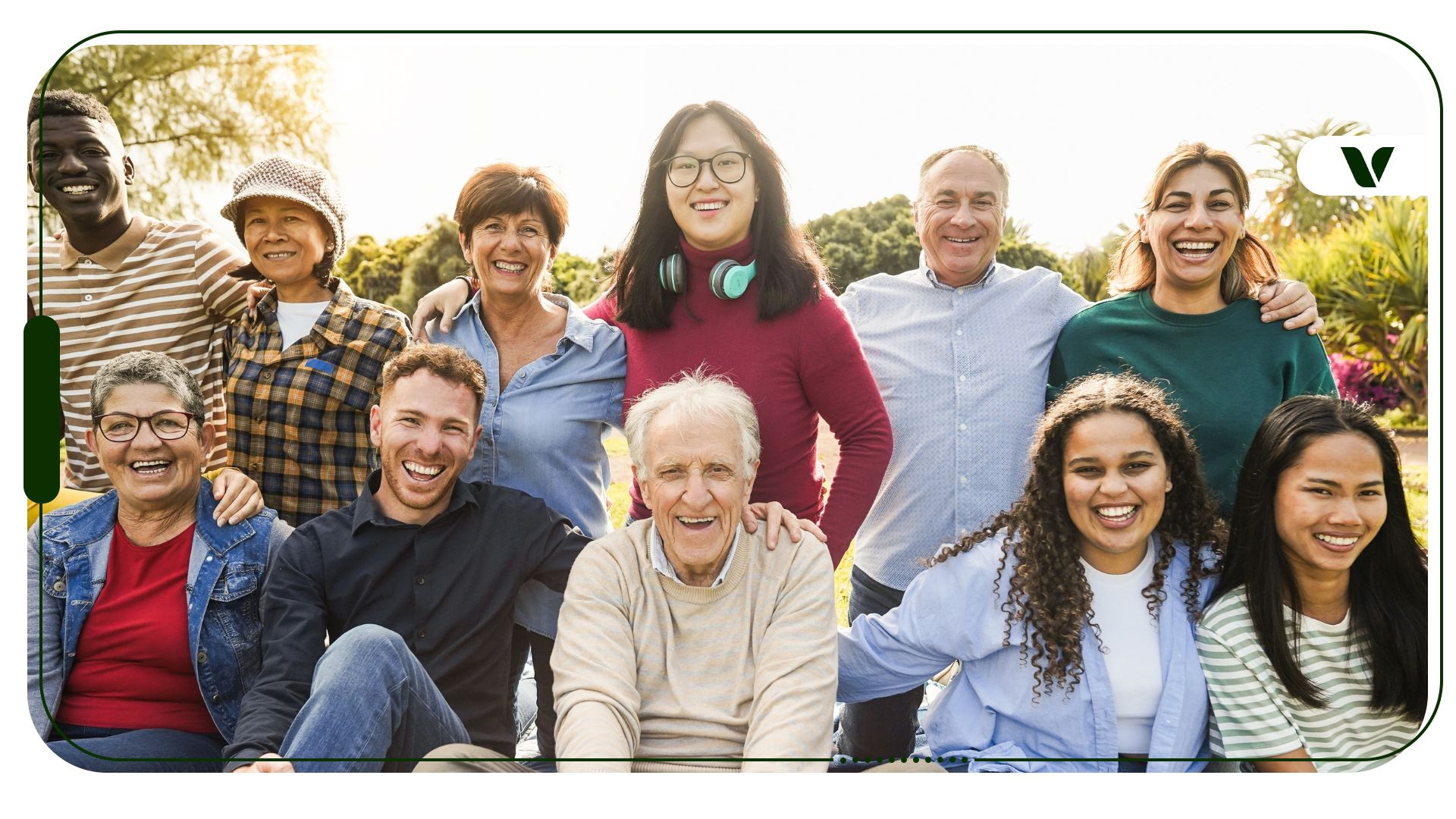
In literature, “found family” is one of the oldest and most common tropes used across genres. It’s seen in TV shows like Friends, Star Trek, and Stranger Things, as well as popular books such as Harry Potter, Percy Jackson, and The Lord of the Rings.
Found family isn’t limited to stories, though – it’s also increasingly prevalent in real life. Essentially,a found family forms when people with no blood ties build deep, unbreakable bonds that transform their lives. These relationships may develop through friendships, workplaces, school, or other situations that unite people against hardships as a unit.
These bonds are life-altering, much as blood family can be, too. Sometimes, people create a found family in response to the absence of a strong biological family unit, a pattern often seen among LGBTQ+ people and other marginalized communities.
With the holidays drawing closer, the found family becomes even more important. Many people don’t have traditional families or homes to return to, so they rely on their chosen loved ones for companionship. At one time, people viewed this as unusual — but now, they recognize and accept it as a much more common way to celebrate.
What Does “Found Family” Really Mean?
As we mentioned a moment ago, a found or chosen family refers to a group of people who define their bonds without relying on genetic ties. Instead, they willingly decide to be in each other’s lives, providing deep emotional support, safety, and love.
But while the definition may be basic enough, the actual ramifications of those ties go much deeper.
People who rely on a chosen family — whether they’re fictional characters, people estranged from blood relatives, or those who have moved far from their hometowns — value those relationships as highly as many others value their biological family bonds. They aren’t just a replacement for family; they are family. They’re people to fight for and show up for again and again with no expectations of owing one another.
One need only look at an example like Guardians of the Galaxy to understand why the found family is so important. In those movies, an unlikely group of characters from wildly different backgrounds end up working together through strange circumstances. They all lack traditional families, whether by death or trauma, leaving them to traipse through the stars as solo acts at the start of the story.
After coming together, they argue, disagree, and screw up countless times – only to find that, despite it all, they do truly care for each other. Their bonds become so strong that they will risk pain and death to help one another out, finding common ties in their life stories that help them relate to each individual member of the group.
These stories have become popular for a reason: many of us need them. Countless people across the globe feel isolated and alone, yearning for the bonds that only genuine, shared love with others can provide. As community becomes harder to find in an increasingly online and polarised world, found family offers a solution to the feeling that so many of us struggle with every day.
The Queer Roots of Chosen Family
It’s easy to argue that the LGBTQ+ community has embraced the love of the found family more than any other group.
Although society is more accepting of gay and nonbinary people than it once was, there is still a long way to go. The current political administration has made transgender people a target, creating an environment for fear and hate to thrive. Every year, LGBTQ+ people still die at the hands of those who believe they shouldn’t exist. Sometimes, those people are their own biological family members.
Even queer people with well-meaning family members may still have to contend with confusion, microaggressions, or urges to be more “normal” when visiting home. It makes sense, then, why LGBTQ+ people advocate so strongly for the bonds of friendship. Those very friends care for them when no one else did, becoming their true family against a world that would rather not have to contend with them.
A huge percentage of queer media highlights their love of chosen family: Rent, The Birdcage, The House in the Cerulean Sea, Six of Crows, The Perks of Being a Wallflower, and Happiest Season, to name just a few. In these stories, the characters’ chosen families stand by them through major life events, holidays, and hardships, becoming not only close loved ones but central parts of their identities.
See If You Qualify For Medical Marijuana -Select Your State!
Select Your State
Alabama
Alaska
Arizona
Arkansas
California
Colorado
Connecticut
Delaware
Florida
Georgia
Hawaii
Idaho
Illinois
Indiana
Iowa
Kansas
Kentucky
Louisiana
Maine
Maryland
Massachusetts
Michigan
Minnesota
Mississippi
Missouri
Montana
Nebraska
Nevada
New Hampshire
New Jersey
New Mexico
New York
North Carolina
North Dakota
Ohio
Oklahoma
Oregon
Pennsylvania
Rhode Island
South Carolina
South Dakota
Tennessee
Texas
Utah
Vermont
Virginia
Washington
West Virginia
Wisconsin
Wyoming
Never miss a post
Get updates on cannabis culture, new research, and expert insights
How Young Adults Are Embracing Found Family Today
The Millennial generation broke the mold on what a traditional family should look like. They are more queer, marrying later, and having fewer children than previous generations. They are unashamed of adopting newer methods of familial relationships, such as coparenting or multigenerational housing. They would rather become a single parent than raise a child in an unhappy home, relying instead on extended family and friends to help create the “village.”
There are a lot of reasons cited for this change in social norms – increased social connectivity, less stigma around mental health treatment, higher standards for dating, etc. – but what’s most important is what it has created. Younger people are prioritizing themselves. They want their relationships to actually enrich their lives, rather than simply exist because of family or work. They choose to surround themselves with people who will help them grow and provide love and support.
Gen Z and Millennials have one more thing in common: they tend to move away from their hometowns. Jobs in small towns have shrunk, prompting college graduates to move to larger cities in other states. Staying connected with loved ones back home is far easier than it used to be, but the farther you go, the harder it is to travel home frequently. As a result, people build their chosen families in their new homes. And if you don’t have a welcoming family to travel back to your hometown for, those friendships become even more vital.
“Friendsgiving” has become an incredibly popular term over the last two decades, referencing a holiday gathering of friends rather than family. Many people are adopting it as a separate holiday, but others have fully embraced celebrating with friends over a traditional Thanksgiving meal. Additionally, flying and traveling can be prohibitively expensive around the holidays, leading to a rise in Christmas parties with friends.
These new traditions may seem lonely to people who like being with their families – but to those who don’t have that option, it’s a beautiful, fulfilling replacement that provides just as much love.
What Found Families Teach Us About Love, Community, and the Holidays
Family comes in all shapes and forms. Sometimes, people of different ages, races, genders, or sexualities form a found family simply because they share a job or a common interest. Other times, it forms from a deep shared love for a subculture like cannabis, gaming, or music.
One thing they all have in common is mutual love and respect. When you remove the obligation that comes with blood family, you open yourself up to surrounding yourself with people who not only accept you but also understand you.
It’s easier to be vulnerable and open with people who don’t have their own preconceived notions about what your life should look like. They will love you despite your career, your slip-ups, or that time you broke that family heirloom. They embrace your sexuality, your style, and your hobbies.
Found family allows people the freedom to build traditions that are more suitable for their needs, like potlucks, regular movie marathons, or volunteer days. If you want a Christmas that involves smoking trees as well as looking at them, there’s a group out there for you. If you want to take a week off work to play Dungeons and Dragons, your friends will be right there with you.
The found family structure has a host of benefits, particularly for those living far from home. It helps establish stability and a connection to the local culture, which makes adding to the community more fruitful. It gives you people to call when your car breaks down or you need someone to feed your cat.
Through it, we can learn to fully embrace the uniqueness of ourselves and others. We show up through triumphs and failures, accepting without judgment. We give to people who may not always be able to return the favor, simply because we care.
For a long time, the platonic love of friends was viewed as “lesser” to that of family – but we now know that’s not true. Friends can become irrefutable pieces of our lives, helping to raise our children, provide a couch to crash on in tough times, or pick us up from the hospital after surgery. They are there when life seems too difficult to stomach alone, making the daily grind not only manageable but fun.
In the end, the value of a found family lies in its intentionality. These are the people who choose us, who show up, stay present, and build a life with us – not because they’re expected to, but because they genuinely care.
As the holidays approach, it’s worth remembering that family isn’t defined by shared DNA or tradition. It’s defined by love, safety, and the people who make us feel at home in our own skin. For anyone navigating distance, grief, conflict, or simply a new path, the bonds of a chosen family can be just as real, steady, and life-giving as any we’re born into.
Emily is a Denver-based transplant from Virginia who is passionate about substance use harm reduction, yoga, and music. She writes and edits to support the extravagant lifestyles of her pug and cat. When she's not writing, she can be found doing flow and aerial arts or browsing flights to faraway places.
According to 2020 data from the Centers for Disease Control (CDC), 14.5% of adults have trouble falling asleep most days, while 17.8% have trouble staying asleep. Other reports estimate that 50 to 70 million Americans have sleep disorders, and roughly 84 million don’t regularly get enough sleep to stay healthy. This widespread lack of sleep…
In a safe and perfect world, everyone who needs cannabis could go to a dispensary and buy safety-tested products from licensed producers. Unfortunately, we are far from living in a perfect world. Despite most states recognizing that cannabis has therapeutic potential, it’s not an easily obtainable substance for many. Many people in states without legal…
Bongs are more than just glass pieces: they’re precision tools that shape every cannabis hit. Unlike other marijuana smoking methods like joints or pipes, bongs use water to cool and filter smoke. This process transforms hot, harsh inhales into smoother, tastier, more customizable draws. However, a bong’s size, along with its other features, plays a…
For many, dating today feels more challenging than ever. The competition is fierce, with many having to fake it to match the expectations and preferences of a limited pool of potential partners. The question that you need answered today is whether your cannabis use might be sabotaging your chances at romance. Sadly, it just might….
More people are talking about mast cell activation syndrome (MCAS) now than ever. The condition, marked by unexplained bouts of symptoms like swelling, diarrhea, vomiting, flushing, and itching, scientists only gave the condition a modernized classification and diagnostic criteria when they gathered at a special conference in 2010. Despite increased conversation around the condition through…
The statements made regarding cannabis products on this website have not been evaluated by the Food and Drug Administration (FDA). Cannabis is not an FDA-approved substance and is still illegal under federal law. The information provided on this website is intended for educational purposes only and is not intended to diagnose, treat, cure, or prevent any disease. It is not intended as medical advice and should not be considered as a substitute for advice from a healthcare professional. We strongly recommend that you consult with a physician or other qualified healthcare provider before using any cannabis products. The use of any information provided on this website is solely at your own risk.