Your medical cannabis journey simplified: find partnered dispensaries, explore pricing options, earn rewards, and get answers to FAQs, all in one spot.
June 25, 2025 02:48 pm ETEstimated Read Time: 7 Minutes
The Mile High City has a reputation. Walk through any Denver neighborhood, and you’ll pass at least one dispensary, step over at least one trampled Zig Zag wrapper, and may catch a faint skunky smell coming from somewhere nearby.
This pervasive presence is no accident: 2025 marks thirteen years since Amendment 64 officially legalized recreational cannabis use in Colorado, with medical marijuana dating back even further, 25 years to the 2000 election. So, yes, while “Mile High” refers to the city’s elevation above sea level, the moniker has become an equally apt nickname for a foundational city in American cannabis history.
But what began as a grassroots movement for freedom and healing has transformed into something far less idealistic. Beneath the front of a booming industry, the cannabis market in Colorado is showing signs of deep structural strain. Intense competition and shifting economic pressures have driven down prices, leading to precarious business models, questionable labor practices, and standards of production that are inconsistent, if not outright problematic.
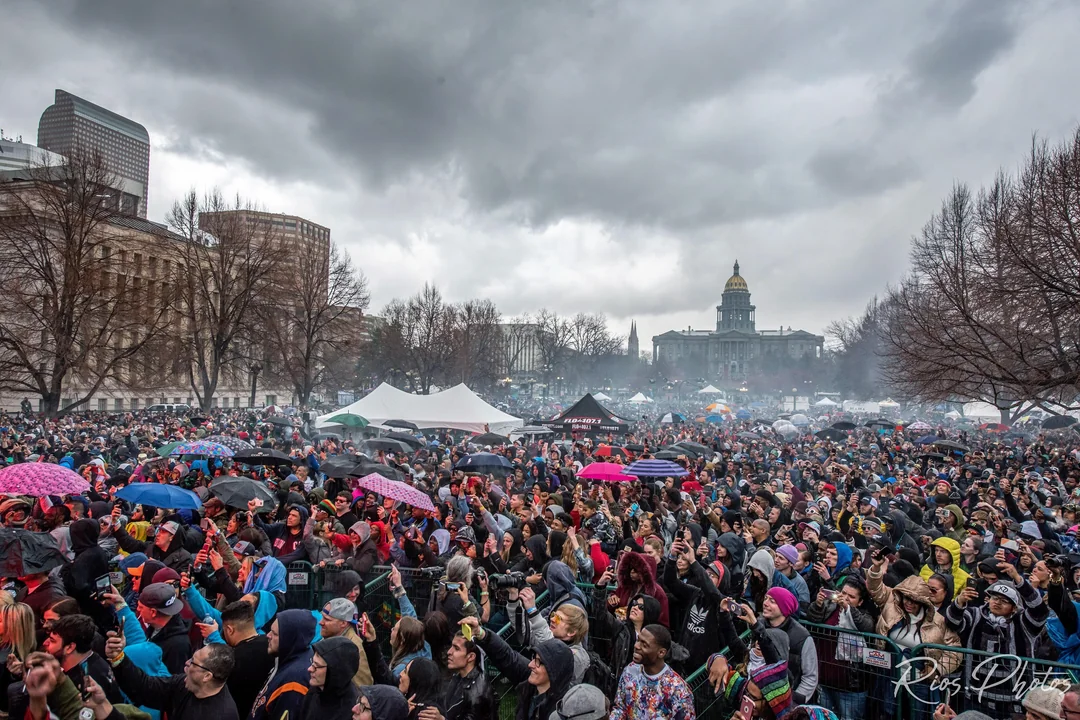
This past April, the Mile High 4/20 Festival — once an open-air demonstration of unapologetic advocacy — charged its attendees an entry fee for the first time, a stark symbol of how far Denver’s cannabis scene has strayed from its founding principles.
This transformation is inextricably linked to the underground story of one of the city’s most foundational figures: Ken Gorman. Long before the gleaming dispensaries and commercialized festivals, Gorman was the relentless, unapologetic force behind Colorado’s cannabis activism, famously organizing the very first 4/20 “smoke-ins” that laid the groundwork for everything that followed.
Yet, as the industry he helped birth expands and thrives, the chilling mystery of his unsolved murder—a crime that unfolded amidst his unwavering advocacy—casts a long-ignored shadow over Denver’s celebrated “green rush.”
Patient-First Activism Cost Ken Gorman His Life
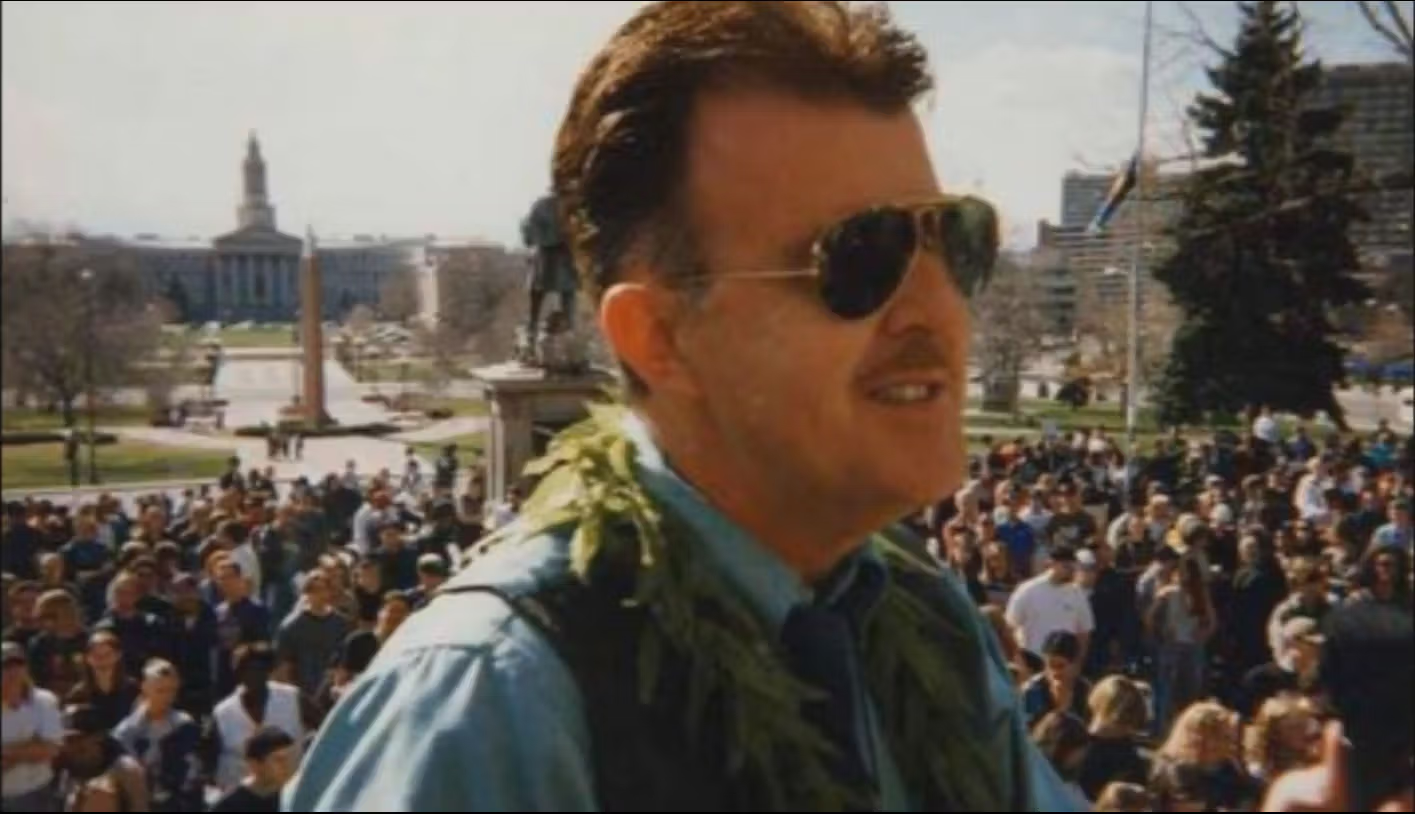
Ken Gorman at the 2006 4/20 Rally in Denver | Photo courtesy of KenGorman.org
A Denver native and Vietnam veteran, Gorman’s life took a defining turn after he was fired from his air traffic controller job by Ronald Reagan in 1981. This experience, coupled with his discovery of Jack Herer’s “The Emperor Wears No Clothes” in 1992, ignited a lifelong dedication to revealing the truth about cannabis.
But he didn’t just advocate: he demonstrated. Gorman became notorious for openly advertising marijuana on the back page of foundational Denver publication Westword with audacious ads like “MARIJUANA – FREE DELIVERY – NO COPS – NO JOKE.” He also spearheaded the annual 4/20 “smoke-ins” on the State Capitol lawn, transforming them from small gatherings into a powerful symbol of civil disobedience, laying the groundwork for Denver’s current Mile High Festival, the world’s biggest open-air 4/20 celebration.
In 1999, Gorman knowingly sold three pounds of marijuana to a police informant who claimed to be buying it for medicinal purposes. As a result – and a statement against prohibition – Gorman served over three years in jail and an additional two years wearing a monitoring ankle bracelet.
After Colorado voters passed medical marijuana in 2000, Gorman, a caregiver himself, became instrumental in pioneering the system. He tirelessly signed up patients and other caregivers to increase access to medical-grade cannabis, without losing sight of the vision of full legalization for everyone. (He even ran for Colorado governor twice, earning the affectionate nickname, “Governor Pothead.”)
In 2006, Gorman’s activism took a deadly turn when he agreed to meet with a 19-year-old who had contacted him through an anonymous internet forum. Unbeknownst to Gorman, the teenager, J. David McSwane, was working undercover for Channel 4 News. McSwane had hidden a recording device in his day planner and captured Gorman sharing how the “nebulous language” of Amendment 20 could be leveraged to grant Colorado residents access to cannabis. Sharing that he was orchestrating a network of “dozens of caregivers and over a hundred patients,” Gorman doubled down on his vision that cannabis should be accessible to everyone – regardless of the letter of the law.
See If You Qualify For Medical Marijuana -Select Your State!
Select Your State
Alabama
Alaska
Arizona
Arkansas
California
Colorado
Connecticut
Delaware
Florida
Georgia
Hawaii
Idaho
Illinois
Indiana
Iowa
Kansas
Kentucky
Louisiana
Maine
Maryland
Massachusetts
Michigan
Minnesota
Mississippi
Missouri
Montana
Nebraska
Nevada
New Hampshire
New Jersey
New Mexico
New York
North Carolina
North Dakota
Ohio
Oklahoma
Oregon
Pennsylvania
Rhode Island
South Carolina
South Dakota
Tennessee
Texas
Utah
Vermont
Virginia
Washington
West Virginia
Wisconsin
Wyoming
Never miss a post
Get updates on cannabis culture, new research, and expert insights
“Everyone has a qualifying condition,” Gorman told McSwane. “It’s just a matter of finding it.
Leaving this meeting, Gorman was confronted by a Channel 4 camera crew. And just six days after the news outlet’s esposé aired, Ken Gorman was shot and killed in his home.
Even beyond the eerie timing, the circumstances of his death were chilling. His recently purchased shotgun was just out of reach. Intruders entered under the guise of robbery but left behind stacks of cash and bags of cannabis. And even 18 years later, the Denver Police Department has made no arrests and has revealed little about the investigation, leaving lingering questions about motive.
Is Denver Losing Touch With Gorman’s Legacy?
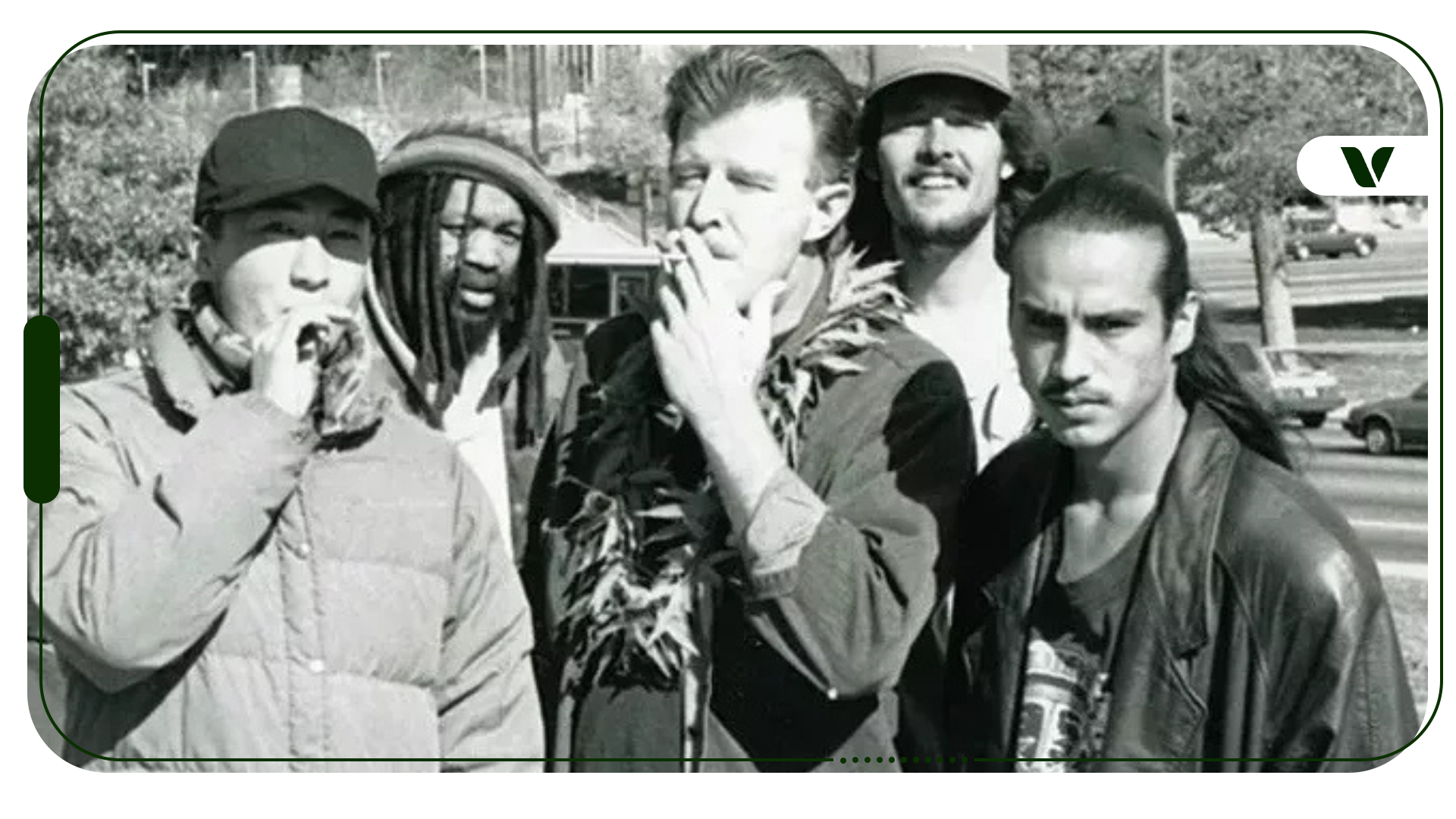
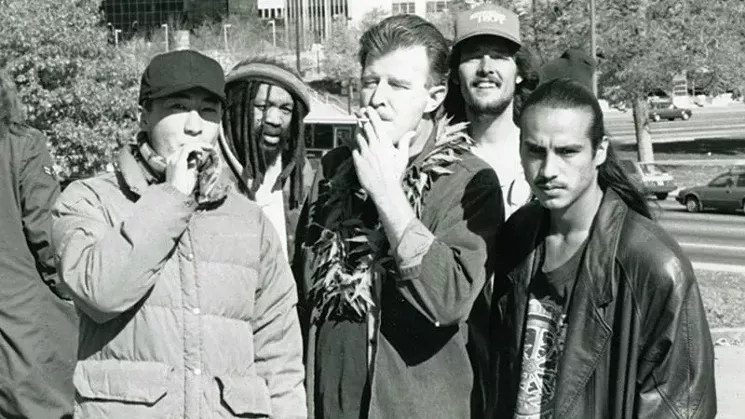
Gorman (center) with fellow cannabis activists | Photo courtesy of KenGorman.org
Gorman’s tireless fight, often waged on the dangerous fringes of legality and ultimately cost him his life. Yet, while Gorman always aimed to “Take the Greed Out of Weed,” Denver’s cannabis landscape has shifted dramatically in the years since his death, now embodying the very corporate greed he opposed. The “green rush” has cultivated a mirage of progress, where profit frequently overshadows integrity and patient welfare.
This insidious transformation is starkly evident in the commercialized 4/20 festival itself. What began as Ken Gorman’s defiant “smoke-ins” — a pure act of political rally — has morphed into a ticketed spectacle, stripped of its protest heart. While the city celebrates tax revenues and pre-rolls on every corner, the cost is clear: the profit-first model is beginning to corrode the industry’s ethical core.
Intense market pressure leads to unsafe labor practices and compromised product quality, with even moldy or pest-infested plants sometimes converted into concentrates rather than discarded. This relentless drive for return on investment creates high-stress environments throughout the supply chain.
Moreover, the promise of accessibility and patient care has been undermined. The state recently doubled the cost of a medical card application, creating a new barrier for patients. Simultaneously, foundational medical dispensaries are struggling, unable to compete in an industry that prioritizes volume and marketing over genuine care.
Miguel Lopez, Gorman’s mentee who worked to keep the origins of the 4/20 fest alive before losing his permit, has observed this shift firsthand. As originally reported by Westword, the “nouveau riche” have turned cannabis into a “commodity,” forgetting the battles fought: “Capitalism has taken it to a level where it isn’t something that he taught us.”
A Cautionary Tale For Legal Cannabis
Photo courtesy of Reddit
Twenty-five years after the state legalized medical cannabis, Colorado’s cannabis story remains complex. The success of legal cannabis in the Mile High City is still under the shadow of what’s been lost. Gorman, who sacrificed his freedom and ultimately his life to “Free the Weed,” remains an enduring symbol of the movement’s radical, patient-first origins.
And yet, his unsolved murder stands as a chilling testament to the dangers faced by those who paved the way, a reminder that some foundational questions about Denver’s cannabis history remain disturbingly unanswered – and maybe, considering the profit-focused shift in Colorado cannabis, intentionally so.
As the industry continues its relentless pursuit of profit, the challenges faced by patients, the questionable integrity of products, and the commercialization of traditions like 4/20 stand as symptoms of a deep disconnect from the very values that made Denver a safe scene in the first place. Denver’s journey into cannabis legalization offers a vital, cautionary tale: without a conscious effort to remember its roots and honor the U.S. history of persecution and discrimination against cannabis and its users, the true spirit of the green movement risks being lost.. The question now for Denver, and for the broader cannabis world, is whether the industry can finally acknowledge its unsettled past, reckon with its present compromises, and forge a future where the profits don’t overshadow the principles.
Kymberly is a Pennsylvania native and soft-hearted crybaby. When she's not searching the racks at the thrift store, Kym can be found rollerblading with her dog, smoking a Dragon Berry Zig Zag, or just goofin' around.
Reclaim edibles are re-purposed leftovers. You see that sticky residue sitting in your dab rig? Take a look, it is there. With a teensy bit of creativity, you can actually transform it into something amazing. The downside? Probably won’t hit exactly like fresh cannabis and won’t taste great either. However, if for whatever reason you…
In the school of life, tetrahydrocannabinol (THC), the most popular intoxicating cannabis compound, is like the popular kid everyone knows by name. The center of attention, always getting talked about, and highly sought after. Cannabidiol (CBD), on the other hand, gets a little less love. It’s more like the quiet honor student: low-key, non-intoxicating, rarely…
In the confusing landscape of state-by-state medical marijuana legalization and federal prohibition lies a patient’s pursuit of a better quality of life, balanced with an unrestricted financial livelihood. In workplaces across many different medical marijuana legal states, no law guarantees that a valid, card-carrying MMJ patient status exempts an employee from termination or discrimination stemming…
An alarming trend has recently come to light: more non-smokers are getting lung cancer than ever before. Given that lung cancer is the most common worldwide and the leading cause of cancer death, you may be worried about the implications of your cannabis habits. How much does cannabis contribute to lung cancer risk? According to…
It feels like every other day, a fresh slang term pops up in the cannabis lexicon, and today, we’re looking at an entry that’s all over TikTok and Reddit – Yart! Spoiler alert: it has everything to do with the humble vape cart (and how challenging it is to talk about cannabis on social media). …
The statements made regarding cannabis products on this website have not been evaluated by the Food and Drug Administration (FDA). Cannabis is not an FDA-approved substance and is still illegal under federal law. The information provided on this website is intended for educational purposes only and is not intended to diagnose, treat, cure, or prevent any disease. It is not intended as medical advice and should not be considered as a substitute for advice from a healthcare professional. We strongly recommend that you consult with a physician or other qualified healthcare provider before using any cannabis products. The use of any information provided on this website is solely at your own risk.