Your medical cannabis journey simplified: find partnered dispensaries, explore pricing options, earn rewards, and get answers to FAQs, all in one spot.
March 22, 2024 08:00 am ETEstimated Read Time: 6 Minutes
Cannabis is an ever-evolving industry, and cannabis users are evolving right along with it. Veriheal regularly surveys its nearly 2 million users to keep up with the changing landscape to learn the what and why behind contemporary cannabis use. We ask patients from all age groups and demographics about their usage patterns, medical conditions, substance history, and more to ensure that we provide a quality service that meets our customer’s needs.
Now, we aim to share that data to help you better understand how Americans are using cannabis for healing, happiness, and relief. In this article, we explore the Baby Boomer generation (those born between 1946 and 1964) and their thoughts, opinions, and views regarding marijuana – as well as what this data tells us about the cannabis landscape as a whole.
Who Is The Baby Boomer Generation?
The Baby Boomer generation, born between 1946 and 1964, is marked by several defining characteristics that have shaped society and culture.
Known for their significant impact on post-war economic growth, Baby Boomers are often associated with values of hard work, ambition, and determination. This generation witnessed transformative social movements such as civil rights and feminism, contributing to a legacy of activism and social change. Additionally, Baby Boomers are recognized for their strong sense of community and loyalty, often prioritizing family and traditional values. As they continue to age, Baby Boomers wield considerable influence in various spheres, including politics, business, and culture – and the cannabis industry.
Report: Baby Boomers Largely Seek Cannabis For Pain Relief
To better understand the relationship between the Baby Boomer generation and cannabis consumption methods, Veriheal surveyed a sample of nearly 10,000 adult medical cannabis patients born between 1946 and 1964 who registered on the Veriheal database between March 1, 2024, and March 1, 2024. While this data represents diverse demographic information, patients surveyed for this report are based within the United States.
TL;DR: Key Findings on Baby Boomer Cannabis Use, Preferences
Over 80% of Baby Boomers prioritize pain relief as their primary reason for using cannabis.
Chronic pain, insomnia, and arthritis are the top conditions Baby Boomers seek relief for. Women are slightly more affected by these chronic conditions than men.
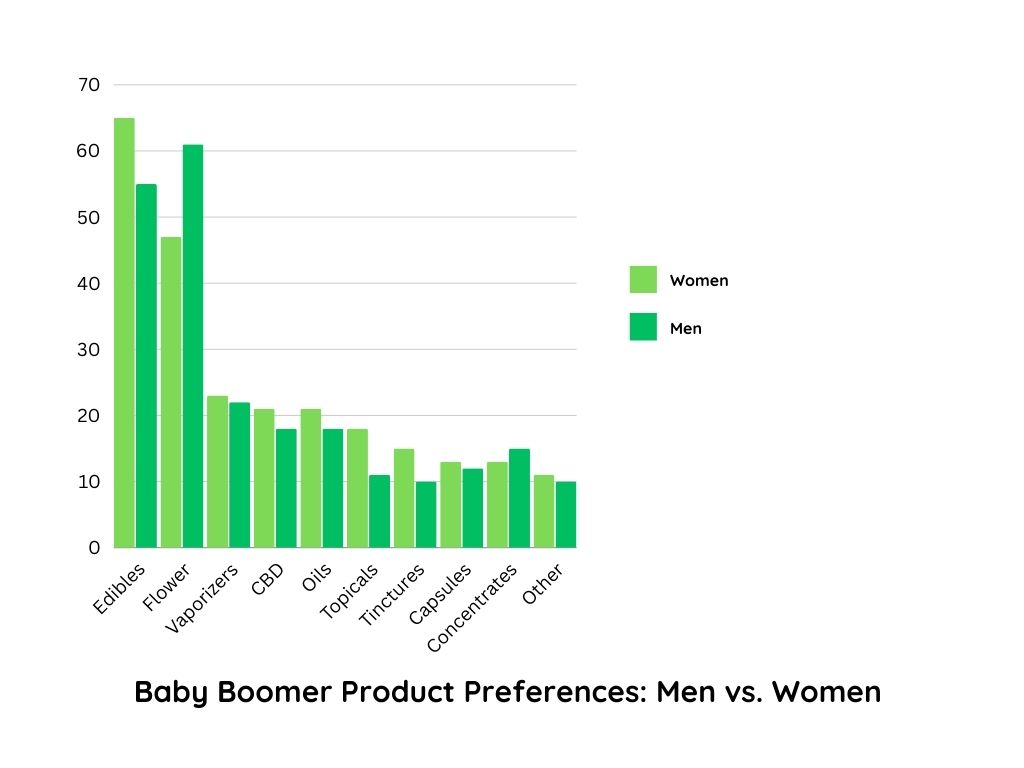
Boomer men generally favor flowers, while Boomer women tend to prefer edibles.
A significant proportion of Baby Boomers have prior experience with cannabis before engaging with platforms like Veriheal.
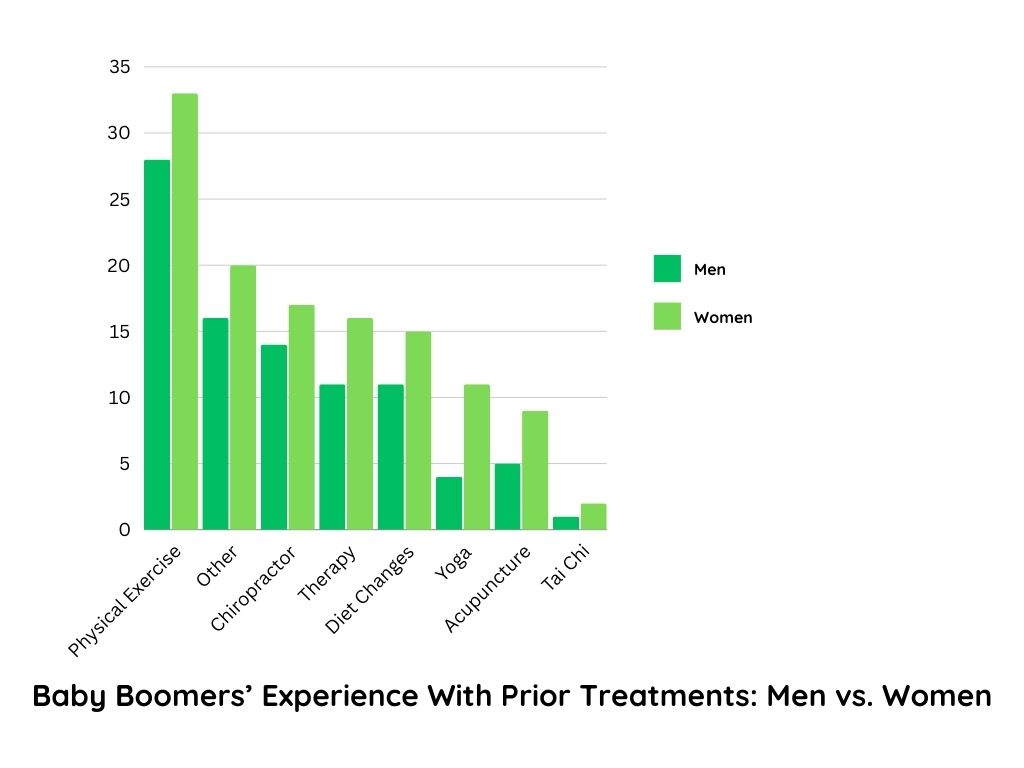
Before turning to cannabis, Baby Boomers often explore alternative wellness treatments such as exercise, chiropractic work, therapy, and dietary changes
How Do Baby Boomers Want to Feel?
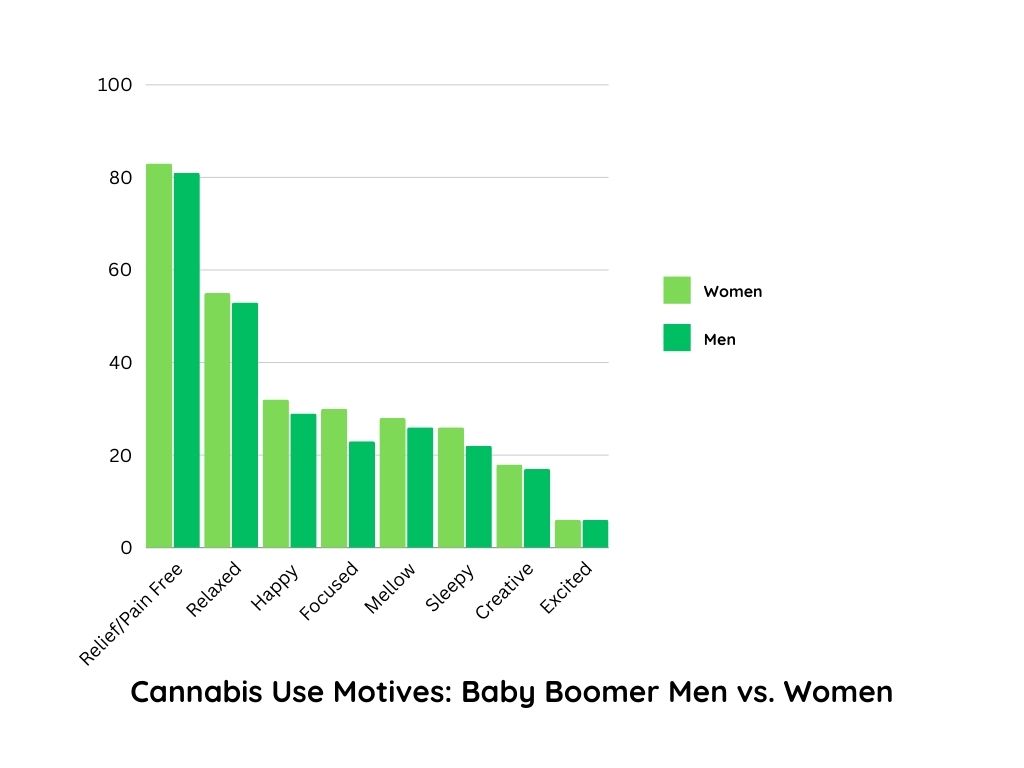
Different generations often pursue cannabis for different reasons. Overall, men and women in this demographic are fairly similar. Most Baby Boomers — over 80% of men and women — want to feel relief from pain. After that, feeling relaxed, happy, chill, and focused wins out over wanting to feel creative, sleepy, or excited.
What Do Baby Boomers Need Relief For?
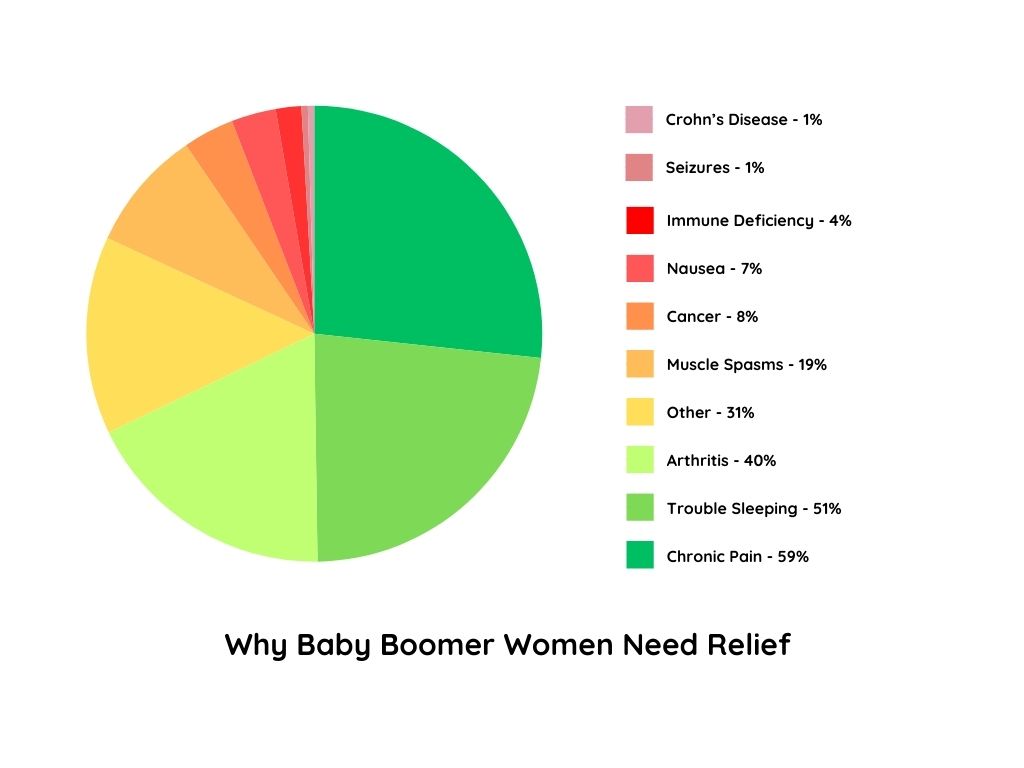
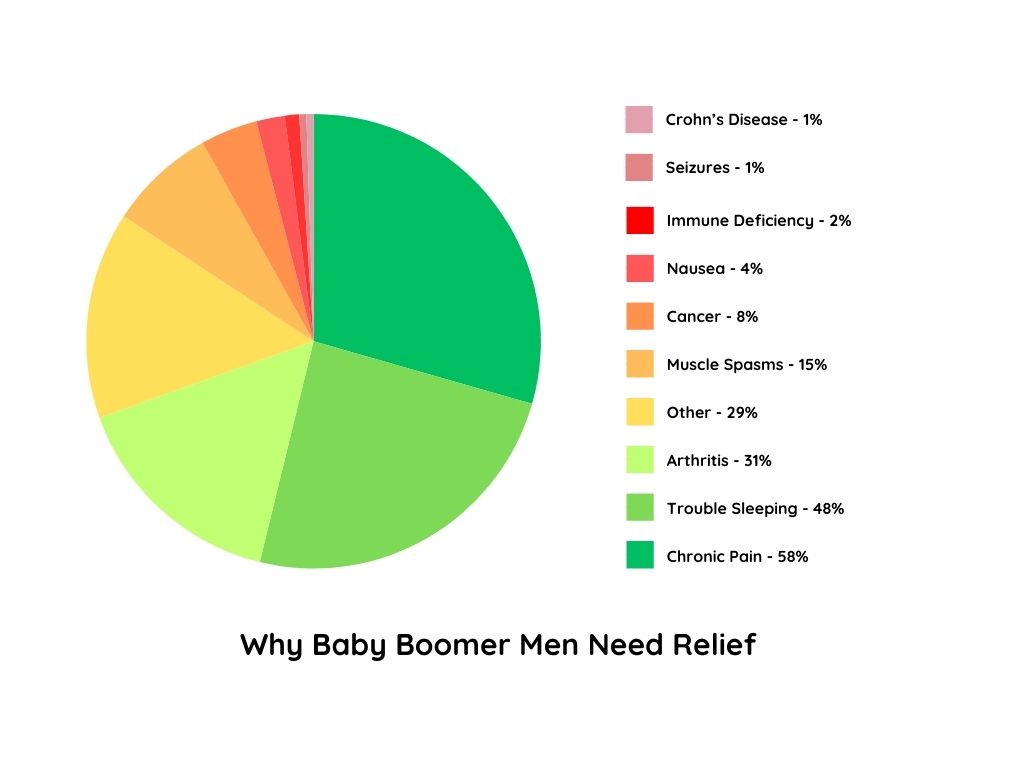
While young people may choose cannabis to feel happy or giggly with friends, Baby Boomers tend to turn to cannabis for relief associated with chronic conditions. Since medical problems often pile up with age, this makes sense–fortunately, CBD and THC can help with a number of these issues.
The top conditions Baby Boomers want relief for include chronic pain, insomnia, and arthritis. Women tend to suffer from these slightly more than men, but these differences are fairly small.
What Consumption Method Do Baby Boomers Prefer?
Interestingly, preferred consumption methods are one of the biggest differences between genders. Men largely prefer flower, while women lean toward edibles. It’s uncertain what causes this divide, but some attribute it to the stigma associated with smoking cannabis, concerns about lung damage from smoking, or simply the desire for longer-lasting relief.
Women are also slightly more likely to choose CBD over THC products, and they turn to concentrates far less often than men. However, both groups will choose vaporizers and oils over topicals, tinctures, capsules, and other forms of marijuana.
How Many Boomers Used Cannabis and CBD Before Veriheal?
On average, older generations like the Silent Generation, Baby Boomers, and elder members of Generation X consume less cannabis than Millenials or Gen Z. A large part of this can be attributed to the harm perpetuated byanti-cannabis propaganda associated with the War on Drugs that was rampant in the latter half of the 20th century.
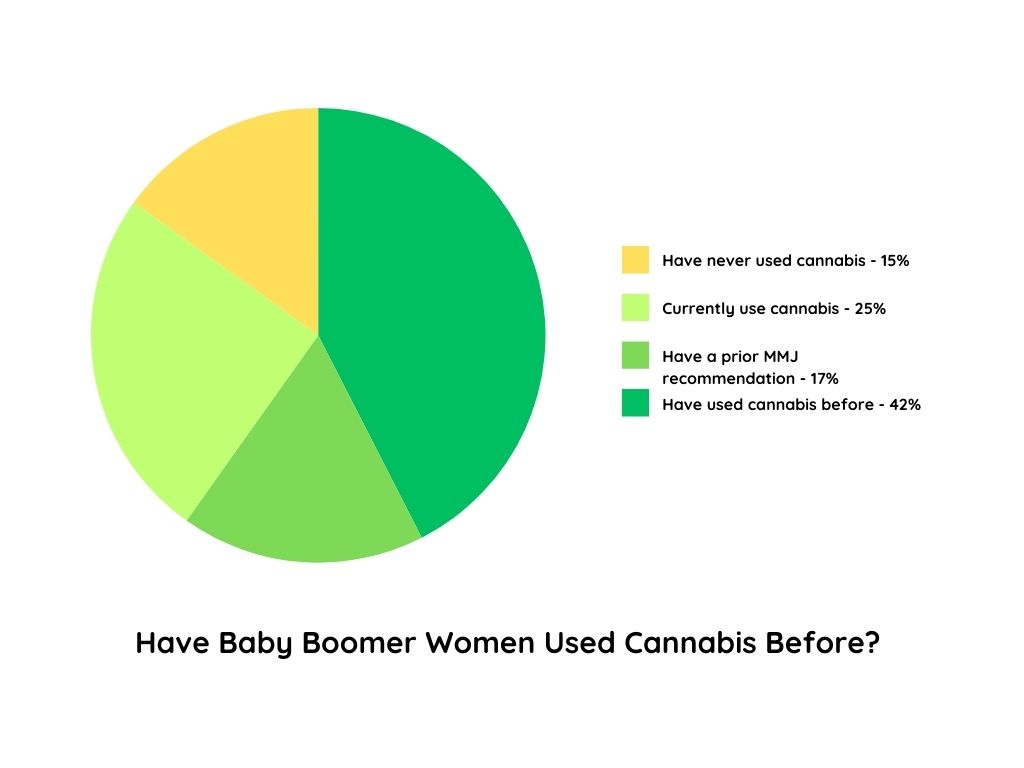
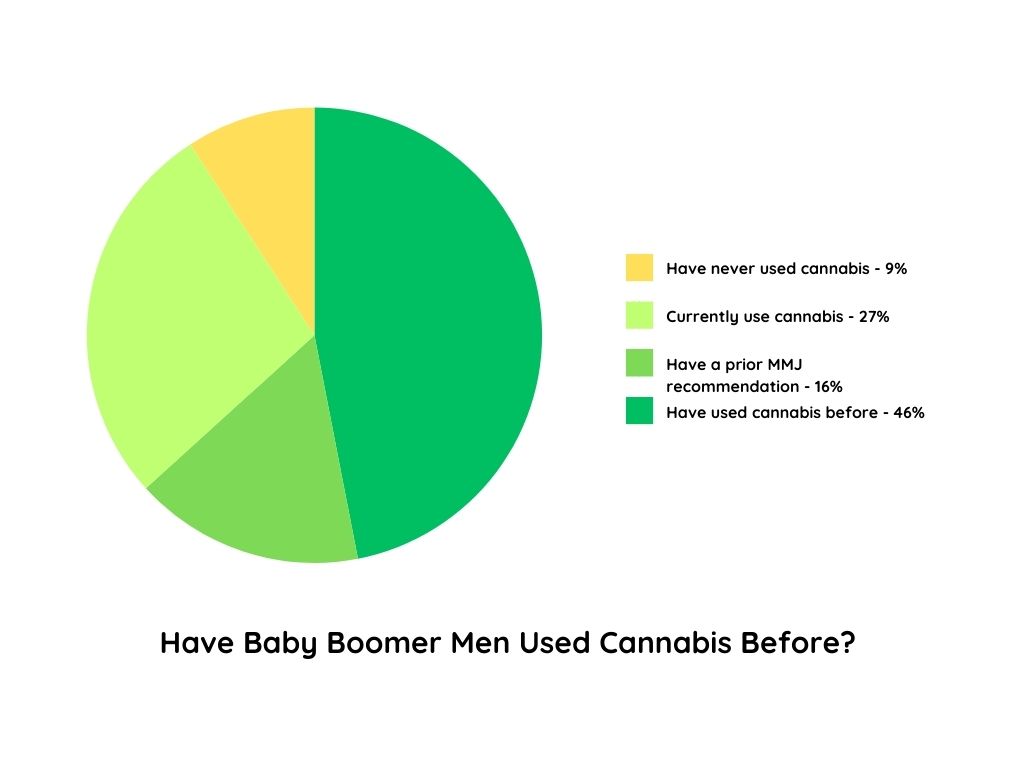
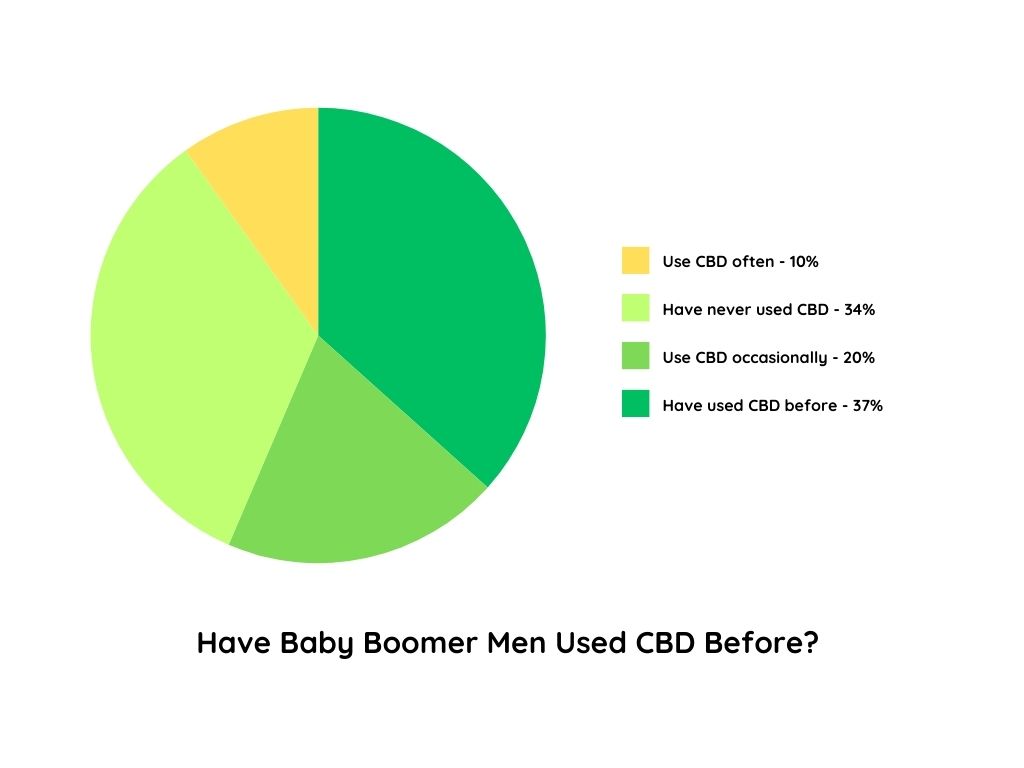
Fortunately, this seems to be changing, albeit slowly. Our responses found that nearly 75% of male Baby Boomers were current or former cannabis users before signing on with Veriheal, and about 68% of women fell into the same category. Additionally, roughly the same amount of men and women (17%) had current or expired recommendations for medical marijuana, showing a clear interest in trying it out for themselves.
Fifteen percent of women had never tried cannabis before, compared to just 9% of men.
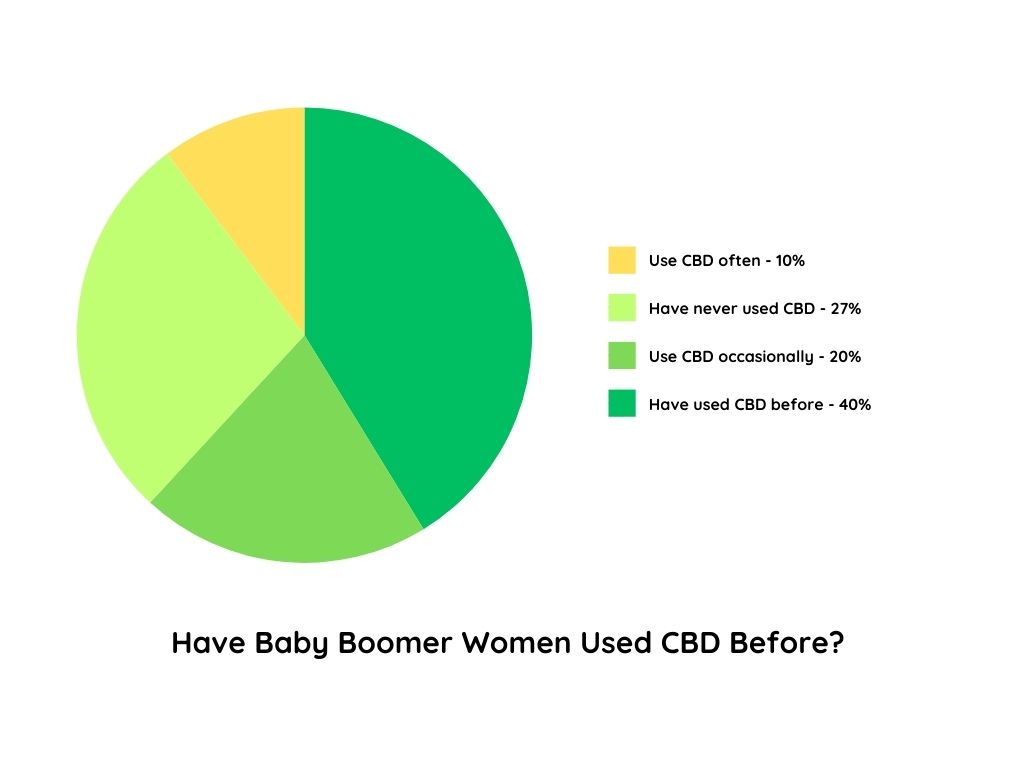
Finally, we found that Baby Boomer women were far more likely to try CBD products on their own. Whether this is due to ease of access or other factors is unclear, but the difference is notable nonetheless.
Did Baby Boomers Try Other Treatments First?
Baby Boomer women are more interested in testing out alternative wellness treatments before turning to cannabis, with exercise, chiropractic work, therapy, and dietary changes leading over yoga or acupuncture. Men, on the other hand, rarely try yoga and acupuncture, instead focusing on exercise, chiropractic work, and diet alterations.
Both groups responded with high percentages of trying other alternative treatments, but these are not listed. However, it could include massages, art or music therapy, sound healing, Chinese medicine, or a wide range of other services.
Final Thoughts:
Despite the subtle differences between Baby Boomer men and women, this generation overall demonstrates a growing interest in using cannabis for relief. Getting older often presents itself with a variety of health concerns, many of which can be alleviated by this plant’s numerous benefits.
Overall, the findings underscore a shifting landscape in how Baby Boomers approach health and wellness, particularly regarding their attitudes toward cannabis and CBD. Despite historical stigma and the lingering effects of anti-cannabis propaganda, there’s a notable openness among Baby Boomers, especially women, to explore cannabis as a potential remedy for chronic ailments.
This shift suggests a growing acceptance of alternative treatments and a willingness to challenge traditional medical paradigms. As society continues to evolve, understanding these changing preferences and behaviors among Baby Boomers becomes essential for healthcare providers, policymakers, and industries catering to this demographic, paving the way for more tailored and effective healthcare solutions
Emily is a Denver-based transplant from Virginia who is passionate about substance use harm reduction, yoga, and music. She writes and edits to support the extravagant lifestyles of her pug and cat. When she's not writing, she can be found doing flow and aerial arts or browsing flights to faraway places.
Oklahoma’s medical-only dispensary market gives licensed patients access to a wide range of cannabis products, but every purchase must follow OMMA rules. This guide explains how to find licensed dispensaries, what identification to bring, purchase and possession limits, product testing, pricing, and what to expect during a visit.
Oklahoma’s advertised $25 medical marijuana card renewal covers the physician evaluation, but patients must also pay a separate OMMA license fee. This guide explains the full renewal cost, reduced-fee eligibility, required documents, online renewal steps, processing times, and the new physician recommendation requirement.
An Oklahoma medical marijuana card provides legal protection under state law, but it can still affect employment, commercial driving, firearms, privacy, and federally regulated situations. This guide explains the main consequences to consider before applying, including workplace drug testing, CDL rules, insurance, housing, and registry privacy.
Getting a medical marijuana card in Oklahoma can be completed online, with no specific qualifying condition required for adult applicants. This guide covers eligibility, telehealth evaluations, required documents, OMMA application steps, fees, processing times, and what patients can do once approved.
A same-day telehealth appointment in Oklahoma can get you a physician recommendation quickly, but OMMA still needs to process your medical marijuana license application. This guide explains the timeline, required documents, costs, and when you can legally visit a dispensary while waiting for the physical card.
The statements made regarding cannabis products on this website have not been evaluated by the Food and Drug Administration (FDA). Cannabis is not an FDA-approved substance and is still illegal under federal law. The information provided on this website is intended for educational purposes only and is not intended to diagnose, treat, cure, or prevent any disease. It is not intended as medical advice and should not be considered as a substitute for advice from a healthcare professional. We strongly recommend that you consult with a physician or other qualified healthcare provider before using any cannabis products. The use of any information provided on this website is solely at your own risk.