1-855-452-6224 (Customer Support Available 24/7)



Finding the correct cannabis dose isn’t always simple. Too little, and you don’t feel relief. Too much, and you may experience unwanted side effects.
Fortunately, that’s where a dosing method called cannabis titration comes in. Titration benefits both new medical marijuana patients and experienced cannabis consumers who want to fine-tune their dosing routine.
In this guide, we’ll break down what titration means, why it matters, and how to do it with different products like edibles, tinctures, vapes, and more.
Cannabis titration means finding your personal “sweet spot” by starting with a low dose and gradually increasing until you reach the desired effect without side effects. Medical marijuana doctors call this method “start low, go slow.” Doctors use titration with other medications to reduce risks and customize treatment.
You can titrate multiple times a day as needed for symptom relief. For example, you might take a small dose in the morning and another later, using the same or different consumption method. You may also switch cannabis strains depending on your needs and the duration of the effects.
Titration is beneficial because everyone responds differently to cannabis. Body chemistry, tolerance, and product potency all play a role. Even two products with the same THC (tetrahydrocannabinol) percentage may affect you differently.
Titrating cannabis helps you manage symptoms more effectively by giving your body time to respond before increasing your dose. This makes it easier to find the amount that delivers consistent relief with a specific product. It also reduces trial-and-error, lowers the risk of overconsumption, and helps you avoid side effects like anxiety, dizziness, or sedation.
Your tolerance, health, and lifestyle may change, but titration allows you to adapt your dose accordingly. Regular marijuana use can raise your tolerance, which means you may need to adjust your dose on occasion, even for products you use regularly. Instead of chasing effects or relying on guesswork, titration builds a personalized routine that works with your body, not against it.
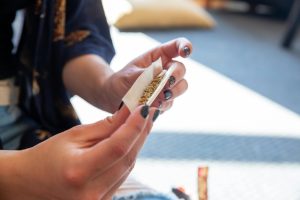
The golden rule of cannabis titration is simple: start low and go slow. Begin with the smallest dose possible, based on your consumption method, and increase only after giving your body time to react to the full effects.
Keeping a journal makes this process more effective. Track your products, doses, and effects, and note onset and duration, since each product and cannabis method works differently.
Working with a cannabis doctor can further help you titrate. They can help interpret results, adjust dosing, and choose the right products through services like Veriheal’s personalized cannabis consultation.
Some medical marijuana patients benefit from dosing and adjusting their cannabis use at different times of day. For example, if you need symptom relief in the morning, you might start with a small dose of a sativa-dominant strain to promote focus and energy while still relieving symptoms. As the day progresses, you can titrate additional doses as needed, always starting with a low dose and reassessing after feeling peak effects before taking more.
In the evening, your needs may shift. Many patients transition to a hybrid or indica strain to support relaxation, more intensive pain relief, or sleep. This kind of day-long titration helps you match cannabis to your schedule and goals.
Each cannabis product absorbs differently in the body, so titration varies significantly depending on consumption method. Understanding the onset, duration, and potency of each helps you plan your titration schedule. You can take cannabis once a day or multiple times, even mixing consumption methods, depending on your needs and how long the effects of your chosen consumption method last.
Edibles take the longest to kick in, especially compared to inhalation methods. Edibles can take 30 to 120 minutes to kick in, and their effects often last 6 to 8 hours or longer.
Start with a microdose—such as 1 to 2.5 mg of THC—and wait at least an hour before deciding if you need more. Avoid stacking edible doses too quickly, since delayed onset can trick you into thinking the product isn’t working as potently.
For daily titration, edibles work well for steady, long-term relief or in combination with other consumption methods. For example, a patient might take a low-dose edible in the morning for baseline symptom control, then supplement later in the day with an inhaled method if symptoms flare up before the edible fully wears off.
Smoking delivers effects within minutes and typically lasts 1 to 3 hours, though some strains can linger in the body for up to 8 hours. This fast onset makes smoking one of the easiest methods to titrate.
Take one or two puffs, wait about 30 minutes to feel the peak effects, and reassess before smoking more. Because of its quick relief, smoking works well for short bursts of symptom control throughout the day. For example, you might take a puff or two of a sativa-dominant strain in the morning for energy and focus, then switch to titrating a hybrid or indica in the evening to relax.

Vaping has a similar onset to smoking but can feel stronger per puff depending on the device, temperature setting, and THC percentage. The best titration strategy is to take one or two inhales, wait at least 10 – 15 minutes, and then decide if you need more.
Vaping also works well for all-day titration or as a complement to other consumption methods. For example, you might microdose with a vape pen in the afternoon if your morning edible starts to fade, giving you relief without the long commitment of another edible. You can also smoke or vape in the morning, then re-up in the afternoon and evening with different strains to match your changing needs.
Tinctures absorb under the tongue within 15 to 45 minutes and last 4 to 6 hours. Start with a small dose—about 0.25 mL or 2 to 3 mg of THC—and increase slowly as needed. Always shake the bottle before use to keep dosing consistent.
Tinctures provide a flexible base for all-day titration. You can take a small dose in the morning for steady relief, then add another dropper later in the day—or pair it with smoking or vaping for breakthrough symptoms.
Capsules affect the body much like edibles but usually provide more precise dosing. Effects can take 30 minutes to 2 hours to kick in and last several hours. Start with the lowest available dose, typically 2 to 5 mg, and adjust gradually.
Capsules work well for people who want predictable dosing at set times of day. For example, take one in the morning, then titrate later with a faster-acting method like smoking if needed, rather than doubling up on capsules too quickly.
This method involves smoking a concentrated form of cannabis through a special pipe. Because dabs contain much higher THC levels than other products, the effects hit almost instantly. To titrate safely, start with a minimal amount—often called a “dab”—wait around 30 minutes to gauge the intensity, and only take more if you need it.
Following a few key strategies can make cannabis titration smoother, safer, and more effective.
Combine CBD with THC: CBD helps balance THC’s psychoactive effects, reducing the chance of feeling too high. Pairing the two can support all-day titration and enhance symptom relief.
Consider Your Environment: Your mood, surroundings, and the people you’re with can all influence how cannabis feels. A calm environment helps you better evaluate each dose and product when titrating.
Watch for Side Effects: Anxiety, dizziness, or dry mouth might signal that you’ve taken too much or titrated too quickly.
READ: A Quick Start Guide to Making Cannabis Tinctures
Avoiding these common pitfalls will help you stay in control of your dosing and get more consistent results.
Taking More Too Soon: Many people take more before the first dose peaks. Waiting until you feel the peak effects first before taking more helps you avoid unwanted side effects.
Ignoring Product Differences: Two products with the same THC percentage can exhibit significantly different effects due to terpenes, extraction methods, or consumption method. Always account for these differences when titrating.
Not Tracking Your Dosing: If you don’t track your dosing, it’s hard to know what works. Keeping notes on doses and symptoms shows patterns and helps you avoid repeating mistakes.
Mimicking Someone Else’s Routine: Cannabis is highly individual, so what works for one person may not work for you. Focus on how each cannabis product affects your body and the specific symptoms you’re treating when titrating.
Titrating cannabis means starting with a minimal dose and slowly increasing until you reach the right amount for relief without side effects. People commonly search “how to find the right cannabis dose” or “how much marijuana should I take” instead of the word titration.
Follow the “start low, go slow” method: begin with the smallest dose—such as one puff if smoking or a few milligrams if it’s an edible—then wait to see how your body reacts before increasing the dose.
It can take days or weeks of trial and error to find the perfect titration for any given product. Factors like weight, metabolism, and tolerance affect it.
Yes, this is a common way to use titration. You might start with a small sativa dose in the morning for focus, take another later in the day as needed, and switch to a hybrid or indica at night for relaxation or sleep.
Yes, CBD balances THC’s effects, making titration smoother and reducing the chance of feeling too high.
Avoid redosing too soon, ignoring product differences, skipping a dosing journal, or copying someone else’s routine.
Yes. A medical cannabis doctor can guide your dosing, recommend products, and adjust your plan safely, especially if you’re managing other conditions or medications.
Sign up for our newsletter

Learn the process in your state
All Rights Reserved Veriheal Inc. ©
Terms Privacy Policy Advertising Agreement Content Disclamer


Get your medical marijuana card today
Sign up in under 5 minutes
Start By Selecting Your State
 Alabama
Alaska
Arizona
Arkansas
California
Colorado
Connecticut
Delaware
Florida
Georgia
Hawaii
Idaho
Illinois
Indiana
Iowa
Kansas
Kentucky
Louisiana
Maine
Maryland
Massachusetts
Michigan
Minnesota
Mississippi
Missouri
Montana
Nebraska
Nevada
New Hampshire
New Jersey
New Mexico
New York
North Carolina
North Dakota
Ohio
Oklahoma
Oregon
Pennsylvania
Rhode Island
South Carolina
South Dakota
Tennessee
Texas
Utah
Vermont
Virginia
Washington
West Virginia
Wisconsin
Wyoming
Puerto Rico
Alabama
Alaska
Arizona
Arkansas
California
Colorado
Connecticut
Delaware
Florida
Georgia
Hawaii
Idaho
Illinois
Indiana
Iowa
Kansas
Kentucky
Louisiana
Maine
Maryland
Massachusetts
Michigan
Minnesota
Mississippi
Missouri
Montana
Nebraska
Nevada
New Hampshire
New Jersey
New Mexico
New York
North Carolina
North Dakota
Ohio
Oklahoma
Oregon
Pennsylvania
Rhode Island
South Carolina
South Dakota
Tennessee
Texas
Utah
Vermont
Virginia
Washington
West Virginia
Wisconsin
Wyoming
Puerto Rico
