Your medical cannabis journey simplified: find partnered dispensaries, explore pricing options, earn rewards, and get answers to FAQs, all in one spot.
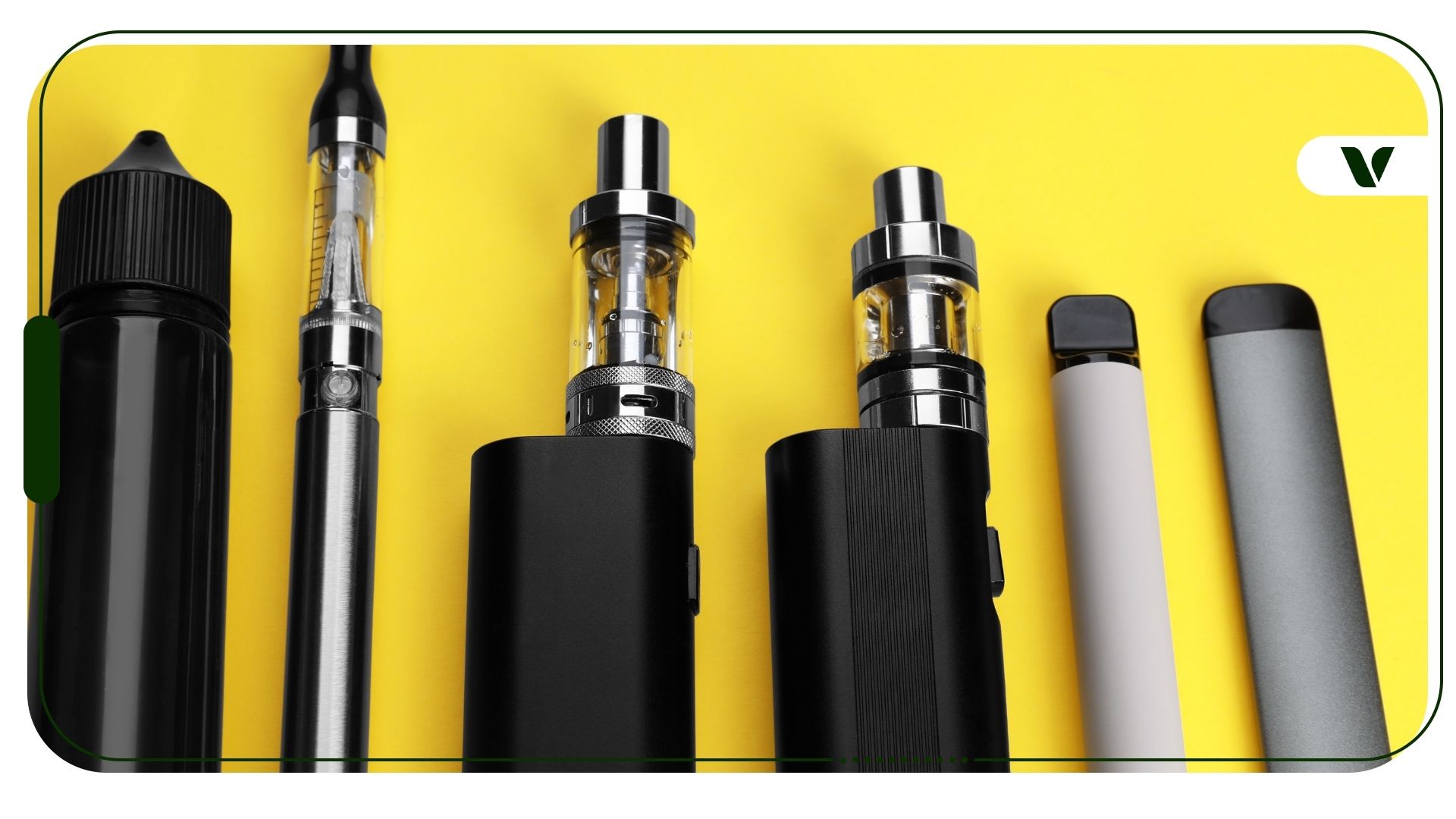
Vape pens have been the subject of many concerns over the years. Most notable was an outbreak of vaping-related illnesses starting in 2019, which skyrocketed concerns about the risks of vaping. Though many of the vape-related illnesses were tied to synthetic additives found in unregulated vape products, concerns about the health risks associated with vaping continue to circulate. Most recently, attention has turned to the possibility of vape pens containing lead.
Lead in Nicotine Vapes
Researchers recently released a study titled “Elevated Toxic Element Emissions from Popular Disposable E-Cigarettes: Sources, Life Cycle, and Health Risks.” They examined three popular disposable nicotine vapes—ELF Bar, Esco Bar, and Flum Pebble to look for possible health risks. They ended up discovering that the examined vape pens contained high, dangerous amounts of toxic elements like lead, antimony, and nickel.
As part of the study, researchers activated the devices to heat their internal liquids, creating between 500 and 1,500 puffs per vape pen device life. They conclude that:
“The levels of ionic metals and metalloids, including chromium, nickel, and antimony, increased as the number of puffs increased, whereas concentrations of ionic zinc, copper, and lead were elevated at the start, and each device had different emissions.
Compared with previous studies, most of the tested disposable e-cigarettes released higher amounts of metals and metalloids into vapors than older refillable vapes.
One of the disposable e-cigarettes studied released more lead during a day’s use than nearly 20 packs of traditional cigarettes.”
This information is alarming for those who use disposable nicotine vape devices. It’s also led some people to worry that their cannabis vapes carry the same risks. Let’s look closer.
What About Lead in Cannabis Vape Pens?
While the aforementioned study didn’t cover the risks of THC and other cannabis vape pens, there is evidence that these may also contain lead and other toxic elements.
In 2022, researchers set out to see if cannabis vapes contain dangerous metal particles. The American Chemical Society (ACS) collaborated with Zuzana Gajdosechova, a scientist at the Metrology Research Centre of the National Research Council of Canada, to investigate.
Before we go any further, I’ll point out that researchers studied both regulated and unregulated products in the Canadian market. The findings don’t represent the overall vape pen landscape, but they do give us a solid starting point to understand what may—or may not—be contaminating these portable devices.
They gathered 41 samples of cannabis vape liquids, with 20 coming from regulated products from the Ontario Cannabis Store and 21 unregulated products provided by the Ontario Provincial Police. Then, they analyzed the liquids by mass spectrometry, looking for 12 different metals.
They discovered that some metals, like arsenic, cadmium, and mercury, were present but within the accepted limits. But they also found high concentrations of other toxins, such as lead, which far exceeded the generally accepted limit for safe consumption. According to their findings, some of the unregulated samples contained more than 100 times more lead than the samples from the Ontario Cannabis Store.
Researchers also discovered that tested products may not convey the full picture. Canadian regulations require samples to represent an entire batch, but researchers noted that vapes in the same production lot have various levels of metal contamination, which could impact test results.
Additionally, researchers note that metal contamination was found in the vape liquid of devices under six months old that had never been used. They suggest that this means the contamination comes from the production of the device, not the heating of the coils, which is a common talking point about vape pen dangers. The danger is apparently present and leached from the start of manufacturing.
See If You Qualify For Medical Marijuana -Select Your State!
Select Your State
Alabama
Alaska
Arizona
Arkansas
California
Colorado
Connecticut
Delaware
Florida
Georgia
Hawaii
Idaho
Illinois
Indiana
Iowa
Kansas
Kentucky
Louisiana
Maine
Maryland
Massachusetts
Michigan
Minnesota
Mississippi
Missouri
Montana
Nebraska
Nevada
New Hampshire
New Jersey
New Mexico
New York
North Carolina
North Dakota
Ohio
Oklahoma
Oregon
Pennsylvania
Rhode Island
South Carolina
South Dakota
Tennessee
Texas
Utah
Vermont
Virginia
Washington
West Virginia
Wisconsin
Wyoming
Never miss a post
Get updates on cannabis culture, new research, and expert insights
The team concluded their summary of the study by stating that they want to determine how many toxic particles are transmitted into aerosol when users inhale. They explained that inhalation allows metals to enter the lungs and cause health issues. Although researchers haven’t found clear evidence for this yet, they noted that studies on nicotine vapes have shown the effect. The researchers also state that they believe cannabis vapes may show the same effect.
What’s In My Vape Pen?
We’ve covered nicotine vapes as well as both regulated and unregulated cannabis vape pens. But moving forward, we’re just going to look at legal, regulated cannabis vape pens to see what’s inside.
Not all vape products work the same. Many people choose a 510 thread cartridge, a universal option that lets them mix and match different cartridges with the same battery. The pen provides the power, while the cartridge holds cannabis oil.
That brings us to the next component of a vape pen: the oil. Manufacturers fill cannabis vape pens with different types of concentrates, including live resin, distillate, and CO2 oils.
Depending on the type of concentrate in your vape pen, the contents may be as simple as the oil itself. High-quality, full-spectrum vape pens will have lots of natural terpenes preserved in the final product, contributing to a natural, earthy cannabis flavor. Best to opt for live resin, as “live” products are closer to whole-plant products than distillates (basically isolated THC).
But other extraction methods can erode the terpene content. Many of these pens have cannabis-derived terpenes added back in to maintain the weed-like flavor and aroma. Others may add terpenes derived from other botanical sources to contribute to the flavor profile.
Some vape pen oils also include thinning agents for a smoother experience. Ingredients like propylene glycol, vegetable glycerin, polyethylene glycol, and medium-chain triglycerides have all been historically used in different vape pen formulations. Heating additional ingredients may pose potential health risks, which is why many health-conscious vape pen users avoid products with any additional ingredients in the oil.
If you’re looking to buy a weed pen, you may want to avoid any products with additives. More importantly, it’s crucial that you purchase a regulated, legal product with clear and reliable test results.
So, is there lead in cannabis vape pens? The answer is, unfortunately, maybe. We don’t have enough clear evidence to say yes or no definitively. We know from the studies we’ve seen that some pens may contain lead, especially those coming from unregulated sources.
Your best bet to find a safe, lead-free pen is to look for a reputable brand that takes safety seriously. This means third-party testing and a commitment to natural ingredients, preferably from a reputable US or Canadian-based source. Always look for the test results and avoid buying any products without clear labeling or results to examine.
Macey is a freelance writer from Seattle. She's covered the cannabis industry extensively, emphasizing the economic opportunities for Indigenous entrepreneurs. Her writing focuses on the people, stories, and labors of love behind every venture.
Oklahoma’s medical-only dispensary market gives licensed patients access to a wide range of cannabis products, but every purchase must follow OMMA rules. This guide explains how to find licensed dispensaries, what identification to bring, purchase and possession limits, product testing, pricing, and what to expect during a visit.
Oklahoma’s advertised $25 medical marijuana card renewal covers the physician evaluation, but patients must also pay a separate OMMA license fee. This guide explains the full renewal cost, reduced-fee eligibility, required documents, online renewal steps, processing times, and the new physician recommendation requirement.
Ohio medical marijuana dispensaries offer registered patients benefits such as lower taxes, higher purchase allowances, and access to certain medical-only products. This guide explains how to find licensed dispensaries, verify their credentials, understand purchase limits, prepare for your first visit, and navigate medical versus recreational purchasing rules.
Tulsa residents can apply for an Oklahoma medical marijuana card online through a telehealth physician evaluation followed by an OMMA application. This guide covers eligibility, application steps, costs, processing times, local dispensary access, out-of-state licenses, and card renewal or replacement.
Florida’s advertised $20 medical marijuana card offers usually cover only the physician evaluation, with separate state registration costs still required. This guide breaks down the actual costs, qualifying conditions, application process, seasonal-resident eligibility, renewals, and other fees patients should consider before applying.
The statements made regarding cannabis products on this website have not been evaluated by the Food and Drug Administration (FDA). Cannabis is not an FDA-approved substance and is still illegal under federal law. The information provided on this website is intended for educational purposes only and is not intended to diagnose, treat, cure, or prevent any disease. It is not intended as medical advice and should not be considered as a substitute for advice from a healthcare professional. We strongly recommend that you consult with a physician or other qualified healthcare provider before using any cannabis products. The use of any information provided on this website is solely at your own risk.