Your medical cannabis journey simplified: find partnered dispensaries, explore pricing options, earn rewards, and get answers to FAQs, all in one spot.
November 26, 2026 07:46 am ETEstimated Read Time: 12 Minutes
Whether recreational cannabis is legal in your state or not, a medical marijuana card can bring numerous benefits. The benefits of a medical marijuana card can include access to higher potency products, financial savings through tax reductions and patient-only discounts, and legal protections.
Each state’s cannabis laws differ, and, as a result, so do the benefits medical marijuana patients can access. So, is a medical marijuana card worth it? This article lays out what a medical card does or does not do, top reasons to get one, and when a card might not be worth it.
What a Medical Card Does and Does Not Do
A medical marijuana card is a state credential tied that shows that a licensed doctor has given you approval for medical marijuana use in your state.
While the medical card demonstrates that you can purchase and consume marijuana based on your state’s guidelines, it does not override federal law and will not prevent legal trouble if you’re caught driving under the influence or surpassing your state’s possession limits.
Furthermore, a medical marijuana card is not a prescription. Your doctor can give you advice about what formulations and ratios may work well with your specific symptoms, but they do not prescribe specific dosages or send detailed orders to a pharmacy or dispensary.
Top Reasons to Get A Card
The benefits of a medical marijuana card can include financial savings, customized wellness plans, and less frequent trips to the dispensary, thanks to higher purchase and possession limits and the ability to grow cannabis in your own home.
Each state differs, but some common reasons to get a medical card include the following benefits.
Legal Access To Cannabis
In states where recreational cannabis is not legal, a medical card is the only option for accessing safe, legal marijuana. Your medical marijuana card can grant you peace of mind in knowing that the cannabis you’re using was sold by a reputable dispensary and is likely tested to ensure it doesn’t contain harmful contaminants.
Plus, even in states where recreational cannabis is legal, the minimum age for purchase is typically 21 years old. If you’re a young adult aged 18 to 20, you’re able to apply for a medical marijuana card on your own without a caregiver in most states. With a medical card, you can bypass your state’s age limits for recreational cannabis and still access cannabis for your medical condition.
Higher Purchase or Possession Limits
Many states allow medical marijuana patients to legally purchase and possess more cannabis than adult-use customers.
In some states, like California, this difference is vast. Medical marijuana patients in California can purchase and possess up to 8 ounces of useable cannabis at a time. Compared to recreational customers, who can purchase and possess approximately one ounce of flower or 8 grams of concentrate, California medical marijuana patients can purchase up to 8-times the cannabis a day.
Tax Savings and Patient Discounts
Financial savings is one of the biggest reasons to get a medical card. Many states with both medical and recreational cannabis programs offer significant savings opportunities for patients, whether that’s tax exemptions or exclusive patient discounts.
States with the biggest tax savings include:
Washington – Patients are fully exempt from the 37% excise tax placed on recreational purchases
Illinois – Patients pay just 1% tax on cannabis purchases, while recreational buyers pay anywhere from 16-31%
Colorado – While recreational buyers are subject to at up to a 30% tax on their purchases, patients just pay a standard 2.9% flat tax rate.
Montana – Montana medical cardholders pay just 4% tax on their purchases, while recreational customers pay 20%
Oregon – Oregon medical marijuana patients are fully exempt from the 12-20% tax placed on adult use purchases.
With most states offering higher purchase and possession limits for medical marijuana patients, individuals with a card can visit the dispensary less frequently, making fewer purchases and paying less taxes over time.
Plus, some states offer patient discounts and benefits on top of tax savings. New Jersey, for example, exclusive dispensary hours, priority service, patient-only menus, and free digital cards for registered patients.
Legal Protections
While a medical marijuana card does not override federal or state law, it can provide protection when you’re applying for employment, housing, or other social services. While it’s not a get out of jail free card, it can help you feel safer and more confident when using, possessing, or transporting cannabis.
For example, while Pennsylvania might not have legal recreational cannabis, the state does operate a comprehensive medical program with patient benefits written into the law. Pennsylvania employers are prohibited from discriminating against individuals with medical cards, so patients are protected from being fired or refused employment simply for their place on the state’s medical marijuana registry.
Alongside your medical card, your doctor can provide you with a state-compliant document that helps explain to potential employers, landlords, health insurance companies, parole officers, and other relevant entities that your cannabis use is legal and approved by a physician.
Wellness Guidance From A Licensed Doctors
While your doctor cannot prescribe specific dosages or products, they can provide guidance on best practices for your unique symptoms.
See If You Qualify For Medical Marijuana -Select Your State!
Select Your State
Alabama
Alaska
Arizona
Arkansas
California
Colorado
Connecticut
Delaware
Florida
Georgia
Hawaii
Idaho
Illinois
Indiana
Iowa
Kansas
Kentucky
Louisiana
Maine
Maryland
Massachusetts
Michigan
Minnesota
Mississippi
Missouri
Montana
Nebraska
Nevada
New Hampshire
New Jersey
New Mexico
New York
North Carolina
North Dakota
Ohio
Oklahoma
Oregon
Pennsylvania
Rhode Island
South Carolina
South Dakota
Tennessee
Texas
Utah
Vermont
Virginia
Washington
West Virginia
Wisconsin
Wyoming
Never miss a post
Get updates on cannabis culture, new research, and expert insights
Details how cannabis might complement other therapies
Explains how it could interact with the medication you take
Explores specific cannabinoids (such as CBN or CBG) that may help your symptoms, and
Indicates the type of cannabis products that could provide the most amount of benefit (such as flower for quick-relief vaporizing or gummies for long-lasting relief)
Whether it’s during the initial appointment or after you’re approved, your doctor can answer any questions you have about using medical marijuana for pain, stress, insomnia, or other symptoms.
Home Grow & Delivery Options
On top of higher possession or purchase limits in some states, many states allow medical cardholders to grow cannabis at home. When it comes to how many plants each patient can or household can cultivate, each state is different.
Furthermore, some states allow dispensaries or couriers to deliver medical marijuana directly to patients. Both delivery and home grow benefits can make a huge difference for patients who live in rural areas where dispensary access is sparse or whose conditions make it challenging to travel to and from the dispensary.
When a Card May Not Be Worth It
Only you can decide whether getting a medical marijuana card feels worth it. Transparently, in states with robust adult-use cannabis programs, such as New York, where plentiful cannabis causes dropping prices, don’t offer significant tax savings or patient discounts. Some patients who may not take advantage of the other benefits of having a New York medical card may feel that the financial savings do not outweigh the cost of the card
Furthermore, while a medical marijuana card can provide legal protections in some areas, it may also restrict individuals in other areas, such as gun ownership. Federal law prohibits gun sales to individuals who regularly use any federally illegal substance, including medical marijuana. As such, many have to make the choice between getting a medical card and owning a gun.
Still, because detailed cannabis law is determined on the state level, many states grant medical marijuana patients and caregivers the right to purchase and possess firearms. Oklahoma, Arizona, Arkansas, and other states indicate that a person may not be denied the right to own a gun based on their status as a medical marijuana patient.
Lastly, in states like Texas that have restrictive medical marijuana programs, patients must navigate limited qualifying conditions and low-THC limits. In those cases, patients must decide if the benefit of access these products outweighs the administrative red tape.
Ultimately, a medical card will always provide access to safe, state-approved cannabis products and the opportunity to work with a doctor to determine a medical cannabis plan that provides the most benefit and the least harm.
Up to 24-40% tax savings compared to recreational buyersLegal home grow of up to 5 mature plants (completely illegal for adult use growers) Rolling 14-day possession limit of 2.5 ounces Patient discounts and priority service at IL dispensaries
0% sales tax on cannabis purchasesFree digital card for patients Priority service & patient-only hours at NJ dispensaries Possession limit up to 6 ounces based on medically-certified allotment Legal protections for public consumption, traffic stops, and employment
Up to 18% tax savings Over double the purchase and possession limit of recreational usersFinancial assistance options for patients in need Protection from some criminal penalties and employment or insurance discrimination
Higher possession limit (based on 90-day supply)Exempt from 10% excise tax on cannabis purchasesAccess to cannabis for young adults aged 18-20 Patient-only discounts and priority service
Up to 20% tax savings Double purchase & possession limits compared to adult use purchasesHome grow up to 99 plants (compared to 6 plants for recreational growers)
Fully exempt from tax on cannabis purchasesUp to 10 ounce possession limit (or 60-day supply) Access to higher potency products and patient-only discounts Workplace accommodation for off-duty cannabis use
How To Get Your Card
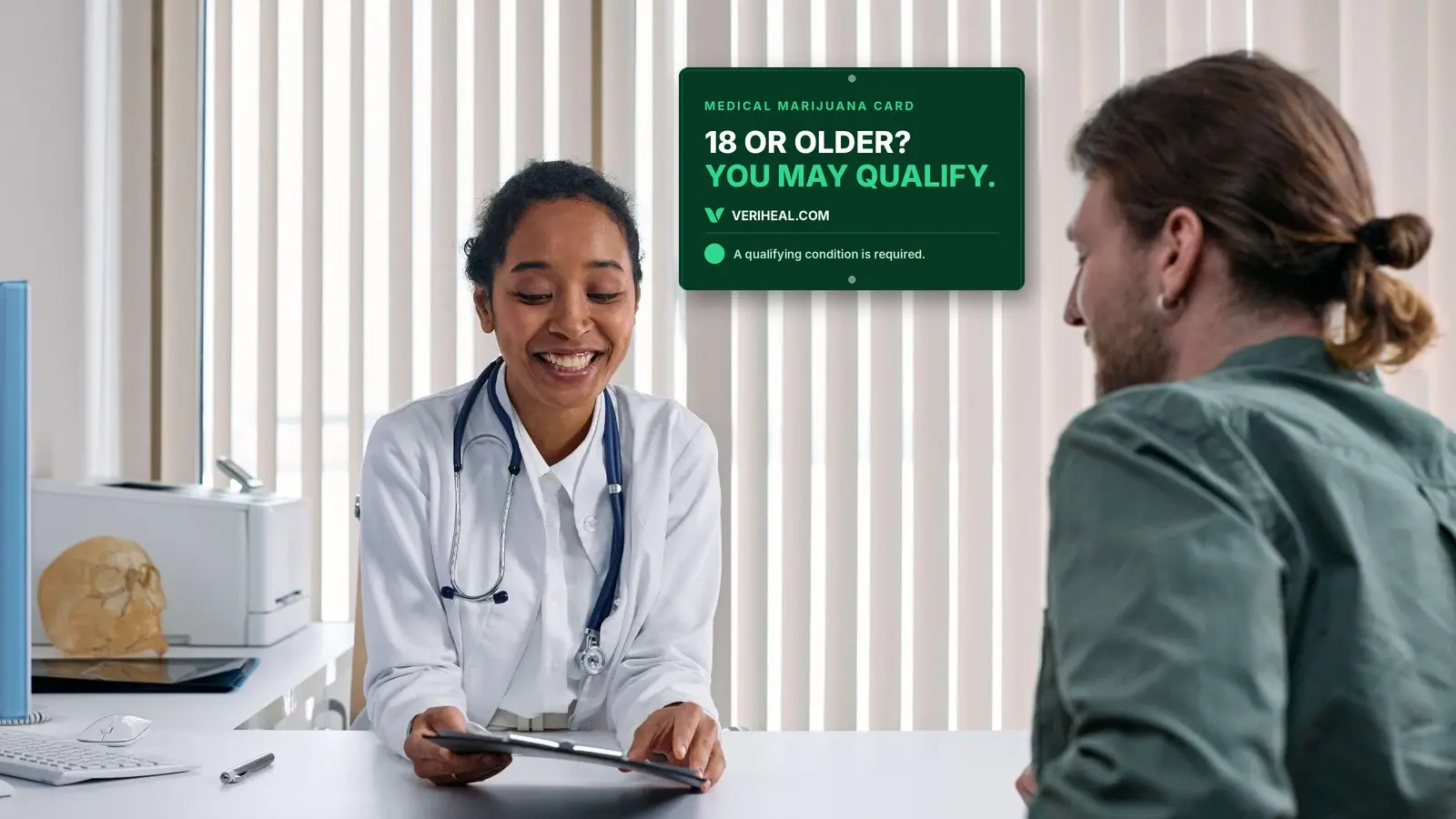
Getting your medical marijuana card can be simple though Veriheal. Start by taking the Do I Qualify? Quiz to determine if you meet your state’s eligibility requirements.
Book An Appointment: After taking the quiz, Veriheal will let you know if you’re eligible for a medical card in your state and prompt you to book an appointment with a licensed doctor.
Talk to a Medical Marijuana Doctor: At your appointment, your doctor will evaluate your unique symptoms and answer any questions you have. If you officially qualify, your doctor will issue your recommendation.
Apply In Your State and Receive Your Card: With your doctor’s recommendation in hand, you can fill out your state’s application for their medical marijuana card program. Your state will process your application and send you a digital or physical medical card.
State application review takes anywhere from one day to a few weeks, depending on where you live. Once you have your card, you can visit a dispensary near you and begin safely and legal using medical cannabis.
Frequently Asked Questions
Is a medical marijuana card worth it if recreational is legal?
Yes, a medical marijuana card can be worth it, even if recreational cannabis is legal in your state. Each state offers different benefits for patients, including tax savings, higher purchase or possession limits, home grow options, or patient-exclusive hours or discounts at the dispensary.
Does a medical card save money?
Yes, a medical card can save money compared with recreational purchases. Each state determines their purchase guidelines, but medical marijuana patients are generally granted tax reductions, higher purchase limits, home grow ability, and other patient discounts. Having a medical marijuana card could mean making less trips to the dispensary and spending less each time you’re there.
Can a medical card protect me at work?
Yes, a medical card may protect you at work in certain states. While drug policies are ultimately determined by your employer, a medical card is a state-compliant certification that proves your cannabis use is medical, legal, and recommended by a doctor. In some states, like Pennsylvania, patients are protected from being fired or denied employment based on their patient status.
Do I need a qualifying condition to get one?
Yes, you do need a qualifying condition to apply for a medical card. Qualifying conditions differ in each state, and your medical marijuana doctor can help you determine if your specific ailment or symptoms qualify under your state’s program.
How long does a medical card last, and do I have to renew it?
A medical card can last anywhere from 30 weeks to five years, depending on where you live. You have to renew your medical card based on your state’s guidelines. Veriheal will reach out when it’s time to renew your card and remind you to book your appointment so your card never lapses.
We seek to help people live better lives by changing the stigma on cannabis. Our aim is to change the image of alternative medicine by creating more ease for all users, more growth in science, more access for all patients, and more transparency in the industry.
Many states let adults 18 and older get a medical marijuana card on their own, with no caregiver needed. Learn which states allow it, what you need to qualify at 18, and how patients under 18 can apply with a caregiver.
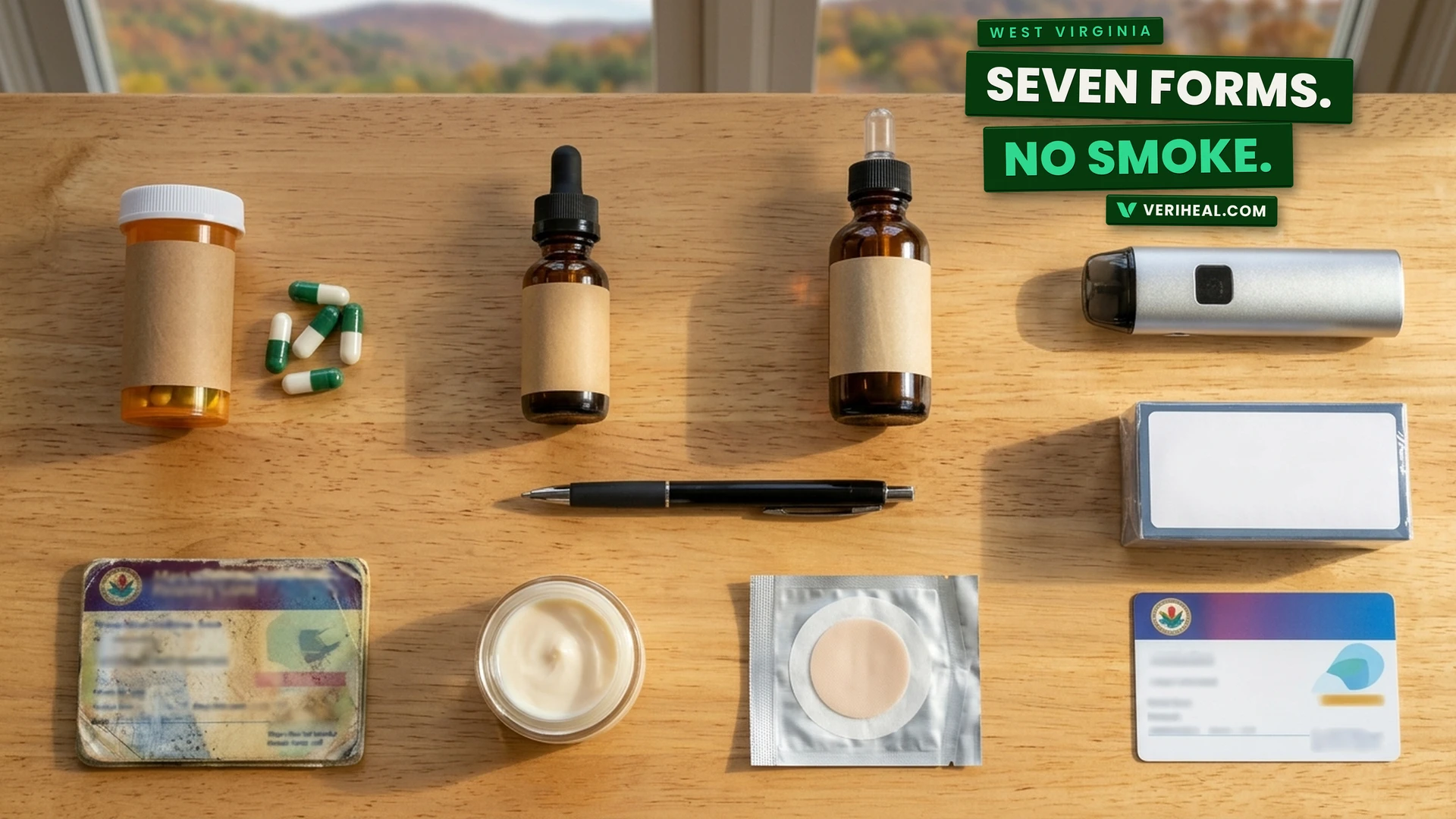
West Virginia allows medical cannabis in approved forms, including pills, oils, tinctures, topicals, patches, and products intended for vaporization, while prohibiting smoking and dispensary-sold edibles. This guide explains the differences between permitted products, dry leaf restrictions, purchase and possession limits, patient registration requirements, certification costs, and important legal considerations for medical cannabis patients.
Getting a medical cannabis certification in New York City involves an evaluation by an authorized healthcare provider, with no physical card or separate state registration required. This guide explains eligibility requirements, telehealth appointments, certification costs, dispensary access across all five boroughs, medical versus recreational cannabis benefits, tax savings, caregiver options, and renewal requirements.
Minnesota allows adults 21 and older to grow up to eight cannabis plants per residence, with no more than four mature and flowering plants. This guide explains home cultivation limits, medical patient and caregiver rules, security requirements, possession limits, prohibited activities, penalties, and how medical cannabis enrollment affects caregiver cultivation rights.
Chronic pain may qualify for medical cannabis in Georgia when a licensed physician determines that it meets the state’s intractable pain criteria. This guide explains qualifying pain conditions, medical documentation, physician certification, application costs, approved cannabis products, possession limits, and important considerations involving medication interactions, existing pain treatments, and insurance coverage.
The statements made regarding cannabis products on this website have not been evaluated by the Food and Drug Administration (FDA). Cannabis is not an FDA-approved substance and is still illegal under federal law. The information provided on this website is intended for educational purposes only and is not intended to diagnose, treat, cure, or prevent any disease. It is not intended as medical advice and should not be considered as a substitute for advice from a healthcare professional. We strongly recommend that you consult with a physician or other qualified healthcare provider before using any cannabis products. The use of any information provided on this website is solely at your own risk.