Your medical cannabis journey simplified: find partnered dispensaries, explore pricing options, earn rewards, and get answers to FAQs, all in one spot.
April 9, 2026 08:00 am ETEstimated Read Time: 11 Minutes
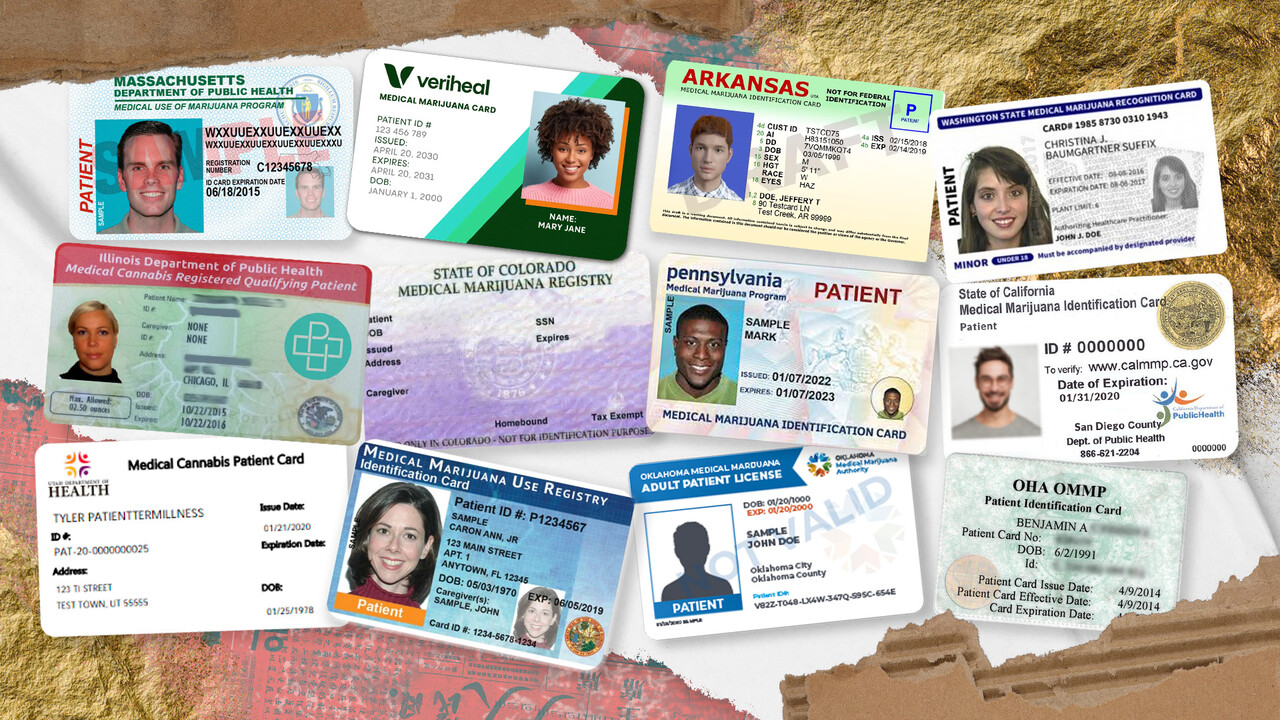
A medical marijuana card is a state-issued ID card roughly the same size as your driver’s license, and it serves as your legal proof of authorization to purchase cannabis from a dispensary. What it looks like depends on where you live, but every state program builds its card around the same core set of identifying fields.
If you are new to the process, understanding the benefits of getting a medical marijuana card can help you decide whether enrolling in your state’s medical cannabis program is the right step for you.
What Information Appears on a Medical Marijuana Card?
A standard medical marijuana card measures approximately 3.375 by 2.125 inches, the same dimensions as a credit card or driver’s license. It is printed on durable card stock and, in most states, functions as a photo identification card you can present at any licensed dispensary.
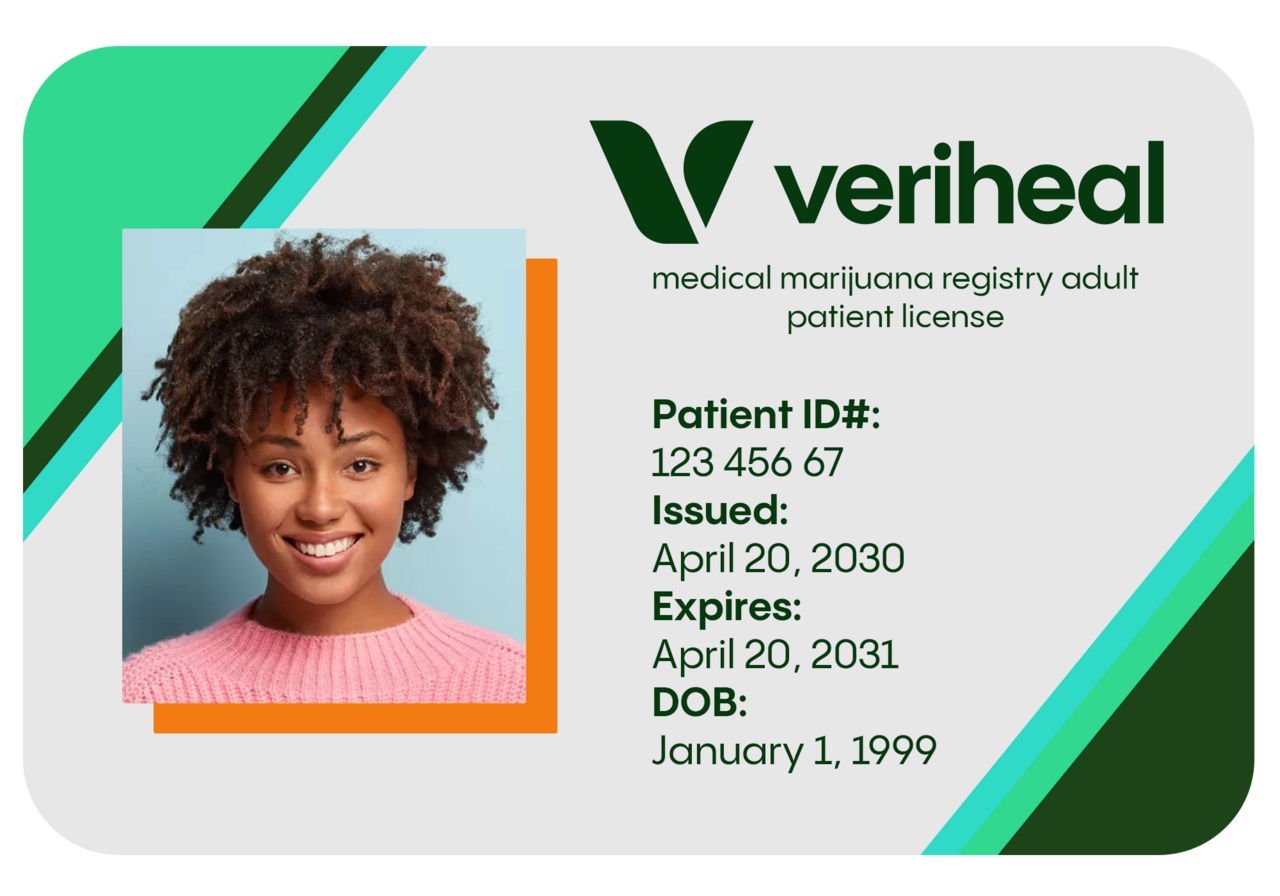
Every state-issued card includes a common set of fields, regardless of the program’s design. These fields are your full legal name, a current photo of you as the cardholder, a registry identification number unique to your enrollment, the card’s expiration date, and the issuing state’s name and official seal. Most states also include a QR code or barcode on the card.
The registry identification number deserves a closer look. It is the primary verification tool dispensary staff use, not your name or photo. When you make a dispensary purchase, staff scan or manually enter that number into the state’s real-time verification system to confirm your registration is active before completing the sale. Your physician recommendation and qualifying medical condition are tied to this number in the state’s database, but they do not appear on the card face itself.
What Is Printed on the Front of a Medical Marijuana Card?
The front of a medical marijuana card follows a layout you would recognize from any government-issued photo ID. Your photo typically appears in the upper left or right corner, with your full name and expiration date printed clearly beside or beneath it. The state seal or program logo is usually positioned at the top of the card, and some states include the name of the issuing state health department as well.
Color schemes and visual design are state-specific. California’s county-issued cards carry both a county seal and a state program identifier. Florida’s cards are formatted more like a standard government ID, with a clean layout and bold lettering. Pennsylvania’s patient identification card has gone through a design update since the program launched, so older and newer cards from the same state can look noticeably different.
One detail that surprises many first-time patients: the card typically does not list your qualifying medical condition or your cannabis possession limits. That information is tied to your registry record, not printed on the card itself, which protects your medical privacy at the point of sale.
What Appears on the Back of a Medical Marijuana Card?
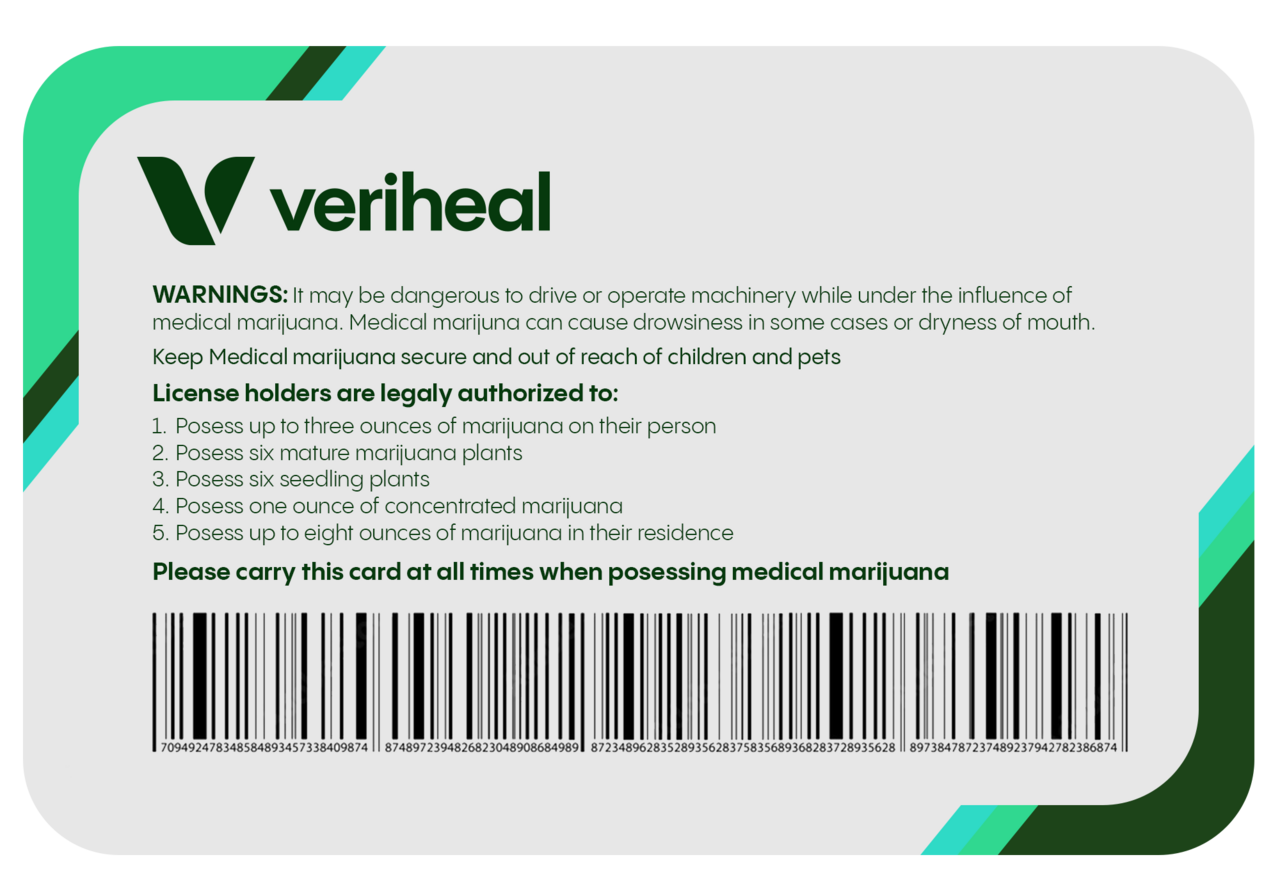
The back of the card is where the machine-readable elements live. Most state programs include a barcode, a QR code, or both, which allow dispensary staff and, in some jurisdictions, law enforcement to verify the card against the state registry without needing to contact the patient directly. This real-time lookup is how programs confirm that a card has not expired or been revoked since it was issued.
Some states also print caregiver information on the back of the patient card, linking the registered caregiver’s name or ID to the patient’s record. Other states issue a separate caregiver card entirely rather than printing that information on the patient’s card. The approach varies by program and has implications for how a dispensary handles the transaction.
How Does a Medical Marijuana Card Differ from State to State?
State medical cannabis programs share a common legal framework, but the physical card each one produces reflects the program’s age, administrative structure, and technology choices. Understanding these differences matters, especially if you travel or relocate, because states that accept out-of-state medical cards are the exception rather than the rule, and your home state’s card will not automatically be recognized elsewhere.
For a clear comparison of how three major programs handle card format and verification, see the table below.
State
Card Format
Fields on Card
Verification Method
California
Physical (county-issued)
Name, photo, county of issuance, registry number, county and state seal
CDPH online verification system
Florida
Physical (state-issued)
Name, photo, registry number, expiration date
MMUR registry lookup; dispensary can verify even without physical card
Pennsylvania
Physical (state-issued)
Name, photo, patient ID number, expiration date
Pennsylvania Department of Health patient registry
California’s program is worth noting because the card is administered at the county level through local health departments, even though the state oversees the program. This means your card may carry your county’s seal alongside the state identifier, and the card renewal process is handled by your county office rather than a central state agency.
Florida’s system offers an important safety net: because the registry lookup is so robust, a dispensary can verify a patient’s active status directly in the state medical cannabis registry design and patient verification systems even if the physical card has been lost or damaged. Some states that began with digital-only registry confirmations have since introduced physical cards as their programs matured, reflecting growing patient demand for a tangible credential.
What Does a Medical Marijuana Caregiver Card Look Like?
In states that issue caregiver cards, the card carries the caregiver’s name, photo, and a caregiver-specific registry identification number. It also includes either the patient’s name or the patient’s ID number, so the card is explicitly linked to the individual the caregiver is authorized to purchase for. The expiration date on a caregiver card is typically tied to the patient’s registration period rather than set independently.
A caregiver card is not interchangeable with a patient identification card. A caregiver cannot use the card to purchase cannabis for personal use. The card authorizes purchases on behalf of the registered patient only, and dispensary staff verify the caregiver’s registry record against the patient’s active enrollment before completing any sale.
See If You Qualify For Medical Marijuana -Select Your State!
Select Your State
Alabama
Alaska
Arizona
Arkansas
California
Colorado
Connecticut
Delaware
Florida
Georgia
Hawaii
Idaho
Illinois
Indiana
Iowa
Kansas
Kentucky
Louisiana
Maine
Maryland
Massachusetts
Michigan
Minnesota
Mississippi
Missouri
Montana
Nebraska
Nevada
New Hampshire
New Jersey
New Mexico
New York
North Carolina
North Dakota
Ohio
Oklahoma
Oregon
Pennsylvania
Rhode Island
South Carolina
South Dakota
Tennessee
Texas
Utah
Vermont
Virginia
Washington
West Virginia
Wisconsin
Wyoming
Never miss a post
Get updates on cannabis culture, new research, and expert insights
Not all states issue a separate caregiver card. Some programs require the caregiver to present the patient’s card alongside their own government-issued photo ID at the point of sale. In states that do issue a distinct card, it is sometimes visually distinguished from the patient card by color, labeling, or a “caregiver” designation printed clearly on the face, though in other states the format is identical to the patient card with different field values.
Do All States Issue a Physical Medical Marijuana Card?
Not every state issues a plastic card. Some medical cannabis programs use a digital or registry-based system where the patient’s credentials exist as a record in the state database rather than a physical object. Understanding the difference matters before your first dispensary visit, because what you need to present depends entirely on how your state’s program is structured.
In states with digital systems, the patient may present a printed confirmation letter, a PDF displayed on their phone, or simply provide their registry identification number and allow the dispensary to look them up directly in the state system. A screenshot of the registry portal is not universally accepted, so confirming your state’s accepted proof-of-registration format in advance is worth doing.
If you are unsure how long it takes to get a medical card or what documentation to expect after application approval, your state health department’s program page is the most reliable source.
States With a Physical Card
These states issue a physical patient identification card that you carry and present at a dispensary. Examples include California, Florida, Pennsylvania, New York, Illinois, New Jersey, and Ohio, among others. Card format, design, and what you present at the point of sale varies by state program.
States With a Digital Card
Some states have moved toward digital-only or hybrid systems. In these programs, your registration confirmation or a digital credential serves as legal proof of authorization rather than a physical card. Always verify your state’s current requirements directly with the state health department, as programs have updated their formats as they have matured.
Note: The content on this page is for informational purposes only and is not intended to be professional medical advice. Do not attempt to self-diagnose or prescribe treatment based on the information provided. Always consult a physician before making any decision on the treatment of a medical condition.
Note: Veriheal does not support illegally consuming therapeutic substances such as cannabis but acknowledges that it transpires because of the current illicit status, which we strive to change by advocating for research, legal access, and responsible consumption. Always consult a physician before attempting alternative therapies.
Frequently Asked Questions
Is a medical marijuana card the same size as a driver’s license?
A medical marijuana card is the same size as a standard driver’s license or credit card, measuring approximately 3.375 by 2.125 inches. Most state programs produce a durable card stock credential that fits in a standard wallet slot.
Does a medical marijuana card have a photo on it?
Most state-issued medical marijuana cards include a photo of the cardholder, functioning as a photo identification card at the dispensary. A small number of programs or temporary credentials may not include a photo, but a photo is standard on permanent cards in the majority of states.
What information is printed on a medical marijuana card?
A medical marijuana card typically shows the cardholder’s full name, photo, registry identification number, expiration date, and the issuing state’s name and seal. It does not display the patient’s qualifying medical condition or cannabis possession limits, as that information is stored in the state registry rather than printed on the card.
How long is a medical marijuana card valid before it expires?
Most medical marijuana cards are valid for one year from the date of issue, though some states issue cards with a two-year validity period. The card renewal process requires patients to recertify with a physician and pay a renewal fee before the expiration date, and some states offer a grace period for patients to continue purchasing while renewal is in progress.
Can I use a digital medical marijuana card at a dispensary?
Whether a digital card is accepted at a dispensary depends on your state’s program. Some states allow patients to present a digital credential or registry lookup in place of a physical card, while others require the physical card for every dispensary purchase. Confirm your state’s accepted formats with your state health department before your first visit.
Do medical marijuana cards in all states look the same?
Medical marijuana cards are not uniform across states. Each state designs its own card through its medical cannabis program, so color schemes, logos, field placement, and security features vary. The core fields, including name, photo, registry ID, and expiration date, are consistent, but the visual design is state-specific.
Are there digital medical marijuana cards?
Yes, some states use digital or registry-based systems instead of issuing a physical card. In these programs, a patient’s credentials exist as a digital record, and patients may present a printed confirmation, a PDF, or allow the dispensary to verify them directly in the state system.
Where do I find my medical card number?
Your medical card number, also called your registry identification number, is printed on the face of your physical card if your state issues one. If your state uses a digital system, your registry ID appears in your confirmation email or patient portal account from the state health department.
Can I print a temporary medical card?
Some states allow patients to print a temporary certificate or approval letter after application approval while their permanent card is being processed. This temporary document may be accepted at dispensaries in that state, but it is not a substitute for your permanent card and may not be recognized as legal proof of authorization in other jurisdictions. Check your state’s program guidelines for specifics on medical marijuana card state-by-state laws.
Emily is a Denver-based transplant from Virginia who is passionate about substance use harm reduction, yoga, and music. She writes and edits to support the extravagant lifestyles of her pug and cat. When she's not writing, she can be found doing flow and aerial arts or browsing flights to faraway places.
Oklahoma’s medical-only dispensary market gives licensed patients access to a wide range of cannabis products, but every purchase must follow OMMA rules. This guide explains how to find licensed dispensaries, what identification to bring, purchase and possession limits, product testing, pricing, and what to expect during a visit.
Oklahoma’s advertised $25 medical marijuana card renewal covers the physician evaluation, but patients must also pay a separate OMMA license fee. This guide explains the full renewal cost, reduced-fee eligibility, required documents, online renewal steps, processing times, and the new physician recommendation requirement.
Ohio medical marijuana dispensaries offer registered patients benefits such as lower taxes, higher purchase allowances, and access to certain medical-only products. This guide explains how to find licensed dispensaries, verify their credentials, understand purchase limits, prepare for your first visit, and navigate medical versus recreational purchasing rules.
Medical marijuana has been legal in Oklahoma since 2018, with eligibility determined by physician judgment rather than a fixed list of qualifying conditions. This guide explains how the OMMA program works, patient rights and possession limits, recreational cannabis laws, federal restrictions, and how Oklahoma compares with neighboring states.
Oklahoma offers a temporary medical marijuana license for out-of-state patients who already hold a valid medical cannabis card in their home state. This guide covers eligibility, required documents, the OMMA application process, costs, possession limits, and what happens when the 30-day license expires.
The statements made regarding cannabis products on this website have not been evaluated by the Food and Drug Administration (FDA). Cannabis is not an FDA-approved substance and is still illegal under federal law. The information provided on this website is intended for educational purposes only and is not intended to diagnose, treat, cure, or prevent any disease. It is not intended as medical advice and should not be considered as a substitute for advice from a healthcare professional. We strongly recommend that you consult with a physician or other qualified healthcare provider before using any cannabis products. The use of any information provided on this website is solely at your own risk.