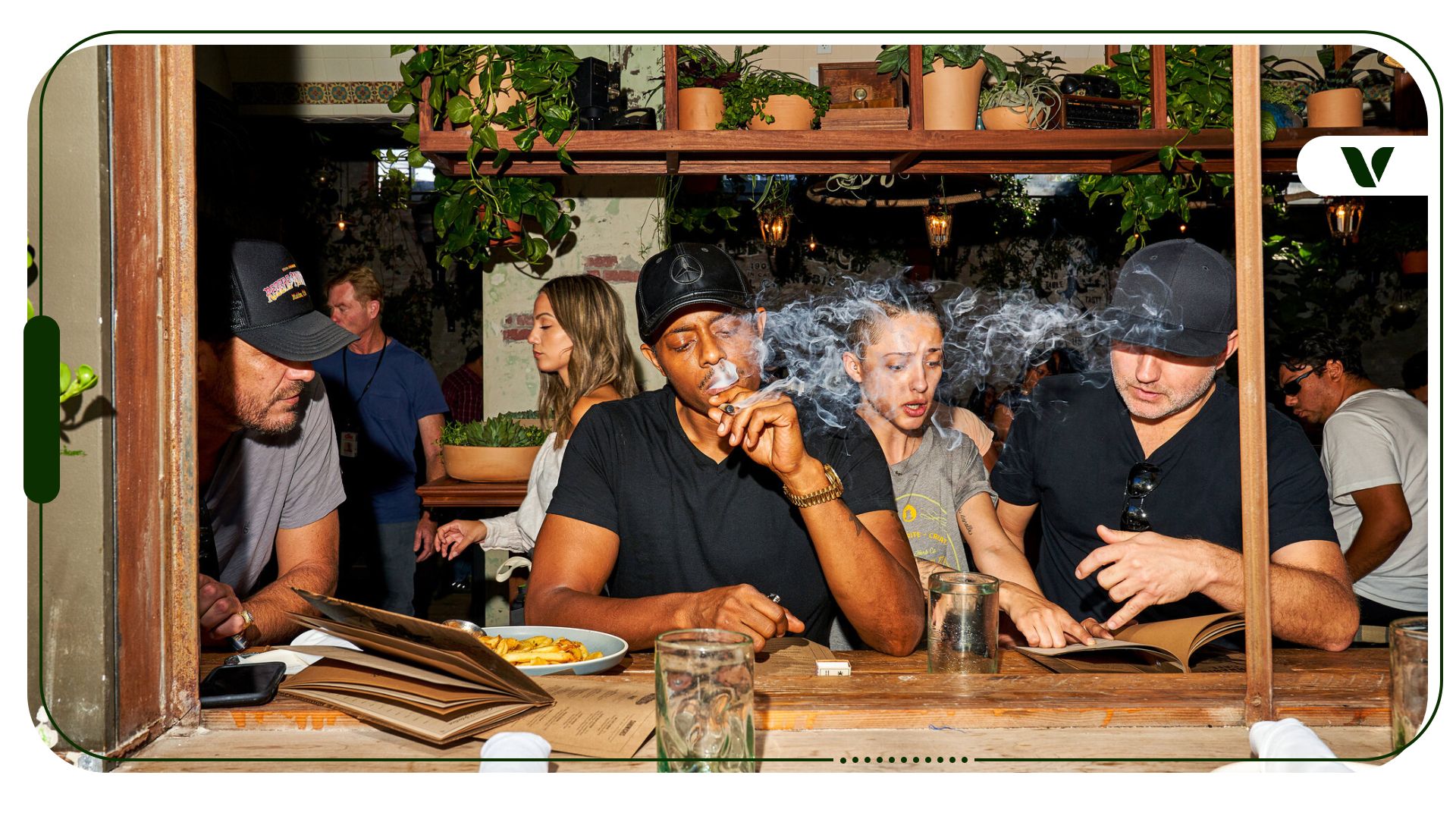
Cannabis lounges and cannabis cafes offer legal social consumption spaces, but they differ in service models, atmosphere, and regulations. While some states use these terms interchangeably, lounges typically focus on consumption with minimal food service, whereas cafes combine cannabis use with full dining experiences.
As cannabis legalization spreads across the US, these social consumption venues represent the next frontier in cannabis normalization. Understanding the differences helps you choose the right experience and know what to expect when visiting.
What is a Cannabis Lounge?
A cannabis lounge is a licensed venue where adults can legally consume cannabis in a social setting. These spaces operate similarly to traditional bars or smoking lounges, but focus specifically on cannabis consumption rather than alcohol.
Most cannabis lounges follow a bring-your-own-cannabis (BYOC) model, where you purchase products from a licensed dispensary and consume them on-site. Some locations feature integrated retail, allowing you to buy and consume in the same venue, though this varies significantly by state regulations.
Cannabis lounges typically offer several standard amenities:
- Designated consumption areas with proper ventilation systems
- Seating arrangements from intimate couches to communal tables
- Consumption devices like vaporizers, dab rigs, or glassware for rent
- Light refreshments, snacks, or non-alcoholic beverages
- Entertainment options such as games, music, or live events
The atmosphere tends to be relaxed and social, designed to normalize cannabis use while maintaining a professional, regulated environment. Licensing requirements are strict, with venues needing specialized permits beyond standard business licenses, and operators must comply with extensive safety, security, and zoning regulations that vary by state.
What is a Cannabis Cafe?
A cannabis cafe combines cannabis consumption with a full dining experience, similar to coffee shops in Amsterdam’s famous cannabis culture. These venues emphasize the culinary aspect alongside cannabis use, often featuring full kitchens and extensive food menus.
Cannabis cafes typically offer more comprehensive food service than lounges, ranging from light cafe fare to full restaurant-style meals. Many focus on pairing cannabis with specific foods or beverages, creating curated experiences that highlight how different strains complement various flavors.
The service model varies between BYOC and integrated retail, depending on state regulations. Some cafes operate as separate businesses with dispensaries next door, while others combine retail and consumption under one license. The key distinction lies in the enhanced food service and dining-focused atmosphere.
Cannabis cafes appeal to a broader audience including cannabis newcomers who feel more comfortable in a familiar restaurant setting. The atmosphere tends to be more upscale and dining-focused, with professional kitchen staff and structured meal services that go beyond the typical lounge snack offerings.
Cannabis Lounges vs Cannabis Cafes: Key Differences
The primary differences between cannabis lounges and cafes center on service models, atmosphere, and target experiences. While some states use these terms interchangeably in their regulations, distinct operational differences exist.
| Feature |
Cannabis Lounges |
Cannabis Cafes |
| Primary Focus |
Cannabis consumption and socializing |
Dining experience with cannabis |
| Food Service |
Snacks and light refreshments |
Full kitchen with extensive menus |
| Atmosphere |
Bar or lounge-style social space |
Restaurant or cafe dining environment |
| Service Model |
Primarily BYOC with some retail |
Mixed BYOC and integrated retail |
| Target Audience |
Experienced cannabis users |
Broader audience including food enthusiasts |
| Average Visit |
1-3 hours of casual socializing |
Structured meal service experience |
| Licensing |
Consumption lounge permits |
Restaurant plus cannabis permits |
Service models represent the most significant operational difference. Cannabis lounges typically operate with simpler logistics, focusing on providing space and basic amenities for consumption. Cannabis cafes require more complex operations, including professional kitchens, food safety compliance, and coordinated service between cannabis and culinary staff.
The target demographics also differ substantially. Lounges generally attract experienced cannabis users seeking social consumption environments, while cafes appeal to a broader audience including cannabis-curious individuals who feel more comfortable in familiar restaurant settings. This distinction influences everything from interior design to staff training and marketing approaches.
Which States Allow Cannabis Lounges and Cafes
Currently, 12 US states with adult-use cannabis programs allow on-site consumption venues, though only a handful have operational locations. State regulations vary dramatically in terminology, licensing requirements, and operational restrictions.
| State |
Legal Status |
Operational Venues |
Notable Restrictions |
| Nevada |
Legal since 2017 |
Yes (Las Vegas area) |
No alcohol sales, strict zoning |
| California |
Legal since 2018 |
Yes (limited locations) |
Local municipality approval required |
| Colorado |
Legal since 2019 |
Yes (Denver, limited) |
BYOC only, no integrated retail |
| Alaska |
Legal since 2016 |
Yes (few locations) |
Limited to rural areas, strict limits |
| Illinois |
Legal since 2020 |
Yes (Chicago area) |
Must be attached to dispensaries |
| New York |
Legal since 2021 |
Pending 2024 |
Regulations still developing |
| Massachusetts |
Legal since 2018 |
Limited pilot programs |
Local approval required |
| Michigan |
Legal since 2019 |
Yes (limited) |
Municipal opt-in required |
| New Jersey |
Legal since 2021 |
Regulations approved |
First venues opening 2024 |
| Connecticut |
Legal since 2022 |
Regulations pending |
Expected 2025 implementation |
| New Mexico |
Legal since 2021 |
Yes (limited) |
Integrated with existing dispensaries |
| Delaware |
Legal since 2023 |
Regulations pending |
Timeline uncertain |
Nevada leads in operational venues, with several established lounges in Las Vegas catering to tourists and locals. California has the most permissive regulations but faces significant local approval hurdles, resulting in fewer operational venues than expected. Colorado’s BYOC-only model has limited growth but maintains steady operations in Denver.
Many states with pending regulations are developing frameworks based on lessons learned from early-adopting states. The trend shows movement toward integrated retail models and expanded food service options, suggesting the industry is evolving toward the cannabis cafe model rather than basic consumption lounges.
For visitors, checking both state and local regulations is essential, as many municipalities within legal states have opted out of allowing consumption venues. Additionally, most venues require valid ID showing you’re 21 or older, and some restrict access to state residents only.
What to Expect When Visiting a Cannabis Lounge
First-time visitors often feel uncertain about cannabis lounge etiquette and procedures. Understanding the standard process and expectations helps ensure a comfortable experience for everyone involved.
The typical visit follows this sequence:
- Check-in and ID verification: All venues require government-issued ID proving you’re 21 or older, and some check for state residency requirements
- Product inspection: BYOC venues may inspect your cannabis to ensure it came from licensed sources and meets venue standards
- Venue orientation: Staff explain consumption rules, designated areas, available amenities, and safety procedures
- Consumption and socializing: You can consume your cannabis using personal or provided devices while following venue guidelines
- Departure planning: Staff may assess your condition before departure and suggest ride-sharing if needed
Cannabis lounge etiquette centers on respect for other patrons and staff. Share consumption devices only with your party, avoid overwhelming others with strong odors by consuming moderately, and respect designated consumption and non-consumption areas. Most venues prohibit alcohol, outside food, and photography of other patrons.
Typical costs include entry fees ranging from $10-30, device rental fees of $5-15 for vaporizers or glassware, and menu charges for snacks or beverages. Some venues operate on membership models with monthly fees instead of per-visit charges.
If you’re visiting with a medical marijuana card, check whether the venue offers medical patient discounts or special hours. Some locations provide dedicated medical consumption areas with lower background noise and more comfortable seating options.
Most venues can accommodate various consumption preferences, from flower and concentrates to edibles and tinctures, though some restrict certain consumption methods. Staff can typically recommend appropriate dosing for your tolerance level and desired experience duration.
Cannabis Cafes
Cannabis cafes represent the premium tier of social consumption venues, combining professional culinary experiences with cannabis consumption. These establishments operate full-service restaurants alongside licensed cannabis consumption areas.
The dining experience typically features cannabis-informed menus, where chefs design dishes to complement different strains or terpene profiles. Some cafes offer cannabis-infused menu items where legal, while others focus on flavor pairings between traditional foods and specific cannabis varieties consumed separately.
Service models vary significantly by location. Some cannabis cafes operate integrated retail, allowing you to purchase cannabis products on-site and consume them with your meal. Others require you to bring licensed cannabis from external dispensaries, similar to BYOB restaurants with alcohol.
The atmosphere tends toward upscale casual dining rather than the lounge-style socializing found at consumption lounges. Professional waitstaff provide table service, and many locations feature outdoor patios or specialized ventilation systems that allow consumption throughout the dining area rather than limiting it to designated sections.
Cannabis cafes generally attract a more diverse clientele than traditional lounges, including cannabis newcomers, food enthusiasts, and tourists seeking unique experiences. The restaurant setting feels more familiar and less intimidating than lounge environments for people new to social cannabis consumption.
Cannabis Consumption Lounges
Cannabis consumption lounges focus primarily on providing comfortable social spaces for cannabis use with minimal additional services. These venues prioritize the consumption experience over dining or entertainment, creating environments similar to traditional smoking lounges or cigar bars.
Most consumption lounges feature various seating arrangements from intimate conversation areas to larger communal spaces designed for meeting new people. The atmosphere emphasizes relaxation and social interaction, with background music, games, and comfortable seating as primary amenities.
The BYOC model dominates consumption lounges, keeping operational costs lower and regulatory compliance simpler than integrated retail models. You bring cannabis purchased from licensed dispensaries and use venue-provided or personal consumption devices in designated areas with proper ventilation.
Consumption lounges often build strong community atmospheres, with regular patrons developing social networks around shared cannabis interests. Many locations host themed events, educational sessions, or social gatherings that extend beyond basic consumption services.
These venues typically operate with lower overhead than cannabis cafes, resulting in more affordable entry fees and service charges. The simplified service model allows greater focus on creating comfortable consumption environments and building community connections among patrons.
For visitors interested in social aspects of cannabis use without the structure of formal dining, consumption lounges provide more relaxed environments where conversation and connection take priority over curated experiences.
The Future of Social Consumption
The social consumption industry continues evolving as more states legalize cannabis and develop regulatory frameworks. Current trends suggest movement toward more sophisticated venue types that combine multiple experience elements.
Hybrid models are emerging that blend lounge and cafe concepts, offering flexible spaces that can accommodate both casual consumption and formal dining experiences. These venues typically feature separate areas for different activities while maintaining unified management and licensing structures.
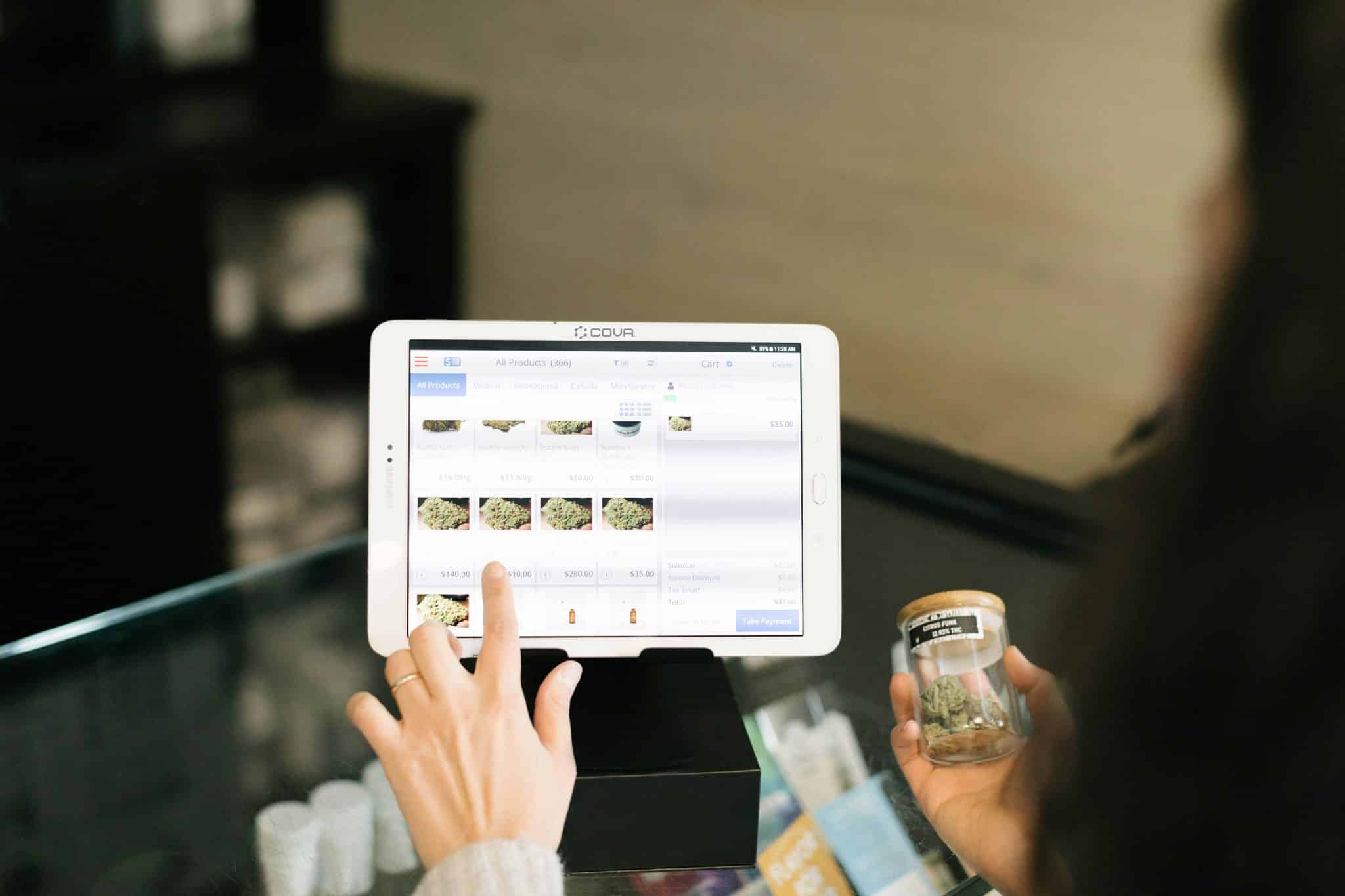
Technology integration is becoming standard, with many venues implementing point-of-sale systems that track individual consumption, mobile ordering for food and beverages, and digital membership programs that offer personalized recommendations based on previous visits and preferences.
The industry is also expanding beyond basic consumption services toward comprehensive cannabis lifestyle experiences. Some venues are adding retail shopping, educational workshops, wellness services, and entertainment programming to create destination experiences rather than simple consumption locations.
Interstate tourism represents a significant growth opportunity, particularly for states with established venues and tourist-friendly regulations. Nevada’s success with cannabis tourism suggests other states may develop similar models, especially those with existing entertainment and hospitality industries.
However, the industry still faces significant challenges including complex licensing requirements, restrictive zoning laws, banking limitations, and varying local acceptance. Many potential operators struggle with the high costs of compliance and the uncertainty of changing regulations across different jurisdictions.
For cannabis users, these developments mean increasing options for legal social consumption, more sophisticated experiences, and greater mainstream acceptance of cannabis culture. The evolution from basic consumption lounges to cannabis lifestyle venues reflects the broader normalization of cannabis in American society.
Ready to Experience Legal Cannabis?
Whether you’re interested in visiting a cannabis lounge or cafe, having proper legal access to cannabis products is the first step. If you’re in a medical cannabis state, getting your medical marijuana card can provide access to products and sometimes venue discounts.
For those planning to visit consumption venues while traveling, understanding which states allow out-of-state patients to purchase cannabis can help you plan your visit. Additionally, knowing the rules about traveling with medical marijuana ensures you stay compliant across state lines.
Find a qualified medical marijuana doctor near you to discuss whether medical cannabis is right for your situation and to learn about legal consumption options in your area.
Note: The content on this page is for informational purposes only and is not intended to be professional medical advice. Do not attempt to self-diagnose or prescribe treatment based on the information provided. Always consult a physician before making any decision on the treatment of a medical condition.
Note: Veriheal does not support illegally consuming therapeutic substances such as cannabis but acknowledges that it transpires because of the current illicit status, which we strive to change by advocating for research, legal access, and responsible consumption. Always consult a physician before attempting alternative therapies.
Frequently Asked Questions
What’s the main difference between a cannabis lounge and a cannabis cafe?
Cannabis lounges focus primarily on consumption and socializing, while cannabis cafes combine cannabis use with full dining experiences and professional food service.
Do I need to bring my own cannabis to these venues?
Most venues operate on a bring-your-own-cannabis (BYOC) model where you purchase from licensed dispensaries and consume on-site, though some locations offer integrated retail where you can buy and consume in the same venue.
Which states have operational cannabis lounges or cafes?
Nevada, California, Colorado, Alaska, Illinois, Massachusetts, Michigan, and New Mexico currently have operational social consumption venues, with New York, New Jersey, Connecticut, and Delaware developing regulations for future implementation.
How much does it cost to visit a cannabis consumption venue?
Entry fees typically range from $10-30, with additional charges for device rentals ($5-15) and food or beverages, though costs vary significantly by location and venue type.
Can I take photos inside cannabis lounges or cafes?
Most venues prohibit photography of other patrons for privacy reasons, though some allow photos of the space itself or your own party with staff permission.
Do cannabis cafes serve alcohol?
No, cannabis consumption venues are prohibited from serving alcohol due to state regulations that separate cannabis and alcohol licensing.
Author, Share & Comments