Your medical cannabis journey simplified: find partnered dispensaries, explore pricing options, earn rewards, and get answers to FAQs, all in one spot.
Though it may not be as widely discussed as other major health concerns like heart disease or cancer, liver disease is a common health condition that affects millions of people. According to the Centers for Disease Control and Prevention (CDC), there are currently 4.5 million adults who have been diagnosed with liver disease living in the US. And the Journal of Hepatology reports that liver disease is responsible for 2 million deaths annually, or 4% of deaths worldwide. Nearly two-thirds of those deaths occur in men.
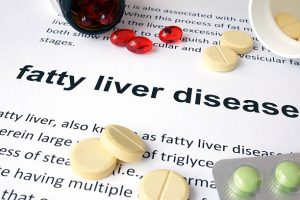
Liver disease is not a singular thing; rather, it is a variety of conditions that affect the organ’s health and function, from viral infections to metabolic or alcohol-induced conditions like fatty liver disease, and genetic diseases like hemochromatosis and cancers.
While we inherit or naturally develop some of these conditions and cannot control them, others develop directly from how we treat our bodies. Factors like diet or substance consumption can cause or worsen certain liver conditions. Which leads us to the question, which is worse for your liver: cannabis or alcohol?
The Function Of The Liver
Photo Credit: iStock
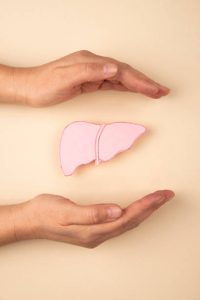
To answer that question, we need to quickly touch on the role of the liver in the body. Dark reddish brown and shaped like a cone, the organ rests just below the diaphragm and right above the stomach. At any given time, your liver is holding around one pint of blood, or 13% of the body’s total supply.
According to Johns Hopkins, over 500 vital functions are connected to the liver. These include clearing the blood of toxins and drugs, preventing blood clotting, producing bile for digestion, storing iron, and metabolizing many of the nutrients our bodies need.
Because of its major role in so many of the body’s processes, a functioning liver is necessary for survival. Northwestern Medicine Hepatologist, Justin R. Boike, told Northwestern Medicine’s HealthBeat, “…you can’t live without a liver, and you can’t live with liver failure. There is no machine like the dialysis machine for people with kidney failure that can replace the function of the liver.”
Alcohol and Your Liver
Alcohol metabolism occurs in several steps. When you drink alcohol, an enzyme in your liver called alcohol dehydrogenase breaks that alcohol down into a compound called acetaldehyde. Acetaldehyde is extremely toxic to the liver, so another enzyme (aldehyde dehydrogenase 2) then goes to work breaking acetaldehyde down into another compound called acetate, which is similar but less reactive, and the body can eventually turn acetate into carbon dioxide and water.
Every time you drink—whether you enjoy a glass of wine with dinner or take shot after shot on a night out—your body goes through this two-step process. And every time your liver encounters alcohol and produces acetaldehyde, both toxic compounds, it causes damage to your liver cells that may become irreversible if the insults are prolonged.
As a result of that damage, alcohol-related liver disease (ALD) occurs when too much alcohol is ingested over time. The amount of alcohol it takes to trigger ALD varies from person to person and is dependent on several factors. The University of Michigan reports that in the US, 21,000 people die annually from ALD, and while the vast majority of them are men, women typically develop the disease after less exposure to alcohol.
Alcohol Related Liver Disease
Photo Credit: iStock
While not everyone who drinks will develop alcohol related liver disease, it’s far more common than you may think, especially in chronic drinkers. Yale Medicine reports that ALD is rarely found in occasional drinkers, and more typically occurs in those who have consumed alcohol excessively for several years.
There are three stages of ALD: alcohol-related fatty liver disease, alcohol-related hepatitis, and alcohol-related cirrhosis. The early stages can typically be reversed completely by abstaining from alcohol, but the later stages are irreversible and can lead to death and an increased risk of serious complications like liver cancer.
See If You Qualify For Medical Marijuana -Select Your State!
Select Your State
Alabama
Alaska
Arizona
Arkansas
California
Colorado
Connecticut
Delaware
Florida
Georgia
Hawaii
Idaho
Illinois
Indiana
Iowa
Kansas
Kentucky
Louisiana
Maine
Maryland
Massachusetts
Michigan
Minnesota
Mississippi
Missouri
Montana
Nebraska
Nevada
New Hampshire
New Jersey
New Mexico
New York
North Carolina
North Dakota
Ohio
Oklahoma
Oregon
Pennsylvania
Rhode Island
South Carolina
South Dakota
Tennessee
Texas
Utah
Vermont
Virginia
Washington
West Virginia
Wisconsin
Wyoming
Never miss a post
Get updates on cannabis culture, new research, and expert insights
Like with alcohol, your liver is responsible for breaking down cannabis. Different groups of enzymes work to metabolize the THC and CBD compounds, eventually leading your body to excrete 80-90% of its metabolites as waste within 5 days.
Unlike with alcohol, however, there is currently no evidence that this process, or any of the chemicals it creates, are directly toxic to an already healthy liver.
However, if fibrosis or chronic liver disease (CLD) is already underway, then activating CB1 receptors at that time may advance liver scarring. THC activates CB1, so avoiding this in CLD patients may be best.
Instead, THCV’s opposite effects on CB1 are more promising than THC itself. Also, targeting CB2 and other anti-inflammatory receptors with beta-caryophyllene and nonintoxicating cannabinoids (e.g., CBD, THCA) presents an overall more potentially therapeutic approach.
Some studies have even found that smoking cannabis might protect your liver, but keep in mind that this clinical data is small and isn’t strong enough yet. To date, there isn’t any clinical research on cannabinoids and alcohol-related liver disease. Still, preclinical studies on related conditions are supportive.
One such study finds that increased cannabis consumption was consistent with lower prevalence of nonalcoholic fatty liver disease (the most prevalent form of liver disease in the US). Essentially, frequent cannabis use lowers inflammation, which decreases the risk of the metabolic-induced condition.
Another study finds correlations between better outcomes for chronic HCV patients (or those who have been infected with the HCV virus for long periods of time and are at risk for liver damage) and increased cannabis consumption. Here, cannabis use is associated with decreased incidence of liver cirrhosis in these patients, but no effect on mortality is seen yet.
The Bottom Line
Alcohol is known as the root cause of liver disease for decades. While there is currently no evidence that cannabis leads to liver conditions, it may be best to avoid THC in favor of hemp-derived THCA, CBD, CBDA, THCV, and beta-caryophyllene.
This doesn’t necessarily mean that consuming cannabis is completely safe and drinking alcohol is always dangerous. Drinking infrequently and in small amounts is reasonable, but the WHO emphasizes that abstinence from alcohol is your best bet when it comes to protecting your liver and overall health. The evidence suggests that general health risks are well-documented, and there is truly no safe amount of alcohol for health.
Additionally, there simply isn’t enough research surrounding cannabis and its impact on the liver to say that it’s necessarily the better choice. Some research suggests that cannabis use may exacerbate or accelerate existing liver conditions, while specific cannabinoids may target the approach better. A lack of evidence is not necessarily conclusive.
Like with anything else, cannabis and alcohol use will impact each person differently. Speaking with your doctor about any concerns and staying on top of your health are your best bets when it comes to staving off liver disease. If you have a family history of liver conditions or a genetic predisposition to these conditions, you may also consider speaking with a medical professional about screening for liver disease. And as always, it’s better to exercise caution when it comes to substance use of any kind, if you are feeling uneasy about your mental or physical well-being.
Madison Troyer is a Brooklyn-based freelancer with 10 years of experience covering pop culture, entertainment, lifestyle, and wellness content. Her work has appeared in outlets like The Chicago Tribune, Newsweek, and a host of other places. When she's not at her desk, you can find her training for her next marathon or reading.
Cannabis coconut oil offers an easy, flexible way to create and use infused cannabis at home. People choose it for edibles, beverages, and topical products because its high fat content supports efficient absorption and longer-lasting effects. Many people choose cannabis coconut oil as a smoke-free option that can offer predictable dosing and dietary flexibility. When…
The Cereal Milk strain name alone conjures up images of sugary-sweet, colorful creaminess. Consumers enjoy Cereal Milk’s strain effects right alongside its irresistible flavor and terpene palette. Many consumers know this powerhouse hybrid’s reputation, but this guide takes a deeper look at Cereal Milk for people who are less familiar. What Is the Cereal Milk…
Once upon a time, the pen was mightier than the sword. These days? It’s mightier than the blunt. That’s how the humble vape pen earned its modern title of the “Penjamin.” It’s a distinguished moniker catching on among a new generation of cannabis enthusiasts. But what exactly does Penjamin mean, and is there more to…
Late last year, language banning the majority of hemp-derived THC products on the market was tucked into a spending bill signed off on by Trump. The bill passed after the longest government shutdown in history. While many people were glad to see the government return to action, many others feared for their businesses, livelihoods, and…
Since Richard Nixon launched the War on Drugs in 1970 — and Ronald Reagan escalated it in the 1980s — the U.S. has poured billions into fighting what those leaders labeled ‘national security threats.’ Today’s data shows that the war’s true casualties are the communities and individuals who needed treatment, not punishment. Nixon Vs. The…
The statements made regarding cannabis products on this website have not been evaluated by the Food and Drug Administration (FDA). Cannabis is not an FDA-approved substance and is still illegal under federal law. The information provided on this website is intended for educational purposes only and is not intended to diagnose, treat, cure, or prevent any disease. It is not intended as medical advice and should not be considered as a substitute for advice from a healthcare professional. We strongly recommend that you consult with a physician or other qualified healthcare provider before using any cannabis products. The use of any information provided on this website is solely at your own risk.