Your medical cannabis journey simplified: find partnered dispensaries, explore pricing options, earn rewards, and get answers to FAQs, all in one spot.
Rolling a blunt is a right of passage for stoners. It’s one thing to smoke out of a bong, but it’s a whole other thing to roll up your own goods and go on a nice evening stroll. That being said, rolling a blunt is easier said than done. There’s a reason it’s a right of passage!
So let’s get into it—we’ll discuss what a blunt is, how to roll one, and some common troubleshooting!
What is a Blunt?
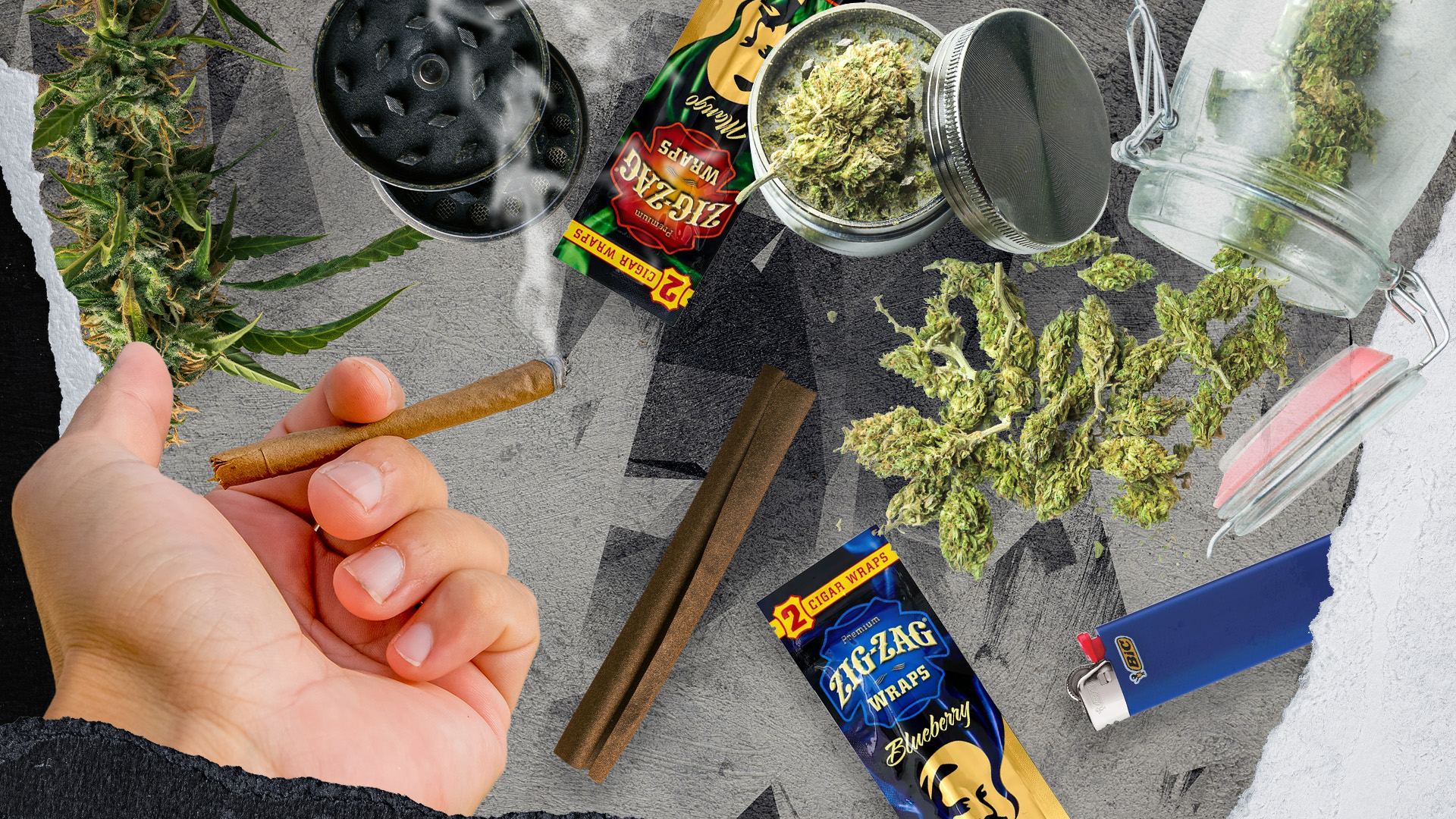
A blunt is simply cannabis rolled in tobacco leaf wrappers, also known as a blunt wrap. Not to be confused with a joint, which is cannabis in rolling papers, or a spliff, which is both cannabis and tobacco in rolling papers.
Blunts are a great on-the-go way to smoke cannabis–for example, you may enjoy one when you’re going on a walk or hanging out with friends.
Blunts also feel similar to cigarettes in your hand, so if you’re weaning off of smoking, that familiar feeling of holding something can help ease your transition.
How to Roll a Blunt
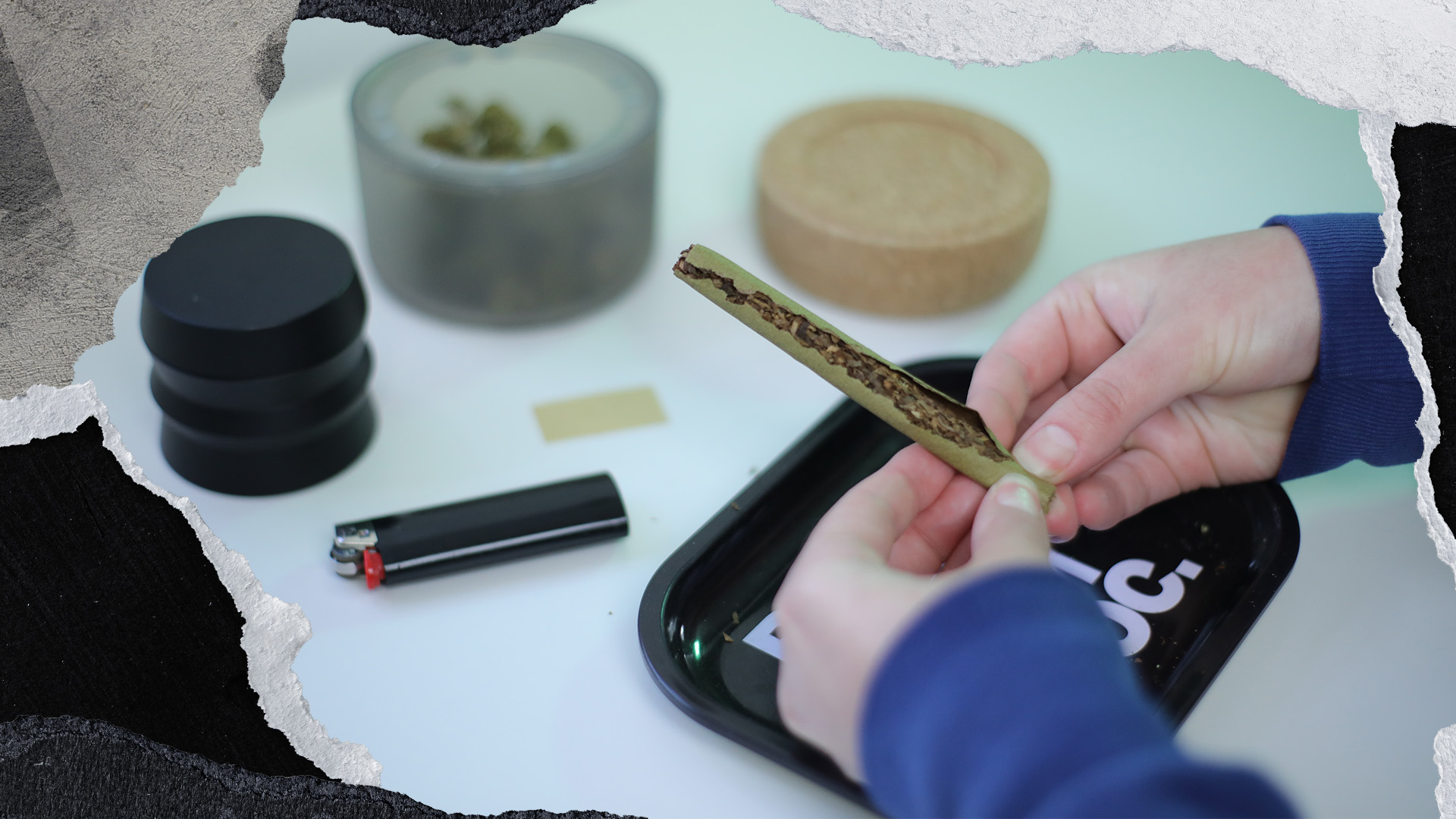
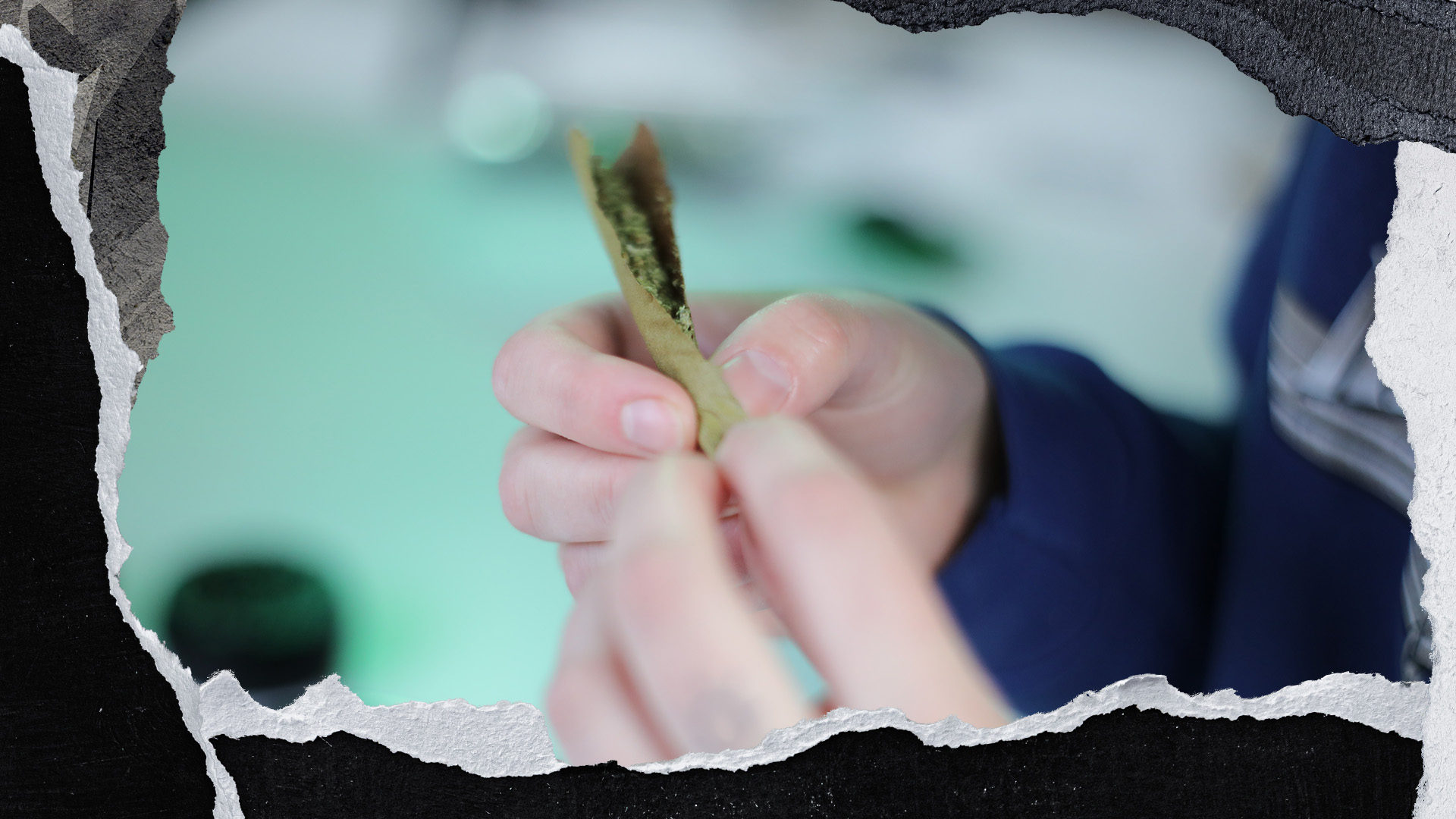
First, crack open the wrap and remove all of the tobacco. Then, fold your tobacco wrap in half horizontally. This will help keep the cannabis in the middle of your wrap when you’re first getting the blunt going.
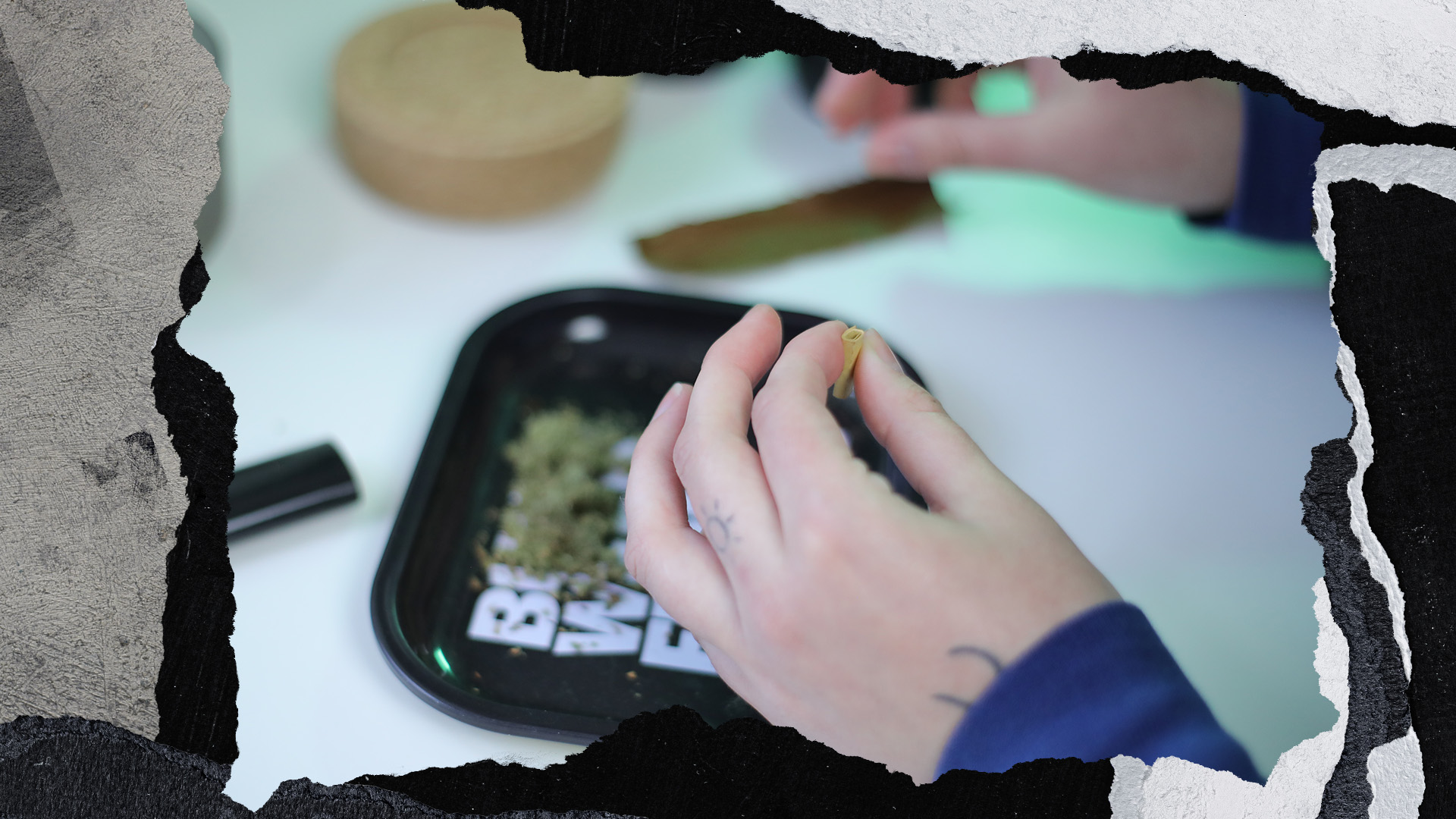
Next, fold your filter. Make a small zig-zag fold on one end and then, starting on that end, roll it into a little tube. The zig-zag helps prevent cannabis from being sucked up when you hit the blunt and makes the filter more effective.
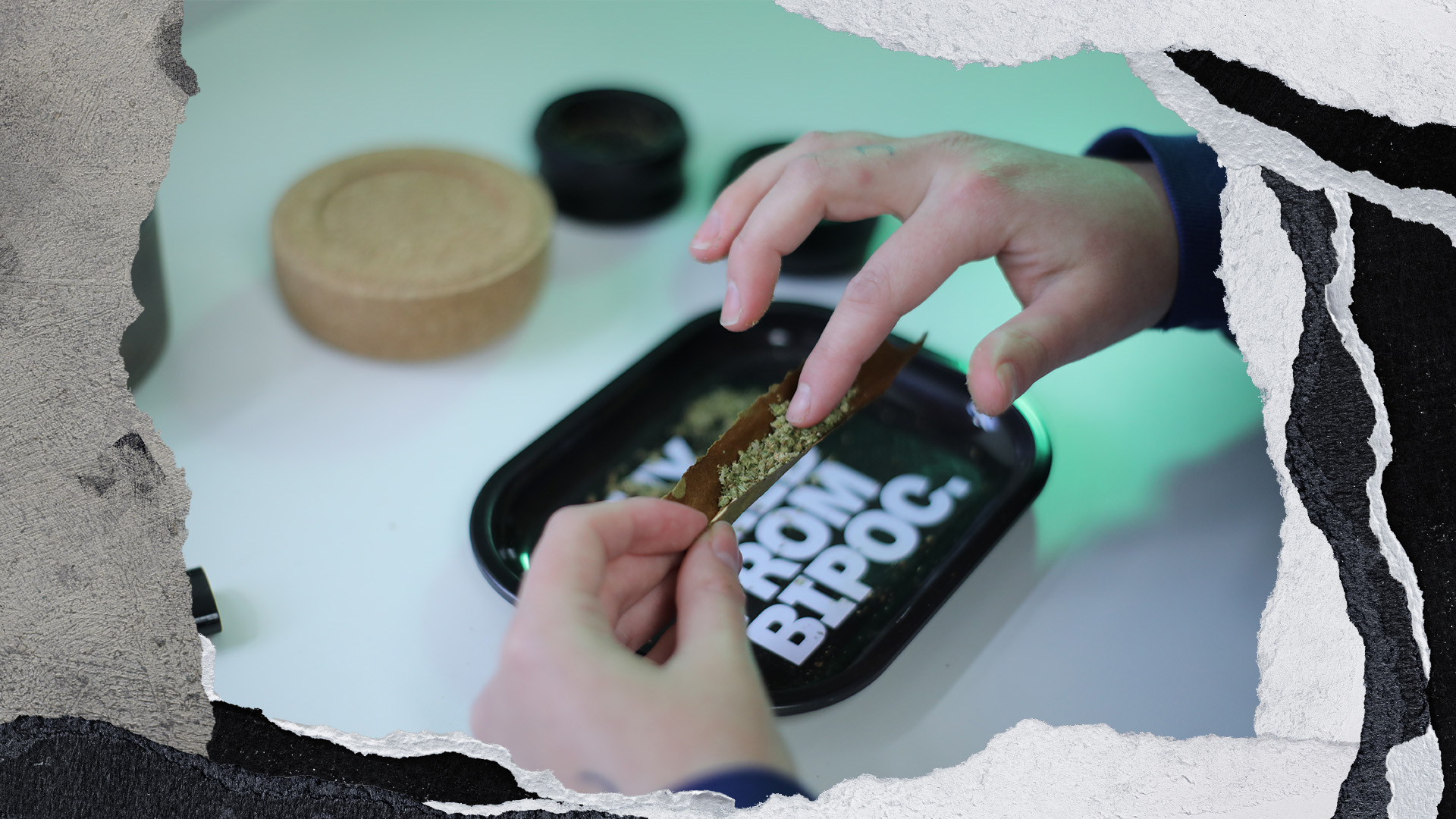
Hold the wrap horizontally between your hands with your thumbs on one side and the rest between your fingers. The sticky seal should be on the top part of the wrap, facing you. Place the filter on the left side of the wrap.
Place the cannabis into the fold of the wrap, letting go of the wrap with one hand to do so. You’ll get a feel for how much cannabis to use over time.
Now, you begin the rolling process. Move your hands closer to the fold in the middle that contains the cannabis. Slowly roll the cannabis up and down with your fingertips, working it towards the bottom of the wrap.
Once the plant matter is all towards the bottom of the wrap, you’re faced with the trickiest part. You need to get the left side of the wrap to roll behind the filter- but after that, it’s mostly smooth sailing. This will take practice, but it’s all about commitment.
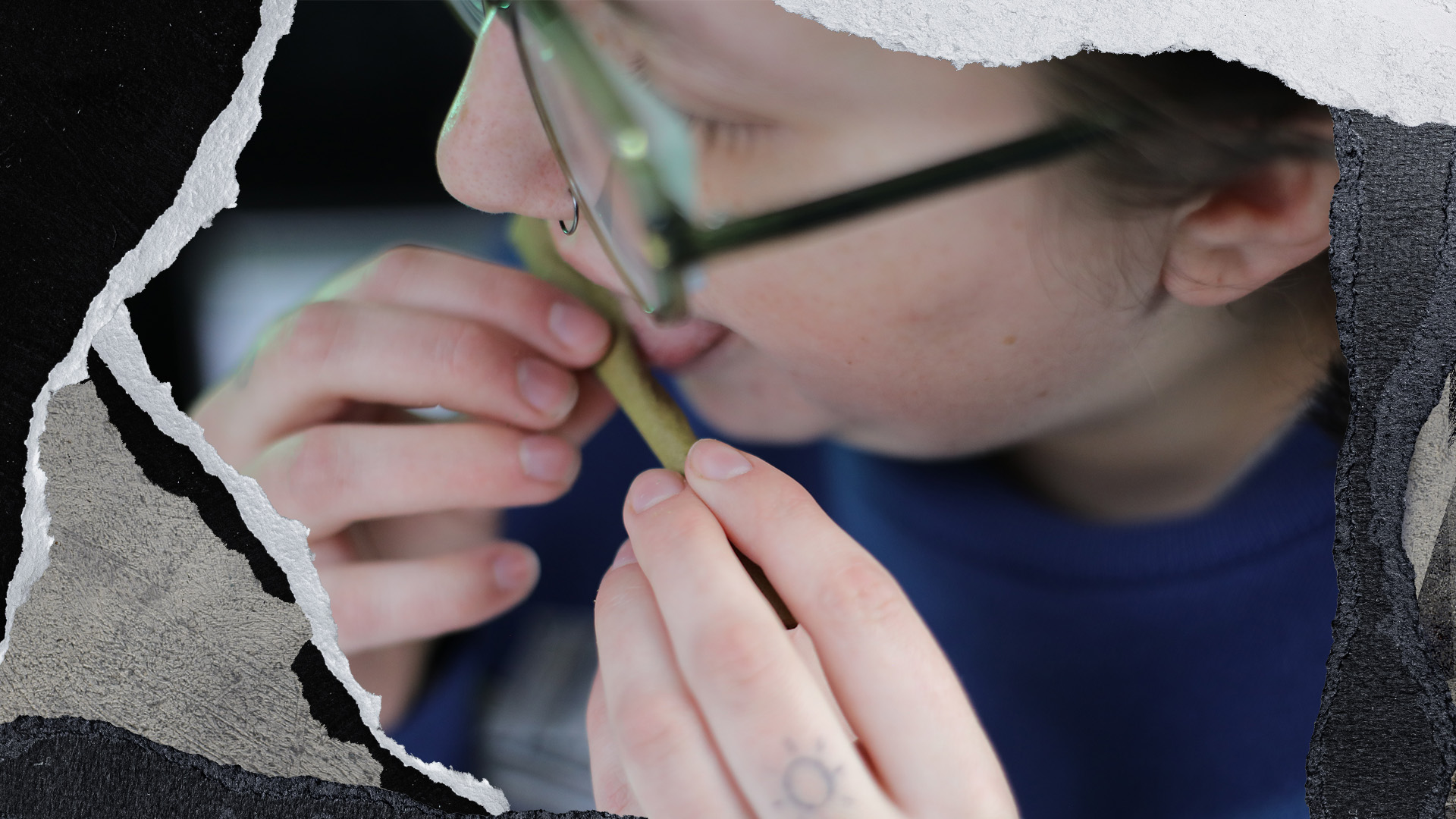
Once the wrap is caught behind the filter, continue to roll the blunt around the plant matter and eventually lick the sticky section and seal it. Congrats, you’re almost done!
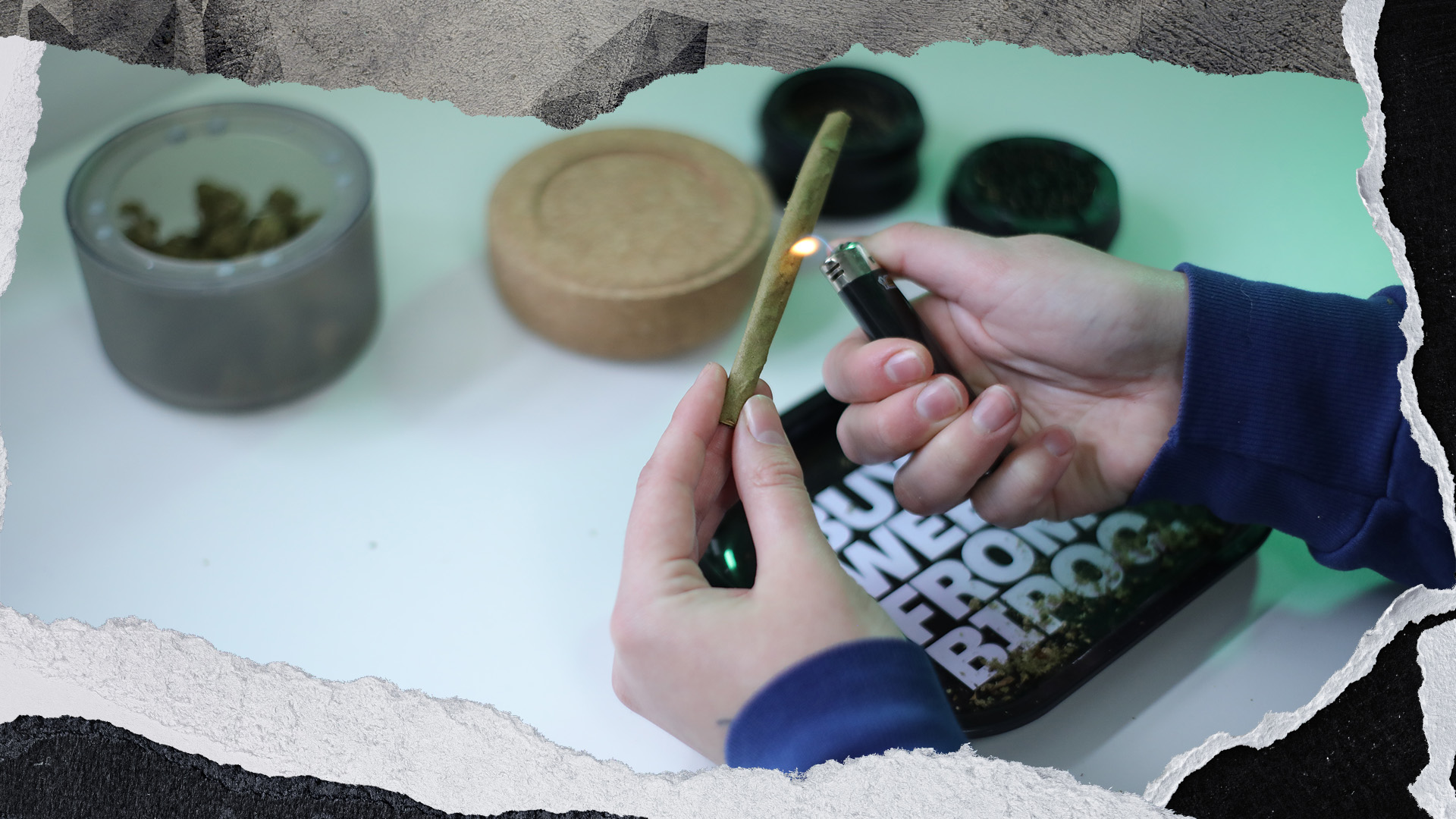
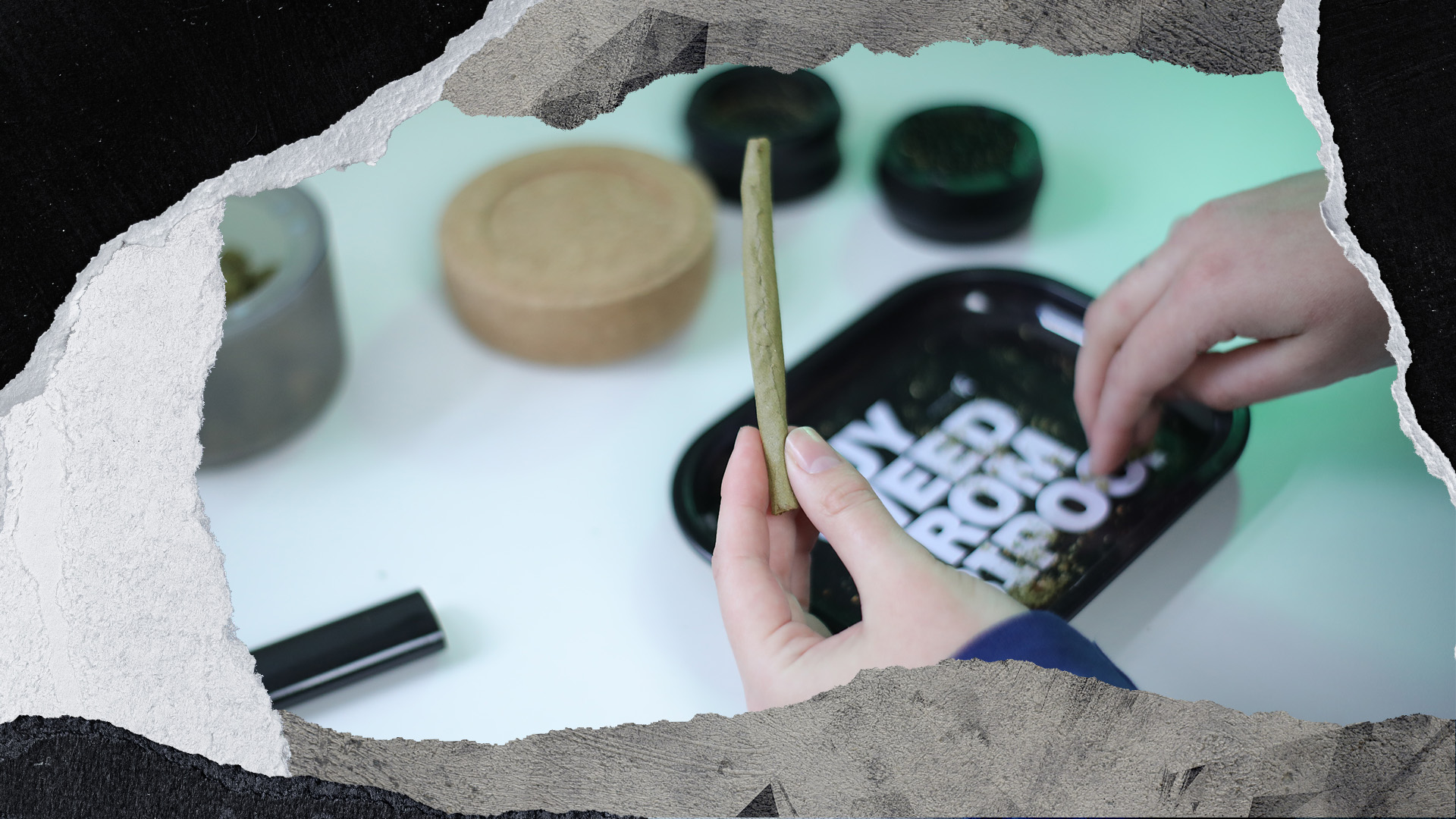
Now, hold your blunt vertically and tamp down the cannabis. Add a bit more and tamp it down again. After this, you can use a lighter to seal the edges and hold everything together.
Last but not least, twist the top of the blunt into the well-known final step, and you’re ready to go!
Let’s troubleshoot some common issues that people run into when first learning how to roll a blunt.
How Much Plant Matter to Add
Being able to estimate the right amount will come with time. For now, add what looks good and keep track of the size of your blunts. Skinny blunts mean you need more plant matter.
If you add too much cannabis, it will just fall out during the rolling process. Make sure you’re using a rolling tray to catch the stray plant material so you’re not wasting it or making a mess!
Catching the Wrap Behind the Filter
This is truly the hardest step. Our best advice is to really go for it, looking directly at the filter and just imagining what you want to happen. Without the muscle memory, it will be about sheer luck at first—but pay close attention to what you’re doing so you can replicate it!
This is the step to really focus on when you’re first learning how to roll. It’s all about visualization and commitment until it’s eventually muscle memory.
Not Having Enough Plant Matter Near the Filter
A rookie mistake is to roll away all the cannabis from the filter area, resulting in a flimsy blunt. Be careful not to do this- it’s easy for your left hand to land there and naturally push the plant material away from the area, so you need to be intentional.
Another thing that helps with this is properly tamping down your blunt at the end. If you do a good job, you’ll successfully move the cannabis towards the filter while compressing it for a better smoking experience.
Sealing the Blunt Properly
There’s nothing worse than rolling the perfect blunt and then ruining it during the sealing process!
Sealing a blunt is an art form in itself. You want to wet the entire seal, but you don’t want to wet the blunt so much that it falls apart.
Don’t be scared to lick the seal more than once if you don’t think you’ve fully wet it, but if you’re going to double dip then you need to be extra careful not to use too much saliva.
A Caveat to Rolling Blunts
Some people have disabilities that make their hands shake. Don’t worry, there are alternatives to roling a blunt!
One way to get a blunt without fully rolling it is to use cones. Cones allow you to pack the cannabis into them without having to do any of the rolling itself.
Another option, and perhaps the most accessible, is to buy prerolls. Although it’s not as financially sound, prerolls are a great way to have blunts if you’re unable to roll them yourself.
Final Thoughts
Be sure to watch some videos and ask friends for help—one article tutorial probably won’t be enough to teach you how to roll a blunt. However, we hope this guide helped you understand the basics, and from here you will only grow your skills until you’re a pro.
Levi Roberts writes with unflinching transparency about cannabis and its place in the world. He lives on unceded Lenapehoking land with his spunky partner and two roommates. Both roommates are cats. Truly, he’s just a goofy guy with a stubborn conviction for liberation, weed, and weird music.
Reclaim edibles are re-purposed leftovers. You see that sticky residue sitting in your dab rig? Take a look, it is there. With a teensy bit of creativity, you can actually transform it into something amazing. The downside? Probably won’t hit exactly like fresh cannabis and won’t taste great either. However, if for whatever reason you…
In the school of life, tetrahydrocannabinol (THC), the most popular intoxicating cannabis compound, is like the popular kid everyone knows by name. The center of attention, always getting talked about, and highly sought after. Cannabidiol (CBD), on the other hand, gets a little less love. It’s more like the quiet honor student: low-key, non-intoxicating, rarely…
In the confusing landscape of state-by-state medical marijuana legalization and federal prohibition lies a patient’s pursuit of a better quality of life, balanced with an unrestricted financial livelihood. In workplaces across many different medical marijuana legal states, no law guarantees that a valid, card-carrying MMJ patient status exempts an employee from termination or discrimination stemming…
An alarming trend has recently come to light: more non-smokers are getting lung cancer than ever before. Given that lung cancer is the most common worldwide and the leading cause of cancer death, you may be worried about the implications of your cannabis habits. How much does cannabis contribute to lung cancer risk? According to…
It feels like every other day, a fresh slang term pops up in the cannabis lexicon, and today, we’re looking at an entry that’s all over TikTok and Reddit – Yart! Spoiler alert: it has everything to do with the humble vape cart (and how challenging it is to talk about cannabis on social media). …
The statements made regarding cannabis products on this website have not been evaluated by the Food and Drug Administration (FDA). Cannabis is not an FDA-approved substance and is still illegal under federal law. The information provided on this website is intended for educational purposes only and is not intended to diagnose, treat, cure, or prevent any disease. It is not intended as medical advice and should not be considered as a substitute for advice from a healthcare professional. We strongly recommend that you consult with a physician or other qualified healthcare provider before using any cannabis products. The use of any information provided on this website is solely at your own risk.