1-855-452-6224 (Customer Support Available 24/7)



Whether you love or hate President Trump, you might have a few choice words for him when next you visit a dispensary for a refill. On April 2nd, 2025, Liberation Day, the president of the United States announced sweeping tariffs affecting allies, neutral nations, and adversaries alike.
These tariffs are still raising the prices of everyday goods, ranging from groceries to cars. Even Walmart, which is famous for its bargains, recently warned customers to brace for higher prices. The domino effect of these tariffs is spreading across industries, and it looks like the cannabis market won’t be left out.
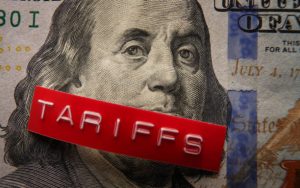
Growing and processing cannabis into smokable flowers or your favorite concentrates is a complex process with multiple moving parts. Thanks to the tariffs, cannabis production and processing costs are on the rise, and brands may pass those costs to consumers.
Even if production costs stay the same, the tariffs have already affected the cost of living of cannabis farmers and producers. These individuals and businesses need to make more money to stay ahead of rising costs. The easiest way to do that is to increase product prices, leaving consumers like you paying more for your favorite cannabis products.
But didn’t the president say other countries would pay the tariffs? Sadly, that’s not how tariffs work. Tariffs are taxes on imported goods, and U.S. companies importing products pay those taxes to U.S. Customs.
The added costs from these taxes don’t magically disappear. Retailers pass them down the supply chain, and they show up on the price tag you see in the store. In this case, that means higher prices at your local dispensary.
However, in some cases, businesses absorb some or all of the new costs to stay competitive or keep loyal customers. But this strategy may not work for cannabis businesses already struggling with the financial burden of high taxes and limited access to financial services.
Be it flower or concentrate, every cannabis product starts as a plant. If we grow the plant in the U.S., the tariffs shouldn’t affect production costs, and prices should stay the same, right? The good news is that most of the legal cannabis consumed in each state is grown within that state. This is thanks to federal law, which prohibits the interstate trade of cannabis.
As such, each state where cannabis is legal has to grow, process, and distribute the herb entirely within its borders. So, yes, tariffs won’t affect your legal marijuana if it’s grown in-state. But they can impact the tools, agricultural products, and packaging materials used for production.
The U.S. imports most of these products, or at least their components. An increase in their prices due to the tariffs will no doubt affect overall production costs and influence the prices you pay at your local dispensary. To summarize, while the bud may be local, very few cannabis products are 100% made without some imported help.
Here are some products crucial to cannabis production that most U.S. farmers and producers import:
READ: The Cost of Medical Marijuana: A State-By-State Breakdown
If you use cannabis for medical reasons or to improve your quality of life, you likely won’t stop just because it costs more. But you can soften the blow to your wallet with these money-saving tips:
For now, no one knows. If Trump’s vision becomes reality, America may start producing more of the products it consumes. But even then, prices may not drop. After all, businesses import items because manufacturing within the U.S. costs far more.
American labor costs, regulations, and overheads are significantly higher than those in countries like China, where wages are lower and production is cheaper. So, don’t expect 100% made in the U.S. cannabis products to be equally or more affordable.
Then again, President Trump may cave in to pressure, call off his tariff war, and return global trade to business as usual. If that happens, prices on imported goods, including cannabis paraphernalia, grow supplies, and packaging, could stabilize or even drop. But until there’s more clarity, the industry remains in a state of uncertainty, and consumers should expect potential price fluctuations in the near future.
Sign up for our newsletter

Learn the process in your state
All Rights Reserved Veriheal Inc. ©
Terms Privacy Policy Advertising Agreement Content Disclamer


Get your medical marijuana card today
Sign up in under 5 minutes
Start By Selecting Your State
 Alabama
Alaska
Arizona
Arkansas
California
Colorado
Connecticut
Delaware
Florida
Georgia
Hawaii
Idaho
Illinois
Indiana
Iowa
Kansas
Kentucky
Louisiana
Maine
Maryland
Massachusetts
Michigan
Minnesota
Mississippi
Missouri
Montana
Nebraska
Nevada
New Hampshire
New Jersey
New Mexico
New York
North Carolina
North Dakota
Ohio
Oklahoma
Oregon
Pennsylvania
Rhode Island
South Carolina
South Dakota
Tennessee
Texas
Utah
Vermont
Virginia
Washington
West Virginia
Wisconsin
Wyoming
Puerto Rico
Alabama
Alaska
Arizona
Arkansas
California
Colorado
Connecticut
Delaware
Florida
Georgia
Hawaii
Idaho
Illinois
Indiana
Iowa
Kansas
Kentucky
Louisiana
Maine
Maryland
Massachusetts
Michigan
Minnesota
Mississippi
Missouri
Montana
Nebraska
Nevada
New Hampshire
New Jersey
New Mexico
New York
North Carolina
North Dakota
Ohio
Oklahoma
Oregon
Pennsylvania
Rhode Island
South Carolina
South Dakota
Tennessee
Texas
Utah
Vermont
Virginia
Washington
West Virginia
Wisconsin
Wyoming
Puerto Rico