Learning how to properly store marijuana preserves its potency, flavor, and therapeutic benefits for months. Without proper storage, THC converts to less psychoactive compounds, terpenes evaporate, and your cannabis loses the effects you’re seeking. The right storage method depends on how long you plan to keep your cannabis and what containers you have available.
Why Proper Cannabis Storage Matters
Proper storage protects cannabis from the four main factors that cause degradation: light, air, heat, and humidity. When these elements interact with your cannabis over time, THC degrades into cannabinol (CBN), which produces a more sedating effect with less psychoactive potency.
Terpenes, the compounds responsible for aroma and flavor, are even more fragile than cannabinoids. They begin evaporating within days of exposure to air and light, which means improperly stored cannabis loses its distinctive smell and taste quickly. Poor storage also creates conditions where mold and bacteria can develop, making your cannabis unsafe to consume.
4 Environmental Factors That Ruin Cannabis
Light Exposure
UV light breaks down cannabis trichomes and accelerates THC degradation faster than any other single factor. Direct sunlight can reduce potency by up to 30% in just a few weeks. Even artificial light from lamps and overhead fixtures causes gradual cannabinoid breakdown over time.
Store your cannabis in a dark place like a cupboard, drawer, or opaque container. Clear glass jars work well if kept in complete darkness, but amber or colored glass provides better light protection for everyday storage.
Air & Oxygen
Oxygen exposure causes THC to oxidize into CBN through a process that continues as long as cannabis remains in contact with air. This reaction happens slowly but consistently, which means cannabis stored in loose bags or unsealed containers loses potency every day.
Airtight containers slow this process significantly by limiting the amount of oxygen available to react with cannabinoids. The goal is not to eliminate all air – cannabis needs some breathing room – but to minimize ongoing air exchange.
Humidity Levels
Cannabis performs best when stored at 59-63% relative humidity. Below 55%, trichomes become brittle and break off easily during handling. Above 65%, you risk mold growth and bacterial contamination that can make your cannabis dangerous to consume.
Humidity packs designed for cannabis help maintain consistent moisture levels without over-drying or over-moistening your flower. These packs regulate humidity automatically and prevent the fluctuations that cause quality problems.
Temperature Control
Heat accelerates every degradation process affecting cannabis. Temperatures above 77°F cause terpenes to evaporate rapidly and speed up THC breakdown. Extreme heat above 90°F can degrade cannabinoids within hours rather than weeks.
Room temperature storage between 60-70°F provides the best balance for most home environments. Avoid storing cannabis near heat sources like radiators, sunny windowsills, or electronics that generate warmth.
Vacuum Sealing Cannabis: Pros and Cons
Vacuum sealing removes nearly all air from cannabis packaging, which makes it excellent for long term storage lasting six months or longer. The lack of oxygen prevents oxidation and preserves cannabinoid levels better than any other storage method for extended periods.
However, vacuum sealing can damage delicate trichomes if done incorrectly. The suction process can crush flower structure and break off the resinous crystals that contain most cannabinoids. This trade-off makes vacuum sealing ideal for storage but poor for cannabis you plan to use within a few weeks.
Vacuum Sealing Process:
- Pre-freeze cannabis for 2-3 hours to harden trichomes and reduce crushing damage
- Wrap flower loosely in parchment paper to create a protective barrier
- Use the lowest suction setting available on your vacuum sealer
- Seal quickly to minimize compression time
- Store sealed packages in a cool, dark location below 70°F
- Label packages with strain name and sealing date for tracking
Should You Refrigerate Cannabis? Complete Guide
Refrigeration can extend cannabis storage life by slowing degradation processes, but it creates new challenges around humidity control and temperature consistency. The main benefit is consistent cool temperatures that prevent heat-related potency loss during hot weather or in warm climates.
The primary risk is condensation formation when cold cannabis meets room temperature air. This moisture can promote mold growth and damage flower quality quickly. Additionally, refrigerator humidity levels often exceed the 65% threshold where mold problems begin.
Refrigeration Guidelines:
- Use airtight containers with humidity packs to prevent moisture absorption
- Allow refrigerated cannabis to reach room temperature before opening containers
- Avoid frequent temperature changes that cause condensation cycles
- Never store cannabis in refrigerator crisper drawers where humidity runs highest
- Consider refrigeration only for storage periods exceeding three months
Freezer storage warnings: freezing makes trichomes extremely brittle and causes them to break off during any handling. Reserve freezer storage only for cannabis destined for extraction processes where trichome structure does not matter.
7 Container Types for Cannabis Storage
Not all containers protect cannabis equally. Here are the main options ranked by effectiveness:
- Mason jar with humidity pack: the gold standard for most users; see detailed guide below
- Vacuum-sealed bags: best for long-term storage over six months
- Airtight glass containers (non-mason): solid alternative if jar sizes don’t suit your quantity
- Titanium or metal containers: durable and light-blocking but less accessible than glass
- Opaque plastic containers with locking lids: budget option; plastic can absorb odors over time
- Cannabis humidors: wood-based humidors designed for cannabis, but wood can absorb terpenes if uncured
- Humidity pack pouches: ideal for travel; re-sealable and humidity-regulated but not as airtight as jars
Mason Jar Storage: The Gold Standard Method
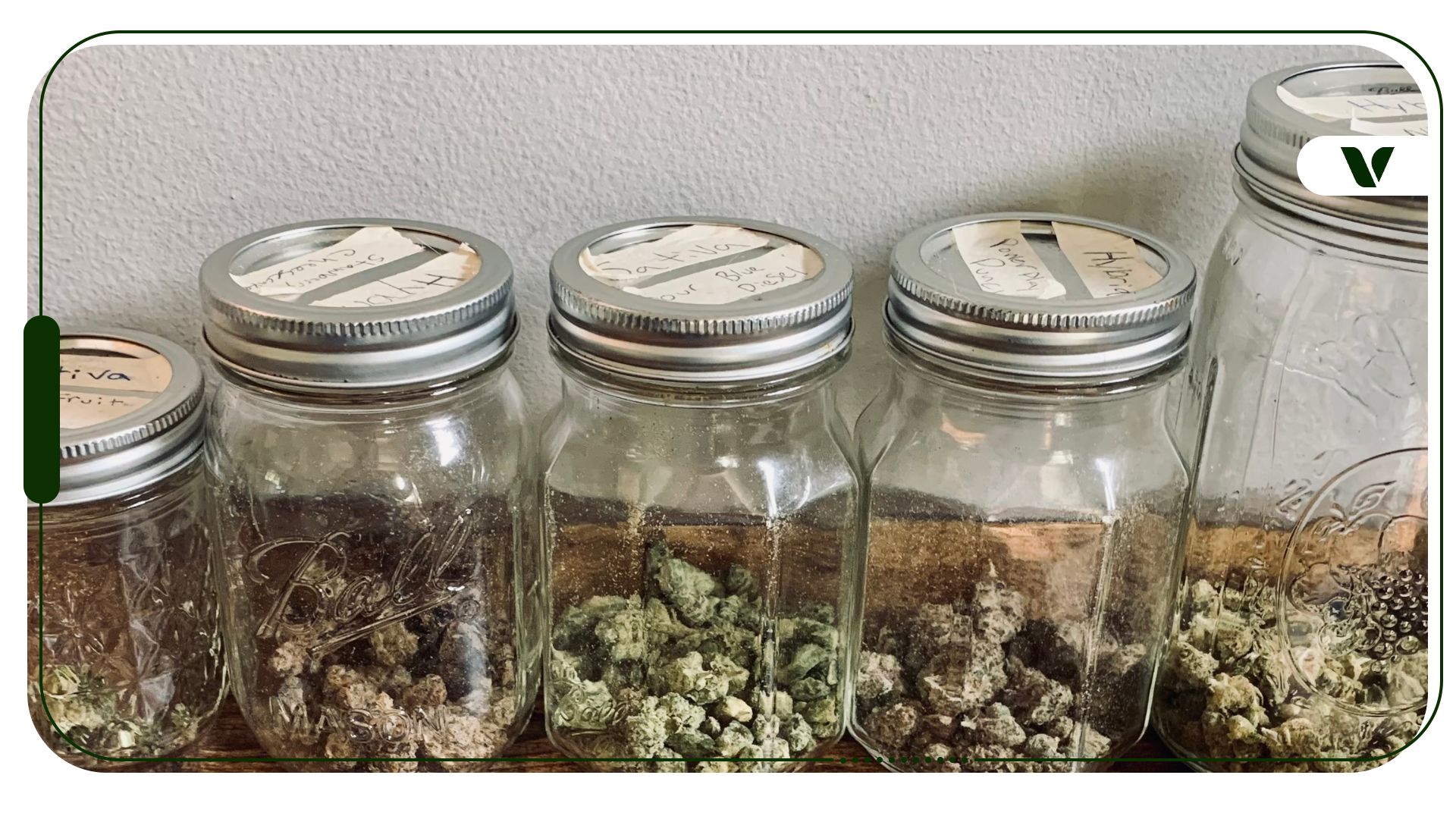
Mason jars provide the ideal combination of airtight sealing, size flexibility, and easy access that makes them the preferred storage method for most cannabis users. The glass material does not absorb odors or flavors, and the tight-fitting lids create an oxygen barrier without completely eliminating air circulation.
Mason Jar Setup Process:
- Choose jar size based on your cannabis quantity – pint jars for 1/4 ounce, quart jars for 1/2 to 1 ounce
- Clean jars thoroughly with isopropyl alcohol and allow to dry completely
- Add one humidity pack sized for your jar volume (8-gram packs for pint jars, 62-gram packs for quart jars)
- Fill jar no more than 75% full to allow air circulation around flower
- Label jars with strain name and storage date for tracking freshness
- Store in a dark cupboard or drawer away from heat sources
Burping technique for freshly cured cannabis: open jars daily for the first week, then weekly thereafter. This releases excess moisture and prevents anaerobic conditions that can cause off-flavors. Well-cured cannabis typically needs minimal burping after the initial week.
|
Jar Size
|
Cannabis Amount
|
Humidity Pack Size
|
Ideal Use
|
|
4 oz (half-pint)
|
Up to 1/8 ounce
|
1-gram pack
|
Personal sampling amounts
|
|
8 oz (pint)
|
1/8 to 1/4 ounce
|
8-gram pack
|
Weekly personal use
|
|
16 oz (pint)
|
1/4 to 1/2 ounce
|
8-gram pack
|
Bi-weekly personal use
|
|
32 oz (quart)
|
1/2 to 1 ounce
|
62-gram pack
|
Monthly personal use
|
Best Storage Locations for Cannabis
The best storage locations maintain consistent temperature and humidity while protecting cannabis from light exposure. Interior closets, bedroom drawers, and kitchen cupboards away from heat sources provide stable environments for most containers.
Avoid locations with temperature fluctuations like attics, basements, garages, or anywhere near heating vents. These areas experience daily temperature swings that cause condensation cycles and accelerate degradation. Bathrooms also present humidity problems from shower steam and poor ventilation.
Recommended storage spots: bedroom closets on interior walls maintain the most consistent temperature, kitchen cupboards away from stoves and dishwashers stay cool and dry, office desk drawers provide easy access with stable conditions, and dedicated storage boxes in temperature-controlled rooms work well for larger quantities.
Locations to avoid: cars and garages where temperatures fluctuate dramatically, bathroom medicine cabinets due to humidity from showers, sunny windowsills or anywhere with direct light exposure, and near electronics that generate heat like computers or gaming systems.
Long-Term vs Short-Term Storage Methods
Short-term storage for cannabis you plan to use within 2-3 months focuses on maintaining easy access while preserving immediate quality. Mason jars with humidity packs stored in a dark cupboard handle most short-term needs effectively without requiring special equipment.
Long-term storage for periods exceeding three months requires more aggressive preservation techniques. Vacuum sealing, refrigeration, or specialized storage containers become worthwhile when you need to maintain potency for six months to a year.
Short-term storage (up to 3 months):
- Mason jars with 62% humidity packs
- Room temperature storage in dark locations
- Weekly container opening to check condition
- Standard airtight containers work adequately
Long-term storage (3+ months):
- Vacuum-sealed packages in cool, dark locations
- Refrigeration with proper humidity control
- Monthly condition checks rather than weekly
- Consider dividing large quantities into smaller sealed portions
The key difference is access frequency. Short-term storage assumes regular opening and use, while long-term storage prioritizes preservation over convenience. Choose your method based on realistic consumption timelines rather than theoretical storage duration.
How Long Does Properly Stored Cannabis Last?
Properly stored cannabis maintains most of its potency for 6-12 months under ideal conditions, with gradual degradation continuing thereafter. The timeline depends heavily on storage method, initial quality, and environmental consistency throughout the storage period.
Medical cannabis patients who need consistent dosing should pay special attention to potency changes over time. A strain that starts at 20% THC may drop to 15-17% THC after six months of proper storage, which affects dosing calculations and symptom management effectiveness.
|
Storage Method
|
Potency Timeline
|
Quality Timeline
|
Best Use Case
|
|
Mason jar + humidity pack
|
90% potency at 6 months
|
Good quality 8-10 months
|
Daily to weekly use
|
|
Vacuum sealed
|
95% potency at 6 months
|
Good quality 12+ months
|
Long-term storage
|
|
Basic airtight container
|
80% potency at 6 months
|
Fair quality 6-8 months
|
Immediate use only
|
|
Refrigerated mason jar
|
95% potency at 6 months
|
Excellent quality 12+ months
|
Medical patient storage
|
Signs of significant degradation: loss of original aroma and development of hay-like smell, brittle dry texture that crumbles easily when handled, noticeable reduction in effects strength compared to fresh cannabis, and color changes from vibrant green to brown or yellow tones.
Cannabis stored beyond 12 months typically remains safe to consume but delivers diminished effects. The decarboxylation process that activates THC continues slowly during storage, but the overall cannabinoid content decreases over extended periods.
Signs Your Cannabis Has Gone Bad
Recognizing deteriorated cannabis protects your health and prevents wasting money on ineffective products. Moldy cannabis presents serious health risks and requires immediate disposal, while other quality issues simply indicate reduced potency or poor storage.
Visual signs of problems: white, gray, or black fuzzy growth indicating mold contamination, excessive dryness where cannabis crumbles to dust when touched, color changes to brown, yellow, or other unnatural hues, and visible insects or evidence of pest contamination.
Aroma and texture indicators: musty, ammonia-like, or moldy odors replacing the original strain scent, completely absent smell where vibrant terpenes once existed, spongy or unusually soft texture that feels different when handled, and sticky residue that was not present when cannabis was fresh.
Any sign of mold contamination means the entire batch must be discarded immediately. Mold can cause respiratory problems and other health issues that make contaminated cannabis dangerous regardless of remaining potency levels.
Get your medical marijuana card with Veriheal today and ensure you have access to properly stored, lab-tested cannabis from licensed dispensaries. Find a qualified physician in your state to start your cannabis journey safely.
Note: The content on this page is for informational purposes only and is not intended to be professional medical advice. Do not attempt to self-diagnose or prescribe treatment based on the information provided. Always consult a physician before making any decision on the treatment of a medical condition.
Note: Veriheal does not support illegally consuming therapeutic substances such as cannabis but acknowledges that it transpires because of the current illicit status, which we strive to change by advocating for research, legal access, and responsible consumption. Always consult a physician before attempting alternative therapies.
Frequently Asked Questions
How long does cannabis stay good when stored properly?
Cannabis maintains 80-90% of its original potency for 6-12 months when stored in airtight containers with humidity control in cool, dark conditions. Potency declines gradually after that point regardless of storage method.
Should I store my weed in the refrigerator?
Refrigeration can extend storage life but creates condensation risks that promote mold growth. Use airtight containers and allow cannabis to reach room temperature before opening if you choose refrigeration.
What’s the best container for storing cannabis?
Mason jars with airtight lids provide the ideal balance of air protection, size options, and easy access for most storage needs.
Can I use vacuum sealing for cannabis storage?
Vacuum sealing works well for long-term storage over six months but can damage trichomes during the sealing process. Pre-freeze cannabis and use low suction settings to minimize damage.
What humidity level is best for cannabis storage?
Store cannabis at 59-63% relative humidity using humidity packs designed for cannabis. This range prevents mold while keeping trichomes from becoming brittle.
How do I know if my stored cannabis has gone bad?
Look for mold growth, musty odors, color changes to brown or yellow, or complete loss of the original aroma. Any visible mold means the cannabis should be discarded immediately.
Does cannabis lose potency over time even with proper storage?
Yes, cannabinoids naturally degrade over time even under ideal storage conditions. Expect gradual potency reduction of 10-20% over the first year of proper storage.
Author, Share & Comments