Your medical cannabis journey simplified: find partnered dispensaries, explore pricing options, earn rewards, and get answers to FAQs, all in one spot.
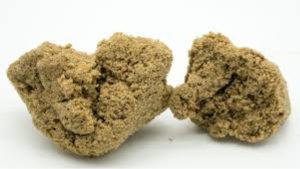
Bubble hash and hash rosin have experienced a notable resurgence in recent years. After quietly riding the bench during the last 10–15 years of solvent-based concentrate popularity, they are now king among consumers seeking a terpy, potent, and solventless experience. But what exactly is bubble hash, and what makes it different from other forms of concentrates?
How Is It Different From Other Concentrates?
People refer to bubble hash as a solventless concentrate. Solvents are typically a gas, chemical, or liquid compound that extracts trichomes from cannabis biomass; however, they can sometimes leave residual toxins from the solvent in the final product, such as a cannabis concentrate.
Solventless concentrates, on the contrary, don’t use any harsh solvents at all during extraction; Ice water acts as the solvent in bubble hash production, extracting cannabinoids and terpenes without leaving dangerous by-products. Makers use ice-cold water, agitation, and filter screens to produce a clean, high-quality solventless cannabis concentrate.
Photo Credit: LivWell
Who Originally Made Bubble Hash?
Cannabis made its way into the hearts and minds of humanity over 12,000 years ago; however, hashish—the concentrated resin of cannabis—remained relatively uncommon until about the 13th century in various parts of Asia and eventually the Middle East. The adoption of hashish use expanded in Europe and eventually in America, where people used it medicinally for decades; however, the U.S. government banned it during cannabis prohibition in the 1930s. Once the counterculture flipped society on its head in the late 1950s through the early 1970s, hashish was back and as popular as ever for recreational use.
It’s still up for debate who exactly created and refined the ice-water and filter bag process for making bubble hash. Neville Schoenmakers explained that ice water removes and preserves the trichome heads from cannabis. A California-based breeder named Skunkman Sam then introduced bubble hash to the world through a High Times article in 1988. Another man, nicknamed “Bubbleman”, developed bubble bags in the 1990s and set the worldwide standard for a refined approach to making bubble hash.
Why Is It Called Bubble Hash?
Connoisseurs often determine bubble hash purity by its full-melt status. Full melt happens when heat exposes hash to a heat source and almost immediately bubbles up and melts away. The bubble and full-melt factors are the hallmarks of a high-quality, potent concentrate that contains little to no plant material.
How Is Bubble Hash Made?
Producers can make bubble hash relatively inexpensively—you just need a lot of weed to make a substantial amount of it. A full ounce of dried weed, for example, can yield anywhere from 3-5 grams of bubble hash. The yield is even less when using frozen plant material—only about 1 gram in return from an entire ounce.
The difference, however, is that the “live” form of bubble hash provides maximum flavor and terpene content. Another important factor to remember when it comes to making bubble hash is that higher-quality cannabis has more resinous trichomes, leading to higher quality and more potent hash.
See If You Qualify For Medical Marijuana -Select Your State!
Select Your State
Alabama
Alaska
Arizona
Arkansas
California
Colorado
Connecticut
Delaware
Florida
Georgia
Hawaii
Idaho
Illinois
Indiana
Iowa
Kansas
Kentucky
Louisiana
Maine
Maryland
Massachusetts
Michigan
Minnesota
Mississippi
Missouri
Montana
Nebraska
Nevada
New Hampshire
New Jersey
New Mexico
New York
North Carolina
North Dakota
Ohio
Oklahoma
Oregon
Pennsylvania
Rhode Island
South Carolina
South Dakota
Tennessee
Texas
Utah
Vermont
Virginia
Washington
West Virginia
Wisconsin
Wyoming
Never miss a post
Get updates on cannabis culture, new research, and expert insights
Materials Needed to Make Bubble Hash
There are several different pieces of easy-to-obtain materials and equipment necessary to make bubble hash, on top of the large amount of cannabis needed.
2-8x: bubble bags containing different micron (perforation filter) sizes
Several gallons of cold, clean ice
Several gallons of cold, distilled water
1x: Large dow rod, large mixing spoon, low-pulse paint mixer
Several sheets of parchment paper
The Process to Make Bubble Hash
You’re ready to begin the process of making bubble hash once you’ve obtained all of the materials needed to start the ice-water extraction. Fully freeze fresh cannabis before use to maximize terpenes and trichome brittleness.
Take a 5-gallon bucket and line it with your set of bubble bags like a Russian nesting doll. The bag with the smallest micron size (usually around 25μm) should go on the very bottom. Place each bag on top of the previous one in succession by micron size. Line the bucket with all bubble bags on top of one another to gradually filter away all of the trichomes from water and excess, unwanted plant material.
In another bucket, mix cold water, ice, and cannabis. There should be plenty more water and ice compared to cannabis to act as a solvent. Gentle agitation and stirring commence for around 15–20 minutes. Too much agitation adds excess plant material, so avoid doing so. This situation is when an automatic washing machine comes in handy since it uses an automatic, hands-free program. Some are also operated by a hand crank.
Let the mixture settle for another 15 minutes after 15–20 minutes of stirring and agitation are complete. The act of stirring and agitating knocks the trichome heads off the plant material, and they sink to the bottom during this time.
Carefully pour the mixture once it’s settled into the other bucket lined with the bubble bags. Pour the mixture into the bubble bag, and water will drain through the small micron perforations and leave the extracted material behind.
The extracted material gets scraped off with a spatula or dab tool in each bag. The first few bags net mostly plant fats and stems, while each successive bubble bag begins to collect the real deal, high-quality bubble hash.
The contents of each bag contain the bubble hash once it gets scraped off completely and added to a piece of parchment paper or a non-stick drying sheet to dry.
Keep the freshly extracted bubble hash in a dark, well-ventilated, and dry area for about a week or longer. Some extractors prefer to freeze their bubble hash after extraction to enhance the terpene content.
Bubble bag sets usually contain quite a few bags of varying micron sizes that get nested and collect the hash. These individual micron sizes produce differing results post-ice-water extraction.
220μm micron bag produces low-grade bubble hash
160μm produces low-grade bubble hash with lots of impurities
45μm makes for quality bubble hash with fewer trichome heads/less flavor
25μm produces hash with more broken trichome heads, with less flavor
High-Quality Bubble Hash Makes High-Quality Rosin
Bubble hash-based rosin is all the rage these days. Producers avoid potentially toxic residual solvents found in other concentrates, plus they’re full of rich flavor and terpene content!
Making quality rosin requires the right tools—specifically, a rosin press. This type of tool for squishing your bubble hash doesn’t always mean investing in an expensive one. While fancy hydraulic and pneumatic rosin presses are awesome, you can still get great yields from a manually operated version or even a hair straightener! The two main factors when it comes to pressing rosin are heat and pressure.
Here are the tools necessary to make hash rosin from bubble hash:
Rosin press (hydraulic, pneumatic, manual)
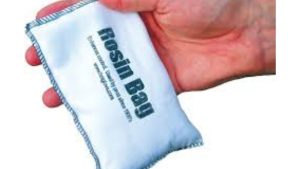
Rosin bags are designed for pressing
Parchment paper
How to Turn Bubble Hash into Rosin With A Rosin Press
Completely dry and freeze the bubble hash before turning it into hash rosin—this practice will provide the ultimate flavor and terpene profiles. It also helps the person doing the pressing by being more workable than room-temperature bubble hash.
Take about a half to a full gram of bubble hash and place it into a rosin bag. Once inside, fold the edges around the bottom of it and put it inside the parchment paper that will collect the rosin once pressed.
Whatever type of press you use to squish your rosin, set it to a low temp around the 150°F range.
Once the right temperature is reached, apply pressure for about 60-90 seconds.
The rosin will ooze out of the bag and onto the parchment paper with a slow viscosity.
Collect the squished rosin with a dab tool once pressed thoroughly and put it into a sealed jar for around 10 days to reach a proper rosin-like consistency.
If using a hair straightener or hand press, wrap the bubble hash in parchment paper and apply pressure for about 10 seconds max on a low temperature around 175°F. Once pressed, collect with a dab tool and store.
Cold curing (placing in a refrigerator or freezer) for about 10 days after pressing produces a budder-like consistency with a premium terpene profile.
Warm curing (storing in a warm place above room temperature) for about 2 days or so results in a looser and sauce-like consistency of the rosin.
Higher-priced rosin presses have automatic programs that will calculate the optimal pressure and heat, eliminating potential human error during the process.
Photo Credit: Ubuy
Make Your Own Solventless Bubble Hash & Rosin with Ease
Traditional solvent-based concentrates like budder, diamonds, and crumble are expensive pick-ups for consumers and medical patients to regularly afford. Anyone with their own cannabis plants usually has quite a bit of leftover material along with an excess of potent buds. That’s when making your bubble hash and rosin makes the most sense.
Bubble hash is one of the easiest, most flavorful, potent, and affordable ways for the average person to turn a lot of extra weed into some incredible DIY concentrates. The absence of any residual chemicals or solvents demonstrates that bubble hash and hash rosin have proven themselves as the elite standard in modern concentrates, so take our advice and make some today!
Anthony DiMeo is a Southern New Jersey-based journalist and cannabis advocate whose work and advocacy have been featured in Leafly, DOPE Magazine, and the Philadelphia Inquirer. Hobbies include navigating interdimensional psychedelic energy vortexes and tennis.
Reclaim edibles are re-purposed leftovers. You see that sticky residue sitting in your dab rig? Take a look, it is there. With a teensy bit of creativity, you can actually transform it into something amazing. The downside? Probably won’t hit exactly like fresh cannabis and won’t taste great either. However, if for whatever reason you…
In the school of life, tetrahydrocannabinol (THC), the most popular intoxicating cannabis compound, is like the popular kid everyone knows by name. The center of attention, always getting talked about, and highly sought after. Cannabidiol (CBD), on the other hand, gets a little less love. It’s more like the quiet honor student: low-key, non-intoxicating, rarely…
In the confusing landscape of state-by-state medical marijuana legalization and federal prohibition lies a patient’s pursuit of a better quality of life, balanced with an unrestricted financial livelihood. In workplaces across many different medical marijuana legal states, no law guarantees that a valid, card-carrying MMJ patient status exempts an employee from termination or discrimination stemming…
An alarming trend has recently come to light: more non-smokers are getting lung cancer than ever before. Given that lung cancer is the most common worldwide and the leading cause of cancer death, you may be worried about the implications of your cannabis habits. How much does cannabis contribute to lung cancer risk? According to…
It feels like every other day, a fresh slang term pops up in the cannabis lexicon, and today, we’re looking at an entry that’s all over TikTok and Reddit – Yart! Spoiler alert: it has everything to do with the humble vape cart (and how challenging it is to talk about cannabis on social media). …
The statements made regarding cannabis products on this website have not been evaluated by the Food and Drug Administration (FDA). Cannabis is not an FDA-approved substance and is still illegal under federal law. The information provided on this website is intended for educational purposes only and is not intended to diagnose, treat, cure, or prevent any disease. It is not intended as medical advice and should not be considered as a substitute for advice from a healthcare professional. We strongly recommend that you consult with a physician or other qualified healthcare provider before using any cannabis products. The use of any information provided on this website is solely at your own risk.