1-855-452-6224 (Customer Support Available 24/7)

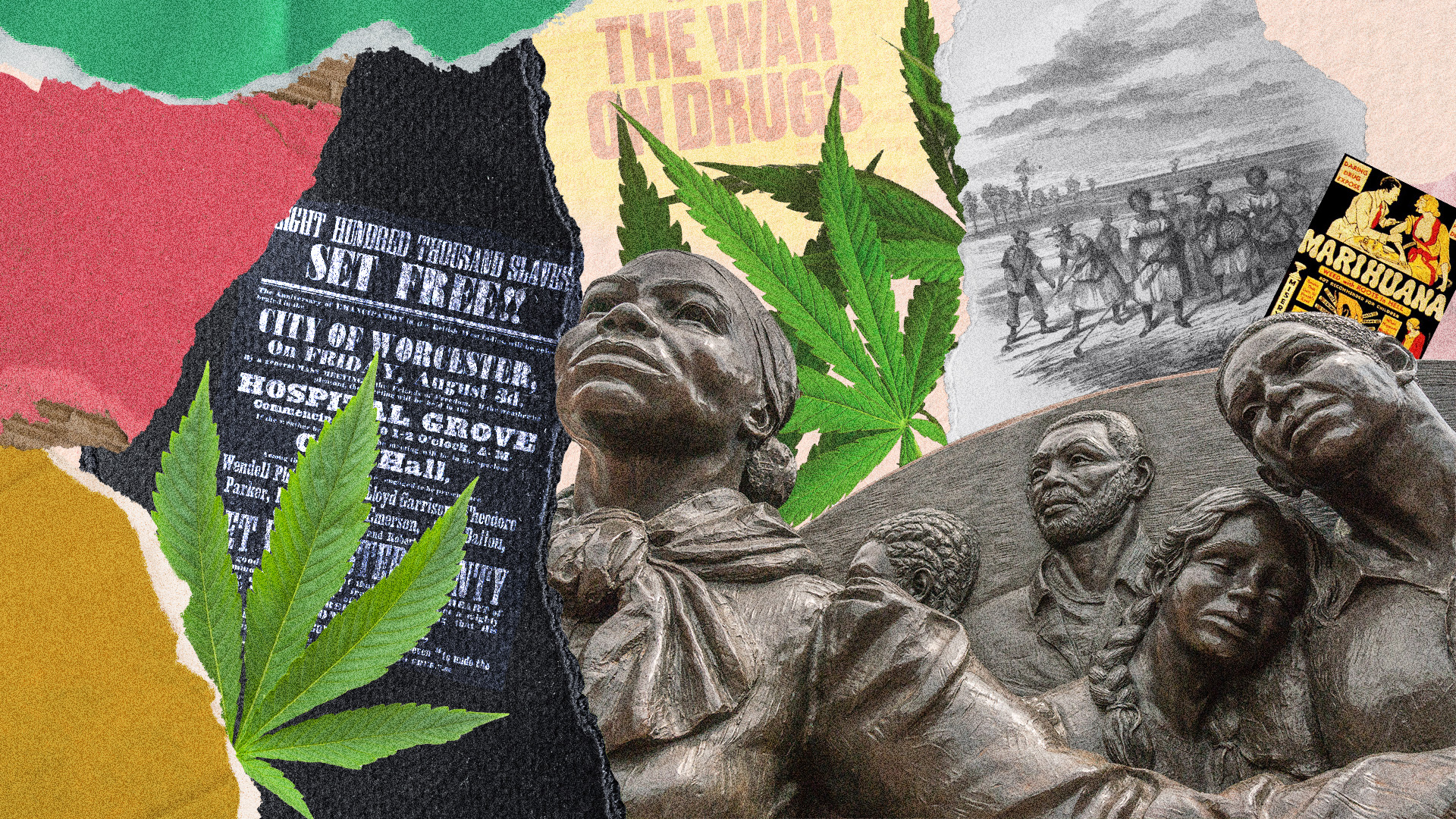
Every February, the United States celebrates Black History Month to honor the heritage, legacies, and accomplishments of Black people, both past and present. Observed initially for a week in February called Negro History Week starting in 1926, the now month-long celebration of Black culture in America aims to accentuate the valuable achievements and cultural traditions that are often left out of conventional prevailing narratives of US history. Black History Month furthermore encourages us to reflect on the difficulties that Black people have endured in the past and how we can impact a more positive future.
In celebration of Black History Month, this article spotlights the intersection between Black history and cannabis. This historical journey will illuminate the connection between culture and cannabis as well as the legacy of racial injustice that persists today. Looking toward the future, we will also recognize the current successes of Black leaders in the cannabis industry.
Surprisingly, there was a point in US history when it was actually illegal not to grow cannabis plants for hemp. In 1619, Virginia was the first to instate the strange law, followed by Massachusetts and Connecticut. Even in states where hemp cultivation was not mandated, government subsidies encouraged people to grow cannabis crops.
Hemp is a breed of the cannabis sativa plant that contains low levels of the psychoactive compound tetrahydrocannabinol (THC). Hemp can be used to make a variety of products, such as clothing, paper, and most recently, plastics. Narratives about the colonies in 18th-century America often mention crops like tobacco, sugar, and cotton as being of major importance. Yet, hemp was a critical resource, with 80 percent of clothing being made from hemp at the time.
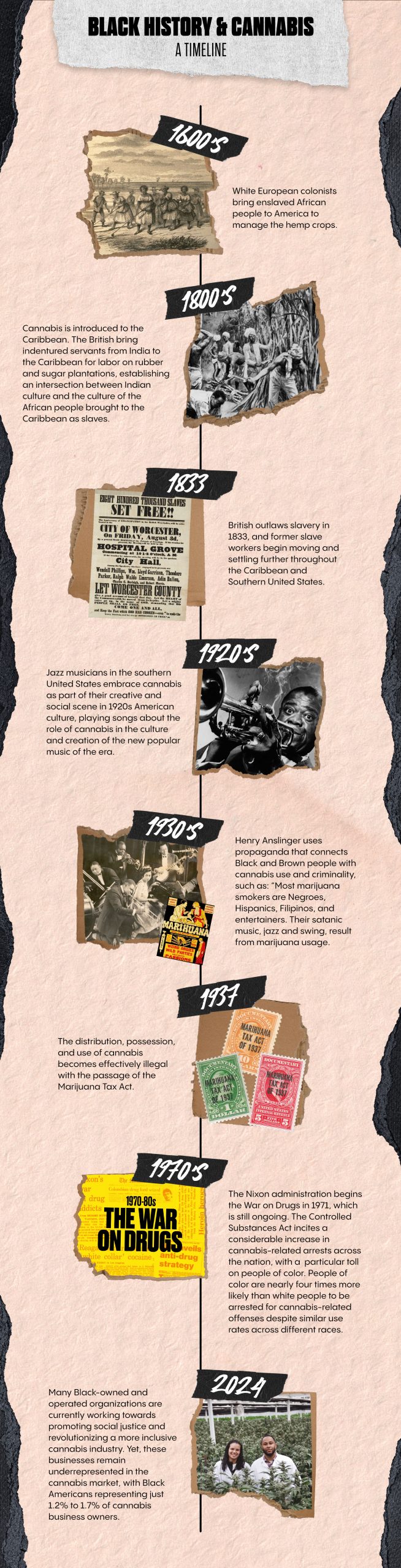
More labor was needed to cultivate the increasingly popular crop in the 17th and 18th centuries. This, unfortunately, meant that more enslaved African people were brought to work the fields and manage the hemp crops for the white European colonists. The use of slave labor by the settlers growing hemp is the earliest, albeit tragic, example of how cannabis history and black history intersect in America.
In the 1800s, cannabis came to the Caribbean when the British brought indentured servants from India to the Caribbean for labor on rubber and sugar plantations. This practice created an intersection between Indian culture and the culture of the African people brought to the Caribbean as slaves. Through interaction with Indian laborers, Black Jamaican laborers became familiar with the special plant the newcomers brought with them.
When the British outlawed slavery in 1833, the colonies in Jamaica and Barbados no longer kept the Indian and Black servants under their control. Former slave workers began moving and settling further throughout the Caribbean and Southern United States. This migration propelled the popularity of cannabis to a grander scale across nations.
One group traditionally associated with cannabis use is the jazz community, particularly African-American jazz musicians. Although the prevalence of cannabis use was varying and unclear during this time, historians have recognized that jazz musicians tended to embrace cannabis as part of their creative and social scene in 1920s American culture.
The social and creative use of cannabis played a role in the work of prominent musicians of the time period. Jazz musicians like Louis Armstrong and Ella Fitzgerald played songs about the role of cannabis – also called “grass,” “viper,” and “tea”—in the culture and creation of the new popular music of the era.
But not everybody embraced the cannabis culture of the Jazz Age. Henry Anslinger, the US’s director of the Federal Bureau of Narcotics (the precursor to the US Drug Enforcement Administration), was the most notorious figure in the effort to place a federal ban on cannabis in the 1930s. Anslinger’s propaganda promoted racist narratives connecting Black and Brown people with cannabis use and criminality, stating, “Most marijuana smokers are Negroes, Hispanics, Filipinos and entertainers. Their satanic music, jazz and swing, result from marijuana usage.” In 1937, the distribution, possession, and use of cannabis became effectively illegal with the passage of the Marijuana Tax Act.
The Nixon administration exacerbated the racist crusade underlying cannabis prohibition with the beginning of the War on Drugs in 1971. This war is still ongoing. Under Nixon, the Marijuana Tax Act was replaced with the Controlled Substances Act. This Act incited a considerable increase in cannabis-related arrests across the nation. The arrests took a particular toll on people of color.
The US War on Drugs, therefore, contributed significantly to America’s infamous mass incarceration problem. The arrests have primarily targeted communities of color who are disproportionately represented in the prison population. Although cannabis use rates are relatively similar across different races, people of color are nearly four times more likely than white people to be arrested for cannabis-related offenses.
The consequences of incarceration, including barriers to employment and housing access, are mainly inflicted upon Black and Brown communities. The resulting prison record makes it difficult to find work with a living wage. This record can even impact an individual’s right to vote. Some advocates for communities of color have even pointed out that the carceral system that overwhelmingly targets communities of color contributes to a new system of oppression that mirrors the Jim Crow era.
Many Black-owned and operated organizations are currently working towards promoting social justice and revolutionizing a more inclusive cannabis industry. Yet, these businesses remain underrepresented in the cannabis market, with white men making up an overwhelming majority of cannabis business executives.
We can all play a role in supporting social justice and inclusivity in the cannabis community by checking out brands from black-owned entrepreneurs and finding local dispensaries that represent people of color.
Sign up for our newsletter
Learn the process in your state
All Rights Reserved Veriheal Inc. ©
Terms Privacy Policy Advertising Agreement Content Disclamer


Get your medical marijuana card today
Sign up in under 5 minutes
Start By Selecting Your State
 Alabama
Alaska
Arizona
Arkansas
California
Colorado
Connecticut
Delaware
Florida
Georgia
Hawaii
Idaho
Illinois
Indiana
Iowa
Kansas
Kentucky
Louisiana
Maine
Maryland
Massachusetts
Michigan
Minnesota
Mississippi
Missouri
Montana
Nebraska
Nevada
New Hampshire
New Jersey
New Mexico
New York
North Carolina
North Dakota
Ohio
Oklahoma
Oregon
Pennsylvania
Rhode Island
South Carolina
South Dakota
Tennessee
Texas
Utah
Vermont
Virginia
Washington
West Virginia
Wisconsin
Wyoming
Puerto Rico
Alabama
Alaska
Arizona
Arkansas
California
Colorado
Connecticut
Delaware
Florida
Georgia
Hawaii
Idaho
Illinois
Indiana
Iowa
Kansas
Kentucky
Louisiana
Maine
Maryland
Massachusetts
Michigan
Minnesota
Mississippi
Missouri
Montana
Nebraska
Nevada
New Hampshire
New Jersey
New Mexico
New York
North Carolina
North Dakota
Ohio
Oklahoma
Oregon
Pennsylvania
Rhode Island
South Carolina
South Dakota
Tennessee
Texas
Utah
Vermont
Virginia
Washington
West Virginia
Wisconsin
Wyoming
Puerto Rico