There’s a medical cannabis dispensary on South 9th Street in downtown Minneapolis, and getting there starts with a certification you can complete from home. A Minnesota practitioner certifies your condition, and the Office of Cannabis Management (OCM) enrolls you. Veriheal connects you with a Minnesota practitioner for an online video evaluation through its Minnesota medical cannabis program.
This guide covers the process, who can certify you, what the OCM looks for, and what the card saves you. By the end, you’ll know what to do first.
How the Telehealth Certification Process Works in Minnesota
Minnesota’s process runs on two clocks, and mixing them up is the most common mistake. The first is your certification, which expires if your enrollment isn’t submitted and approved within 90 days. The second is the OCM’s review, which can take up to 30 days. The OCM lays out the steps on its page about how to become a medical cannabis patient:
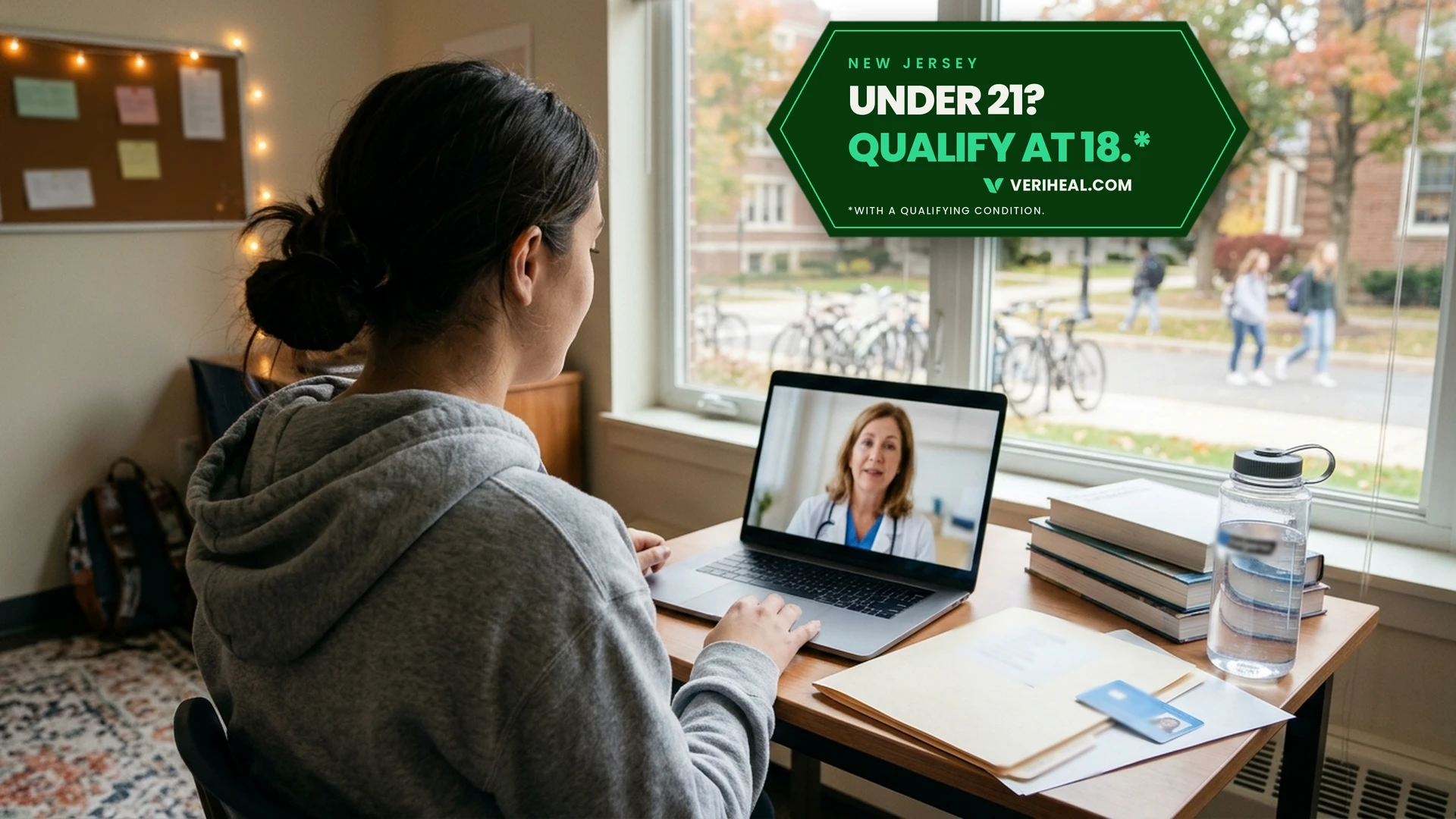
- Book a visit: See a Minnesota-licensed practitioner. Visits can be conducted by telemedicine, according to the OCM.
- Get certified: If you qualify, your practitioner certifies your condition in the Medical Cannabis Registry.
- Apply for enrollment: The OCM emails you a link. Submit your application and photo ID within 90 days of certification. The OCM suggests applying within the first 60 days.
- Wait for review: The OCM reviews your application and may email you for more information.
- Visit a dispensary: Once approved, you can access your registry account and pick up your medicine.
Enrollment is valid for three years, and you reenroll with a new certification after that. Veterans can use the OCM’s veteran certification form instead of a practitioner’s certification. For timing, read Veriheal’s guide on how long it takes to get a medical card. To see how online visits work, read Veriheal’s guide on telemedicine for medical cannabis.
Who Can Certify You: Minnesota Practitioner Eligibility Rules
Only a Minnesota-licensed physician, physician assistant, or advanced practice registered nurse can certify you, and they must be enrolled in the Medical Cannabis Registry first. That rule matters if you’re thinking about an out-of-state provider, since certification has to come from someone licensed in Minnesota and registered with the program.
Certifying also carries a commitment. Practitioners attest that they’re available to manage your condition on an ongoing basis. The OCM doesn’t keep or share a list of participating practitioners, so ask your care team, or look for a practice that says it participates.
What to Expect During the OCM Enrollment Review
Once you submit your application, the OCM reviews it, and most delays come down to timing rather than anything you did wrong. The review can take up to 30 days, and your 90-day certification window keeps running the whole time. Knowing how those two clocks overlap helps you avoid starting over. Here is what to watch for:
- The 90-day window: Your certification expires if your enrollment isn’t submitted and approved within 90 days.
- The 30-day review: The OCM can take up to 30 days to process a completed application.
- Missing information: The OCM may email you if it needs more details.
Applying within the first 60 days of certification leaves a buffer. If your certification expires, you’ll need to start over with a new one.
Qualifying Conditions for the Minnesota Medical Cannabis Program
The OCM lists 19 qualifying conditions, plus a catch-all for any condition your practitioner has recommended cannabis to treat. This table shows the list from its qualifying conditions page:
Note: Rows with no note have no special criteria.
| Condition |
Notes |
| Alzheimer’s disease |
|
| Amyotrophic lateral sclerosis (ALS) |
|
| Autism spectrum disorder |
Must meet DSM-5 criteria |
| Cancer |
If the illness or its treatment causes severe or chronic pain, nausea or severe vomiting, or cachexia or severe wasting |
| Chronic motor or vocal tic disorder |
None |
| Chronic pain |
None |
| Glaucoma |
None |
| HIV/AIDS |
None |
| Inflammatory bowel disease |
Includes Crohn’s disease |
| Intractable pain |
None |
| Irritable bowel syndrome |
None |
| Obsessive-compulsive disorder |
None |
| Obstructive sleep apnea |
None |
| Post-traumatic stress disorder (PTSD) |
None |
| Seizures |
Including those characteristic of epilepsy |
| Severe and persistent muscle spasms |
Including those characteristic of multiple sclerosis |
| Sickle cell disease |
None |
| Terminal illness |
Probable life expectancy of less than one year, with the same cancer-style symptoms |
| Tourette syndrome |
None |
Anxiety isn’t a standalone condition. Your practitioner decides whether you qualify, and the list can change, so check the OCM’s page.
Medical Cannabis Dispensaries in Minneapolis: Where Your Card Works
The OCM’s dispensary locations page lists one medical dispensary in Minneapolis, at 207 South 9th Street, operated by Green Goods. Nearby suburbs have more locations, including Bloomington, Brooklyn Park, New Hope, Blaine, Burnsville, Eagan, and St. Paul. Operators and hours can change, so check the page before you go.
The OCM’s list doesn’t describe delivery, so call a dispensary to ask whether it serves your address. For a dispensary visit, the OCM asks patients to complete the Patient Self-Evaluation in their registry account first.
Medical Card vs. Recreational Cannabis in Minneapolis
Adult-use cannabis is legal in Minnesota, but enrollment changes what you pay and what limits apply. This table compares the two:
| Feature |
Medical enrollment |
Adult-use |
| Retail tax |
Exempt from the 15% cannabis gross receipts tax |
15% cannabis gross receipts tax |
| Possession |
Adult-use limits don’t apply if products carry patient-specific labeling |
2 ounces in public, 2 pounds at home, and 8 grams of concentrate |
| Age |
Practitioner or veteran certification required |
21 or older |
Medical enrollment suits regular users, since the tax savings add up. At $200 a month, the 15% tax comes to $30 a month, or $360 a year, before sales tax, under Minnesota Statutes section 295.81. Enrollment also keeps a practitioner involved in your care. A few details to keep in mind:
- Who misses out: Patients in Tribal programs and visiting patients don’t get the exemption.
- Legal protections: The state’s 2024 summary says certain protections, such as in parenting time and civil actions, extend to everyone enrolled. A lawyer can explain how they apply to you.
For more, read Veriheal’s guides on medical vs. recreational cannabis taxes and the benefits of a medical marijuana card.
Caregivers and Helpers for Minneapolis Patients
Some patients need help getting to a dispensary or taking their medicine, and Minnesota allows for that. Under section 342.09, a patient’s parent, legal guardian, or spouse may possess medical cannabis for them. A registered designated caregiver can help too, and the rules are straightforward:
- Age: A caregiver must be at least 18.
- Patient limit: A caregiver can serve up to six registered patients, unless the patients live in the same residence.
- Registration: Caregivers apply through the OCM.
Parents of minor patients should check the OCM’s caregiver guidance for current requirements.
What Does Enrollment Cost?
Minnesota charges no state enrollment fee, according to the state’s patient enrollment process document, and enrollment is valid for three years. Your practitioner’s visit is the cost to plan for. Your practitioner’s visit is the cost to plan for, and Veriheal keeps it simple with a $199 fee you can split into interest-free installments.
What Should Minneapolis Cardholders Know About Firearms at the Counter?
Federal firearms rules shifted in 2026, but not enough to make a card risk-free. Here is where each piece stands:
- Rescheduling: State-licensed medical marijuana moved from Schedule I to Schedule III on April 28, 2026, under Federal Register rule 2026-08176. Marijuana outside a state medical license, and outside FDA-approved products, stays in Schedule I.
- The Supreme Court: In United States v. Hemani, decided June 18, 2026, the Court unanimously held that prosecuting someone under 18 U.S.C. § 922(g)(3) based solely on marijuana use was inconsistent with the Second Amendment. The Court called its decision narrow.
- The ATF: The Bureau of Alcohol, Tobacco, Firearms and Explosives (ATF) rescinded its 2011 open letter, which had told dealers a medical card was grounds to refuse a sale.
- Unchanged: Section 922(g)(3) remains federal law, ATF Form 4473 is unchanged, and the ATF hasn’t issued replacement guidance, so dealer practices may vary and a false answer still carries real federal risk.
A licensed attorney can explain how these rules apply to you before you enroll. For more detail, read Veriheal’s guide on medical cannabis patients and gun rights.
How Can Veriheal Help You in Minneapolis?
Timing is the one thing to plan around in Minnesota, since your certification needs to be dated within 90 days of your application. That makes the evaluation the right step to book once you’re ready to enroll. Your practitioner decides whether certification fits your care, and Veriheal backs the visit with a “get approved or your money back” policy.
Find a medical marijuana doctor online whenever you’re ready to begin.
Note: The content on this page is for informational purposes only and is not intended to be professional medical advice. Do not attempt to self-diagnose or prescribe treatment based on the information provided. Always consult a physician before making any decision on the treatment of a medical condition.
Note: Veriheal does not support illegally consuming therapeutic substances such as cannabis but acknowledges that it transpires because of the current illicit status, which we strive to change by advocating for research, legal access, and responsible consumption. Always consult a physician before attempting alternative therapies.
Frequently Asked Questions
How do I get a medical cannabis card in Minneapolis, Minnesota?
A Minnesota-licensed practitioner certifies your condition in the state registry, then you submit your enrollment application to the Office of Cannabis Management within 90 days. The OCM reviews it, and you can pick up medicine at a dispensary once you’re approved.
What conditions qualify for a medical marijuana card in Minnesota?
Minnesota lists 19 qualifying conditions, including chronic pain, PTSD, cancer, and seizures. A practitioner can also certify any condition they’ve recommended cannabis to treat.
How much does it cost to get a medical cannabis card in Minnesota?
Minnesota charges no state enrollment fee, so your main cost is your practitioner’s visit. Veriheal’s online evaluation is $199, with interest-free installments available.
Can I use my Minnesota medical cannabis card in other states?
A Minnesota medical cannabis card isn’t automatically honored in other states, because each state sets its own rules for out-of-state patients. Federal law also restricts carrying cannabis across state lines. Check your destination’s rules before you travel.
Do I still need a medical cannabis card in Minnesota now that recreational marijuana is legal?
Enrollment still saves money, since medical items are exempt from the 15% cannabis gross receipts tax. Adult-use possession limits also don’t apply to enrolled patients whose products carry patient-specific labeling. It also keeps a practitioner involved in your care.
Can I get certified by telehealth in Minnesota?
Yes, the OCM says certification and recertification visits can be conducted by telemedicine. Your practitioner must be Minnesota-licensed and enrolled in the registry.
Author, Share & Comments