Cannabis remains federally illegal despite growing state-level legalization, which creates complex legal issues for medical marijuana patients living in rental housing. Your rights as a tenant depend on federal housing laws, state medical cannabis protections, and your specific lease agreement.
Understanding these overlapping legal frameworks helps you navigate apartment smoking policies while protecting your access to medical treatment. The tension between federal drug laws and state medical cannabis programs creates unique challenges that require careful consideration of your legal protections and potential risks.
Federal Law and Cannabis in Rental Housing
Federal law classifies cannabis as a Schedule I controlled substance under the Controlled Substances Act, regardless of state medical marijuana programs. This classification affects tenant protections because federal anti-discrimination laws, including the Fair Housing Act, do not require landlords to provide reasonable accommodations for federally illegal substances.
The Department of Housing and Urban Development (HUD) has clarified that federally assisted housing programs must comply with federal drug laws. This means properties receiving federal funding can prohibit medical marijuana use entirely without violating fair housing requirements. Private landlords may also reference federal illegality when establishing no-cannabis policies.
However, the federal stance creates enforcement gaps in practice. Local housing authorities rarely investigate individual tenant cannabis use unless complaints arise or lease violations become apparent through other means. This enforcement reality means many medical marijuana patients continue using cannabis in rental housing despite technical federal restrictions.
Key federal restrictions include:
- Schedule I status exempts cannabis from reasonable accommodation requirements
- Federally assisted housing must prohibit medical marijuana use
- Private landlords can reference federal law to justify cannabis restrictions
- Federal illegality overrides state medical protections in housing law
Fair Housing Laws and Medical Cannabis
The Fair Housing Act protects individuals with disabilities from housing discrimination and requires reasonable accommodations for disability-related needs. However, medical marijuana complicates these protections because cannabis remains federally illegal.
Federal fair housing laws do not require accommodations for illegal drug use, which technically includes medical marijuana under the Controlled Substances Act. This creates a conflict between state medical cannabis programs and federal housing protections.
Reasonable Accommodation Requests
Some medical marijuana patients may qualify for reasonable accommodations if their underlying medical condition meets disability definitions under fair housing law. The accommodation request must relate to the disability itself, not specifically to cannabis use.
Successful accommodation requests typically focus on the medical condition requiring treatment rather than the cannabis itself. For example, a patient with severe epilepsy might request accommodation for their seizure disorder, which happens to include medical marijuana treatment.
Documentation Requirements
Reasonable accommodation requests require documentation from healthcare providers establishing:
- Disability status: Medical condition that substantially limits major life activities
- Treatment necessity: Why the requested accommodation addresses disability-related needs
- Reasonable relationship: Connection between the accommodation and the disability
Housing providers can request verification of disability status and treatment necessity but cannot demand specific medical details or cannabis recommendations from physicians.
Landlord Rights vs. Tenant Protections
Landlords retain significant authority to establish property rules, including smoking and substance policies, even in states with medical cannabis programs. Most lease agreements include broad language prohibiting illegal activities or controlled substances, which technically covers medical marijuana under federal law.
Your lease agreement determines the scope of permissible cannabis activities on the property. Standard smoking clauses often prohibit all combustible materials without specific cannabis exemptions, while drug-free housing policies may reference federal controlled substance classifications.
| Landlord Can |
Landlord Cannot |
| Prohibit smoking of all substances |
Discriminate based solely on medical status |
| Include no-cannabis clauses in new leases |
Evict without following proper legal procedures |
| Reference federal law for policy justification |
Deny reasonable accommodations for qualifying disabilities |
| Require tenant compliance with property rules |
Prohibit non-smokable medical cannabis in some states |
Tenant protections vary significantly by state and depend on specific medical cannabis legislation. Some states explicitly protect medical marijuana patients from housing discrimination, while others defer to federal law and landlord discretion.
The benefits of a medical marijuana card may include housing protections in certain jurisdictions, but these protections are not universal across all states with medical programs.
Lease Agreements and Cannabis Policies
Your lease agreement serves as the primary legal document governing cannabis use in your apartment. Most standard lease forms include clauses addressing smoking, illegal activities, or controlled substances that may affect medical marijuana use.
Review your lease carefully for specific language about cannabis, smoking, or drug-related activities. Some leases explicitly mention marijuana or controlled substances, while others use broader terms like “illegal activities” or “substances prohibited by federal law.”
| Common Lease Clause |
Enforceability Status |
| “No smoking of any substance” |
Generally enforceable |
| “No illegal drugs or controlled substances” |
Enforceable under federal law |
| “No cannabis or marijuana use” |
Explicitly enforceable |
| “Compliance with all federal and state laws” |
Creates federal law obligation |
Negotiating cannabis-friendly lease terms requires understanding your state’s specific protections for medical marijuana patients. In states with strong tenant protections, you may successfully request modifications to standard lease language before signing.
When reviewing lease agreements, pay attention to renewal clauses and policy change provisions. Some leases allow landlords to modify policies with proper notice, which could affect your cannabis access during your tenancy.
Secondhand Smoke and Neighbor Concerns
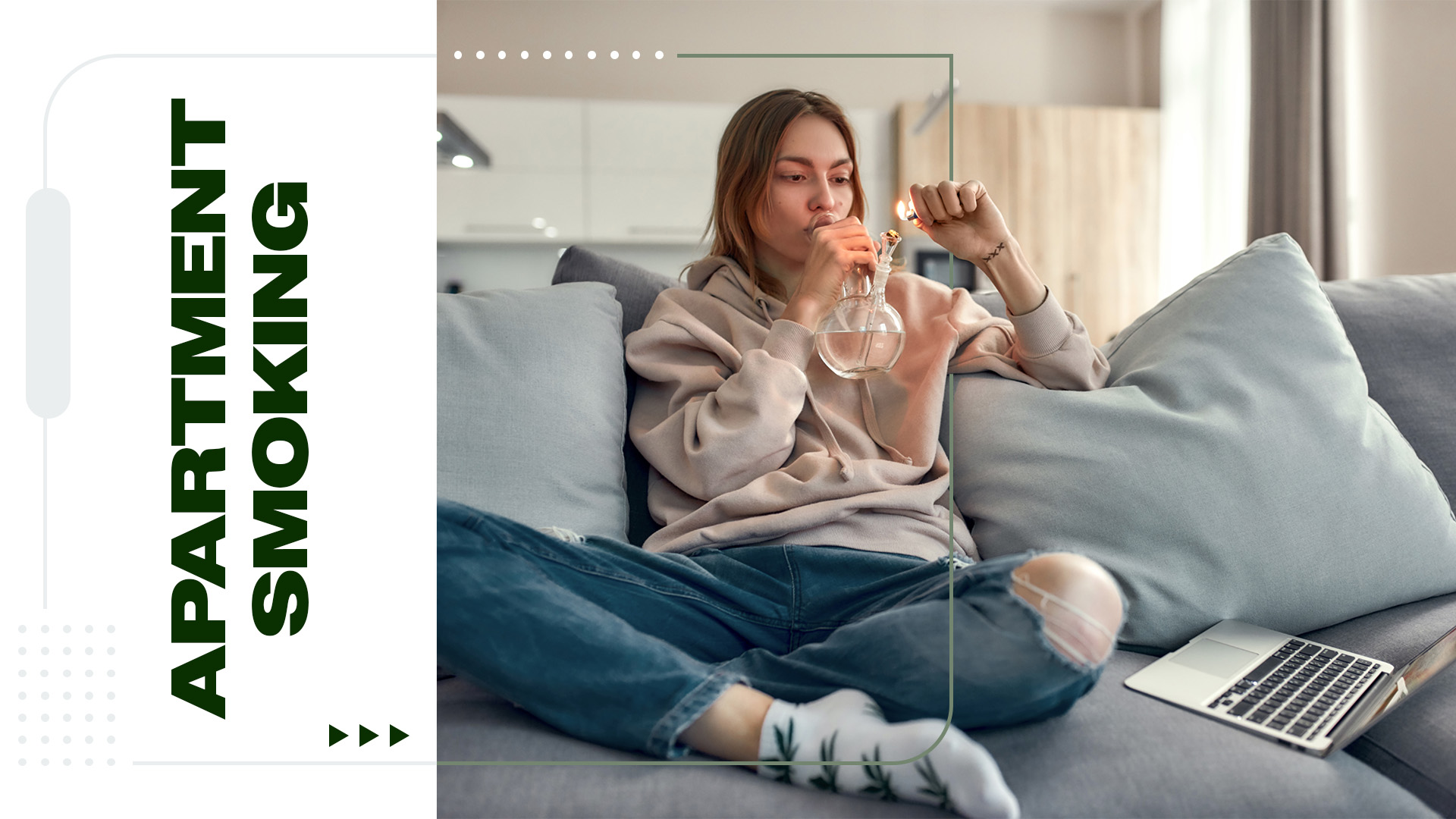
Neighbor complaints about cannabis odor or secondhand smoke create significant challenges for medical marijuana patients in apartment buildings. Landlords often receive pressure to address these concerns, even when cannabis use is technically permitted.
Secondhand cannabis smoke has been shown to contain many of the same compounds as directly inhaled smoke, raising legitimate health concerns for neighbors with respiratory conditions or children. These considerations give landlords grounds to restrict smoking even when they cannot prohibit cannabis use entirely.
Building ventilation systems can distribute cannabis odor throughout apartment complexes, making it difficult to contain smoking to individual units. Many lease agreements include nuisance clauses that prohibit activities affecting neighbors’ quiet enjoyment of their homes.
Common solutions for managing neighbor concerns include:
- Using alternative consumption methods like vaporizers or edibles
- Installing air purifiers and improving unit ventilation
- Smoking in designated outdoor areas when building policies allow
- Communicating with neighbors about medical necessity and accommodation efforts
Property managers increasingly recommend non-smokable medical cannabis products to avoid secondhand smoke issues while maintaining tenant access to medical treatment.
State-by-State Variations in Tenant Protections
State medical cannabis laws create varying levels of tenant protection across the country. Some states explicitly protect medical marijuana patients from housing discrimination, while others provide limited or no specific housing protections.
| State |
Tenant Protection Level |
Key Protections |
| California |
Strong |
Prohibits housing discrimination based on medical cannabis use |
| Colorado |
Moderate |
Limited protections; landlord policies generally upheld |
| New York |
Strong |
Recent legislation strengthens tenant cannabis rights |
| Florida |
Limited |
Defers to federal law and landlord discretion |
California has been among the more tenant-protective states for medical cannabis patients, with legislation aimed at limiting housing discrimination based on lawful cannabis use. Patients should verify current protections with a local tenant rights attorney, as specific provisions vary by locality.
Connecticut has implemented broad protections that prevent housing discrimination against medical cannabis patients and require reasonable accommodations for qualifying medical conditions. These protections extend beyond housing approval to include use within rental properties.
New York’s recent cannabis legalization included specific tenant protection provisions that limit landlord authority to restrict medical cannabis use. The legislation distinguishes between smoking restrictions (which remain permitted) and blanket cannabis prohibitions (which are limited).
States without specific tenant protections typically allow landlords to reference federal controlled substance laws when establishing cannabis policies. This creates significant variation in tenant rights depending on geographic location and individual landlord policies.
Understanding your state’s specific medical marijuana card laws helps you assess your housing rights and potential legal protections as a medical cannabis patient.
Your Rights: Key Takeaways for Medical Cannabis Patients
Medical marijuana patients face complex legal considerations when renting apartments due to conflicts between federal and state law. Your rights depend on your state’s specific protections, your lease agreement terms, and your landlord’s policies.
Federal law continues to classify cannabis as illegal, which limits traditional tenant protections under fair housing legislation. However, many states have implemented specific protections for medical marijuana patients that may override standard lease restrictions.
The most effective approach involves understanding your state’s laws before signing any lease agreement. Research whether your state provides explicit tenant protections for medical cannabis patients and review lease language carefully for cannabis-specific restrictions.
When possible, discuss medical cannabis use with potential landlords before signing lease agreements. Open communication may prevent future conflicts and help you find housing that accommodates your medical needs legally.
If you need access to medical cannabis for a qualifying condition, obtaining your medical marijuana card represents the first step in establishing legal protection for your medical treatment.
Note: The content on this page is for informational purposes only and is not intended to be professional medical advice. Do not attempt to self-diagnose or prescribe treatment based on the information provided. Always consult a physician before making any decision on the treatment of a medical condition.
Note: Veriheal does not support illegally consuming therapeutic substances such as cannabis but acknowledges that it transpires because of the current illicit status, which we strive to change by advocating for research, legal access, and responsible consumption. Always consult a physician before attempting alternative therapies.
Ready to explore your medical cannabis options? Find a qualified physician today to discuss whether medical marijuana could be right for your condition and learn about your legal rights as a patient.
Frequently Asked Questions
Can my landlord evict me for having a medical marijuana card?
Simply possessing a medical marijuana card typically cannot serve as grounds for eviction, but using cannabis on the property may violate lease terms depending on your state’s laws and lease language.
Do I have to tell my landlord about my medical marijuana card?
No legal requirement exists to disclose medical marijuana card status to landlords, though lease violations related to cannabis use may require disclosure during dispute resolution.
Can I smoke medical marijuana in my apartment if my state allows it?
State medical cannabis laws do not automatically override lease agreements or building smoking policies, so apartment smoking depends on your specific lease terms and local housing regulations.
What if my neighbors complain about cannabis odor from my apartment?
Neighbor complaints may trigger lease violation proceedings if your cannabis use violates smoking policies or nuisance clauses, regardless of medical necessity.
Are there alternatives to smoking that might avoid lease violations?
Vaporizers, edibles, tinctures, and other non-combustible medical cannabis products may satisfy medical needs while complying with smoking restrictions in lease agreements.
Author, Share & Comments