As we progress through our lives into early adulthood, cannabis becomes a more widely accepted facet of life. In 2023, an astounding 26% of young American adults aged 18-34 reported smoking cannabis. By now, 50% of adults admit to trying it, and 70% of Americans support the legalization of cannabis – the highest number ever.
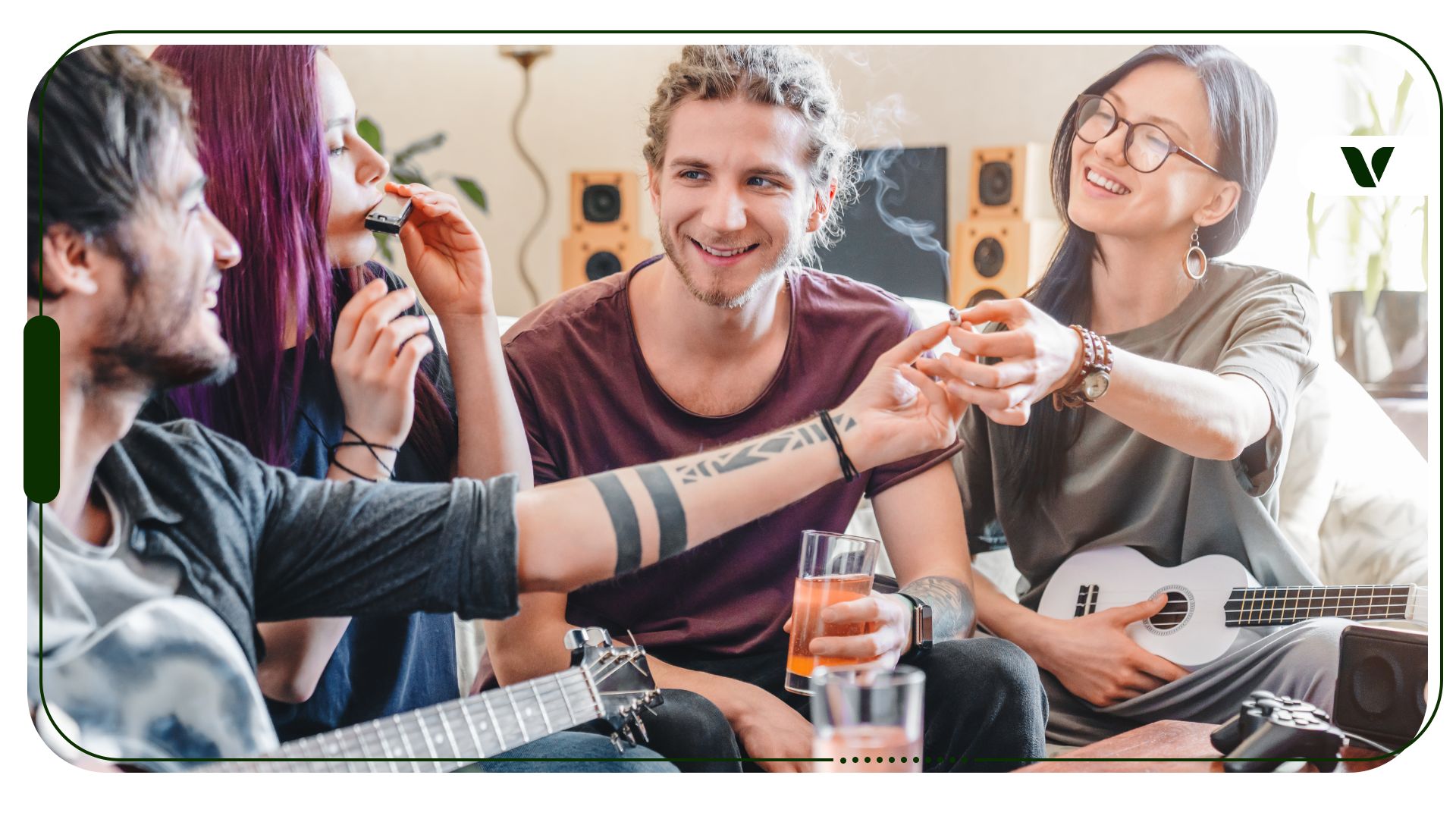
Whether you’re taking cannabis for medical purposes, dual med-rec use, bonding with friends, or simply unwinding at the end of a long day, adult therapeutic use takes many practical forms. Likewise, cannabis products also take various forms to suit your lifestyle and preferences, including non-impairing hemp products and plenty of non-smoking options.
Cannabis empowers you to live your physically active and busy life in balance with wellness and self-care in mind.
Cannabis Use in Early Adulthood
Medical and recreational cannabis use are both therapeutic in some way. However, depending on the goals and intentions set, people still often tend to identify as one of these consumer types.
To your body, medical and recreational cannabis are one and the same.
As a society, we’ve come a long way towards accepting that the therapeutic uses of cannabis extend beyond purely medically-focused needs or the authorization of a healthcare provider. These matters are still important and will always be in cannabis medicine, but they’re less critical as legal landscapes and public perception co-evolve.
Recreational vs. Medical
In modern early adulthood, people become more open and less concerned about the stigma or perception of simply embracing nonmedical or “recreational” cannabis use. When nonmedical cannabis was legalized in Canada, about 1 in 4 medical cannabis patients moved towards identifying as either dual-users or even exclusively nonmedical. This highlights the absurdity of the divide.
I often see this internal conflict reflected in my clinical encounters. Sometimes, patients feel self-conscious about telling me they like the uplifting and euphoric side effects of their cannabis treatment plan, or that a large part of it is just to relax or help them fall asleep, worried if it’s “enough” to justify their cannabis use (it is).
Sadly, Western medicine makes patients haggle for preferred treatments, so I understand this sentiment. But I love to reassure my adult patients that it’s okay to enjoy your cannabis – you should!
Cannabis providers want you to have healing, positive experiences that come from benefits outweighing harms. Whichever camps you choose to join, we just want to be sure the rest of your health, social, and work life aren’t negatively affected by it.
Recreational Use
Managing life, home, work, family, and social stressors can be tough, especially all at the same time. Even people who use cannabis “non-medically” are actually consuming it for a lot of the same symptoms and therapeutic purposes medical patients employ, such as:
- Anxiety
- Depression
- Mood
- Creativity
- Relaxation
- Impaired sleep
- Increase enjoyment of recreational hobbies
- Enhance libido and improve sexual experiences
- Pain
- Headaches
Recreational Cannabis is Harm Reduction
Our consumption choices and how we spend our free time have profound influences on our habits and long-term health. In 2022, nationally representative data indicated for the first time that there are more daily and near-daily cannabis users than alcohol users. Now, 2024 survey results from New Frontier Data show about 70% of adults aged 18-35 prefer cannabis to alcohol, with the youngest group (18-24) also avoiding tobacco the most.
Furthermore, 2023 data reveal that recreational markets are associated with an 11% average reduction in opioid overdose fatalities. Altogether, these data demonstrate the therapeutic, harm-reducing effects of choosing cannabis over other drugs – regardless of medical intentions.
When it comes to addictive potential and mortality, THC and cannabis rank among the least harmful substances compared to recreational drugs like alcohol, tobacco, opioids, and more. While cannabis cannot kill you directly, recreational cannabis laws are associated with a 10% increase in motor vehicle deaths – underscoring the importance of responsible consumption.
However, nonmedical or recreational consumers face state-by-state limitations. Fortunately, medical cannabis cards are more widely available.
Medical Use
Becoming a designated medical card patient or caregiver has its practical advantages for legal access and regulation purposes. There are many tangible and significant benefits to medical cards, such as:
- Lower taxes
- Higher possession, potency, and quantity limits
- Better cannabis growing rights
- Legal protections
- State reciprocity
- Medical cannabis treatment for minors
- Access to medical-only dispensaries
The benefits of medical cards can’t be ignored in a country with severely fractured cannabis laws.
Depending on the state you live in, there’s a defined list of “qualifying” conditions set forth by medical authorities. While cannabis isn’t meant as a prize to be won, the most common conditions you may use to apply for a medical card in your state often include:
- Chronic pain
- Anxiety
- Depression
- Insomnia
- PTSD
- Nausea and vomiting
- Arthritis
- Migraines
- Cancer and chemo-related symptoms
- Seizures and epilepsy
- Multiple sclerosis and spasticity
- Glaucoma
- HIV/AIDS
Risks of Heavy THC or Cannabis Use
In adulthood, the distinction between recreational and medical cannabis use here becomes less important as we depart the adolescent years. Once the brain fully matures around age 25, the long-term neurodevelopmental risks of THC significantly decrease.
Short-term, however, is a different story until it’s metabolized. THC and similar impairing cannabinoids (e.g. delta 8, etc.) cause temporary impairments in:
- Learning
- Memory
- Spatial orientation
- Attention span
- Executive functioning
THC side effects are dose-dependent, and may also cause temporary, mild-to-moderate:
- Dizziness
- Fast heart rate
- Sleepiness
- Dry mouth
- Dry, red eyes
Long-term, 2024 data observing adult medical card patients over 1 year of cannabis use shows no functioning differences in working memory, reward, or inhibitory control.
Neuropsychiatric Effects
Reassuringly, 2023 data show that states with medical or recreational cannabis are not associated with increased rates of psychosis-related health outcomes.
Nevertheless, people with existing severe mental illness or strong genetic psychiatric dispositions to psychotic (i.e. schizophrenia), substance abuse, or manic disorders, should avoid the intensely triggering effects of high-potency THC.
Hemp may still offer them relief through non-intoxicating, antipsychotic, and antianxiety cannabinoids like CBD and CBG.
Cannabis Use Disorder (CUD)
Problematic cannabis dependence, or cannabis use disorder, can happen when certain factors overwhelm you and overrun your work or social life. The likelihood increases as tolerance and dependence build with repeat high-THC exposure. CUD also usually co-occurs with mental illness and other substance use disorders.
Ironically, medical cannabis laws are associated with less CUD treatment-seeking. But if this happens, seek treatment with a knowledgeable, local healthcare professional such as a therapist or your doctor.
Cannabinoid Hyperemesis Syndrome (CHS)
Cannabinoid hyperemesis syndrome (CHS) is rare but may occur with heavy or repeated THC use. Refer to Veriheal’s CHS guide for more information, but keep in mind that uncontrolled vomiting is a medical emergency.
Cannabis Smoking
Cannabis smoking is the most popular means of consumption, but it’s also the least healthy. That’s because smoking cannabis or anything else releases many of the same harmful particulates as tobacco smoke.
Current research shows no conclusive evidence between cannabis smoking and lung cancer, but COPD may occur in the heaviest and longest-term smokers (20 joint-years). More commonly, pulmonary side effects include:
- Airway irritation
- Chronic bronchitis
- Cough
- Wheezing
- Sputum production
- Increased risk of airway infection
- Aspergillosis in immunocompromised patients
Thankfully, you don’t need to smoke cannabis to get its benefits. Non-smoking routes like tinctures, edibles, topicals, and more are preferable and readily accessible in legal markets. Vaping concentrate is safer, but can easily overwhelm beginners and quickly increases tolerance due to its much higher potency than flower.
For my patients who still prefer cannabis smoking or find it hard to stop, I don’t shame or judge. I just try to gently steer them towards dry herb vaporizing for a number of health, efficiency, and financial reasons in their best interest.
Cannabis Parenting
If you are a new parent, congratulations! Keep in mind that it’s important to safely store and lock your cannabis away from:
- Children
- Pets
- Unsuspecting guests
Discussing cannabis use with young children may be challenging, but it’s best to be open and honest. Framing cannabis in terms of a helpful medication for adults only is the simplest place to start. As they grow, you should engage in more nuanced discussions when they approach their teenage years.
Bottom Line
The responsibilities and challenges you face in life as an early adult are some of the most intense. With cannabis, there’s a world of flexibility and choice over how to balance yourself, be productive, and safely heal.
References
- Azcarate, P. M., Zhang, A. J., Keyhani, S., Steigerwald, S., Ishida, J. H., & Cohen, B. E. (2020). Medical Reasons for Marijuana Use, Forms of Use, and Patient Perception of Physician Attitudes Among the US Population. Journal of General Internal Medicine, 35(7), 1979–1986. https://doi.org/10.1007/s11606-020-05800-7
- Bilkei-Gorzo, A., Schurmann, B., Schneider, M., Kraemer, M., Nidadavolu, P., Beins, E. C., Müller, C. E., Dvir-Ginzberg, M., & Zimmer, A. (2024). Bidirectional Effect of Long-Term Δ9-Tetrahydrocannabinol Treatment on mTOR Activity and Metabolome. ACS Pharmacology & Translational Science, 7(9), 2637–2649. https://doi.org/10.1021/acsptsci.4c00002
- Burdinski, D. C. L., Kodibagkar, A., Potter, K., Schuster, R. M., Evins, A. E., Ghosh, S. S., & Gilman, J. M. (2024). Year-Long Cannabis Use for Medical Symptoms and Brain Activation During Cognitive Processes. JAMA Network Open, 7(9), e2434354. https://doi.org/10.1001/jamanetworkopen.2024.34354
- Caulkins, J. P. (2024). Changes in self-reported cannabis use in the United States from 1979 to 2022. Addiction, 119(9), 1648–1652. https://doi.org/10.1111/add.16519
- Choi, N. G., Moore, J., & Choi, B. Y. (2024). Cannabis use disorder and substance use treatment among U.S. adults. Journal of Substance Use and Addiction Treatment, 167, 209486. https://doi.org/10.1016/j.josat.2024.209486
- Ebbert, J. O., Scharf, E. L., & Hurt, R. T. (2018). Medical Cannabis. Mayo Clinic Proceedings, 93(12), 1842–1847. https://doi.org/10.1016/j.mayocp.2018.09.005
- Ellingson, J. M., Hinckley, J. D., Ross, J. M., Schacht, J. P., Bidwell, L. C., Bryan, A. D., Hopfer, C. J., Riggs, P., & Hutchison, K. E. (2021). The Neurocognitive Effects of Cannabis Across the Lifespan. Current Behavioral Neuroscience Reports, 8(4), 124–133. https://doi.org/10.1007/s40473-021-00244-7
- Elser, H., Humphreys, K., Kiang, M. V., Mehta, S., Yoon, J. H., Faustman, W. O., & Matthay, E. C. (2023). State Cannabis Legalization and Psychosis-Related Health Care Utilization. JAMA Network Open, 6(1), e2252689. https://doi.org/10.1001/jamanetworkopen.2022.52689
- Inc, G. (2024, February 5). What Percentage of Americans Smoke Marijuana? Gallup.Com. https://news.gallup.com/poll/284135/percentage-americans-smoke-marijuana.aspx
- Jett, J., Stone, E., Warren, G., & Cummings, K. M. (2018). Cannabis Use, Lung Cancer, and Related Issues. Journal of Thoracic Oncology, 13(4), 480–487. https://doi.org/10.1016/j.jtho.2017.12.013
- Khoj, L., Zagà, V., Amram, D. L., Hosein, K., Pistone, G., Bisconti, M., Serafini, A., Cammarata, L. M., Cattaruzza, M. S., & Mura, M. (2024). Effects of cannabis smoking on the respiratory system: A state-of-the-art review. Respiratory Medicine, 221. https://doi.org/10.1016/j.rmed.2023.107494
- Lachenmeier, D. W., & Rehm, J. (2015). Comparative risk assessment of alcohol, tobacco, cannabis and other illicit drugs using the margin of exposure approach. Scientific Reports, 5, 8126. https://doi.org/10.1038/srep08126
- Marinello, S., & Powell, L. M. (2023). The impact of recreational cannabis markets on motor vehicle accident, suicide, and opioid overdose fatalities. Social Science & Medicine (1982), 320, 115680. https://doi.org/10.1016/j.socscimed.2023.115680
- Mauro, P. M., Gutkind, S., Askari, M. S., Hasin, D. S., Samples, H., Mauro, C. M., Annunziato, E. M., Boustead, A. E., & Martins, S. S. (2024). Associations between cannabis policies and state-level specialty cannabis use disorder treatment in the United States, 2004–2019. Drug and Alcohol Dependence, 257, 111113. https://doi.org/10.1016/j.drugalcdep.2024.111113
- Petrilli, K., Ofori, S., Hines, L., Taylor, G., Adams, S., & Freeman, T. P. (2022). Association of cannabis potency with mental ill health and addiction: A systematic review. The Lancet Psychiatry, 9(9), 736–750. https://doi.org/10.1016/S2215-0366(22)00161-4
- Reiman, Amanda. (2022, May 24). New Frontier Data—Washington, DC – The Kids Are Alright: Tobacco, Alcohol and Cannabis Use Among Gen Z. https://newfrontierdata.com/cannabis-insights/the-kids-are-alright-tobacco-alcohol-and-cannabis-use-among-gen-z/
- Wu, Y., Fang, F., Fan, X., & Nie, H. (2024). Associations of Cannabis Use, Metabolic Dysfunction-Associated Steatotic Liver Disease, and Liver Fibrosis in U.S. Adults. Cannabis and Cannabinoid Research. https://doi.org/10.1089/can.2024.0027
- Xue, Y., Diep, C., Zhao, H. J., Wijeysundera, D. N., Clarke, H., & Ladha, K. S. (2024). Recent Cannabis Use and Accelerometer-Measured Physical Activity and Sedentary Behavior Among Young-to-Midlife Adults: An Analysis of the National Health and Nutrition Examination Survey from 2011 to 2014. Cannabis and Cannabinoid Research. https://doi.org/10.1089/can.2023.0244
Author, Share & Comments