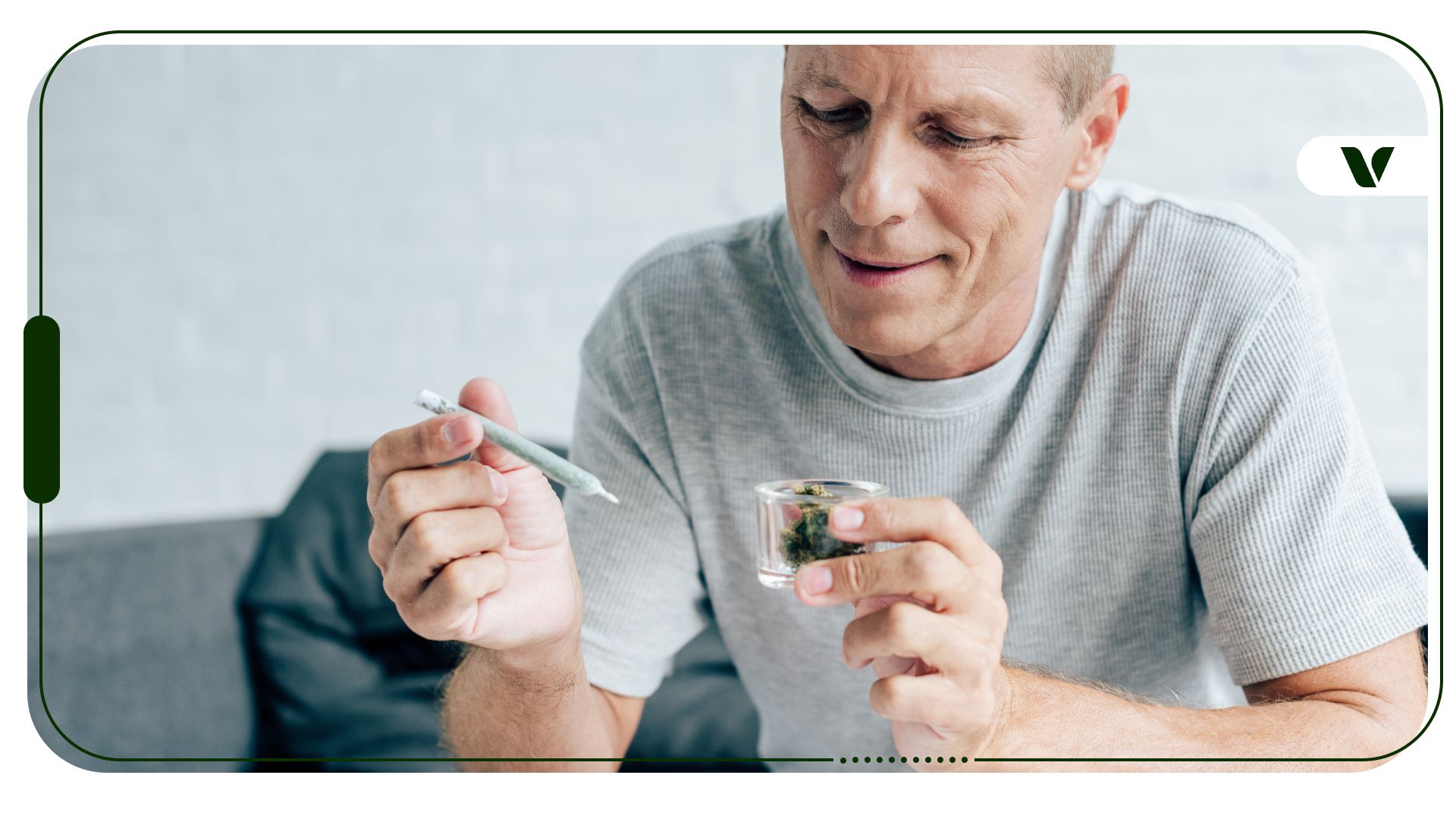
People sometimes think that cannabis is a fling of youth – simply an act of folly or just a fleeting social habit. This couldn’t be farther from the truth. More and more middle-aged adults are waking up to this over the last decade, heavily influenced by the pandemic.
The pandemic and legalization efforts caused significantly increasing numbers of cannabis users across all young and middle-aged sociodemographic groups regardless of race, ethnicity, or college degree. Middle-aged men have a higher prevalence of cannabis use than women, but women are the fastest-growing cannabis demographic among this age group.
In this article, we’ll go over practical considerations and common uses of medical cannabis for middle-aged beginners and experienced consumers alike. If you’re already a medical patient, you’re probably dealing with one or more of the most commonly cited conditions in this age group.
Common Uses and Indications
Our physiology proves that humans never “outgrow” cannabis. That’s because the body always uses the endocannabinoid system, a master regulatory system present within every organ system. This enables cannabis and hemp products to be effective at any life stage for a wide variety of afflictions.
According to Veriheal recommendation data, middle-aged adults (40-65) signing up for medical cannabis are seeking relief from:
- Chronic pain (54%)
- Trouble sleeping (54%)
- Arthritis (21%)
- Muscle spasms (16%)
- Nausea (8%)
- Cancer (3%)
- Immune problems
- Seizures (2%)
- Crohn’s (1%)
- HIV/AIDS (<1%)
- Or other (32%)
Mental health symptoms such as anxiety (49%) and depression (39%) are also among the most common patient-reported reasons, right alongside chronic pain (42%), according to other national surveys. The reason for the reporting discrepancies here is that many states unfortunately don’t recognize mental health conditions as indications for starting medical cannabis, while nearly all states recognize chronic pain.
Menopause
A hallmark of midlife for biological women, perimenopause and menopause mark significant reproductive transitions – and carry several uncomfortable symptoms. Many are using medical cannabis to effectively address many common symptoms of perimenopause and menopause, such as:
- Hot flashes
- Sleep disturbances and insomnia
- Anxiety
- Muscle and joint achiness
- Weight gain and slower metabolism
- Bone density
- Mood swings
- Low libido
Check out our menopause-focused articles for a more in-depth explanation and recent expert interview.
Brain Health
Cannabis use in older ages isn’t linked to poor cognition, as seen in fetuses, children, and adolescents. In fact, it may help improve brain health in older ages, based on the known neuroprotective and anti-inflammatory benefits of several cannabis compounds.
However, some studies point out specific flaws in verbal memory particularly in men but not women, as well as few attention and executive function deficits. These can happen in the short term, but the long-term effects seen in youth no longer apply.
Middle-Aged Adults Commonly Choose CBD over Cannabis
You might be surprised that the latest national statistics from Gallup show that middle-aged adults 35 to 54 report smoking cannabis at nearly the same rates (18%) as young adults aged 18 to 34 (19%).
A large proportion of my patients are middle-aged, and they are frequently beginners or have a distant history of cannabis use in their younger days. Most experienced consumers started cannabis around ages 18–20.
I’ll often hear delightful stories of yesteryear’s beloved cannabis use when socializing with friends. But life moved on; they stopped soon after and now seek medicinal benefits they didn’t need before.
You Don’t Have to Get High
By contrast, most middle-aged beginners tell me they’ve tried CBD first and are hesitant about THC’s psychoactive effects. Concordantly, Veriheal data shows middle-aged adults 40-65 are more likely to have tried CBD (42.8%) than cannabis (38.8%) at sign-up. This trend is also supported by peer-reviewed research publications.
Many patients prefer to avoid impairment for any number of reasons, which is entirely okay. Cannacoaches like me understand this and work with your preferences to make a cannabis action plan that practically fits around your work, caretaking, and daily responsibilities.
Preclinical and some clinical research shows that minor, non-impairing cannabinoids like CBDA, CBG, CBN, and many more, are also potentially effective for alleviating symptoms of:
- Pain
- Insomnia
- Nausea and Vomiting
- Inflammation
- Diabetes, obesity, and metabolic syndrome
- Neurological conditions
- Cancer
- Anorexia or low appetite
- Seizures and epilepsy
- Migraines
- Acne and bacterial infections
- Autism
- Muscle spasticity and muscular dystrophy
- And more
All without getting high and made possible by hemp.
Middle and older adults have good reason to approach THC with caution, as age-related factors like these influence cannabis’ effects on the body and mind:
All of these increase the potency and duration of cannabinoid effects, including THC intoxication, and therefore the possibility of side effects.
Side Effects
The truth is that cannabis and hemp products aren’t risk-free. However, you’re more likely to get uncomfortable side effects with THC than CBD because of its intoxicating effects.
Beyond that, the risks are mainly related to the chosen route and dosage, with THC taking far smaller doses to cause side effects. In my experience, my middle-aged patients are more likely to find side effects with:
- More than 10–20mg of oral or edible THC
- Smoking THC-dominant cannabis flower (e.g., coughing, wheezing, airway irritation, sputum production)
- Excessive concentrates or RSO
- Ingesting over 100mg of oral CBD
- Taking more than 2–3mL of sublingual oil at a time (e.g., heartburn, burping, GI upset)
Basically, the side effects of THC and CBD differ fundamentally based on dosing and THC’s psychoactive effects. Keep in mind that cannabis is not directly lethal because it doesn’t suppress your breathing like opioids do. Here’s a closer look.
THC-containing products:
- Impairment of memory, learning, attention, and spatial orientation
- Dizziness
- Dry mouth and eyes
- Fast heart rate
- Anxiety
- Drowsiness
- Fatigue
- Increased appetite
CBD is generally safe and well-tolerated, and side effects are less common. Minor cannabinoids and hemp products generally have a similar safety profile to CBD. These may include mild to moderate:
- Gastrointestinal symptoms like diarrhea
- Drowsiness
- Sleepiness
- Loss of appetite
Despite this, there is plenty of room for harm reduction because the dosage windows are wide enough to effectively address underlying issues without needing to go overboard. Consulting with a knowledgeable provider or cannabis coach can help you optimize your approach to minimize the chances of side effects.
Dependence and Cannabis Use Disorder (CUD)
For many, midlife brings high rates of depression and life dissatisfaction. Note that THC products carry the risk of dependence, especially if you have a mental health condition like depression. Without other ways to cope, it’s easier to become dependent on cannabis.
Rates of cannabis use disorder have alarmingly tripled in middle-aged to older adults, from 0.4% to 1.3% between 2001 through 2013. That’s why it’s important to feel comfortable opening up about your feelings and cannabis use with a sympathetic and understanding provider.
Cardiovascular Effects
Another important note for people of middle age is that THC increases heart rate and blood pressure as well as putting temporary demand on the heart and blood vessels. If you have cardiovascular disease, common in middle age, you should avoid smoking cannabis because there may be up to five-fold risk of triggering a heart attack within an hour of smoking cannabis, although there isn’t a greater mortality rate.
While this is a short-term risk, meaning that cannabis isn’t shown to cause heart disease in the first place, it can be an inciting event for susceptible people. Research proposes it’s enough to advise people with cardiovascular disease to avoid smoking cannabis.
Frequency and Harm Reduction
Today, many middle-aged adults use cannabis daily or near-daily, often preferably over alcohol and tobacco. This population now astutely perceives fewer health risks with cannabis than with alcohol.
Some of my patients also use cannabis and hemp oils to turn away from harmful substances such as opioids and antianxiety drugs like benzodiazepines, certain prescriptions (e.g., antidepressants, NSAIDs), or find much-needed relief using natural cannabis-based products for the first time.
Cannabinoids’ benefits outweigh the harms in most cases – as determined by your provider first – because they generally have less risky side effects than most medications and other recreational substances.
Bottom Line
Expert psychologists describe midlife as a time of reflection, but sometimes of midlife crisis. Always feel free to ask for help if you’re struggling, you aren’t alone. Knowing that you have many cannabinoid options to address what you’re feeling or going through during this time is empowering.
Enjoying a healthy and balanced life, diet and hydration, hobbies, exercise, time with your children, caretaking for aging parents, and celebrating milestones is a lot to balance – but these are important goals to keep in mind in middle age. It’s certainly possible to manage all of these things with a cannabis action plan that suits your preferences and lifestyle.
References
- Al-Khazaleh, A. K., Zhou, X., Bhuyan, D. J., Münch, G. W., Al-Dalabeeh, E. A., Jaye, K., & Chang, D. (2024). The Neurotherapeutic Arsenal in Cannabis sativa: Insights into Anti-Neuroinflammatory and Neuroprotective Activity and Potential Entourage Effects. Molecules, 29(2), Article 2. https://doi.org/10.3390/molecules29020410
- Azcarate, P. M., Zhang, A. J., Keyhani, S., Steigerwald, S., Ishida, J. H., & Cohen, B. E. (2020). Medical Reasons for Marijuana Use, Forms of Use, and Patient Perception of Physician Attitudes Among the US Population. Journal of General Internal Medicine, 35(7), 1979–1986. https://doi.org/10.1007/s11606-020-05800-7
- Babyn, K., Ross, S., Makowsky, M., Kiang, T., & Yuksel, N. (2023). Cannabis use for menopause in women aged 35 and over: A cross-sectional survey on usage patterns and perceptions in Alberta, Canada. BMJ Open, 13(6), e069197. https://doi.org/10.1136/bmjopen-2022-069197
- Bell, A. D., MacCallum, C., Margolese, S., Walsh, Z., Wright, P., Daeninck, P. J., Mandarino, E., Lacasse, G., Deol, J. K., Freitas, L. de, Pierre, M. S., Belle-Isle, L., Gagnon, M., Bevan, S., Sanchez, T., Arlt, S., Monahan-Ellison, M., O’Hara, J., Boivin, M., & Costiniuk, C. (2024). Clinical Practice Guidelines for Cannabis and Cannabinoid-Based Medicines in the Management of Chronic Pain and Co-Occurring Conditions. Cannabis and Cannabinoid Research. https://doi.org/10.1089/can.2021.0156
- Caulkins, J. P. (2024). Changes in self-reported cannabis use in the United States from 1979 to 2022. Addiction, 119(9), 1648–1652. https://doi.org/10.1111/add.16519
- Choi, N. G., Moore, J., & Choi, B. Y. (2024). Cannabis use disorder and substance use treatment among U.S. adults. Journal of Substance Use and Addiction Treatment, 167, 209486. https://doi.org/10.1016/j.josat.2024.209486
- Dahlgren, M. K., El-Abboud, C., Lambros, A. M., Sagar, K. A., Smith, R. T., & Gruber, S. A. (2022). A survey of medical cannabis use during perimenopause and postmenopause. Menopause (New York, N.y.), 29(9), 1028. https://doi.org/10.1097/GME.0000000000002018
- Ebbert, J. O., Scharf, E. L., & Hurt, R. T. (2018). Medical Cannabis. Mayo Clinic Proceedings, 93(12), 1842–1847. https://doi.org/10.1016/j.mayocp.2018.09.005
- Ellingson, J. M., Hinckley, J. D., Ross, J. M., Schacht, J. P., Bidwell, L. C., Bryan, A. D., Hopfer, C. J., Riggs, P., & Hutchison, K. E. (2021). The Neurocognitive Effects of Cannabis Across the Lifespan. Current Behavioral Neuroscience Reports, 8(4), 124. https://doi.org/10.1007/s40473-021-00244-7
- Evaluation of Cannabis Use Among US Adults During the COVID-19 Pandemic Within Different Legal Frameworks | Substance Use and Addiction Medicine | JAMA Network Open | JAMA Network. (n.d.). Retrieved November 6, 2024, from https://jamanetwork.com/journals/jamanetworkopen/fullarticle/2798136
- Frost, L., Mostofsky, E., Rosenbloom, J. I., Mukamal, K. J., & Mittleman, M. A. (2013). Marijuana Use and Long-Term Mortality among Survivors of Acute Myocardial Infarction. American Heart Journal, 165(2), 170–175. https://doi.org/10.1016/j.ahj.2012.11.007
- Gable, R. (2004). Comparison of acute lethal toxicity of commonly abused psychoactive substances. Addiction (Abingdon, England), 99, 686–696. https://doi.org/10.1111/j.1360-0443.2004.00744.x
- Gallup. (2024, November 1). What Percentage of Americans Smoke Marijuana? Gallup.Com. https://news.gallup.com/poll/284135/percentage-americans-smoke-marijuana.aspx
- Khoudary, S. R. E., Greendale, G., Crawford, S. L., Avis, N. E., Brooks, M. M., Thurston, R. C., Karvonen-Gutierrez, C., Waetjen, L. E., & Matthews, K. (2019). The menopause transition and women’s health at midlife: A progress report from the Study of Women’s Health Across the Nation (SWAN). Menopause (New York, N.y.), 26(10), 1213. https://doi.org/10.1097/GME.0000000000001424
- Mejia-Gomez, J., Phung, N., Philippopoulos, E., Murphy, K. E., & Wolfman, W. (2021). The impact of cannabis use on vasomotor symptoms, mood, insomnia and sexuality in perimenopausal and postmenopausal women: A systematic review. Climacteric, 24(6), 572–576. https://doi.org/10.1080/13697137.2021.1898581
- Menopausal Hormone Therapy and Cancer—NCI. (n.d.). Retrieved October 25, 2024, from https://www.cancer.gov/about-cancer/causes-prevention/risk/hormones/mht-fact-sheet
- Patrick, M. E., Pang, Y. C., Terry-McElrath, Y. M., & Arterberry, B. J. (2024). Historical Trends in Cannabis Use Among U.S. Adults Ages 19-55, 2013-2021. Journal of Studies on Alcohol and Drugs, 85(4), 477–486. https://doi.org/10.15288/jsad.23-00169
- Patrick, M. E., Terry-McElrath, Y. M., Peterson, S. J., & Birditt, K. S. (2023). Age- and Sex-Varying Associations Between Depressive Symptoms and Substance Use from Modal Ages 35 to 55 in a National Sample of U.S. Adults. Prevention Science, 1. https://doi.org/10.1007/s11121-023-01491-8
- Pocuca, N., Walter, T. J., Minassian, A., Young, J. W., Geyer, M. A., & Perry, W. (2020). The Effects of Cannabis Use on Cognitive Function in Healthy Aging: A Systematic Scoping Review. Archives of Clinical Neuropsychology, 36(5), 673–685. https://doi.org/10.1093/arclin/acaa105
- Psychreg. (2023, July 6). What Are the 4 Stages of Adult Development. Psychreg. https://www.psychreg.org/stages-adult-development/
- Stanley, C., & O’Sullivan, S. E. (2014). Vascular targets for cannabinoids: Animal and human studies. British Journal of Pharmacology, 171(6), 1361. https://doi.org/10.1111/bph.12560
- Vinocur, L. (2024, July 24). Ask Dr. Leigh: Could cannabis help women through menopause? GreenState. https://www.greenstate.com/health/ask-dr-leigh-cannabis-and-menopause/
- Waddell, J. T. (2021). Age-varying time trends in cannabis- and alcohol-related risk perceptions 2002–2019. Addictive Behaviors, 124, 107091. https://doi.org/10.1016/j.addbeh.2021.107091
- Walsh, K. B., McKinney, A. E., & Holmes, A. E. (2021). Minor Cannabinoids: Biosynthesis, Molecular Pharmacology and Potential Therapeutic Uses. Frontiers in Pharmacology, 12, 777804. https://doi.org/10.3389/fphar.2021.777804
- Weinstein, G., & Sznitman, S. R. (2020). The implications of late-life cannabis use on brain health: A mapping review and implications for future research. Ageing Research Reviews, 59, 101041. https://doi.org/10.1016/j.arr.2020.101041
- Yoo, H. B., DiMuzio, J., & Filbey, F. M. (2020). Interaction of Cannabis Use and Aging: From Molecule to Mind. Journal of Dual Diagnosis, 16(1), 140–176. https://doi.org/10.1080/15504263.2019.1665218
Author, Share & Comments