1-855-452-6224 (Customer Support Available 24/7)



Whether you’re a casual runner or an elite marathoner, you likely find yourself constantly on the lookout for things that will make training and recovery easier, more efficient, and less painful. After all, nothing takes a nice Sunday morning jog from pleasant to miserable as fast as achy muscles or nagging injuries.
Over the past several years, a ton of new cannabidiol-infused products have hit the market, claiming to address many of the most common issues runners face. But do they really work? And how should you be using them in your routine for maximum results? We’re answering all your running-related cannabidiol questions here.
First, let’s briefly look at what cannabidiol is.
Tetrahydrocannabinol (THC) and cannabidiol (CBD) are the primary compounds of the cannabis plant. THC is the main psychoactive compound of cannabis, responsible for giving you that feeling of being high. CBD, on the other hand, does not produce intoxicating effects but still has positive, mood-boosting effects. People primarily use it for therapeutic or medicinal purposes, such as alleviating anxiety, insomnia, chronic pain, and addiction or withdrawal symptoms.
According to the World Health Organization, “in its pure state, cannabidiol does not appear to have abuse potential or cause harm.” Because it’s not considered addictive, CBD is no longer a scheduled substance the way tetrahydrocannabinol is, and is legal for medical and recreational use on the state and federal levels in the United States. Even the World Anti-Doping Agency accepts it, so athletes won’t be banned from competitions for using it.
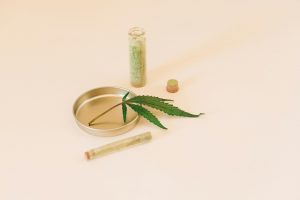
Through thousands of primary test tube and animal studies, we know that CBD works within but mostly outside the ECS. Research shows it has very limited activity at cannabinoid (CB) receptors, but it can increase our natural endocannabinoids to cause indirect effects.
The endocannabinoid system, or ECS, is a complex cell signaling system that helps to regulate a number of functions like sleep, memory, immunity, and pain control. Researchers believe that CBD increases endocannabinoids that interact with endocannabinoid receptors, causing the cells to initiate anti-inflammatory and pain-relieving responses.
Beyond this, CBD by itself also targets 65 other molecules relevant for pain and mood processing, such as serotonin, TRP, and anti-inflammatory agents. This expanded set of cannabinoid-sensitive targets makes up what we call the endocannabinoidome (eCBome).
READ: Why Is Cannabis Still Illegal Despite All of the Research?
The Food and Drug Administration approved the use of Epidiolex® (pharmaceutical CBD) for rare childhood seizure conditions, but it does not regulate over-the-counter CBD formulations, so it has not issued any official dosage recommendations for other conditions.
Additionally, a 2021 review of several studies finds that there isn’t a universal standard, but that different people respond best to different dosages of CBD depending on factors like frequency, height, weight, gender, and genetic disposition, including how sensitive their endocannabinoid systems are.
Typical dosage for CBD in pain research falls anywhere between 2.5 mg and 800 mg per day. It also shows that CBD’s positive effects on pain generally start at doses higher than 30mg daily. You may want to speak with your doctor to get a recommended dosage level, particularly if you have underlying health conditions or take other medications that CBD could impact.
But for those who aren’t taking prescribed CBD products, or whose doctors are unable to give dosage recommendations, experts widely agree that it’s best to start with 5mg of CBD twice daily. Increase your CBD dosage by 10 mg each week until you find your sweet spot, as long as your current level is well-tolerated and not producing side effects.
Now that we’ve covered the basics, let’s look at the various ways CBD can be integrated into your training plan. Starting with the night before your next training run.
The ECS plays a role in regulating your sleep-wake cycles. Because of this, many runners use CBD as a sleep aid the night before a run.
The effectiveness of CBD on sleep varies by person. In a 2023 meta-analysis, CBD-dominant therapies were effective in 4 of 7 studies. However, this proportion improves to 12 of 16 studies when an equal portion of THC is added. Recent research suggests THC is better for falling asleep, while CBD is better for staying asleep, unless CBD alone is used in high doses (50-160 mg) for sleep.
But getting to sleep and staying asleep aren’t the only parts of the sleep-wake cycle that CBD can affect. Another study finds that participants reported greater well-being scores and superior sleep efficiency scores after taking CBD. By contrast, research suggests that taking excessive, unopposed THC or recreational cannabis use may worsen sleep quality over time – promoting the need for balanced effects.
If you find yourself consistently tired when waking and feel that poor sleep quality is affecting your runs, taking CBD the night before could go a long way in ensuring you feel rested and refreshed before you lace up. Brands like Medterra and Charlotte’s Web offer gummies with both CBD and melatonin, which could fit the bill perfectly. But keep in mind that low doses of CBD (15 mg) are just as effective as 5 mg of melatonin in a 2023 clinical trial.
Using CBD at the start of a run may also have positive benefits. One recent review found that in endurance runners, CBD increased oxygen intake and pleasure ratings, along with heart-protective and anti-inflammatory factors in preclinical studies. What runner wouldn’t kill for a quick way to breathe a little easier and enjoy that runner’s high a little longer? Athlete-founded brand Just Live offers CBD-infused gummies for energy, which could be an excellent option for a mid-run boost.
CBD also demonstrates a positive effect on anxiety and stress. For runners who feel overwhelmed by the number of miles on their training plan, a few milligrams of CBD can help ease those nerves and make runs something to look forward to instead of dread. Lazarus Naturals has a whole range of affordable, stress-relieving CBD products from gummies to softgels to tinctures that would integrate perfectly into a pre-run fuel-up.
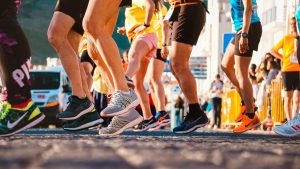
Perhaps the most effective place to use CBD products is after a run, to stave off those aches and pains and speed up recovery.
After a challenging run, inflammation is common as the body repairs muscle damage and adapts to new levels of exertion. CBD may regulate the inflammatory process, muscle repair, and lower the amount of stress it places on the body. One study finds that taking CBD after a hard workout can lessen muscle damage and, therefore, speed up overall recovery. Brands like Aspen Green and Medosi have CBD recovery topical treatments that are targeted at athletes and their specific needs.
CBD can also be a great way to treat ongoing pain. While it certainly can’t replace a proper medical diagnosis or rest, it may lower levels of chronic pain, and could be a great thing to work into your recovery routine. cbdMD has a good assortment of products targeted at lowering pain levels, including its CBD MAX pain tablets. Extract Labs also offers a bunch of pain and recovery CBD-infused topicals that many runners swear by.
It’s important to keep an open mind and a willingness to experiment when deciding whether to include CBD in your running routine. What works for some runners may not work for others, and the side effects – which typically include dry mouth, diarrhea, fatigue, and a decrease in appetite – may outweigh the benefits in higher doses.
Don’t get discouraged if the first gummy or dosage doesn’t hit the mark— the CBD market is growing rapidly, and there are almost an unlimited number of products to test out in order to find your perfect match.
You should speak openly with your doctor—especially if you have underlying health concerns, are taking other medications, or are concerned about side effects—as this is a crucial part of any CBD journey. It can be incredibly helpful to keep a log of what products you’re using, the dosage levels you’re taking, and the timing of use in order to have a clear idea of how they’re helping or hurting your training.
Sign up for our newsletter

Learn the process in your state
All Rights Reserved Veriheal Inc. ©
Terms Privacy Policy Advertising Agreement Content Disclamer


Get your medical marijuana card today
Sign up in under 5 minutes
Start By Selecting Your State
 Alabama
Alaska
Arizona
Arkansas
California
Colorado
Connecticut
Delaware
Florida
Georgia
Hawaii
Idaho
Illinois
Indiana
Iowa
Kansas
Kentucky
Louisiana
Maine
Maryland
Massachusetts
Michigan
Minnesota
Mississippi
Missouri
Montana
Nebraska
Nevada
New Hampshire
New Jersey
New Mexico
New York
North Carolina
North Dakota
Ohio
Oklahoma
Oregon
Pennsylvania
Rhode Island
South Carolina
South Dakota
Tennessee
Texas
Utah
Vermont
Virginia
Washington
West Virginia
Wisconsin
Wyoming
Puerto Rico
Alabama
Alaska
Arizona
Arkansas
California
Colorado
Connecticut
Delaware
Florida
Georgia
Hawaii
Idaho
Illinois
Indiana
Iowa
Kansas
Kentucky
Louisiana
Maine
Maryland
Massachusetts
Michigan
Minnesota
Mississippi
Missouri
Montana
Nebraska
Nevada
New Hampshire
New Jersey
New Mexico
New York
North Carolina
North Dakota
Ohio
Oklahoma
Oregon
Pennsylvania
Rhode Island
South Carolina
South Dakota
Tennessee
Texas
Utah
Vermont
Virginia
Washington
West Virginia
Wisconsin
Wyoming
Puerto Rico