1-855-452-6224 (Customer Support Available 24/7)

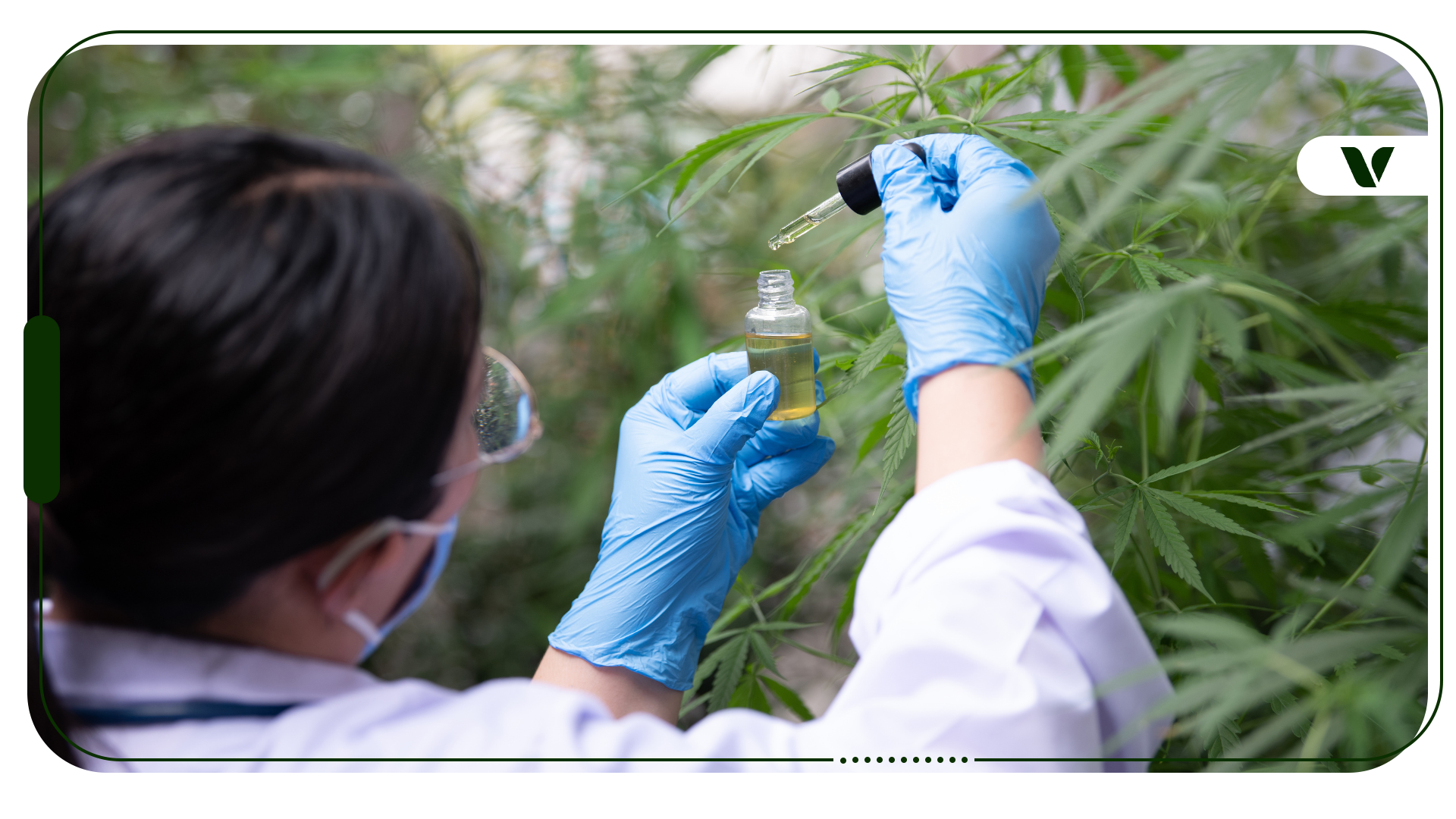
Cannabis consumers in the legal market rely on proper analysis and testing as a matter of knowledge and safety regarding the composition of the weed they’re purchasing. One of the main differences between the state-run legal market and the black and gray cannabis markets is how they handle testing.
Those of us in medical and legal states see the package label at the point of sale and have an idea of the properties of the weed we’re potentially buying and consuming, along with the assurance that it’s safe from any contaminants. In the gray and black markets, it’s a roll of the dice to sometimes even know if the strain you’re buying is actually what the plug says it is.
Testing and analysis of cannabis continues to keep all of us safe and supplied with properly analyzed legal weed, but how does it really work? Veriheal was lucky enough to get some face time with the founder of one of New Jersey’s most trusted cannabis testing labs, Kristen Goedde of Trichome Analytical, to explain the state-mandated process from start to finish.
Cannabis remains federally illegal, so each state where medical and legal weed is allowable has its own testing standards and limits that vary state-by-state. There’s also no one-size-fits-all solution for testing cannabis.
A lab may test and approve a product for sale in one state, yet regulators in another state may reject it due to differing allowable limits. For example, Maine has continually punted down the road as to when they will test medical marijuana for contaminants, with the state supposedly eyeing sometime in 2026 to begin.
Testing labs have their own standard operating procedures to achieve the proper analysis, while also complying with state mandates regarding testing criteria. Almost all states require testing of cannabinoid potency as well as a basic contaminant testing panel. Others go a step further and examine microbial and pathogenic contamination in testing samples as well.
States oversee cannabis testing labs on an individual basis. Some states operate their own state-run labs, while others are licensed by the state as approved third parties to conduct analysis. Both types of labs have the unique responsibility of keeping the public safe and informed regarding ingestible products not approved by the Food & Drug Administration (FDA).
As mentioned, not all state cannabis laws and testing labs are created equal, so some of the criteria analyzed aren’t consistent across all states. Once labs complete the analysis, cultivators and processors receive a report detailing all analyzed sample data. Below are the main criteria testing labs evaluate concerning legal cannabis products:
One of New Jersey’s busiest and most trusted cannabis testing labs is Trichome Analytical, a female-owned business based out of Mt. Laurel. The founder of Trichome, Kristen Goedde, was previously a lab manager at an industrial hygiene environmental testing lab before founding the company.
The Jake Honig Compassionate Use Medical Marijuana Act of 2019 authorized third parties to conduct cannabis testing in New Jersey. Trichome started analyzing the U.S. The Department of Agriculture (USDA) pre-harvest hemp samples in 2020 and eventually moved over to medical and legal cannabis testing in the Garden State.
Trichome Analytical analyzes anywhere from 150 to 200 samples a week, taken from over 20 to 30 different licensed cannabis businesses in the state. According to Goedde, New Jersey still operates on a 2021 testing model used by Maryland for its medical marijuana program. The Cannabis Regulatory Commission (CRC) of New Jersey still has yet to create its own testing regulation since legal sales began in 2022. The company also still conducts hemp industry testing of flower, hemp-based beverages, and other products, as they are registered across state lines to do so.
New Jersey requires comprehensive cannabis testing. Right off the bat, Goedde has a notion of whether samples have potential contamination based on the total aerobic bacteria mandated by the state. These organisms survive and thrive in an oxygenated environment, which she says is more of an initial quality indicator regarding cultivators and their samples.
“Total aerobic bacteria will give you an idea of the cleanliness of the cannabis grow and the potential for there to be more serious contaminants,” said Goedde during our recent chat. Goedde and her team analyze the following categories during their testing:
Cannabis edibles are subject to their own panels of testing regarding microbial content and food-borne bacteria, in addition to potency. Some manufacturers request the terpene content of their edible products, like live rosin-infused gummies. Microbial testing criteria include:
There are two main methods of instrumentation that lab professionals use to analyze cannabis products—liquid and gas chromatography. Heavy metal tests undergo a more elemental, acid-dilution-based process.
The chemical-based analytical process known as liquid chromatography combines the testing sample and a liquid solvent compound in a centrifuge column.The solvent flows through the sample, separating the plant material and carrying the liquid containing cannabinoids and other compounds for analysis.
Compounds exit the column at different times, which informs an ultraviolet (UV) detector or mass spectrometer (MS), which identifies them. The resulting data creates an informative graph that displays, identifies, and measures the full spectrum of compounds found based on their volatility and molecular weight. The acidic versions of cannabinoids, like THCA or CBDA, are accounted for.
Gas chromatography is another method of cannabis analysis similar to liquid chromatography, but using a carrier gas through the centrifuge column. A similar detector displays, identifies, and measures the compound separated from the plant matter by the carrier gas.
According to Goedde, researchers use this method of analysis for more volatile compounds such as terpenes, pesticides, and residual solvent levels in concentrates.
We asked Goedde if she could take us through the entire testing process for cannabis—from pulling samples all the way up to the certificate of analysis (COA). She graciously obliged us and took us through a tour of a typical day regarding analysis of cannabis flower samples.
Cultivators must first cure and trim cannabis flower to its final state before the testing lab collects samples. Once products are batched and ready, testing labs visit cultivation and processing facilities on-site and pull the samples themselves.
Analysts collect a 0.5% sample from each batch, with batches weighing up to 100 pounds max. So if the batch is 10 lbs, 22.7g of cannabis flower will be tested.
Analysts take representative samples from each batch container before testing, and when multiple containers are available, they collect equal sample amounts from each one. They then fill out the chain-of-custody information documenting dates and weights. Lab workers place the cannabis securely in a locked, temperature-controlled cooler for transport and monitoring back to the lab.
Lab staff enter sample information into the laboratory information management system (LIMS) once back in Mt. Laurel. The lab assigns each sample a unique ID and photographs it.
Technicians gather and homogenize the sample material to ensure uniform and consistent testing. This process helps provide a better representative sample, as well as extracts the compounds more efficiently during chromatography. Analysts take subsamples at this stage for microbial and foreign matter testing, while the rest of the sample is processed further into a fine powder for the most optimal analysis.
Goedde and team analyze about 200mg of the flower powder sample for potency testing. Technicians insert the powder into a 15 ml centrifuge tube and add an extraction solvent such as methanol. Trichome Analytics uses several different forms of extraction to analyze the samples—vortex mixing ensures all compounds analyzed are within the methanol.
Lab workers separate the extracted compounds into another container, leaving the plant matter behind in the bottom of the centrifuge tube. UV or MS detectors indicate the total cannabinoids present; however, the remaining solvent solution is sometimes diluted to differing amounts depending on the extraction method used. Technicians perform terpene and pesticide extraction separately using similar methods.
Cannabis is a natural bioaccumulator, with an affinity to absorb heavy metals from soil, fertilizers, water, and even processing equipment. Many of these metals are toxic to human beings, so testing for them is particularly important. Goedde and team use a more elemental method of testing for heavy metals.
“Heavy metal testing is not like the chemical analysis before—it’s more digestive. The sample gets dissolved in acid and diluted to certain amounts.”, said Goedde regarding the overall process involved.
Technicians place the acid-diluted sample into an instrument capable of detecting elements across the periodic table. Trichome Analytical frequently subjects its instrumentation to quality control and calibration checks, using benchmark measurements to determine consistent preparation and analysis.
Metals tested include some that naturally exist in cannabis, like potassium and iron, but especially toxic heavy metals such as:
Lab workers now use the reserved microbial sample from before to determine whether harmful contamination exists. Trichome’s analysts examine contamination and microbial content, testing specifically for:
According to Goedde, a separate type of microbial analysis is mandated by the state for Salmonella, yeast, and mold. Salmonella testing is culture-based, meaning the sample goes into a type of broth that microbes love to feast on.
Analysts place a broth sample onto a plate or liquid media culture and monitor its growth for about 22 hours, examining if any Salmonella is present. Yeast and mold undergo a similar process, and are examined after 72 hours, since mold takes longer to grow compared to bacteria.
Labs use Polymerase Chain Reaction (PCR) analysis to examine cannabis for pathogen content, similar to scanning for COVID or other viruses. PCR techniques take a snapshot of DNA and RNA structures, which can detect even very low levels of microbial contamination. Pathogens investigated include Staph, Salmonella, and Listeria.
Once testing is complete, the lab compiles the analytical data and compares it to established legal and regulatory requirements mandated by the state, as well as international quality standards. The lab documents all recorded statistics and levels in a certificate of analysis (COA) and provides it to the cultivator or processor.
If the batch’s samples meet all mandated criteria, regulators approve it for legal sale. If the samples fail, regulators prohibit their sale and require destruction. The lab also updates the state regulatory committee by entering results into a tracking system—typically called a Marijuana Enforcement Tracking Reporting & Compliance System (METRC) in most legal markets.
Before we wrapped up with Goedde, we had one last question we wanted to ask the cannabis analysis expert, “What’s with all of the super high THC percentages we’ve been seeing on labels lately? Is it just better genetics and cultivation methods, or are they artificial numbers?”
“I mean, lab shopping has a huge role to play in that”, Goedde replied without hesitation. “Some craft growers are coming online that have smaller grows and can produce higher THC contents, but across the board it seems like a race for the highest THC percentage.”
Goedde also said that the retail competition—in combination with a lack of education in many states—drives the desire for such high-testing percentages. Consumers, unfortunately, use THC percentage alone to rate and quantify weed as the best.
“I think seasoned smokers understand that THC potency is not the end-all be-all. Our pains are important too.”, Goedde added, a cannabis consumer and advocate herself.
As a result, dispensaries are only buying from cultivators that have high-testing weed. That’s why some cultivators and processors will keep going from lab to lab in search of their most preferred analysis. Goedde confirmed she’s had clients ask her to re-test over and over again, ultimately unsatisfied with any unfavorable results, and then never to be seen again. She ultimately sees more laboratory governance as a good thing to remove bad-acting labs from the industry that comply with immoral lab shopping practices
Grabbing a fresh pick-up from the dispensary is a great feeling—the excitement of the new product and the potential fun or relaxation to be had. Cannabis testing labs do all of the dirty work for us, so we don’t have to. They thoroughly utilize scientific and analytical processes to weed out any bad stuff we could potentially put into our bodies, while keeping us informed of what exactly we’re buying!
Sign up for our newsletter
Learn the process in your state
All Rights Reserved Veriheal Inc. ©
Terms Privacy Policy Advertising Agreement Content Disclamer

Get your medical marijuana card today
Sign up in under 5 minutes
Start By Selecting Your State
 Alabama
Alaska
Arizona
Arkansas
California
Colorado
Connecticut
Delaware
Florida
Georgia
Hawaii
Idaho
Illinois
Indiana
Iowa
Kansas
Kentucky
Louisiana
Maine
Maryland
Massachusetts
Michigan
Minnesota
Mississippi
Missouri
Montana
Nebraska
Nevada
New Hampshire
New Jersey
New Mexico
New York
North Carolina
North Dakota
Ohio
Oklahoma
Oregon
Pennsylvania
Rhode Island
South Carolina
South Dakota
Tennessee
Texas
Utah
Vermont
Virginia
Washington
West Virginia
Wisconsin
Wyoming
Puerto Rico
Alabama
Alaska
Arizona
Arkansas
California
Colorado
Connecticut
Delaware
Florida
Georgia
Hawaii
Idaho
Illinois
Indiana
Iowa
Kansas
Kentucky
Louisiana
Maine
Maryland
Massachusetts
Michigan
Minnesota
Mississippi
Missouri
Montana
Nebraska
Nevada
New Hampshire
New Jersey
New Mexico
New York
North Carolina
North Dakota
Ohio
Oklahoma
Oregon
Pennsylvania
Rhode Island
South Carolina
South Dakota
Tennessee
Texas
Utah
Vermont
Virginia
Washington
West Virginia
Wisconsin
Wyoming
Puerto Rico