Getting a medical marijuana card in Ohio is a straightforward process, but knowing exactly what to expect at each stage makes the difference between a smooth application and unnecessary delays. This guide walks you through every step, from finding a certified physician to receiving your card, with the state-specific detail you need to act with confidence.
Ohio legalized recreational cannabis in December 2023, which raises a fair question: why pursue the medical pathway at all? The answer matters before you invest time in the process, so this guide addresses it directly at the start.
Why Get a Medical Marijuana Card in Ohio When Recreational Is Legal?
Recreational legalization changed what Ohio adults can buy, but it did not eliminate the advantages outlined in Ohio marijuana legalization laws for the medical program. For patients who qualify, the medical card still delivers concrete, measurable benefits that recreational access does not.
Here is what the medical card gets you that recreational purchase does not:
- Higher possession limits. Medical patients are permitted to possess larger quantities of cannabis than recreational buyers under current Ohio law, which matters if you use cannabis regularly for a qualifying condition.
- Sales tax exemption. Medical cannabis purchases are exempt from the excise tax applied to recreational sales, making your dispensary visits meaningfully cheaper over time.
- Dispensary priority access. Registered medical patients receive priority at licensed dispensaries, and medical inventory is maintained separately from recreational stock at many locations.
- Age eligibility from 18. The medical program accepts patients aged 18 and older. Recreational purchase requires you to be 21, so the medical pathway is the only legal option for adults under that threshold.
- Caregiver designation rights. Only registered medical patients can designate a caregiver to purchase and possess cannabis on their behalf. Recreational buyers cannot access this feature.
If any of these advantages apply to your situation, the medical card is worth pursuing. The next section confirms whether you meet the baseline eligibility requirements before walking you through each step.
Ohio Medical Marijuana Card Requirements
Before booking a physician visit, it helps to confirm you meet Ohio’s three core eligibility criteria. Meeting all three means you are ready to begin the process.
Ohio Residency
You must be an Ohio resident to participate in the state’s medical marijuana program. A valid Ohio driver’s license or state-issued ID satisfies this requirement. Out-of-state identification is not accepted, and there is no reciprocity arrangement that allows patients registered in another state to purchase from Ohio dispensaries using their home state credentials.
Age Requirements
Patients must be 18 years of age or older to register independently. Patients under 18 may still qualify for the program, but a parent or legal guardian must be designated as a registered caregiver to purchase and possess cannabis on the minor’s behalf.
Qualifying Medical Condition
You must have at least one condition on the Ohio Medical Marijuana Control Program’s approved list, confirmed by a physician who holds certified-to-recommend (CTR) status through the State Medical Board of Ohio. That certification is a clinical judgment call, not a rubber stamp, as the next section explains in more detail. The full list of qualifying medical conditions is covered later in this guide.
How to Get a Medical Marijuana Card in Ohio: Step by Step
The Ohio Medical Marijuana Control Program follows a seven-step process from physician visit to card in hand. Each step below contains enough detail that you should not need to leave this page to understand what comes next.
Step 1: Find a Certified-to-Recommend (CTR) Physician
Not every licensed physician in Ohio can recommend medical cannabis. A physician must complete a State Medical Board-approved two-hour training requirement under Ohio Revised Code § 4731.30 to earn CTR status. You can verify a physician’s certification through the State Medical Board of Ohio’s online licensee search before booking an appointment. Veriheal connects patients with CTR-certified physicians via telemedicine for medical cannabis, so you can complete this step from home without visiting a clinic in person.
Step 2: Complete Your Telehealth or In-Person Appointment
During the appointment, the physician evaluates your qualifying medical condition and reviews your medical records documentation to confirm your diagnosis. Bring a valid Ohio ID and any relevant records from your treating providers. If the physician determines that medical cannabis certification is appropriate, they enter your recommendation and patient profile directly into the Ohio Patient and Caregiver Registry. The physician-patient relationship established at this visit is the foundation of your entire application.
Step 3: Check Your Email for Registry Activation
After your physician submits your recommendation, you will receive an automated email from no-reply-pmpaware@globalnotifications.com with the subject line “ACTION NEEDED: Ohio MMCP Registry – Account Registration.” This email typically arrives within 24 to 48 hours. If it does not appear in your inbox, check your spam or junk folder before assuming there is a delay on the physician’s end.
Step 4: Log In and Review Your Registry Profile
This step is where many applicants encounter avoidable delays. Once you log into the Patient and Caregiver Registry portal, review every piece of information your physician entered against your actual identification documents. Name spelling, date of birth, and address must match your Ohio ID exactly. Identity data mismatches are the most common cause of activation delays and can require a correction request back through your physician’s office.
Step 5: Accept the Legal Statement
Before your medical marijuana certificate becomes active, you must affirmatively accept a legal statement within the registry portal under Ohio Administrative Code § 3796:6-2. This statement covers your acknowledgment of Ohio’s medical cannabis regulations and your responsibilities as a registered patient. Skipping or overlooking this step is one of the primary reasons patients believe their application is complete when it is not.
Step 6: Pay the State Registration Fee
Pay the $0.01 state fee directly through the registry portal to complete your registration. This nominal fee applies to all patients and caregivers alike, there’s no separate reduced tier for indigent or veteran status, since the base fee itself is already effectively negligible.
Step 7: Receive Your Medical Marijuana Card
Once your payment is processed and your account is fully activated, your card is issued digitally through the registry and also sent by mail. You can begin purchasing at licensed Ohio dispensaries as soon as the digital card is active. The full timeline from physician approval to card in hand is typically a few days to one week when no corrections are needed. Your medical marijuana certificate is valid for one year and requires annual renewal to remain active. For details on how long it takes to get a medical card in Ohio and other states, Veriheal’s guide covers the full range of timelines by state.
Ohio Medical Marijuana Qualifying Conditions
Ohio’s CTR physician does not simply verify that you have a diagnosis. They certify that your condition appears on the State Medical Board of Ohio’s approved list and that medical cannabis may be appropriate for your treatment. This distinction matters because it means the physician is making a clinical judgment, not processing a form.
The Ohio Medical Marijuana Control Program currently recognizes the following qualifying medical conditions:
- AIDS
- Amyotrophic lateral sclerosis (ALS)
- Alzheimer’s disease
- Cachexia
- Cancer
- Chronic traumatic encephalopathy (CTE)
- Crohn’s disease
- Epilepsy or another seizure disorder
- Fibromyalgia
- Glaucoma
- Hepatitis C
- Inflammatory bowel disease
- Multiple sclerosis
- Pain (acute, chronic, or intractable), including chronic pain
- Parkinson’s disease
- Positive status for HIV
- Post-traumatic stress disorder (PTSD)
- Sickle cell anemia
- Tourette syndrome
- Traumatic brain injury
- Ulcerative colitis
- Any other condition added by the State Medical Board of Ohio
Chronic pain and PTSD are among the most commonly cited qualifying medical conditions among Ohio applicants, and both are conditions NIH’s overview of current cannabis and cannabinoid research covers in more depth. The State Medical Board may add conditions over time, so it is worth confirming the current list through the official OMMCP website if your condition does not appear above.
Understanding which conditions qualify is one part of the picture. The next section covers what the dispensary experience actually looks like once your card is active.
What to Expect at Your Ohio Medical Marijuana Dispensary
Your first dispensary visit is straightforward once you know what to bring. Present your active medical marijuana card alongside a valid Ohio photo ID, both are required at the point of sale. A digital card displayed through the registry portal is accepted, so you don’t need to wait for the physical card to arrive by mail before your first purchase.
Ohio doesn’t use a simple gram-based possession cap for medical patients. Instead:
- The Ohio Division of Cannabis Control administers a days-of-supply equivalency system under Ohio Administrative Code § 3796:6-3
- Different product types, plant material, extracts, oils, tinctures, edibles, patches, and topicals, are each converted into supply-day equivalents, since cannabinoids are absorbed and metabolized differently across forms
- Your physician recommends a 90-day supply, with up to three refills available per year for a total of 360 days
- Your purchase limit depends on which product types you select and what your physician has recommended, not a single fixed quantity
Dispensary staff can walk you through the equivalency calculation for your specific situation.
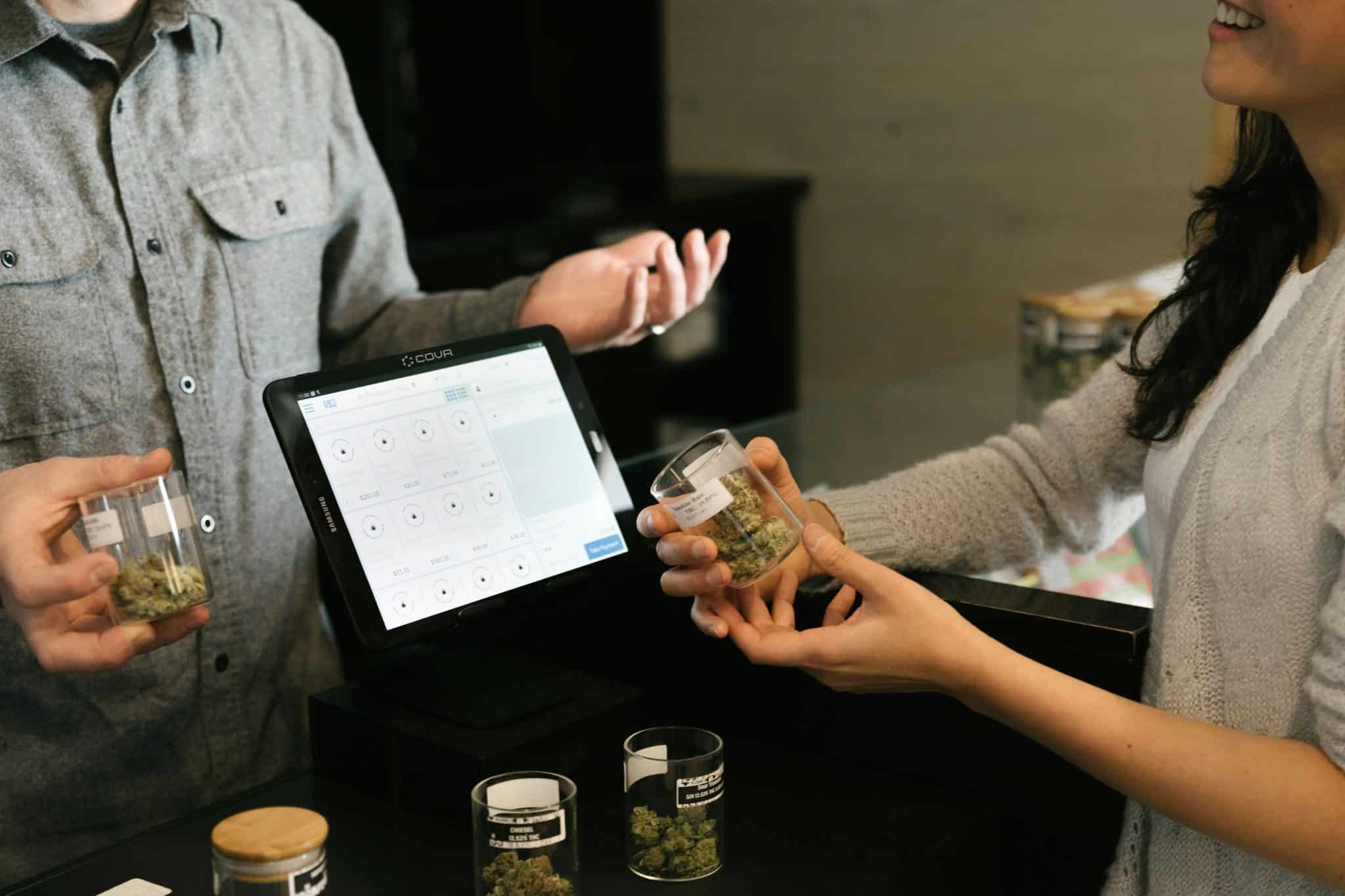
Licensed Ohio dispensaries carry plant material and extracts alongside oils, tinctures, edibles, patches, lotions, and creams. The product range available to medical patients is typically broader than what recreational buyers can access, and medical inventory is maintained separately at many locations.
Ohio Medical Marijuana Card Costs and Fees
State Registration Fee
As of March 4, 2024, Ohio reduced the patient and caregiver registration fee from $50 to $0.01 (one cent). The Division of Cannabis Control had projected full elimination for “late spring” 2024, but that hasn’t materialized, the fee remains $0.01 as of this writing. Confirm this is still current on the Division of Cannabis Control’s site before you apply, since fee policy has shifted before and could change again.
Physician Consultation Fee
The physician consultation fee is separate from state registration and varies by provider. Veriheal’s current fee structure is available on the Ohio landing page. Confirm the fee before booking your appointment.
A Note on Indigent and Veteran Status
Ohio’s registration fee is currently $0.01 for all patients, so there’s no separate fee-reduction category for indigent or veteran applicants specifically, everyone already pays the same nominal amount. If you’re a veteran, it’s still worth mentioning your status to your physician, since some providers offer their own discounted consultation rates for veterans, a separate, provider-set benefit, not a state fee waiver.
Caregiver Registration in Ohio
A caregiver is a person designated by a registered patient to purchase and possess medical cannabis on the patient’s behalf under Ohio’s caregiver registration rules. Caregivers serve patients who are minors, patients with mobility limitations, or patients who cannot manage their own purchases independently.
Caregiver registration runs parallel to patient registration, not after it:
- The patient’s CTR physician initiates the caregiver’s entry into the Patient and Caregiver Registry at the same time as the patient’s own profile
- The caregiver then receives their own registry activation email
- They complete the same log-in and profile review steps
- They must accept their own legal statement before their registration becomes active
- Caregivers are also subject to a background check and eligibility confirmation step before their registration is finalized
Once registered:
- The caregiver must carry their caregiver registration card when purchasing at a dispensary on the patient’s behalf
- The caregiver’s purchase limits are tied to the patient’s physician-recommended supply, not a separate allowance
If you think you may need a caregiver, or if you’re considering serving as one, raise it with your physician during the certification appointment so the registration can be initiated at the same time as yours. For context on how does a medical cannabis card show on a background check, Veriheal’s guide covers what appears and what does not in the background review process.
Ready to take the first step? Apply now to connect with an Ohio-certified physician through Veriheal’s telehealth platform and start your application today.
Note: The content on this page is for informational purposes only and is not intended to be professional medical advice. Do not attempt to self-diagnose or prescribe treatment based on the information provided. Always consult a physician before making any decision on the treatment of a medical condition.
Note: Veriheal does not support illegally consuming therapeutic substances such as cannabis but acknowledges that it transpires because of the current illicit status, which we strive to change by advocating for research, legal access, and responsible consumption. Always consult a physician before attempting alternative therapies.
Ohio Medical Marijuana Card FAQ
Can I get an Ohio medical marijuana card online?
Ohio authorizes telemedicine visits with CTR-certified physicians, so your physician evaluation can be completed entirely via a telehealth appointment. The registry steps and fee payment are also completed online. For patients new to this process, Veriheal’s guide on how to get your medical marijuana card online walks through each step in detail. Only the state-issued physical card arrives by mail, typically within a few days of your digital card becoming active.
How long does it take to get a medical marijuana card in Ohio?
Budget roughly a week end to end: the activation email lands within 24 to 48 hours of your physician’s submission, and finishing the registry steps and fee payment typically activates your card within a few more days after that. For a full state-by-state comparison of application timelines, Veriheal’s guide on how long it takes to get a medical card covers what affects the timeline and what you can do to avoid delays.
What conditions qualify for a medical marijuana card in Ohio?
22 conditions currently qualify, spanning everything from cancer and epilepsy to chronic pain, PTSD, and fibromyalgia, and the State Medical Board periodically adds more.
Can out-of-state medical marijuana cards be used in Ohio?
Ohio does not currently operate a formal reciprocity program. Out-of-state cardholders cannot use their home state registration to purchase from Ohio dispensaries. For a full list of states that allow out-of-state patients to purchase legally, Veriheal’s reciprocity guide has the current state-by-state breakdown.
How much does an Ohio medical marijuana card cost?
The state registration fee is currently $001. You’ll still pay a separate, provider-set physician consultation fee
Should I tell my employer about my medical marijuana card?
Ohio law does not require you to disclose your medical cannabis status to your employer, but workplace cannabis policies vary widely. Veriheal’s guide on should you tell your employer about your medical card covers what Ohio employees should know before making that decision.
Where can I learn more about medical marijuana card laws by state?
Ohio is one of many states with an active medical cannabis program, each with different rules and qualifying conditions. Veriheal’s medical marijuana card state laws guide tracks current regulations across all active state programs.
Author, Share & Comments