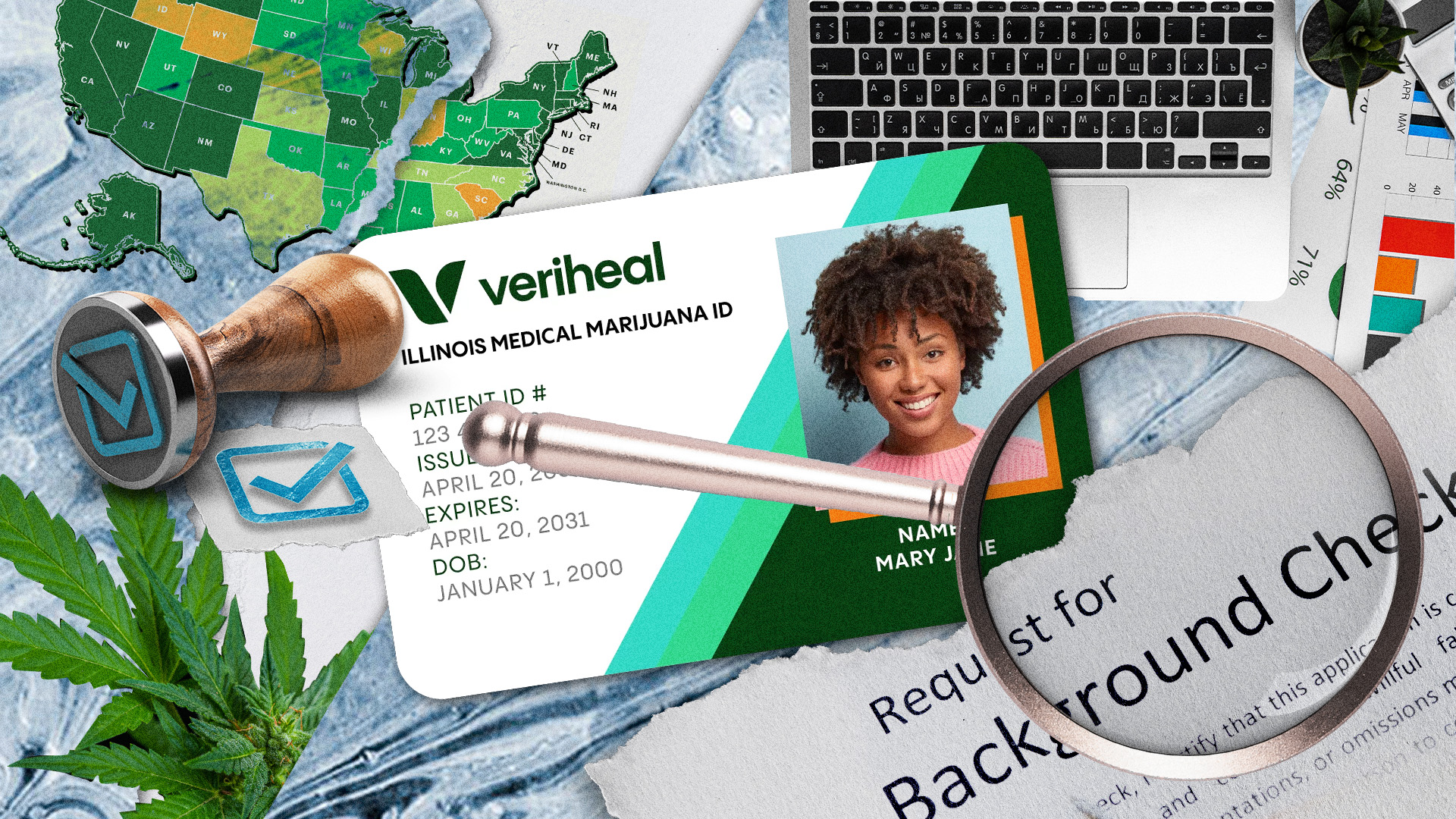
No, medical cannabis cards typically do not appear on standard employment background checks because they are protected health information under the Health Insurance Portability and Accountability Act (HIPAA).
The confusion around medical cannabis privacy creates unnecessary anxiety for patients. Getting a medical marijuana card shouldn’t put your job at risk, but understanding exactly what shows up and where, helps you make informed decisions about disclosure.
This article breaks down the different types of background checks, federal implications, employment protections, state-by-state privacy variations, and practical steps you can take to protect your medical information.
Types of Background Checks and What They Include
Most background checks fall into three categories, each with different access levels to your personal information. Understanding these distinctions helps clarify when your medical cannabis status might surface.
Employment background checks focus on criminal history, employment verification, education confirmation, and credit reports for certain positions. These standard checks do not access medical registries or health information because employers cannot legally request protected health data without specific job-related justification.
Employment Background Checks
Standard employment screening looks for criminal convictions, employment gaps, and financial red flags. Your medical cannabis card exists in a state health registry that employers cannot access through typical background check services like HireRight or Sterling.
The key protection here is HIPAA, which classifies your medical cannabis registration as protected health information. Even if an employer suspects you use medical cannabis, they cannot verify this through a standard background check process.
Housing and Rental Checks
Landlords typically run credit checks and criminal background searches but cannot access medical information. However, some rental applications ask directly about drug use or criminal history, which creates a different disclosure question entirely.
Federal Security Clearances
Federal positions requiring security clearances operate under different rules. These investigations can access state databases and may uncover your medical cannabis registration, especially for positions requiring Top Secret or higher clearance levels.
The distinction matters because federal clearance investigations specifically look for drug use patterns, even legal medical use under state law. This represents the one area where your card registration might surface during the vetting process.
Employment and Medical Cannabis Cards
Employment discrimination based on medical cannabis use varies dramatically by state, with some offering strong protections and others providing none. Understanding your state’s employment laws helps you navigate disclosure decisions and workplace policies.
Employment Protections by State
Some states explicitly protect medical cannabis patients from employment discrimination. States like New York, Nevada, and New Jersey have laws preventing employers from firing or refusing to hire qualified medical cannabis patients, with exceptions for safety-sensitive positions.
Other states offer no employment protections, meaning employers can legally terminate employees for medical cannabis use even with valid cards. At-will employment states particularly lack protections, leaving patients vulnerable to workplace discrimination.
The benefits of a medical card include legal protection for possession and use, but employment protection depends entirely on your state’s specific laws.
When Employers Can Act
Employers retain the right to maintain drug-free workplace policies and can take action when medical cannabis use affects job performance or safety. Safety-sensitive positions like commercial driving, aviation, or heavy machinery operation typically maintain zero-tolerance policies regardless of medical status.
However, employers cannot legally discriminate based solely on medical cannabis patient status in states with employment protections. The key distinction lies between having a card and actually being impaired at work.
Medical Cannabis Cards and Federal Background Checks
Federal background investigations present the most complex scenario for medical cannabis patients. While standard employment checks cannot access your medical information, federal security clearances follow different rules that may reveal your patient status.
HIPAA Protections and Limitations
HIPAA protects your medical cannabis information from most background check companies and employers. This federal privacy law prevents unauthorized access to your health records, including state medical cannabis registries.
However, HIPAA contains exceptions for federal investigations and national security purposes. When you apply for federal employment requiring a security clearance, you typically sign waivers that allow investigators to access otherwise protected information.
Research on medical cannabis patient privacy shows that most patients worry unnecessarily about standard employment screening, but federal positions do require more careful consideration.
State Registry vs. Federal Database Access
State medical cannabis registries exist independently of federal databases, which is why standard background checks cannot find them. Your registration lives in your state’s health department system, not in criminal justice databases that background check companies typically search.
Federal investigators, however, can request access to state registries during security clearance investigations. This doesn’t happen automatically but becomes possible when you’re being vetted for sensitive positions.
Federal Employment Implications
Cannabis remains federally illegal regardless of state medical programs, which creates complications for federal employment. Even with a valid medical cannabis card, federal agencies may deny employment or security clearances based on current use.
The conflict between state medical laws and federal prohibition means that holding a medical cannabis card could disqualify you from certain federal positions, even if the background check itself doesn’t reveal the information.
State-by-State Privacy Variations
Medical cannabis registry systems vary significantly between states, with some maintaining strict confidentiality while others allow broader access. These differences affect how protected your information remains from background checks and other inquiries.
California operates one of the most privacy-focused systems, with strict limitations on who can access patient information. The state’s registry is not searchable by employers or most background check companies, and patient data receives strong legal protection.
Arizona and Florida maintain more accessible registries, though still protected under HIPAA. However, certain government agencies and law enforcement may have broader access rights compared to states with stricter privacy frameworks.
| State |
Registry Type |
Privacy Level |
Background Check Risk |
| California |
Confidential |
High |
Very Low |
| New York |
Protected |
High |
Low |
| Florida |
Accessible |
Moderate |
Moderate |
| Arizona |
Accessible |
Moderate |
Moderate |
The variation means that patients in some states enjoy stronger privacy protections than others. However, federal investigations can potentially access any state registry regardless of local privacy laws.
Note: State privacy protections vary significantly. Patients should check their state’s current medical cannabis program guidelines or consult an attorney familiar with local cannabis law for the most accurate and up-to-date information.
Practical Steps to Protect Your Privacy
Protecting your medical cannabis privacy requires understanding your rights, researching employer policies, and making informed disclosure decisions. These practical steps help you navigate employment situations while maintaining your medical privacy.
- Research your state’s employment protections before making any disclosure decisions. States with strong anti-discrimination laws provide more security for medical cannabis patients in employment situations.
- Review employer policies carefully during the hiring process. Many companies explicitly state their drug testing and medical cannabis policies in employee handbooks or during orientation.
- Understand the difference between disclosure and discovery. You may choose to disclose your medical status to build trust, but employers cannot discover it through standard background checks.
- Consult with employment attorneys if you face discrimination based on medical cannabis use. Legal professionals can help you understand your rights and potential remedies in your specific situation.
Consider protecting your privacy as an ongoing process rather than a one-time decision. Your employment situation, health needs, and state laws may change over time.
The overlap between medical cannabis and gun rights creates additional privacy considerations for some patients, as federal firearms applications specifically ask about controlled substance use.
Ready to get your medical cannabis card with confidence about your privacy rights? Find a qualified medical cannabis doctor who can guide you through the application process and help you understand your state’s specific privacy protections.
Note: The content on this page is for informational purposes only and is not intended to be professional medical advice. Do not attempt to self-diagnose or prescribe treatment based on the information provided. Always consult a physician before making any decision on the treatment of a medical condition.
Note: Veriheal does not support illegally consuming therapeutic substances such as cannabis but acknowledges that it transpires because of the current illicit status, which we strive to change by advocating for research, legal access, and responsible consumption. Always consult a physician before attempting alternative therapies.
Frequently Asked Questions
Does a medical marijuana card show up on a background check for employment?
No, medical marijuana cards do not appear on standard employment background checks because they are protected health information under HIPAA. Employers cannot access state medical cannabis registries through typical background screening services.
Can federal jobs see my medical cannabis card?
Federal positions requiring security clearances may access state registries during investigation processes. While standard federal employment checks follow the same HIPAA protections, security clearance investigations operate under different rules that can reveal medical cannabis patient status.
What states protect medical cannabis patients from employment discrimination?
States like New York, Nevada, New Jersey, and Connecticut have laws protecting medical cannabis patients from employment discrimination. However, many states offer no employment protections, and safety-sensitive positions typically maintain exceptions regardless of state law.
Can my landlord find out I have a medical cannabis card?
Landlords cannot access your medical cannabis information through standard rental screening processes. However, some rental applications ask directly about drug use, which creates a separate disclosure question from what appears on background checks.
Do medical cannabis cards show up on gun background checks?
Medical cannabis cards themselves don’t appear on federal firearms background checks, but the ATF form 4473 asks about controlled substance use. This creates a legal conflict for medical cannabis patients regardless of what databases can access registry information.
Author, Share & Comments