Your medical cannabis journey simplified: find partnered dispensaries, explore pricing options, earn rewards, and get answers to FAQs, all in one spot.
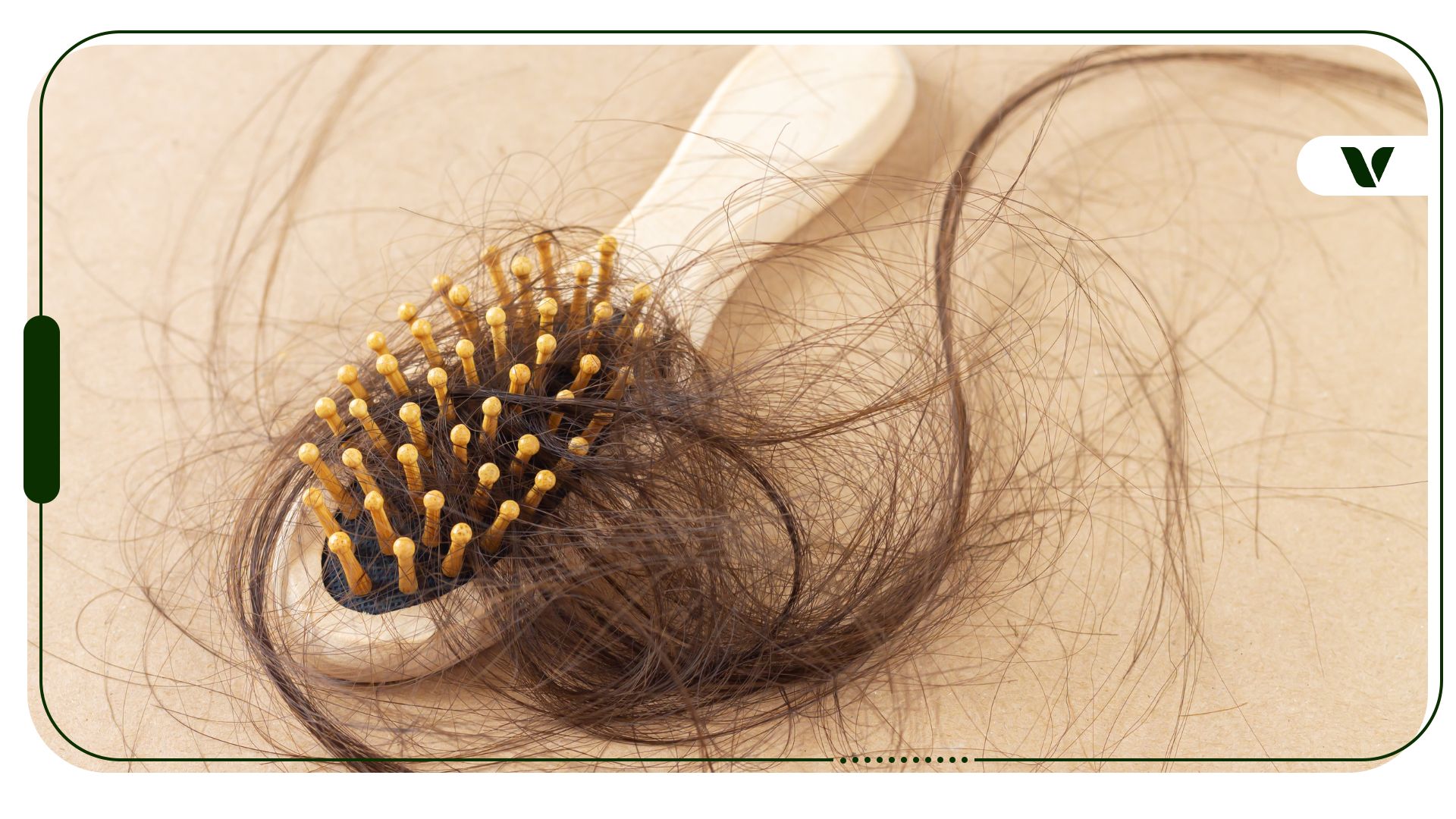
For many people, hair loss is a particularly emotional issue. Our hair shapes our individual and cultural identities, expresses who we are, and deeply influences our self-esteem.
Losing your hair can feel isolating, but it’s actually much more common and widespread than you may think. It’s estimated that over 50% of women will experience noticeable hair loss at some point, and that nearly two-thirds of men will experience male pattern baldness.
Given those statistics, it’s not surprising that science has come up with a variety of prescription drugs that can help combat hair loss. Doctors often prescribe minoxidil, finasteride, and corticosteroids to men and women experiencing excessive shedding, thinning, or balding.
But what about cannabidiol? Can the naturally derived compound help combat hair loss? Can it complement prescribed medications and enhance their effectiveness? We’re answering those questions, and so much more, below.
The Most Common Type of Hair Loss
Hair loss can be caused by a number of things— from stress to genetics, hormone changes, and other illnesses— but one of the most common forms of hair loss is androgenetic alopecia, better known as male pattern baldness or female pattern hair loss.
An estimated 50 million men and 30 million women in the U.S. experience androgenetic alopecia. Hair loss can start as early as a person’s teenage years, but the risk and loss rate increase with age.
Scientists haven’t yet identified every genetic or environmental factor that causes androgenetic alopecia, but they widely agree that androgens—a group of hormones including testosterone—play a major role in determining your likelihood of hair loss.
Hair growth begins in your follicles, the small structures under your skin that contain the hair bulb and root. Typically, each strand of hair will grow from the follicle for two to six years before it enters a resting period of several months and then falls out.
Androgens help to control this cycle. Androgens overstimulate the follicles, causing shorter growth periods and delaying regrowth cycles.
The Endocannabinoid System and Hair Loss
The endocannabinoid system is described by Medical News Today as “an active and complex cell signaling network” that “involves a combination of endocannabinoids, enzymes, and cannabinoid receptors that help regulate several functions in the human body.”
See If You Qualify For Medical Marijuana -Select Your State!
Select Your State
Alabama
Alaska
Arizona
Arkansas
California
Colorado
Connecticut
Delaware
Florida
Georgia
Hawaii
Idaho
Illinois
Indiana
Iowa
Kansas
Kentucky
Louisiana
Maine
Maryland
Massachusetts
Michigan
Minnesota
Mississippi
Missouri
Montana
Nebraska
Nevada
New Hampshire
New Jersey
New Mexico
New York
North Carolina
North Dakota
Ohio
Oklahoma
Oregon
Pennsylvania
Rhode Island
South Carolina
South Dakota
Tennessee
Texas
Utah
Vermont
Virginia
Washington
West Virginia
Wisconsin
Wyoming
Never miss a post
Get updates on cannabis culture, new research, and expert insights
Available studies indicate that, in addition to playing a role in processes like pain, appetite, immunity, and memory, the endocannabinoid system also plays a role in hair growth. Researchers believe the endocannabinoid system in the skin supports the proliferation and differentiation of hair follicle cells, both of which play a crucial role in hair growth.
They also suggest that activating a specific endocannabinoid receptor, CB1, may slow hair growth. Therefore, using a CB1 antagonist—a compound that blocks this receptor—could potentially stimulate hair production.
Cannabidiol, or CBD, is a CB1 negative modulator and works on eCBome receptors like TRP. Some recent studies have shown that applying it topically may help reduce hair loss and promote regrowth. Current research indicates that it works better on men than women, though both biological sexes experience some level of regrowth.
It’s important to note that scientists believe the effects of CBD on hair growth are dose-dependent, meaning that using too much could actually lead to an increase in shedding rates. It seems that using 3–4 milligrams of CBD topically per day is the correct dosage amount for most people in this small study. You can also use CBD alongside minoxidil and finasteride, as it works through different biological systems.
THCV is a known CB1 inverse agonist and antagonist, meaning it blocks and does the opposite of THC at CB1. But it hasn’t yet been studied in the context of hair regrowth.
Additional Benefits of CBD Use
For people who are experiencing other non-androgenetic alopecia forms of hair loss, using CBD may also be helpful.
CBD can be used to fight stress and anxiety, which are common culprits behind excessive shedding in men and women. Studies have shown that it lowers inflammation, which helps when hair loss results from inflammatory conditions like eczema and psoriasis. It can also interact with the endocannabinoid system to help regulate sebum, or oil, production, which plays a role in overall scalp health.
Finding the Right Product
From limited evidence, scientists think that using CBD topically, via products like serums, shampoos, or hair oils, is the best cannabis-based option for combating hair loss. One 2021 study found that CBD-rich hemp extract used topically led to a 93.5% average increase in hair regrowth.
There are plenty of brands that offer CBD-infused hair and scalp products, but some of the highest-rated include Vegamour, Prose, and R+Co. When looking for a product, avoid those with high alcohol content, which can dry out the scalp, and synthetic fragrances, which can cause adverse reactions. Instead, look for options made with full-spectrum or broad-spectrum oils and low THC levels (it is thought that, unlike CBD, THC may lead to increased hair loss).
At this point, researchers are not suggesting CBD as an alternative to prescription medications, but as an addition to them. Active ingredients like minoxidil and finasteride interact with different systems in your body, and attack hair loss from other angles. Unless your doctor suggests otherwise, you should not replace your prescription medication with CBD.
Hair to Stay!
Unfortunately, CBD is not a miracle product that will stop hair loss in its tracks. However, it has proven to help slow shedding and promote regrowth. When added to a healthy hair routine, the majority of users find that it produces notable results.
Once the correct dosage is determined, there have been no reported adverse effects, meaning it’s likely safe for use in most people. Of course, if you have any concerns, we always suggest talking to your doctor before beginning use.
Madison Troyer is a Brooklyn-based freelancer with 10 years of experience covering pop culture, entertainment, lifestyle, and wellness content. Her work has appeared in outlets like The Chicago Tribune, Newsweek, and a host of other places. When she's not at her desk, you can find her training for her next marathon or reading.
According to the New York Times, 64 million gabapentin prescriptions were dispensed in 2016, with numbers continuing to rise each year. Many patients now explore medical cannabis as an alternative after experiencing gabapentin’s concerning side effects, including FDA warnings about serious respiratory problems. Both treatments target similar conditions like nerve pain and seizures, but they…
An Oklahoma medical marijuana card provides legal protection under state law, but it can still affect employment, commercial driving, firearms, privacy, and federally regulated situations. This guide explains the main consequences to consider before applying, including workplace drug testing, CDL rules, insurance, housing, and registry privacy.
Getting a medical marijuana card in Oklahoma can be completed online, with no specific qualifying condition required for adult applicants. This guide covers eligibility, telehealth evaluations, required documents, OMMA application steps, fees, processing times, and what patients can do once approved.
A same-day telehealth appointment in Oklahoma can get you a physician recommendation quickly, but OMMA still needs to process your medical marijuana license application. This guide explains the timeline, required documents, costs, and when you can legally visit a dispensary while waiting for the physical card.
Medical marijuana has been legal in Oklahoma since 2018, with eligibility determined by physician judgment rather than a fixed list of qualifying conditions. This guide explains how the OMMA program works, patient rights and possession limits, recreational cannabis laws, federal restrictions, and how Oklahoma compares with neighboring states.
The statements made regarding cannabis products on this website have not been evaluated by the Food and Drug Administration (FDA). Cannabis is not an FDA-approved substance and is still illegal under federal law. The information provided on this website is intended for educational purposes only and is not intended to diagnose, treat, cure, or prevent any disease. It is not intended as medical advice and should not be considered as a substitute for advice from a healthcare professional. We strongly recommend that you consult with a physician or other qualified healthcare provider before using any cannabis products. The use of any information provided on this website is solely at your own risk.