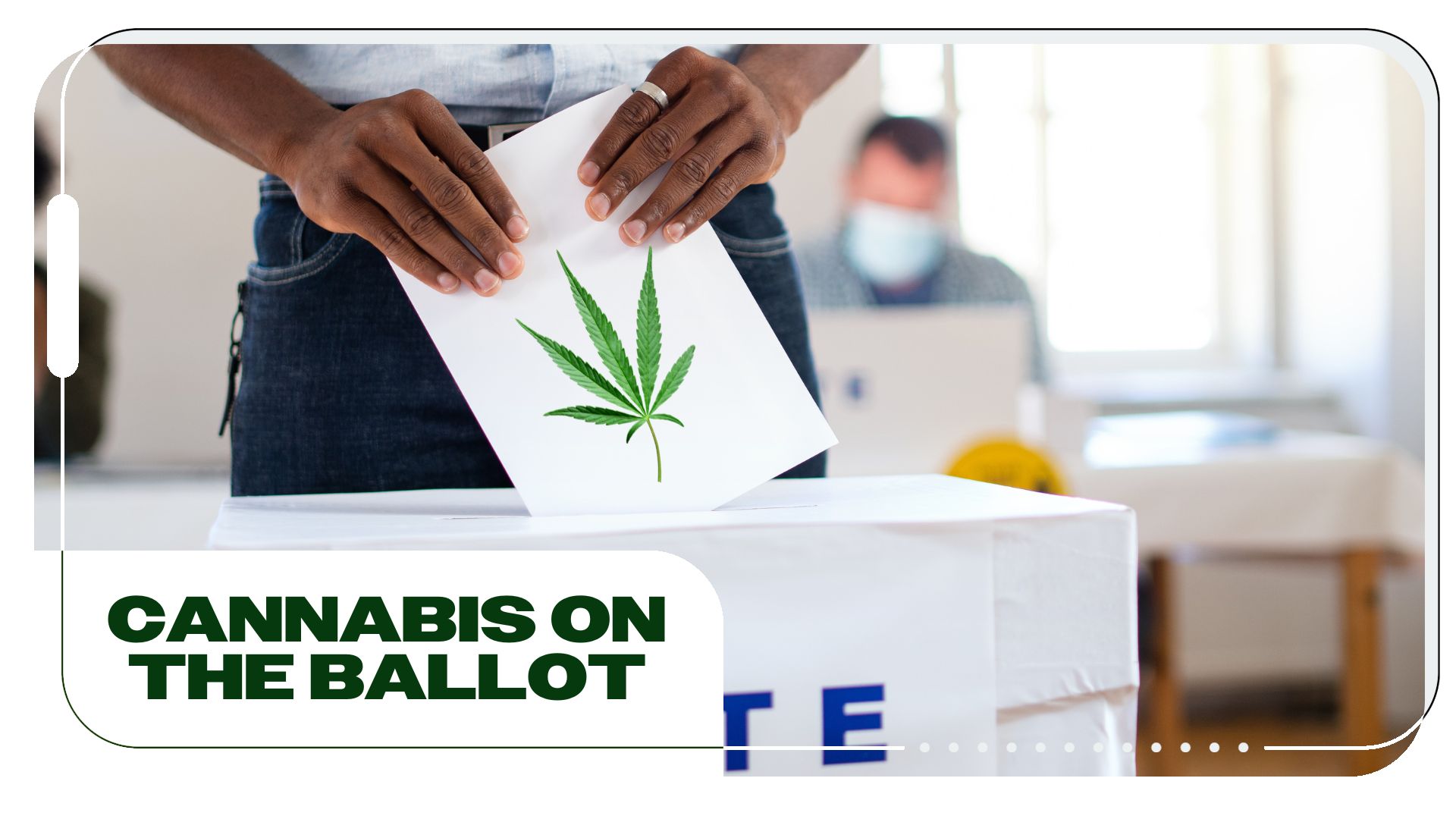
This election day, voters in five U.S. states will decide the outcomes of some particularly significant statewide cannabis-related initiatives. In Florida, Nebraska, South Dakota, North Dakota, and Arkansas, cannabis will be on the ballot, with initiatives ranging from expanding medical cannabis access to full recreational legalization.
Below, we explore the major cannabis measures that will feature on the ballot this November, providing details about changes being proposed along with some considerations of the pros and cons of each measure.
Florida: Adult-Use Legalization Proposal
Florida is undergoing a major shift in its stance on cannabis with a new initiative to legalize adult-use cannabis appearing on the ballot this November. The proposed amendment to the state’s constitution would allow adults over 21 to purchase and possess cannabis for personal use. Specifically, adults in Florida would be able to possess up to 3 ounces of dried cannabis flower or up to 5 grams of cannabis concentrate.
If passed, this has the potential to start a regulated recreational cannabis system in the state of Florida and grant significant economic growth for the state’s existing cannabis industry, which is currently limited to medical use only. The law would allow existing medical cannabis operators to remain vertically integrated, while the state legislature would determine the process for licensing additional entrants into the adult-use market.
Pros:
- Economic Opportunity: Legalization could stimulate Florida’s economy by establishing the state as a southern hotspot for cannabis businesses, potentially generating substantial tax revenues and tourism, as well as opening new job and business opportunities.
- Public Support: Public support for cannabis legalization in Florida has been increasing over the years, especially with the growing recognition of the economic and health benefits the plant has brought to Floridians with the rise of the state’s medical-use market. A recent poll suggests that almost two-thirds of Floridians support adult-use legalization
- Preventing Injustice: Adults in possession of cannabis within the legal limit would not face criminal penalties. Overall, the new legal regulated market for cannabis in Florida would lower the number of arrests and prosecutions over cannabis-related activity.
Cons:
- 60% Supermajority: Florida requires a 60% approval rate for constitutional amendments, which is a high threshold. The most recent poll from Emerson College shows 64% of Florida voters responding in support of the measure, which is only marginally above the supermajority requirement, so victory for cannabis is not yet assured in Florida.
- No Retroactive Justice: Individuals previously arrested for cannabis possession in Florida will not have their criminal records revised and those in jail will not be released from legal custody.
Nebraska: Legalizing Medical Use
Nebraskans will vote on two key measures concerning cannabis legalization, despite legal challenges regarding the validity of signatures on the ballot petitions. The first measure, the Medical Cannabis Regulation Initiative, proposes the establishment of a state-regulated medical cannabis system and would legalize the cultivation, distribution, and sale of medical cannabis for medical purposes. Medical cannabis commerce under the new initiative would be overseen by a commission authorized to establish licensing criteria and license businesses.
The second measure, the Nebraska Medical Cannabis Patient Protection Initiative, focuses on protecting patients who use medical cannabis, as well as their healthcare providers, from criminal prosecution. Under this law, patients could legally possess up to 5 ounces of cannabis for medical use with a prescription. Passage would mark a victory for Nebraskan advocates who have maintained a consistent effort for cannabis reform, having faced setbacks in 2020 and 2022. If these initiatives succeed, Nebraska will join 38 other U.S. states in legalizing medical cannabis, offering patients new treatment options while also presenting new regulatory challenges for the state.
Pros:
- Medical Use: Patients suffering from certain conditions will be able to consider cannabis as a potential therapeutic alternative. Patients using cannabis to relieve their symptoms will no longer face criminal charges for using the substance as a medication recommended by a doctor.
- Economic Growth: The establishment of a commercial cannabis industry could create new jobs and generate tax revenue for the state of Nebraska.
- Reduced Legal Burden: People using cannabis for medical reasons would no longer face criminal charges, reducing the burden on law enforcement and the judicial system.
Cons:
- Regulatory Challenges: Establishing a new medical cannabis market will be a complex process, requiring resources for oversight and the development of new legal frameworks.
South Dakota: Another Attempt at Adult-Use Legalization
After a historic voter-approved measure in 2020 was struck down by the state’s Supreme Court, South Dakota is attempting to legalize adult-use cannabis once again. The South Dakota Marijuana Legalization Initiative seeks to legalize the possession, distribution, consumption, and cultivation of cannabis for adults over 21.
Under the proposed initiative, adults in South Dakota would be allowed to possess up to 2 ounces of cannabis flower or up to 16 grams of cannabis concentrate. People would also be permitted to possess up to six cannabis plants at their private residences. This will be the third time South Dakota voters decide whether to legalize recreational cannabis in the state, following failed attempts in 2020 and 2022.
Pros:
- Second Chance for Legalization: Although voters were denied their decision to pass a similar measure in 2020, South Dakota now has another opportunity to secure a legal adult-use market. Given that the voters of 2020 favored the legalization movement, there is hope that the initiative still resonates with a high percentage of South Dakotan voters.
- Justice for Cannabis Users: Under current state law, possession of any amount of cannabis under two ounces is a criminal misdemeanor that is punishable by up to one year and jail and a $2,000 fine. This means even one joint can result in jail time according to current South Dakota law. The new law would allow adults to own up to 2 ounces of cannabis flower and up to 6 personal cannabis plants.
Cons:
- Recent Defeat: Voters rejected a similar measure in 2022, suggesting a more divided public opinion than previously thought. Proponents of the legalization initiative hope to benefit from greater voter turnout for the presidential ballot this year.
- Legal and Constitutional Obstacles: The South Dakota Supreme Court’s rejection of the 2020 initiative due to its violation of the “single-subject rule” means the 2024 proposal must be carefully crafted to avoid similar pitfalls.
North Dakota: Voters Revisit Recreational Cannabis
North Dakota voters will have the opportunity to legalize the possession, cultivation, and use of cannabis for adults aged 21 and over. Under the state’s Marijuana Legalization Initiative (North Dakota Initiated Measure 5), people would be allowed to possess up to one ounce of cannabis flower, 1,500mg of THC in the form of cannabinoid products, and grow up to three cannabis plants for personal use.
Despite having legalized cannabis for medical use in 2016, North Dakota voters rejected legalization initiatives for recreational use in 2022 (55% of voters opposed) and in 2018 (59% opposed). Proponents of Measure 5 are optimistic that increased nationwide acceptance of cannabis, coupled with North Dakota’s nearness to other legal states, has created a more positive public perception of cannabis in the state that will shift the outcome this time around.
Pros:
- Economic Growth: Legalization could bring significant tax revenue to the state through the regulation and sale of cannabis products while also stimulating entrepreneurship in the state’s cannabis industry, contributing to the overall expansion of North Dakota’s economic power.
- Reduced Criminal Justice Burden: Legalization can decrease arrests and incarcerations related to cannabis possession, which means law enforcement can use its resources for addressing more serious crimes and controlling more serious drugs of abuse, such as opioids.
Cons:
- Regulatory Challenges: The state would still face challenges associated with implementing a comprehensive regulatory framework for recreational cannabis commerce.
- Opposition from Law Enforcement and Conservative Groups: A number of local law enforcement, public health, and other conservative organizations oppose legalization in North Dakota. It is unclear whether the authority of these organizations will generate enough persuasion to defeat the adult-use initiative in 2024, but it is not unlikely, given the narrow majority by which adult-use measures were defeated in past North Dakota elections.
Arkansas: Expanding the State’s Existing Medical Program
In Arkansas, the Arkansas Medical Cannabis Ballot Initiative will introduce several key reforms designed to improve access to medical cannabis for patients while making the program more efficient. For one, the initiative aims to diversify the practitioners who can legally recommend medical cannabis to include pharmacists, nurse practitioners, and physician assistants (currently, only physicians can certify medical use patients).
The initiative will also extend the expiration dates of patient medical cannabis cards from one year to three years, broaden eligibility requirements for medical cannabis patients, eliminate the prohibition on selling paraphernalia, allow patients to cultivate a limited number of cannabis plants for personal use, and permit medical patient certification via telemedicine.
Pros:
- Increased Accessibility: Allowing a broader variety of healthcare professionals to certify patients and allowing for certification via telemedicine are particularly important improvements for patient accessibility in underserved rural areas where access to healthcare is limited. The measure will also improve accessibility for patients in Arkansas who could benefit from therapeutic cannabis but cannot qualify for a medical card under the state’s current list of eligible conditions.
- Cost Reduction for Patients: Extending card validity provides financial relief for patients who must pay to renew their patient status annually for ongoing treatment.
Cons:
- Missed Opportunity for Expungement: The measure does not include provisions to expunge past cannabis-related convictions. Advocates for criminal justice reform argue this is a critical omission.
Final Thoughts
Looking at the 2024 election, we see how far the progress of cannabis reform across the country has come, but there is a long road ahead. Whether these initiatives pass or not, they symbolize a significant cultural shift in the US public perception of cannabis, one that anticipates further progress toward destigmatization and acceptance of cannabis as a valuable medical, economic, and cultural commodity.
Author, Share & Comments