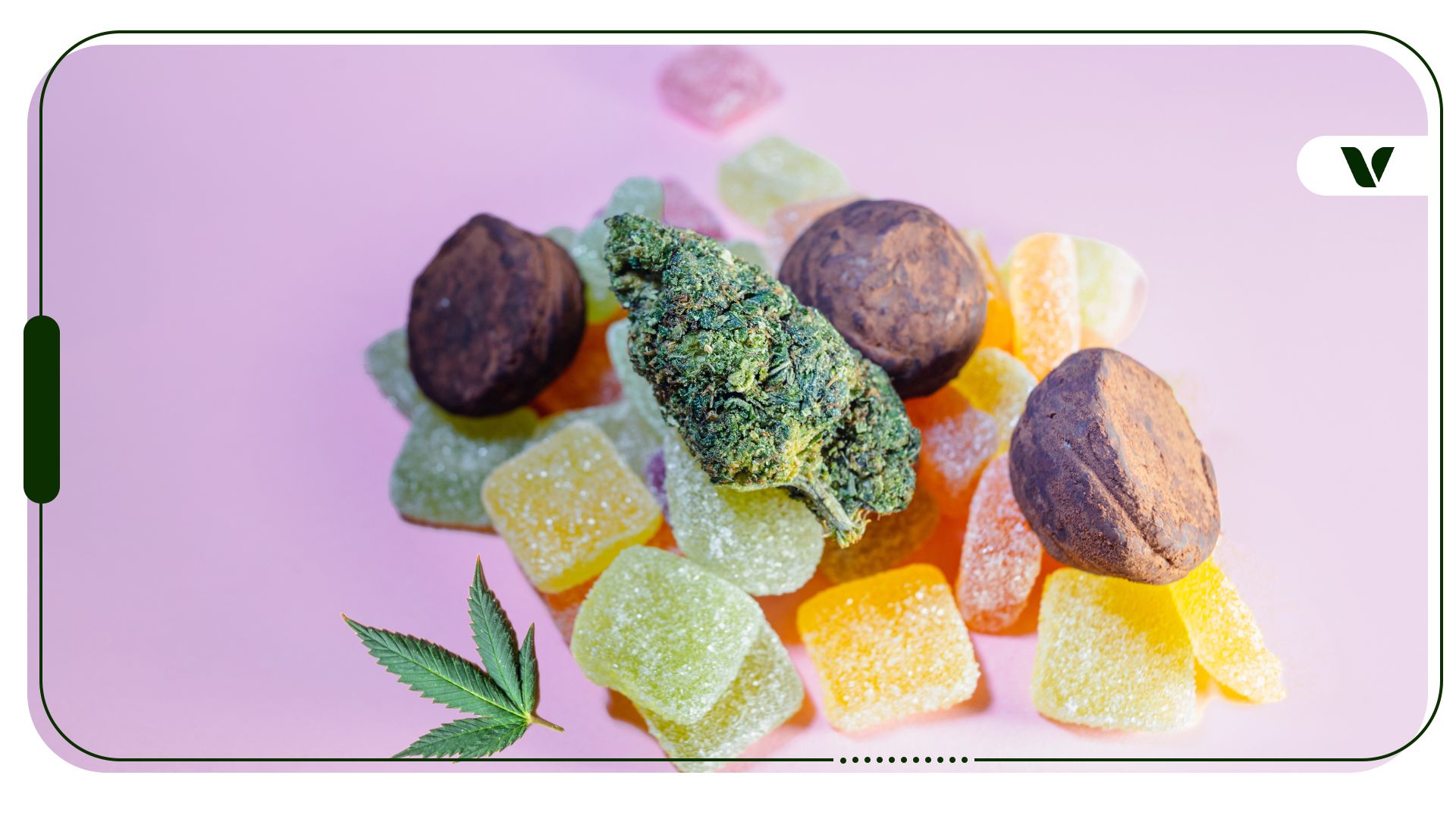
Edibles may not work for you, which can be frustrating, especially when others feel the effects from the same dose. If you haven’t felt anything after taking cannabis edibles, you’re not alone.
Sometimes your body doesn’t process THC from edibles in a way that causes effects. This is called being ‘ediblocked,’ where cannabis works when smoked or vaped but not when eaten.
This guide explains why this happens, what’s happening in your body, and what you can do if cannabis edibles don’t work for you.
What Does It Mean to Be Ediblocked?
Being ediblocked means you don’t feel cannabis effects from edibles, even at high doses. You may use the same product and amount as others and feel little or nothing.
This experience stands out because edibles affect most people at low doses. Many consumers report noticeable effects between 5 and 10 milligrams of THC during cannabis consumption, yet you may consume 50 to 100 milligrams or more without a response.
Reports suggest this is not rare. A feature by the Boston Globe described an unknown portion of people who appear resistant to edibles while responding to inhaled cannabis.
This pattern usually stays the same over time. You might try different products, brands, or doses and still feel nothing from edibles.
Why Don’t Edibles Work on Some People?
Edibles might not work for you because your liver controls how THC becomes active in your body. When you consume cannabis, THC passes through your digestive system and reaches your liver before entering your bloodstream.
In the liver, THC converts into a compound called 11-hydroxy-THC. This form produces the effects most people associate with edibles. Research suggests that enzymes such as CYP2C9 handle about 70% to 90% of this process.
If your liver breaks down THC too fast, it clears it before enough active compound builds up in your bloodstream. If your liver converts too little THC into its active form, the amount that reaches your brain stays too low to feel.
Your genetics help determine how your body processes THC. Digestion and metabolism differences affect how much THC becomes active and how long it stays in your system.
These differences explain why the same high-quality edible can produce desired effects for others while you feel nothing.
How Genetics Affect How You Process THC
Your genetics shape how your body processes THC at every stage. Small differences in your genes can change how much THC becomes active and how long it stays in your system.
One key factor involves liver enzymes, such as CYP2C9. Research shows that this enzyme accounts for most of the conversion of THC after digestion. Some genetic variants reduce its activity to about 7% of normal levels, which can increase THC exposure by up to 3 times. Other variants can increase enzyme activity, which may clear THC faster and limit the effects you feel.
Genetic variation also affects proteins that move THC through your body. Recent studies show that proteins such as FABP1 bind to THC and help control how it travels and breaks down. Changes in these pathways can shift how quickly THC enters the bloodstream and how long it remains active.
Your genes also influence your endocannabinoid system, which controls how your body responds to cannabis. Researchers have identified dozens of possible variations in CB1 receptors, which play a major role in how THC produces its effects.
Common Causes of Being Ediblocked
Several factors can influence why you do not feel the psychoactive effects of THC edibles. These causes go beyond genetics and often relate to how your body absorbs and responds to THC.
Tolerance and Dose
Tolerance plays a major role in how edibles affect you. If you use cannabis often, your body may respond less to the same amount of THC over time.
A high tolerance can appear in clear ways. You might consume 50 to 100 milligrams or more and still notice little to no effect, while many individuals report effects at 5 to 10 milligrams.
However, edible tolerance does not always match smoking tolerance. When you inhale cannabis, THC enters your bloodstream through the lungs. Edibles follow a different path through digestion, which can change how your body responds, even if you have a strong tolerance to smoking or vaping cannabis.
Frequent use can raise your baseline tolerance, reducing the effects of both forms.
A break from cannabis use can help reset how your body responds to THC. A period of 2 to 3 weeks may lower tolerance and make edibles feel stronger.
Digestive Disorders
Digestive health affects how your body absorbs THC from edibles. If your digestive system does not process food and fats well, less THC may reach your bloodstream.
Certain conditions can limit this absorption. These include Crohn’s disease, Irritable Bowel Syndrome, Gastroparesis, and Celiac disease. These conditions can disrupt how your body breaks down and absorbs nutrients, which affects how THC enters your system.
Gut motility adds another layer to this process. If food moves too quickly through your digestive tract, your body may not absorb enough THC. If it moves too slowly, THC may break down before it becomes available.
In these cases, methods that bypass digestion may produce more consistent effects. Options such as tinctures or inhaled forms do not rely on the same absorption process.
Food Intake and Timing
Food intake and timing can change how your body absorbs THC from edibles. The presence of food in your stomach affects how quickly THC moves through your digestive system and becomes available.
Edibles taken on an empty stomach generally reach the bloodstream faster. Many people notice the onset within 30 to 60 minutes in this state, though the effects may feel shorter or less stable.
Eating before or with an edible can slow this process. A full stomach can delay the onset by 2 to 3 hours, making the effects feel weaker or harder to notice.
Fat content also plays a key role. THC binds to fat, so meals that include fats can increase how much THC your body absorbs. Studies suggest that taking THC with food can increase absorption by up to 2 times compared to taking it on an empty stomach.
Can You Fix Being Ediblocked?
In some cases, you may be able to improve how your body responds to edibles, but results vary. The outcome depends on tolerance, digestion, and individual biology.
A few approaches may help improve how edibles affect you:
- Take a tolerance break
A break from cannabis use for two to four weeks can lower your baseline tolerance and help your body respond more strongly to THC.
- Pair gummies with fatty foods
THC binds to fat, and studies show that taking THC with food can increase absorption by up to two times. Meals that include fats can help more THC become available in your system.
- Adjust your dose carefully
Some people need a higher dose to feel the effects of edibles. Dose response varies widely, and higher amounts carry a greater risk of unwanted effects, so medical guidance is important.
- Try alternative formulations
Nano-emulsified or water-soluble THC products absorb more efficiently and often produce a faster onset compared to traditional edibles.
Not all cases have a clear solution. Genetic differences can affect how individuals respond to THC, meaning edibles may not work well regardless of the approach. In such situations, methods like tinctures or inhaled cannabis may provide more consistent results.
Alternatives to Edibles if You’re Ediblocked
If edibles do not work for you, other cannabis products may produce more consistent effects. These options bypass digestion, which changes how THC enters your bloodstream and reaches your brain.
Sublingual Tinctures
Sublingual tinctures absorb through the tissue under your tongue. This route allows THC to enter your bloodstream without passing through your digestive system first.
Many people report onset within 15 to 45 minutes, which is faster than traditional edibles. This method can provide more predictable effects if your body does not respond well to digestion-based formats.
Smoking or Vaping
Smoking or vaping delivers THC through your lungs and into your bloodstream within minutes. This method avoids liver first-pass metabolism, which is the step that can limit effects for some people.
Most people who do not respond to edibles still feel effects when using inhaled cannabis. Onset often occurs within 2 to 5 minutes, with peak effects reached shortly after.
Transdermal Patches
Transdermal patches deliver cannabinoids through your skin and into your bloodstream over time. This method does not rely on digestion, making it useful if absorption is a concern. Effects tend to build gradually and remain steady for several hours, which can support consistent dosing for medical use.
Sublingual Strips and Sprays
Sublingual strips and sprays work similarly to tinctures. They dissolve in the mouth and allow THC to be absorbed through oral tissues. This route can provide a faster onset than edibles and does not depend on digestion. Many users find these formats more discreet and easier to dose.
Final Thoughts
Edibles do not work the same for everyone, and your experience can come down to how your body processes THC. Differences in tolerance, digestion, and genetics can all shape whether you feel effects or not.
For some, small changes in dose, timing, or product type can improve results. For others, edibles may never produce consistent effects, which reflects biology instead of user error.
If you are unsure how cannabis will work for your body, consulting a licensed doctor can help you understand your options. You can connect with a medical marijuana doctor through Veriheal for personalized recommendations based on your needs.
Note: The content on this page is for informational purposes only and is not intended to be professional medical advice. Do not attempt to self-diagnose or prescribe treatment based on the information provided. Always consult a physician before making any decision on the treatment of a medical condition.
Note: Veriheal does not support illegally consuming therapeutic substances such as cannabis but acknowledges that it transpires because of the current illicit status, which we strive to change by advocating for research, legal access, and responsible consumption. Always consult a physician before attempting alternative therapies.
Frequently Asked Questions About Edibles Not Working
What Percentage of People Are Ediblocked?
There is no confirmed percentage, and reports often describe ediblocked individuals as an unknown portion of the population, as noted by the Boston Globe. Anecdotal discussions suggest it could affect around 20% of users, though clinical data has not established a reliable figure.
Do Edibles Work Differently on an Empty Stomach?
Edibles can feel faster on an empty stomach because THC reaches your system more quickly, while meals that include fat can increase how much THC your body absorbs. This effect is separate from being ediblocked, which can persist regardless of whether you have eaten.
Why Do Edibles Work for My Friend But Not for Me?
Edibles can work differently because your body processes THC in its own way, and genetics play a major role in that difference. Variations in enzymes like CYP2C9 can cause two people to react very differently to the same edible, with one feeling strong effects and the other feeling none.
Can I Get Ediblocked After Smoking Works Fine?
Yes, you can feel normal effects when smoking cannabis and still be ediblocked when consuming edibles. Edibles rely on digestion and liver processing, while smoking sends THC directly into your bloodstream, which leads to a very different response.
1. Fugh-Berman, A., Wood, S., Kogan, M., Abrams, D., Mathre, M. L., Robie, A., Raveendran, J., Onumah, K., Mehta, R. S., White, S., Kasimu-Graham, J., & D’Antonio, P. (n.d.). An Introduction to the Biochemistry & Pharmacology of Medical Cannabis. Washington DC; Department of Health. https://doh.dc.gov/sites/default/files/dc/sites/doh/publication/attachments/Medical%20Cannabis%20An%20Introduction%20to%20the%20Biochemistry%20and%20Pharmacology.pdf
Author, Share & Comments