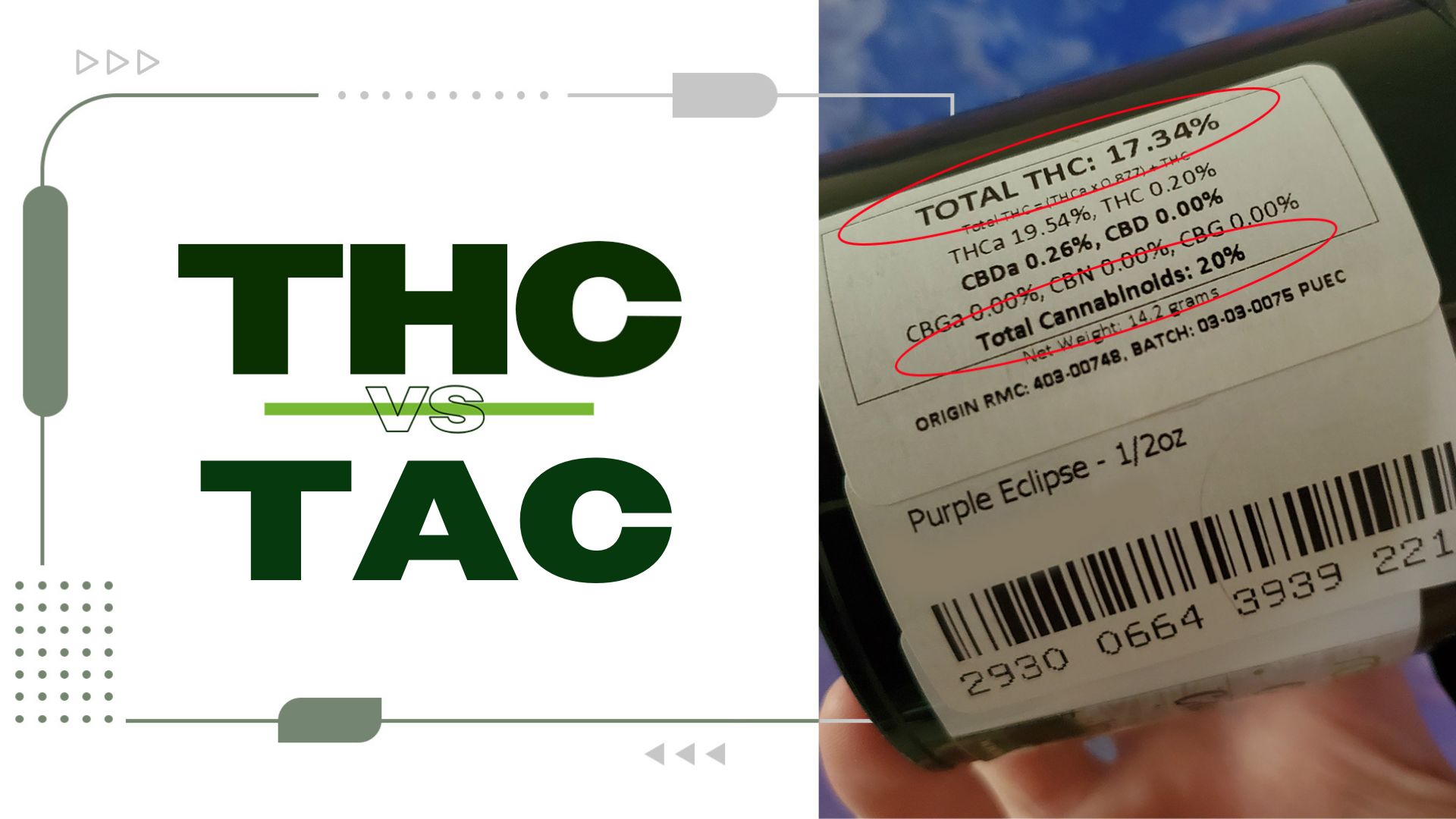
When shopping for cannabis products, you’ll see two key measurements on dispensary labels: THC and TAC. THC measures only delta-9-tetrahydrocannabinol, the main psychoactive compound, while TAC represents Total Active Cannabinoids – the combined potency of all cannabinoids in the product.
Understanding the difference helps you make better purchasing decisions. A product with 15% THC might actually contain 20% TAC when you include CBD, CBG, and other active compounds that contribute to your overall experience.
What is THC (Delta-9-Tetrahydrocannabinol)?
THC is the primary psychoactive cannabinoid in cannabis that produces the “high” sensation. When people talk about cannabis potency, they’re usually referring to THC percentage – the amount of this specific compound present in the product after cannabis decarboxylation activates it from its raw form.
Most dispensary products show THC levels ranging from 10% to 30%, though some concentrates reach much higher percentages. This measurement tells you how much of the product consists of the compound responsible for psychoactive effects.
THC’s Role in Cannabis Effects
THC binds directly to CB1 receptors in your brain and nervous system, creating the euphoric and intoxicating effects cannabis is known for. The higher the THC percentage, the stronger these psychoactive effects typically become.
However, THC-CBD combination effects differ from THC alone when other cannabinoids are present. A product with 20% THC and 5% CBD may feel less intense than a product with 18% THC and no CBD, because CBD can moderate THC’s psychoactive impact.
How THC is Measured in Products
Dispensaries measure THC through laboratory testing that identifies the exact concentration of delta-9-THC in dried flower, oils, edibles, and concentrates. This testing occurs after decarboxylation converts THCA (the raw, non-psychoactive form) into active THC.
The measurement appears as a percentage or milligram amount on nutrition facts labels. For flower, you’ll see percentages like “22% THC.” For edibles and oils, you’ll see milligram amounts like “10mg THC per serving.”
| THC Level |
Typical Product Type |
Expected Effects |
| 5-15% |
Entry-level flower |
Mild euphoria, relaxation |
| 15-25% |
Standard flower/vapes |
Moderate psychoactive effects |
| 25-35% |
Premium flower/concentrates |
Strong euphoria, potential impairment |
| 50%+ |
Concentrates only |
Intense effects, experienced users only |
What is TAC (Total Active Cannabinoids)?
TAC represents the combined percentage of all active cannabinoids in a cannabis product – not just THC. This measurement includes THC, CBD, CBG, CBC, CBN, and dozens of other compounds that contribute to the product’s overall effects and therapeutic potential.
A product labeled “18% THC, 25% TAC” contains 18% THC plus 7% of other active cannabinoids. This additional 7% might include CBD for relaxation, CBG for focus, or CBN for sleep – compounds that shape your experience beyond THC alone.
What Cannabinoids are Included in TAC
TAC measurements typically include the major cannabinoids present in meaningful concentrations. Most products contain THC as the dominant compound, followed by varying amounts of CBD, CBG, CBC, and CBN.
Minor cannabinoids like THCV, CBT, and others may also contribute to TAC when present in detectable levels. The exact cannabinoid profile depends on the strain genetics, growing conditions, and processing methods used.
TAC vs Individual Cannabinoid Testing
Individual cannabinoid testing breaks down each compound separately – showing you exactly how much THC, CBD, CBG, and other cannabinoids the product contains. TAC gives you the combined total without the detailed breakdown.
Some dispensaries display both measurements. You might see “THC: 22%, CBD: 3%, CBG: 1%, TAC: 28%” on the same label, giving you both specific and total information.
Why Dispensaries Use TAC Measurements
TAC measurements help consumers understand a product’s full cannabinoid content rather than focusing solely on THC. This broader view matters because cannabinoids work together through the entourage effect – the synergistic interaction between different compounds.
Dispensaries also use TAC to highlight products with diverse cannabinoid profiles. A flower with 15% THC and 20% TAC signals additional therapeutic compounds that THC-only testing wouldn’t reveal.
| Cannabinoid |
Typical % in TAC |
Primary Effects |
| THC |
50-80% of total |
Euphoria, pain relief |
| CBD |
5-30% of total |
Relaxation, anti-anxiety |
| CBG |
1-5% of total |
Focus, alertness |
| CBC |
1-3% of total |
Anti-inflammatory |
| CBN |
1-3% of total |
Sedation, sleep aid |
Key Differences Between THC and TAC
The fundamental difference lies in scope: THC measures one specific compound while TAC measures the combined potency of all active cannabinoids together. This distinction affects how you interpret product strength and predict your experience.
THC percentage tells you about psychoactive intensity. TAC percentage tells you about overall cannabinoid content, including both psychoactive and non-psychoactive compounds that influence effects.
Measurement Scope
THC testing isolates and measures only delta-9-tetrahydrocannabinol, ignoring all other cannabinoids present. TAC testing measures every detectable cannabinoid and adds them together for a comprehensive potency reading.
This means a product could have low THC but high TAC if it contains significant amounts of CBD, CBG, or other non-psychoactive cannabinoids. These products offer therapeutic benefits without intense psychoactive effects.
Product Selection Impact
When choosing products based on THC alone, you might miss options with beneficial cannabinoid combinations. A product with 12% THC and 18% TAC might provide better pain relief than a product with 20% THC and 20% TAC, depending on what those additional cannabinoids are.
TAC measurements help you identify products with diverse cannabinoid profiles that may offer more balanced effects than high-THC products with minimal other compounds.
Effects on Cannabis Experience
THC-dominant products (where THC makes up most of the TAC) tend to produce stronger psychoactive effects. Products where THC represents a smaller portion of TAC often provide more balanced experiences with therapeutic benefits and manageable psychoactivity.
Understanding both measurements helps you predict whether a product will feel intensely psychoactive or offer a more nuanced experience with multiple cannabinoid contributions.
| Measurement |
What It Tells You |
Best For Choosing |
| THC only |
Psychoactive strength |
Products for recreation or strong effects |
| TAC only |
Total cannabinoid content |
Products for therapeutic use |
| Both THC + TAC |
Complete potency picture |
Balanced products matching your needs |
How to Use TAC and THC Information When Shopping
Smart cannabis shopping involves reading both THC and TAC measurements to understand what you’re buying. These numbers work together to give you a complete picture of a product’s potency and potential effects.
Start by identifying whether you want primarily psychoactive effects (focus on THC) or therapeutic benefits with manageable psychoactivity (look for products where TAC significantly exceeds THC).
Reading Dispensary Labels
Most dispensary labels display THC and TAC percentages prominently, often alongside CBD and other major cannabinoids. Look for products where the TAC percentage is noticeably higher than THC – this indicates the presence of other active compounds.
Quality dispensaries also provide detailed cannabinoid breakdowns showing exactly which compounds contribute to the TAC measurement. This information helps you identify specific therapeutic compounds like CBG for focus or CBN for sleep.
When TAC Matters More Than THC
TAC becomes the more important measurement when you’re seeking therapeutic effects rather than intense psychoactivity. Medical patients often benefit more from diverse cannabinoid profiles than from high-THC products alone.
Products with moderate THC (10-15%) but high TAC (20-25%) typically provide effective symptom relief with fewer side effects than products where THC dominates the cannabinoid profile. The additional compounds modulate THC’s effects while adding their own therapeutic benefits.
Choosing Products Based on Cannabinoid Profiles
Consider your desired experience when comparing THC and TAC ratios. Products where THC makes up 70-80% of TAC tend to be more psychoactive. Products where THC represents 50-60% of TAC offer more balanced effects.
For daytime use, look for products with significant CBG content contributing to TAC. For evening use, seek products where CBN contributes meaningfully to the total cannabinoid content. Many dispensaries now label products by their intended effect rather than just cannabinoid percentages.
- Morning products: Higher CBG contribution to TAC for alertness
- Daytime products: Balanced THC/CBD ratios within TAC
- Evening products: CBN contribution for relaxation and sleep
- Pain relief: Diverse TAC with multiple therapeutic cannabinoids
- Anxiety management: Lower THC percentage of total TAC
TAC vs THC: Which Should You Prioritize?
The answer depends on your experience level, intended use, and desired effects. Neither measurement is universally “better” – they serve different purposes in helping you select appropriate cannabis products.
New users benefit from focusing on both measurements together, while experienced users might prioritize one based on their specific goals and tolerance levels.
For New Cannabis Users
Start by looking for products where TAC significantly exceeds THC, indicating the presence of other cannabinoids that can moderate psychoactive effects. A product with 8% THC and 15% TAC provides a gentler introduction than a product with 20% THC and 21% TAC.
The additional cannabinoids in higher-TAC products often reduce anxiety and paranoia that some new users experience with high-THC products. This makes TAC a more useful measurement for beginners than THC percentage alone.
For Medical Patients
Medical patients often find that diverse cannabinoid profiles deliver better symptom relief than high-THC products in isolation. Products with diverse cannabinoid profiles address multiple symptoms simultaneously.
However, patients dealing with severe pain or nausea might need higher THC percentages within their TAC profile. Work with healthcare providers familiar with CBD/THC ratios to find optimal cannabinoid combinations for your specific conditions.
For Experienced Users
Experienced users can make informed decisions using either measurement, depending on their goals. Those seeking maximum psychoactive effects might prioritize high THC percentages, while those wanting complex experiences focus on diverse TAC profiles.
Some experienced users specifically seek products with unique cannabinoid ratios that aren’t available in traditional high-THC varieties. These products offer new experiences despite potentially lower THC percentages.
| User Type |
Prioritize |
Ideal Range |
Reasoning |
| Beginners |
TAC over THC |
8-12% THC, 15-20% TAC |
Balanced effects, reduced anxiety |
| Medical patients |
Diverse TAC |
Varies by condition |
Therapeutic synergy |
| Recreation users |
Balanced approach |
15-25% THC within TAC |
Predictable effects |
| Experienced users |
Personal preference |
Varies widely |
Individual tolerance and goals |
How TAC and THC Work Together: The Entourage Effect
The entourage effect explains why TAC measurements matter beyond simple potency calculations. This phenomenon describes how cannabinoids work together synergistically, creating effects that differ from what any single compound would produce alone.
When you consume a product with 20% THC and 25% TAC concentration, you’re not just getting THC plus some additional compounds. You’re getting a complex interaction where each cannabinoid influences how the others behave in your body.
THC’s psychoactive effects change significantly when combined with other cannabinoids. CBD can reduce THC-induced anxiety while maintaining pain relief benefits. CBG might enhance focus while CBN promotes relaxation. These interactions mean that TAC composition matters as much as TAC percentage.
Whole-plant cannabis extracts with diverse cannabinoid profiles often provide better therapeutic outcomes than isolated THC products according to research on the entourage effect, even when THC percentages are lower. This supports the value of considering TAC measurements when selecting cannabis products.
Ready to explore medical cannabis options tailored to your specific needs? Find a qualified medical marijuana doctor who can help you navigate THC and TAC measurements to find products that work best for your health goals.
Final Thoughts
Understanding both THC and TAC measurements gives you the complete picture needed to make informed cannabis purchases. While THC tells you about psychoactive strength, TAC reveals the full cannabinoid content that shapes your overall experience.
Use these measurements together rather than relying on either one alone. The most effective cannabis products often balance THC potency with diverse cannabinoid profiles that enhance therapeutic benefits while managing side effects.
Note: The content on this page is for informational purposes only and is not intended to be professional medical advice. Do not attempt to self-diagnose or prescribe treatment based on the information provided. Always consult a physician before making any decision on the treatment of a medical condition.
Note: Veriheal does not support illegally consuming therapeutic substances such as cannabis but acknowledges that it transpires because of the current illicit status, which we strive to change by advocating for research, legal access, and responsible consumption. Always consult a physician before attempting alternative therapies.
Frequently Asked Questions
What does TAC stand for in cannabis products?
TAC stands for Total Active Cannabinoids, representing the combined percentage of all active cannabinoids in a cannabis product, including THC, CBD, CBG, CBC, CBN, and other compounds.
Is higher TAC better than higher THC?
Neither is universally better – it depends on your goals. Higher TAC indicates more diverse cannabinoid content, which often provides more balanced effects, while higher THC delivers stronger psychoactive effects.
Can TAC be lower than THC percentage?
No, TAC cannot be lower than THC since TAC includes THC plus all other active cannabinoids. TAC will always equal or exceed the THC percentage.
Why do some products show both THC and TAC?
Displaying both measurements gives consumers complete information about psychoactive potency (THC) and total cannabinoid content (TAC), helping them make better purchasing decisions based on their specific needs.
Do edibles show THC or TAC measurements?
Most edibles display THC content in milligrams per serving, though some manufacturers also include TAC measurements or list other cannabinoids like CBD separately on their packaging.
Author, Share & Comments