1-855-452-6224 (Customer Support Available 24/7)


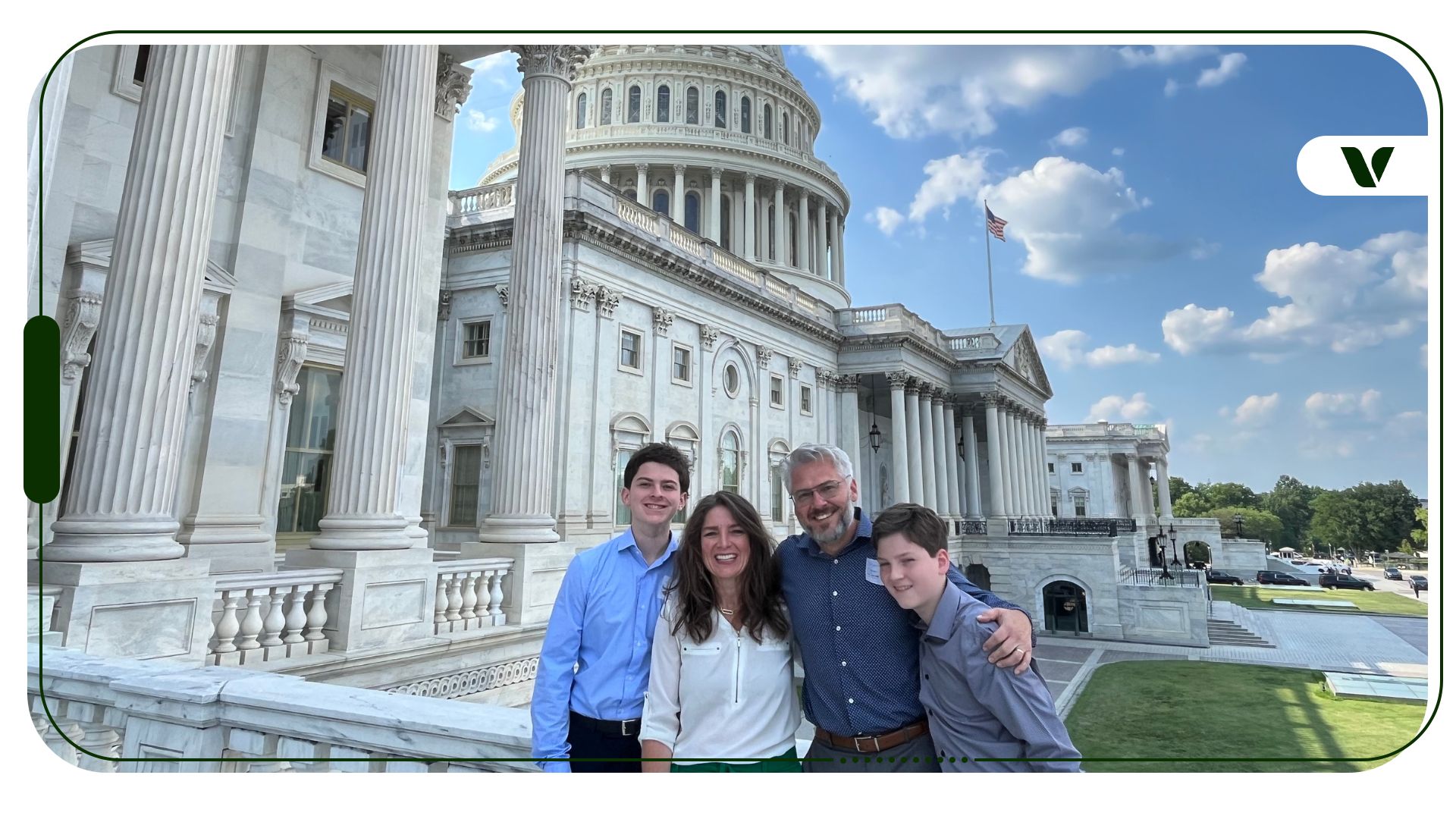
When Piper Lindeen’s son Zach began showing medical issues at just three years old, no one suspected a rare, severe form of epilepsy. Doctors initially didn’t recognize his symptoms as seizures. Eventually, they diagnosed Zach with epilepsy—but by then, his condition had worsened from a few seizures a week to several each day.
As it turns out, Zach had Lennox-Gastaut Syndrome, a rare epilepsy syndrome that starts in young children and typically leads to lifelong disability. The condition is rare–affecting one in every 2,000 people–and develops over time. In the United States, nearly 50,000 people have Lennox-Gastaut Syndrome.
On top of clinical seizures, Zach was also experiencing subclinical seizures–symptomless, difficult-to-identify events that can impact cognitive and developmental abilities.
“That’s when we started to consider cannabis,” explains Piper.
At this time, Charlotte Figi made headlines for using CBD to manage a rare epilepsy disorder. Figi’s family discovered that CBD oil could drastically reduce the number of seizures she experienced, dropping from hundreds per week to a few per month. This success led many families to move to Colorado to access medical cannabis and played a pivotal role in shaping recent medical marijuana laws.
Piper considered moving from Texas to Colorado to get a medical card for her son, but Colorado’s law requires one year of residency before one can get a medical card. She didn’t have that kind of time. So she took to her next options: the internet and the streets.
She found an online extraction guide, bought weed from a dealer, and gave Zach his first dose the night before he started first grade.
Piper recalls Zach sleeping at least 18 hours a day and barely interacting with anyone before trying cannabis. But the morning after she gave him his first dose, the tides appeared to be changing.
“He woke up back to normal. Interactive, active, and not sleepy,” recalls Piper. “That continued for the whole time we gave him that batch.”
Although Piper found something that helped her son, she knew it could cause problems given the illegal status of the plant. Plus, there wasn’t a lot of information on strain efficacy for her son’s condition. She found herself using Facebook groups to connect with and learn from other families in similar situations.
As Zach’s electroencephalograms (EEGs) were coming back with improvements, Piper was on to her next move: advocating for safe access to the plant that has helped her son so immensely. She asked her doctor for her son’s medical records to showcase during a legislative session.
“I said I’m sorry, I haven’t been honest with you. We’ve been medicating with cannabis, and that’s why his EEGs are so good. I want to share that with the Texas legislature,” explains Piper.
After some back and forth with threats of discontinuing treatment, Zach’s healthcare team requested that he come in for an evaluation.
“We were scared,” remembers Piper. “We always went to the same exam room. But this time they took us to one that was right next to the social worker’s office. I had my mom come with me, and we had worked out a plan. If the social workers come in, she would just take him and get out of Texas.”
Fortunately, the examination went well, and there was no need to flee.
“The doctor said he looks good and that she couldn’t advise us on cannabis. But [she said] it looks like it’s working and to keep doing what we’re doing,” says Piper.
READ: Will Texas Ban Hemp Products?
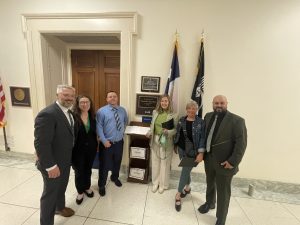
Piper’s mission has remained strong over the years: to help others access the crucial medicine that has, for more than a decade, improved her son’s life. Her advocacy spans from regular visits to Texas legislature sessions to chatting one-on-one with the patients she sees at her day job as a dental hygienist. She even got her Master of Science in Medical Cannabis Science and Therapeutics from the University of Maryland School of Pharmacy to expand her knowledge. When we first spoke, Piper had recently returned from an important Texas legislative session.
“They’re trying to ban hemp,” she says, dismayed. “My son participates in the Texas Compassionate Use Program, but he also gets hemp from a farm in Oregon. The entourage effect is super important for him. SB3 and House Bill 28 both would ban whole-plant cannabis products.”
Piper was referring to two Texas bills–one in the House and one in the Senate–that strictly tighten the hemp regulations in the state and eliminate access to whole-plant hemp. Her son, now 17 years old, benefits from the whole plant’s chemical makeup, rather than just isolated compounds such as cannabidiol (CBD) or tetrahydrocannabinol (THC) alone. These bills threaten access to the most beneficial medicine the Lindeen family has found for Zach.
The fight for hemp in Texas underscores a larger picture–a problem that Piper sees growing as a sort of culture war between hemp and cannabis. “There’s this arbitrary legal distinction between the two that has created all these problems.”
When we first spoke, there was a slight air of optimism that these bills might not pass. But since then, the Texas Legislature finalized approval on the law slated to forbid sales of any amount of THC, including hemp. The widely criticized, overreaching bill now awaits the approval of Texas Governor Greg Abbott.
A frustrated Lindeen says, “These politicians, who love to throw around words like “liberty” and “freedom”, aren’t willing to learn from experts regarding this topic and don’t trust doctors to make decisions for patients. They would rather keep things under the control of poorly staffed and poorly funded bureaucracies. They have no regard for patients, using them as pawns to push their more restrictive legislation.
I hope that the hemp companies we purchase from will continue to supply to Texans, but it’s uncertain until lawsuits play out. What is certain is that if I am pulled over and found to have hemp CBD oil, which Zach needs as medicine, I could be fined and jailed for up to a year.”
Despite a seemingly endless onslaught of challenges, Piper continues to push her advocacy forward each day. She’s currently working on a documentary called “Potbound: the Unmet Needs of Cannabis Patients,” where she plans to take a road trip from Texas to DC, stopping to speak with patients along the way. The film is currently in the fundraising stage.
Piper credits her supportive husband and family for helping her keep going when it gets tough. Because, as she knows too well, the fight for safe access never stops.
“All of the advancements that advocates have managed to make over the past few decades could all go away so quickly with public negative headlines,” she worries. “But one of the things I often marvel at about cannabis is how it sort of regulates itself. It kind of can’t be constrained by law. It can in some ways, but it’s so difficult to manage because of its complexity. It’s kind of mythical.”
Sign up for our newsletter

Learn the process in your state
All Rights Reserved Veriheal Inc. ©
Terms Privacy Policy Advertising Agreement Content Disclamer
Get your medical marijuana card today
Sign up in under 5 minutes
Start By Selecting Your State
 Alabama
Alaska
Arizona
Arkansas
California
Colorado
Connecticut
Delaware
Florida
Georgia
Hawaii
Idaho
Illinois
Indiana
Iowa
Kansas
Kentucky
Louisiana
Maine
Maryland
Massachusetts
Michigan
Minnesota
Mississippi
Missouri
Montana
Nebraska
Nevada
New Hampshire
New Jersey
New Mexico
New York
North Carolina
North Dakota
Ohio
Oklahoma
Oregon
Pennsylvania
Rhode Island
South Carolina
South Dakota
Tennessee
Texas
Utah
Vermont
Virginia
Washington
West Virginia
Wisconsin
Wyoming
Puerto Rico
Alabama
Alaska
Arizona
Arkansas
California
Colorado
Connecticut
Delaware
Florida
Georgia
Hawaii
Idaho
Illinois
Indiana
Iowa
Kansas
Kentucky
Louisiana
Maine
Maryland
Massachusetts
Michigan
Minnesota
Mississippi
Missouri
Montana
Nebraska
Nevada
New Hampshire
New Jersey
New Mexico
New York
North Carolina
North Dakota
Ohio
Oklahoma
Oregon
Pennsylvania
Rhode Island
South Carolina
South Dakota
Tennessee
Texas
Utah
Vermont
Virginia
Washington
West Virginia
Wisconsin
Wyoming
Puerto Rico