Your medical cannabis journey simplified: find partnered dispensaries, explore pricing options, earn rewards, and get answers to FAQs, all in one spot.
October 19, 2023 08:00 am ETEstimated Read Time: 4 Minutes
Rolling papers have a long and storied history. They originated in Alcoy, Spain back in the 1500s where they were known as cigarette papers, primarily used for tobacco. Today, rolling papers have taken on an entirely new identity as essential tools for any cannabis consumer. Even rolling paper companies themselves have caught on, designing their products with cannabis specifically in mind.
Thanks to cannabis’ ever-growing popularity, the modern herb consumer has nearly unlimited options when it comes to their rolling paper. Not just when it comes to brands either! Today’s consumers can even choose what material they want their rolling paper to be made from.
Here are some of the most popular brands on the market:
JOB Gold 1-1/2 size (100% wood fibers)
Zig Zag (made from wood, pulp, hemp, and flax)
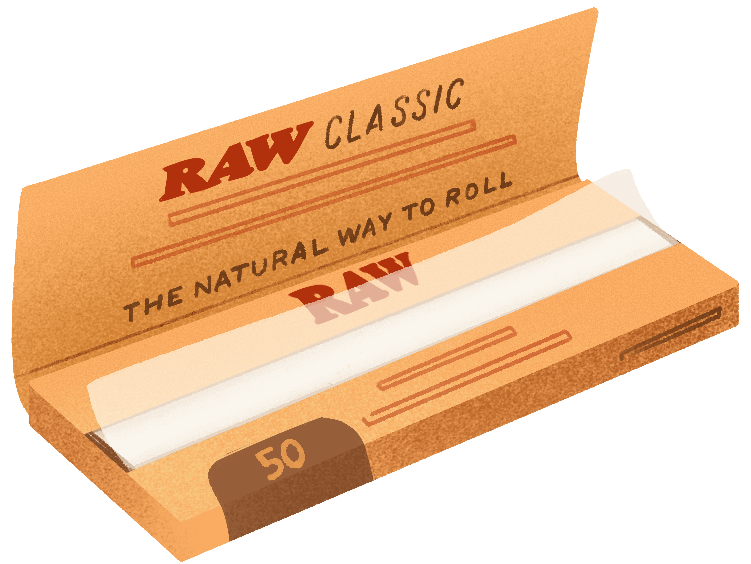
Raw (made from flax and hemp fibers)
Element (made from pure rice)
OCB (made from flax, bamboo, wood, and hemp)
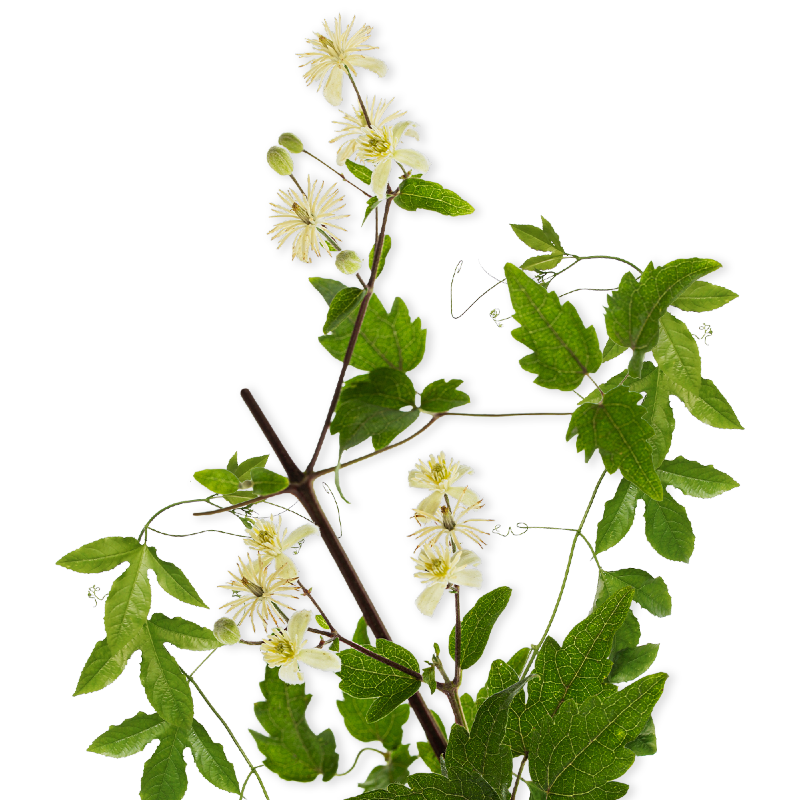
Here are the rolling paper material options consumers can choose from:
Even with all these cannabis-specific papers, some consumers still prefer more traditional tobacco papers. When these are used, the end product is called a blunt. Buyer beware; if tobacco is not for you — you will not enjoy a blunt.
The History of Rolling Papers
Rolling paper’s history goes back hundreds of years. There are many different versions of where rolling papers come from or originated, but most, lead you to a town in Spain called Alcoy. Legend says that Christopher Columbus brought tobacco leaves and cigars to Spain when he returned from the Americas. Cigars were expensive as they were new, and only rich people, known as aristocrats, could afford them. Aristocrats would smoke their cigars and frivolously toss the butt wherever they chose. Poor people would pick these butts up and re-roll the tobacco using old newspapers.
Allegedly, someone saw these poor people using newspapers to roll tobacco and had an ingenious idea. Somewhere in the 1500s, rolling papers were born. The first rolling papers were more of a roll of paper comprised of big sheets that were folded and cut to size. The first rolling paper company, Pay-Pay, established itself in 1703. In 1765, Dominican monk Father Jamie Villanueva Estingo reportedly redefined how papers were distributed, placing them in pre-packed booklets.
Of course, Spain wasn’t the only one entertaining the concept of rolling papers. An old campfire story recounts the tale of a Frenchman, Alexandro Lacroix, trading a soldier champagne for papers in 1532. Alexandro replicated these papers and started making them himself. Nearly 200 years later, a descendant of Alexandro named Francois Lacroix founded the Lacroix Rolling Paper Company. Another hundred years would pass, and this company would go on to become what is known today as the legendary Rizla Rolling Papers.
Unpacking the Popularity of Joints
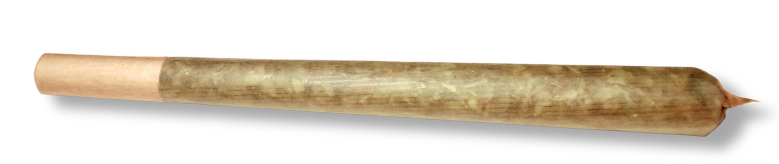
Joints have grown in popularity over the years. Today, they are a staple of cannabis consumption. Even with the advent of healthier smoking options like vaporizers, many still choose the classic joint.
See If You Qualify For Medical Marijuana -Select Your State!
Select Your State
Alabama
Alaska
Arizona
Arkansas
California
Colorado
Connecticut
Delaware
Florida
Georgia
Hawaii
Idaho
Illinois
Indiana
Iowa
Kansas
Kentucky
Louisiana
Maine
Maryland
Massachusetts
Michigan
Minnesota
Mississippi
Missouri
Montana
Nebraska
Nevada
New Hampshire
New Jersey
New Mexico
New York
North Carolina
North Dakota
Ohio
Oklahoma
Oregon
Pennsylvania
Rhode Island
South Carolina
South Dakota
Tennessee
Texas
Utah
Vermont
Virginia
Washington
West Virginia
Wisconsin
Wyoming
Never miss a post
Get updates on cannabis culture, new research, and expert insights
Many people start and end their day with a good joint. When you smoke in the morning after waking up, it is referred to as a wake-n-bake. Wake and bakes can be done with bowls and bongs, but for many, a good old-fashioned joint is still the go-to option.
The art of rolling joints is one that is an acquired talent. Joints can be rolled into all kinds of different shapes. Simply put, if you can imagine it, there’s somebody out there who can roll a joint in its shape. I’ve seen joints rolled into helicopters, scorpions, bowls, and more.
(RAW Rolling Papers show how to use their rolling papers in unconventional ways)
Decades of government anti-cannabis propaganda brainwashed a nation into believing cannabis, or marijuana as they called it, was the devil’s lettuce. Of course, this campaign against cannabis was built on the foundation of racism, sexism, and greed. To protest this, it’s not uncommon to see crowds smoking joints or even crowds smoking a huge joint. At this point, it’s hard to argue that the humble joint hasn’t risen to the status of a powerful political tool.
Ashley Priest is a patient, mother, entrepreneur, and activist that fights to end prohibition globally for a better future for all. Ashley has a passion for sharing education pertaining to the goddess plant known as cannabis. She believes that a single seed can tip the scales and that together through education we can end the stigma that is preventing cannabis from flowering to its full potential globally.
Reclaim edibles are re-purposed leftovers. You see that sticky residue sitting in your dab rig? Take a look, it is there. With a teensy bit of creativity, you can actually transform it into something amazing. The downside? Probably won’t hit exactly like fresh cannabis and won’t taste great either. However, if for whatever reason you…
In the school of life, tetrahydrocannabinol (THC), the most popular intoxicating cannabis compound, is like the popular kid everyone knows by name. The center of attention, always getting talked about, and highly sought after. Cannabidiol (CBD), on the other hand, gets a little less love. It’s more like the quiet honor student: low-key, non-intoxicating, rarely…
In the confusing landscape of state-by-state medical marijuana legalization and federal prohibition lies a patient’s pursuit of a better quality of life, balanced with an unrestricted financial livelihood. In workplaces across many different medical marijuana legal states, no law guarantees that a valid, card-carrying MMJ patient status exempts an employee from termination or discrimination stemming…
An alarming trend has recently come to light: more non-smokers are getting lung cancer than ever before. Given that lung cancer is the most common worldwide and the leading cause of cancer death, you may be worried about the implications of your cannabis habits. How much does cannabis contribute to lung cancer risk? According to…
It feels like every other day, a fresh slang term pops up in the cannabis lexicon, and today, we’re looking at an entry that’s all over TikTok and Reddit – Yart! Spoiler alert: it has everything to do with the humble vape cart (and how challenging it is to talk about cannabis on social media). …
The statements made regarding cannabis products on this website have not been evaluated by the Food and Drug Administration (FDA). Cannabis is not an FDA-approved substance and is still illegal under federal law. The information provided on this website is intended for educational purposes only and is not intended to diagnose, treat, cure, or prevent any disease. It is not intended as medical advice and should not be considered as a substitute for advice from a healthcare professional. We strongly recommend that you consult with a physician or other qualified healthcare provider before using any cannabis products. The use of any information provided on this website is solely at your own risk.