1-855-452-6224 (Customer Support Available 24/7)

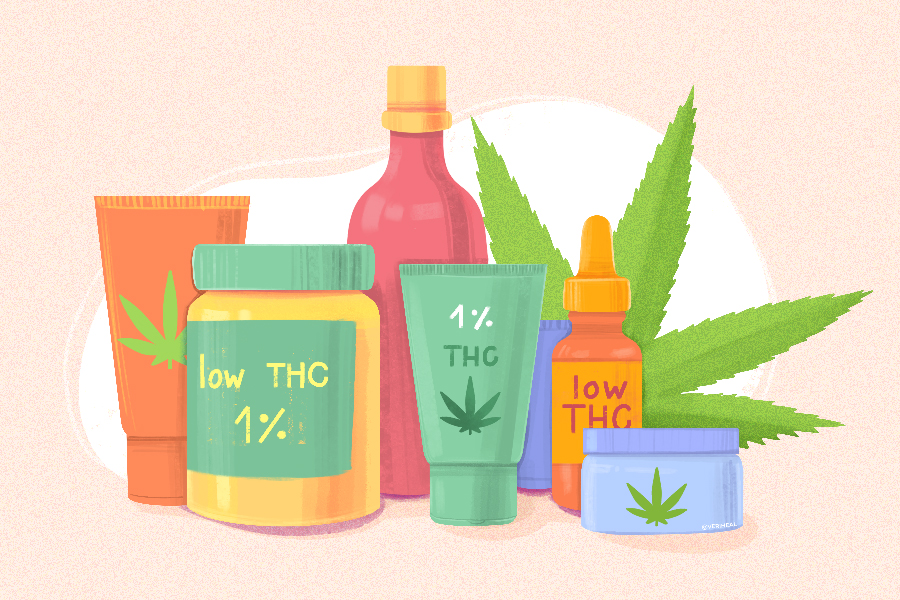
Cannabis is one of the most famous plants on the planet, with the first recorded use dating back to 2800 B.C. when it was featured in Emperor Shen Nung’s pharmacopeia. Now, as legislation spreads across the world and we begin to unlock more science about the natural substance, we are learning more about one of its most abundant (and formerly misunderstood) cannabinoids: tetrahydrocannabinol (THC).
Due to its diversity, THC has branched off into a field of its very own. Nope, we’re not talking about using the cannabinoid for its recreational appeal—we’re focusing on what THC can do for medical patients who consume the compound in low quantities.
This is where low-THC therapy comes in.
THC, despite being acknowledged as a psychoactive constituent of the cannabis plant, possesses immense power in terms of what it can do for the human body. Aside from its relaxing and euphoric effects, THC may help to relax muscles in MS patients, promote a good night’s sleep, increase appetite, and control chemotherapy-related nausea.
Every human being has two kinds of cannabinoid receptors inside their body, CB1 and CB2. In order to release its effects, THC must first bind with and stimulate these receptors in the brain. When this happens, THC produces a “high” in users.
By attaching to those cannabinoid receptors, THC arouses neurons that help to regulate coordination, memory, pleasure, thinking, and time perception. When administered in the form of low-THC therapy, a patient will receive 0.8% or less of the psychotropic cannabinoid (enough to cause a mild high) and over 10% CBD.
Although some skeptics and prohibitionists remain firm against the use of cannabis in the field of medicine, there is some anecdotal evidence and research pointing to THC’s use for a broad scope of medical conditions.
For example, a large-scale 2015 systematic review assessed cannabis studies on patients who had been diagnosed with chronic pain and discovered that THC boosted the chances of pain improvement by 40%. A small 2010 study of chemotherapy patients discovered that those who consumed a THC-based medicine at the same time as standard chemo methods endured less nausea and vomiting than patients who only underwent chemo.
A broad 2015 systematic review found that patients experienced fewer muscle spasms when they consumed THC in conjunction with other cannabinoids as opposed to a placebo. However, researchers noted that the difference in the results wasn’t significant.
The method of administration for low-THC products is dependent on the results of your medical evaluation and personal preferences. Some of the most common formulations include:
Examples of some medical conditions that may be relieved with low-THC therapy include:
Whether you choose to inhale, ingest, or topically apply THC-containing products, the cannabinoid will release its effects after first stimulating cannabinoid receptors inside the brain. Once these receptors inside the brain indirectly react with THC, pain levels are reduced and the symptoms are diminished.
A low-THC strain of cannabis that contains a generous amount of the non-intoxicating compound CBD (cannabidiol) is recommended for people who want to enjoy potential relief from medical conditions like pain, stress, seizures, inflammation, and anxiety but who also want to remain productive, focused, and clear-headed.
Listed below are a few low-THC strains worth trying:
While the benefits of low-THC therapy cannot be ignored, it’s important to note that THC can interact with other types of medications as well as certain types of food and drink. On that note, consult with a doctor to get the go-ahead before attempting low-THC therapy.
Products containing more than 0.3% THC are also federally illegal, and such products might trigger a positive drug test—something to think about if your employer conducts random drug testing. Finally, make sure you get your hands on real THC, since some prescribable drugs like Marinol and Syndros contain a synthetic form of the cannabinoid.
Sign up for our newsletter
Learn the process in your state
All Rights Reserved Veriheal Inc. ©
Terms Privacy Policy Advertising Agreement Content Disclamer


Get your medical marijuana card today
Sign up in under 5 minutes
Start By Selecting Your State
 Alabama
Alaska
Arizona
Arkansas
California
Colorado
Connecticut
Delaware
Florida
Georgia
Hawaii
Idaho
Illinois
Indiana
Iowa
Kansas
Kentucky
Louisiana
Maine
Maryland
Massachusetts
Michigan
Minnesota
Mississippi
Missouri
Montana
Nebraska
Nevada
New Hampshire
New Jersey
New Mexico
New York
North Carolina
North Dakota
Ohio
Oklahoma
Oregon
Pennsylvania
Rhode Island
South Carolina
South Dakota
Tennessee
Texas
Utah
Vermont
Virginia
Washington
West Virginia
Wisconsin
Wyoming
Puerto Rico
Alabama
Alaska
Arizona
Arkansas
California
Colorado
Connecticut
Delaware
Florida
Georgia
Hawaii
Idaho
Illinois
Indiana
Iowa
Kansas
Kentucky
Louisiana
Maine
Maryland
Massachusetts
Michigan
Minnesota
Mississippi
Missouri
Montana
Nebraska
Nevada
New Hampshire
New Jersey
New Mexico
New York
North Carolina
North Dakota
Ohio
Oklahoma
Oregon
Pennsylvania
Rhode Island
South Carolina
South Dakota
Tennessee
Texas
Utah
Vermont
Virginia
Washington
West Virginia
Wisconsin
Wyoming
Puerto Rico