Your medical cannabis journey simplified: find partnered dispensaries, explore pricing options, earn rewards, and get answers to FAQs, all in one spot.
As cannabis journalists with fingers always on the pulse of the state of counterculture, mushroom cultivation just does not get enough love! Peer-reviewed studies and research have all but confirmed the positive effects psilocybin and psilocin can have; however, access is always a major deterrent.
Some U.S. states have started to recognize psilocybin-based therapies, while also scratching the surface of decriminalization laws. Accessing psilocybin is easier said than done for many people who don’t know the first thing about where to get it. Growing your own is often the only logical course of action for many people—in places where it’s decriminalized or legal, of course!
A lot of people think growing mushrooms is super difficult or just as time and labor-intensive as growing weed, but we’re here to give you the truth with our list of 10 Things No One Tells You About Growing Mushrooms!
10. Growing Mushrooms Is DIY Affordable
Mushrooms can be expensive when purchased on the black market, costing upwards of $35 per 1/8th. Home growers of mushrooms save themselves a lot of coin in the long run, with the potential to save even more depending on the grow setup you decide on. Some people buy expensive kits with all the bells and whistles they think that they need, creating an illusion of necessity.
There Are Many DIY Teks Online
But they’re not necessary—very often you can get a solid home grow set up without breaking the bank. Others like to get their Bob Vila on and make or modify their own equipment at home, with everything ranging from old coolers to inexpensive gardening equipment and soils. It’s very possible to gather and/or make your own mushroom growing environment without spending over $100. Psilocybe Fanaticus and his PF Tek—a tek is a method—lit the way down the DIY path over 25 years ago, and it still shines for anyone looking to go down it. Let’s also not forget the almost foolproof “Ben’s Original” tek—a favorite among newer growers looking for an easy way to get started.
Source: iStock
9. You’ll Grow A LOT of Mushrooms If You’re Successful
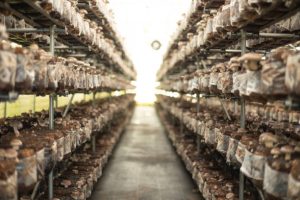
Home growers of mushrooms yield large quantities of mushrooms, even if they’re only halfway successful. Massive yields of hundreds of mushrooms are a common sight during the right conditions. Mushrooms colonize, pin, and fruit in large bunches, as well as in several different flushes, or waves of growth.
Growers yield substantial amounts of mushrooms during their first healthy flush, often several ounces worth. Another two flushes of mushrooms continue once the first is complete; however, numbers dwindle with the latter flushes due to a lack of viable substrate at that point. Growers are rewarded with several ounces up to a full pound or more of mushrooms if they have everything dialed in correctly. Make new friends or re-establish old ones because you’ll be a popular guy once your mushroom ship comes in!
8. Many Different Species of Mushrooms To Grow
Growers of mushrooms have a lot of variety to choose from when it comes to mushrooms rich in psilocin and psilocybin. Different types of mushrooms are referred to as ‘species’ instead of ‘strains’, like with cannabis. Potencies also vary between species of mushrooms.
Most American consumers typically consume and grow different species of Psilocybe Cubensis (P. cubensis), since they are more widely available here. The many species of P. cubensis are too many to name, but here are some of the more popular that home growers like to cultivate.
Albino A+
Amazonian
B+
Blue Meanies
Cambodian
Columbian
Ecuadorian
Enigma
Fanaticus
Golden Teachers
Mazatec
Penis Envy
Other species of mushrooms in the Psilocybe family of psychedelic mushrooms include: P. azurescens, P. cyanescens, and P. mexicana. There are thousands of different mushrooms, including different genera other than Psilocybe. Many of these species of mushrooms are more rare finds in both dried specimens and spores for cultivation.
7. Cleanliness Is the Key To A Successful Harvest
Many who have tried unsuccessfully to grow mushrooms typically fail due to one big factor—sterility. Bacteria and contamination continually attempt to attack the fruiting bodies and the mycelium network of mushrooms.
The ideal growing environment for mushrooms includes proper humidity, temperature, and humidity levels. Bacteria and other fungi also find these conditions conducive for growth, too—keeping your equipment, growing area, surrounding area, and hands sterile and clean at all times gives you the best chance of success. Gloves, masks, isopropyl alcohol, anti-bacterial wipes, and Lysol disinfectant work wonders to keep bacteria at bay.
6. Mushrooms Are 90% Water By Weight. Smaller Mushrooms May Be More Potent
The excitement caused by seeing your mushrooms start to pin and rise out of their substrate is unmatched! This moment reveals the potential of your efforts thus far, while just a few days later, those same pins become massive umbrellas of mushrooms, full of potential.
See If You Qualify For Medical Marijuana -Select Your State!
Select Your State
Alabama
Alaska
Arizona
Arkansas
California
Colorado
Connecticut
Delaware
Florida
Georgia
Hawaii
Idaho
Illinois
Indiana
Iowa
Kansas
Kentucky
Louisiana
Maine
Maryland
Massachusetts
Michigan
Minnesota
Mississippi
Missouri
Montana
Nebraska
Nevada
New Hampshire
New Jersey
New Mexico
New York
North Carolina
North Dakota
Ohio
Oklahoma
Oregon
Pennsylvania
Rhode Island
South Carolina
South Dakota
Tennessee
Texas
Utah
Vermont
Virginia
Washington
West Virginia
Wisconsin
Wyoming
Never miss a post
Get updates on cannabis culture, new research, and expert insights
Big mushrooms may be great to look at, but as far as size goes, they won’t stay that way for long. Mushrooms contain 80–90% water since they thrive in humidity. Drying a mushroom for 4–5 days to a cracker-crisp consistency leaves only 10% of its weight behind. It’s cool to think that you and Alice will have tea together on the huge mushrooms you just grew; however, not to dash any dreams, those giant mushrooms will end up just being a mere fraction of their original size once dried.
Bigger Mushrooms May Not Always Mean Stronger Mushrooms
One other supposed factor regarding mushroom size is that smaller means stronger. Speculation remains, but there are many growers who believe that there’s no need to grow the biggest mushrooms to get the strongest effects. Water content swelling, not psychoactive metabolites, causes mushroom size—the mushroom should already have all it needs to deliver psychoactivity. There’s also the belief that a mushroom peaks in maturity once its veil has torn—any growth after is for naught.
Source: iStock
5. Is Psilocybin Decriminalized or Legal Where You Live?
The classic fear of incarceration still runs amok in our society due to uncompassionate and unjust laws, as well as stigmatization. However, the last decade or so of scientific research on mushrooms determined legitimate therapeutic potential in psilocybin for managing a host of conditions, including depression, post-traumatic stress disorder, and alcoholism.
This potential led to a handful of states and cities in the U.S. to adopt a more compassionate approach to psilocybin despite its Schedule I federal legal status. The last few years have given us decriminalization, reduced penalties, and straight-up legalization of psilocybin and other natural medicines. Here are a few:
Legalization: Colorado, Oregon, and New Mexico
Decriminalization: Santa Cruz, CA, Ann Arbor, MI, Washington, D.C.
Reduced Penalties: New Jersey
Several other states, as of 2025, are in the process of working on legislation for new frameworks regarding psilocybin possession.
Mushrooms develop from spores, the psychedelic version of a seed. Spores naturally emanate from overly mature mushrooms whose veil has broken, allowing them to do so. Experienced mushroom growers and breeders gather spores this way, but novice or basic home growers can just order spores online as the easiest option.
Delivery services like Sporeworks have delivered spore syringes containing the genetic material necessary to propagate mushrooms to home growers since the late 1990s. They do all of this under the protection that spores for sale are for “microscopy and taxonomy purchases only”. However, California, Florida, Georgia, and Idaho still outlaw the sale and possession of spores.
3. Growing Mushroom Is Super Stealthy (Unlike Weed)
A setup to grow mushrooms can be as tiny as a closet or as big as a room, depending on your goals. No matter the size of your tek or setup, there will be two constants.
You don’t need to run expensive, power-hungry lights, fans, or exhaust systems for your home grow.
There’s no noticeable footprint to outsiders that you’re growing mushrooms, whereas growing cannabis is sometimes obvious. Lights only need to run an hour or two a night for pinning, while there’s not really any discernible smell to a mushroom grow, except some rubbery earthiness. Weed, on the other hand, features a super potent aroma, providing a tell-tale sign that something is going on inside your home.
Source; iStock
2. Growing Mushrooms Is Easy!
Growing weed is a months-long process that involves a lot of care, patience, and observation. Cultivating mushrooms takes two months or longer sometimes, not nearly as long as cultivating cannabis. There’s also not a lot of equipment needed, nor is there a lengthy curing and drying process after harvest—growers can typically dry mushrooms to a cracker-crisp consistency in just 4–5 days after harvest, while cannabis takes several months to flower, harvest, and cure. Scientific journals also agree on the simplicity of cultivation.
1. Mushrooms Have Shown Efficacy As A Potential Medicine
We’re living in a modern-day psychedelic revival, whether you’re aware of it or not. This revival—while not soaked in the dayglo and flower power of the 1960s—seeks answers to many of our modern-day afflictions. Clinical studies from over the last decade paved the way for a shift from stigmatization to legalization. These studies include plenty of positive correlations between psilocybin as a potential treatment for:
There’s nothing like seeing the literal fruits of your labor sprout forth with a successful mushroom harvest. The mushroom cultivation process doesn’t require perfection, but it still needs plenty of dedication and common sense for success. The attainable goal of a plentiful harvest full of potential medicine isn’t some pipe dream—forgo the doubt and use these 10 Things No One Tells You About Growing Mushrooms to manifest your own personal access!
Anthony DiMeo is a Southern New Jersey-based journalist and cannabis advocate whose work and advocacy have been featured in Leafly, DOPE Magazine, and the Philadelphia Inquirer. Hobbies include navigating interdimensional psychedelic energy vortexes and tennis.
According to the New York Times, 64 million gabapentin prescriptions were dispensed in 2016, with numbers continuing to rise each year. Many patients now explore medical cannabis as an alternative after experiencing gabapentin’s concerning side effects, including FDA warnings about serious respiratory problems. Both treatments target similar conditions like nerve pain and seizures, but they…
An Oklahoma medical marijuana card provides legal protection under state law, but it can still affect employment, commercial driving, firearms, privacy, and federally regulated situations. This guide explains the main consequences to consider before applying, including workplace drug testing, CDL rules, insurance, housing, and registry privacy.
Getting a medical marijuana card in Oklahoma can be completed online, with no specific qualifying condition required for adult applicants. This guide covers eligibility, telehealth evaluations, required documents, OMMA application steps, fees, processing times, and what patients can do once approved.
A same-day telehealth appointment in Oklahoma can get you a physician recommendation quickly, but OMMA still needs to process your medical marijuana license application. This guide explains the timeline, required documents, costs, and when you can legally visit a dispensary while waiting for the physical card.
Medical marijuana has been legal in Oklahoma since 2018, with eligibility determined by physician judgment rather than a fixed list of qualifying conditions. This guide explains how the OMMA program works, patient rights and possession limits, recreational cannabis laws, federal restrictions, and how Oklahoma compares with neighboring states.
The statements made regarding cannabis products on this website have not been evaluated by the Food and Drug Administration (FDA). Cannabis is not an FDA-approved substance and is still illegal under federal law. The information provided on this website is intended for educational purposes only and is not intended to diagnose, treat, cure, or prevent any disease. It is not intended as medical advice and should not be considered as a substitute for advice from a healthcare professional. We strongly recommend that you consult with a physician or other qualified healthcare provider before using any cannabis products. The use of any information provided on this website is solely at your own risk.