Your medical cannabis journey simplified: find partnered dispensaries, explore pricing options, earn rewards, and get answers to FAQs, all in one spot.
Thirty-eight states have now legalized some form of medical marijuana, and roughly half of the country has approved adult-use (recreational) cannabis. Millions of people around the United States are registered for medical cannabis, and one of the most common questions many people have when signing up is what a medical card looks like. While recreational users don’t receive a card, medical patients do. Becoming a patient can open you up to a range of benefits that you wouldn’t otherwise be eligible for.
There are several unique benefits of getting a medical marijuana card. One of the most notable is lowered costs since medical patients are often exempt from certain taxes. This can add up to thousands of dollars in savings a year. You are also able to grow more plants, purchase and possess more cannabis, and access higher-potency strains than recreational users.
Many of the thousands of dispensaries open across the country are medical-only. Having your med card enables you to visit more dispensaries and allows you to buy cannabis at 18 instead of 21. Finally, you have stronger legal protections and an easier time traveling from one state to another. Many states with medical programs offer reciprocity, which means your out-of-state medical card can be used to purchase cannabis at their dispensaries.
Once you sign up for your state’s medical marijuana program, you’ll receive your card and can begin making purchases. Below, we’ll discuss what you can expect from your medical card.
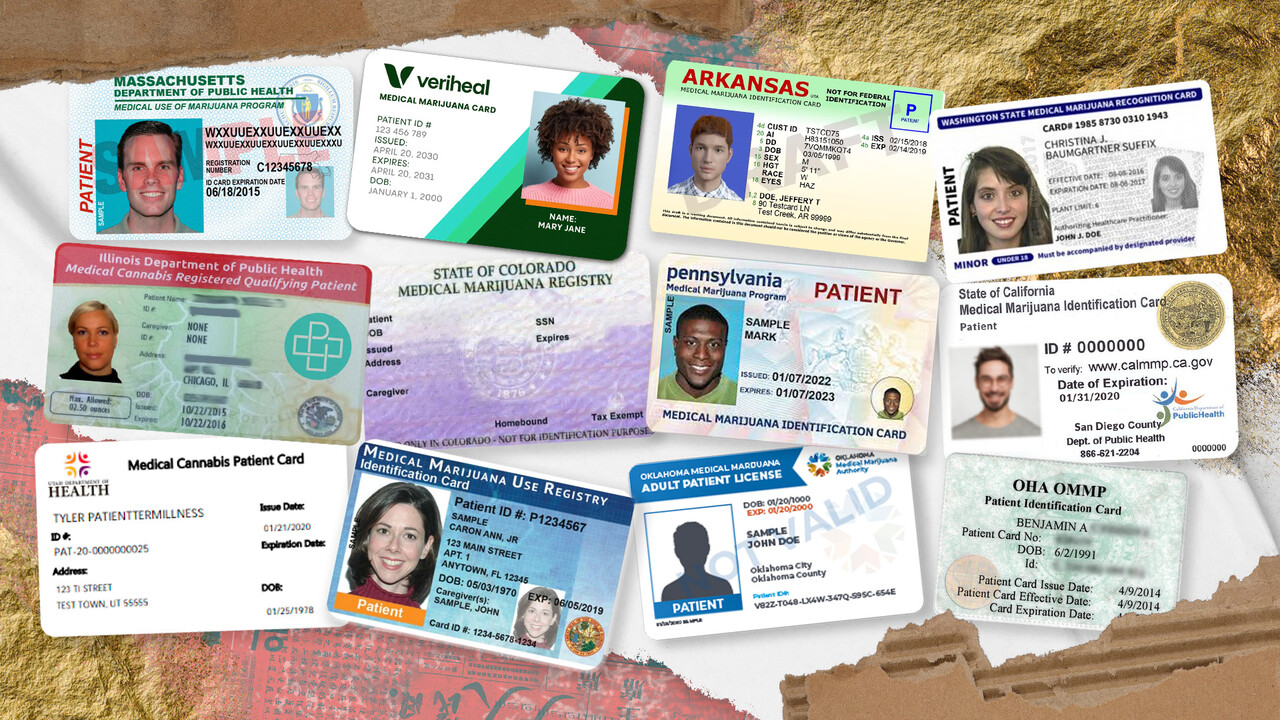
What Does a Medical Marijuana Card Look Like?
Medical cards vary in appearance from one state to another. They can also look different depending on the service you acquire your card through. Some states offer virtual cards, while others may only provide physical versions. Additionally, there can be variations between patient and caregiver cards. On the whole, most medical cards look like a typical ID, although more specific to cannabis.
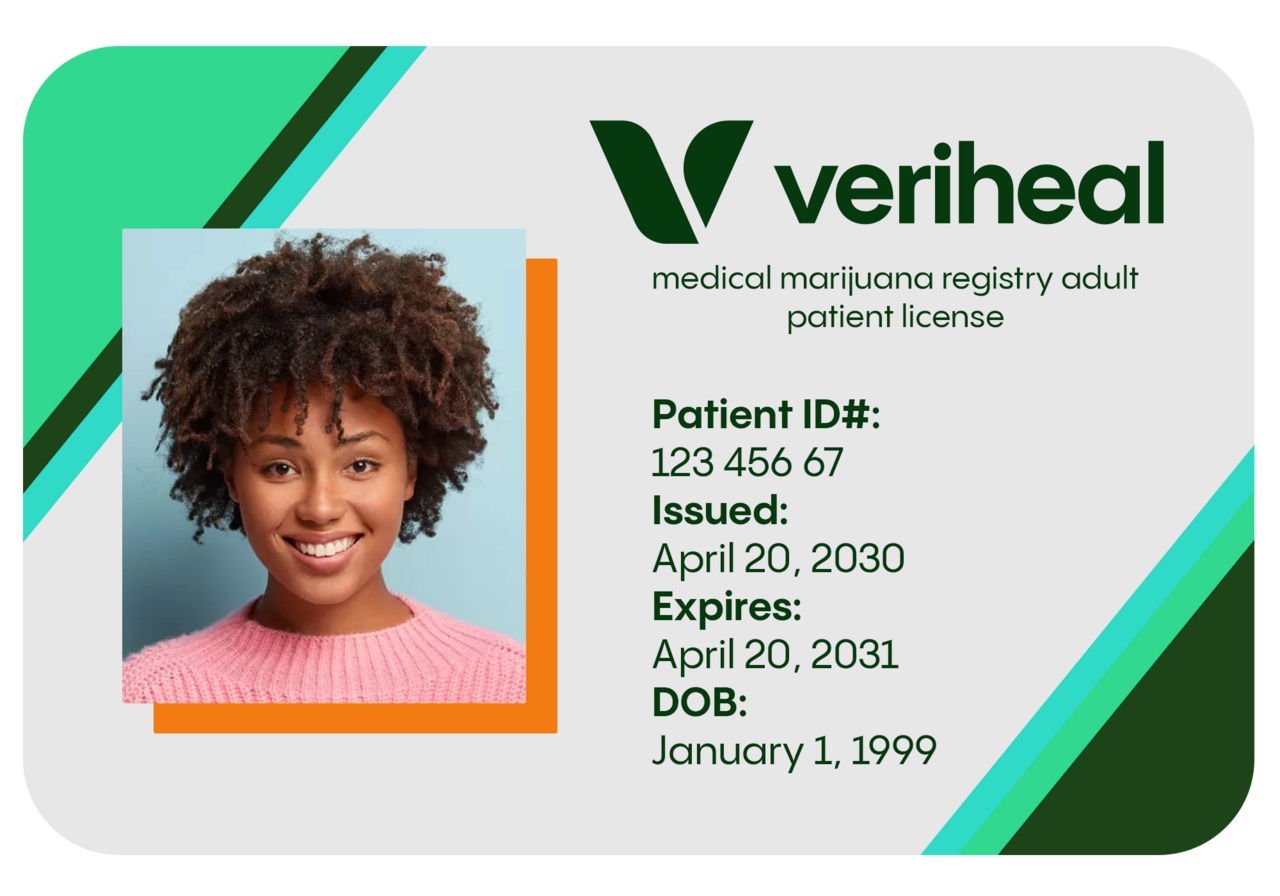
Front
Despite the variations between cards, there are a few basic things you can expect from your medical card. Your name, picture, address, registry ID number, and birthday will likely all be on the front of the card. The front will also have the date issued and the expiration date, but the duration of these dates will vary based on your state.
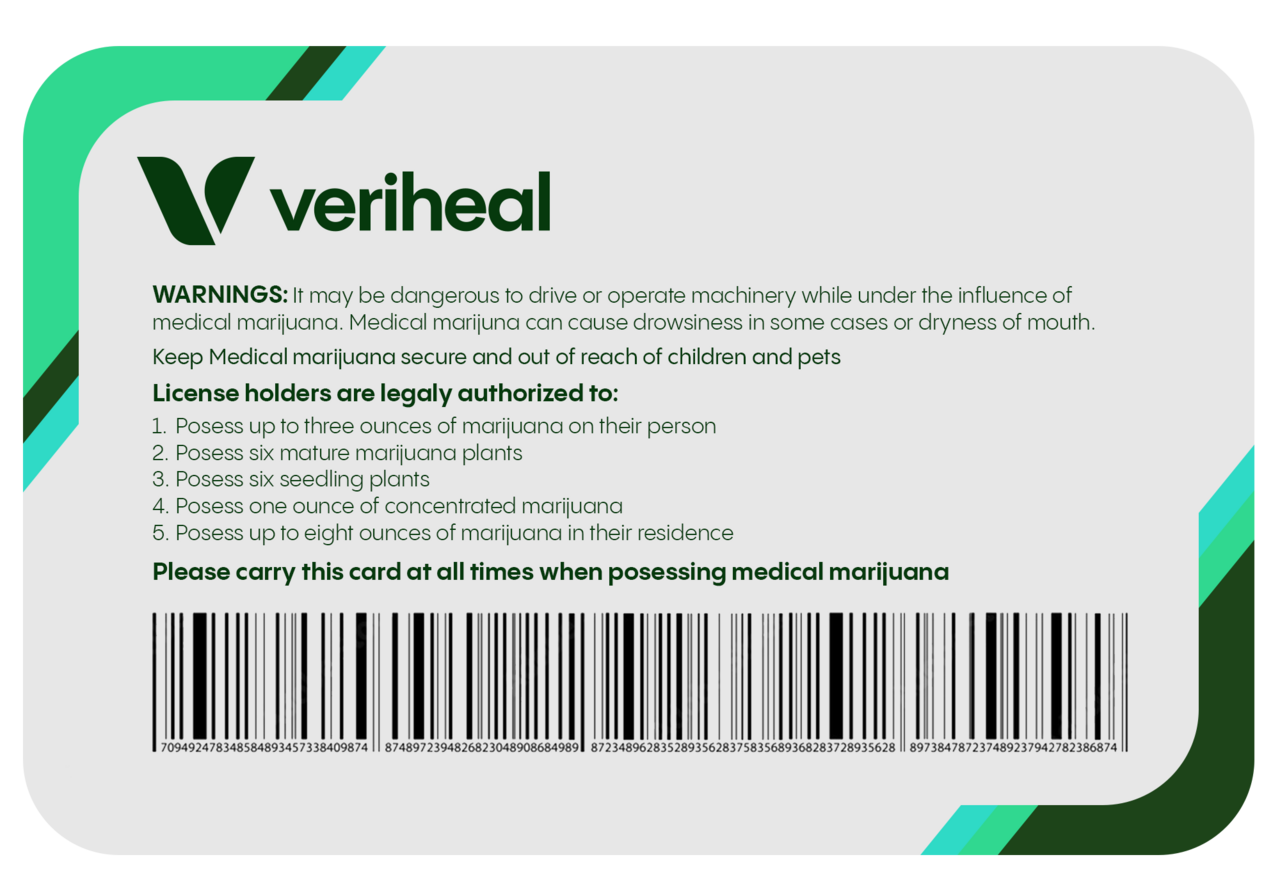
Back
See If You Qualify For Medical Marijuana -Select Your State!
Select Your State
Alabama
Alaska
Arizona
Arkansas
California
Colorado
Connecticut
Delaware
Florida
Georgia
Hawaii
Idaho
Illinois
Indiana
Iowa
Kansas
Kentucky
Louisiana
Maine
Maryland
Massachusetts
Michigan
Minnesota
Mississippi
Missouri
Montana
Nebraska
Nevada
New Hampshire
New Jersey
New Mexico
New York
North Carolina
North Dakota
Ohio
Oklahoma
Oregon
Pennsylvania
Rhode Island
South Carolina
South Dakota
Tennessee
Texas
Utah
Vermont
Virginia
Washington
West Virginia
Wisconsin
Wyoming
Never miss a post
Get updates on cannabis culture, new research, and expert insights
The back of the card will have a barcode or black strip, similar to those on debit and credit cards. This allows your budtender to swipe the ID and verify that you’re a registered patient in their system. They can also track your purchase limits this way to ensure you don’t buy more than the legal limit. There may be warnings or other legal requirements on the back, but this depends on state laws.
Do All States Have a Physical Medical Card?
Not all states offer physical copies of medical cards. Some provide them virtually, such as through an app, or they give patients both physical and virtual cards. However, the majority of states still offer physical cards.
Interestingly enough, there are a couple of states (such as Texas) that don’t offer cards at all. Instead, you’ll be listed in a registry that your budtender can cross-check with your state ID.
The following frequently asked questions can better help you prepare to get your own medical marijuana card.
Do medical marijuana cards in all states look the same?
No. There are many variations between medical cards in different states, although most of them present the same information in a fairly similar way.
Are there digital medical marijuana cards?
Yes. Certain states provide virtual medical cards to patients, which are often through an app you can keep on your cell phone.
Where do I find my medical card number?
Typically, your medical card number will be printed on the front of your medical marijuana card. It will be listed along with your name, address, date of birth, and card expiration date.
Can I print a temporary medical card?
Certain states, such as California, may allow you to print a temporary version of your medical card while you wait for your physical copy to arrive. If this is allowed in your state, you’ll receive instructions on how to proceed.
Apply For a Medical Marijuana Card Today
If you’re ready to get a medical cannabis card, Veriheal is the quickest, easiest, and most professional way to do so. Getting a medical card opens you up to higher purchase limits, enhanced legal protection, stronger strains, more dispensaries, and a host of other benefits. To learn more about how cannabis can help you with a number of different mental and physical health issues, schedule an appointment with one of our doctors today.
Emily is a Denver-based transplant from Virginia who is passionate about substance use harm reduction, yoga, and music. She writes and edits to support the extravagant lifestyles of her pug and cat. When she's not writing, she can be found doing flow and aerial arts or browsing flights to faraway places.
According to 2020 data from the Centers for Disease Control (CDC), 14.5% of adults have trouble falling asleep most days, while 17.8% have trouble staying asleep. Other reports estimate that 50 to 70 million Americans have sleep disorders, and roughly 84 million don’t regularly get enough sleep to stay healthy. This widespread lack of sleep…
In a safe and perfect world, everyone who needs cannabis could go to a dispensary and buy safety-tested products from licensed producers. Unfortunately, we are far from living in a perfect world. Despite most states recognizing that cannabis has therapeutic potential, it’s not an easily obtainable substance for many. Many people in states without legal…
For many, dating today feels more challenging than ever. The competition is fierce, with many having to fake it to match the expectations and preferences of a limited pool of potential partners. The question that you need answered today is whether your cannabis use might be sabotaging your chances at romance. Sadly, it just might….
Whoever says only women can use beauty products needs to hush. Men deserve to look good, too, because the better you look, the better you feel. Research suggests younger men aged 18-34 are most likely to use CBD for skin conditions, but so do those 34–55 still. You don’t have to go as far as…
A major part of the cannabis legalization process in many states occurs both before and after ratification — it’s called fearmongering. This unfortunate side effect of liberty takes on many forms: legal hypocrisy, religious and gender discrimination, racism, and so many more abhorrent realities. Much of the same misinformed and hateful rhetoric hardens and congeals around…
The statements made regarding cannabis products on this website have not been evaluated by the Food and Drug Administration (FDA). Cannabis is not an FDA-approved substance and is still illegal under federal law. The information provided on this website is intended for educational purposes only and is not intended to diagnose, treat, cure, or prevent any disease. It is not intended as medical advice and should not be considered as a substitute for advice from a healthcare professional. We strongly recommend that you consult with a physician or other qualified healthcare provider before using any cannabis products. The use of any information provided on this website is solely at your own risk.