1-855-452-6224 (Customer Support Available 24/7)



Educational only—this isn’t medical or legal advice. Everyone’s body responds differently; start low and go slow.
Historically, indica and sativa described how cannabis plants look and grow:
In modern dispensaries, those labels are used as shorthand for effects, but today’s products are overwhelmingly hybrids. The chemistry—tetrahydrocannabinol/cannabidiol (THC/CBD) ratio plus terpenes (aromatic compounds like myrcene, limonene, linalool, pinene, and caryophyllene)—does more to shape your experience than the label alone.
| Category | Typical plant look | THC/CBD tendency* | Common terpenes (examples) | Reported vibes** | When people use it |
| Indica | Short/bushy, broad leaves | Often THC-forward; CBD can vary | Myrcene, linalool, caryophyllene | Body-heavy, calm, “wind-down” | Evenings, comfort, before bed |
| Sativa | Tall, narrow leaves | Often THC-forward; CBD can vary | Limonene, pinene, terpinolene | Uplifted, heady, “get-things-done” | Daytime, creative tasks |
| Hybrid | Mixed traits | Anything from CBD-forward to high-THC | Blend depends on cultivar | Balanced or targeted effects | Flexible—depends on goal |
*Ratios vary widely; check the product’s lab results (COA).
**Effects are anecdotal and dose-dependent—your experience may differ.
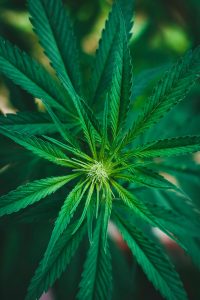
Many people associate indica with a body-relaxing, settling vibe. Products rich in myrcene (often described as musky/earthy) and linalool (floral) are frequently chosen for evening wind-downs. Some report heavier sensations and a strong “couch-lock” at higher THC doses.
Keep in mind:
Sativa-leaning products are often described as brighter, buzzy, or more energizing—the kind of vibe people reach for when they want to be social, brainstorm, or power through a to-do list. Chemically, that “lift” is usually linked less to the sativa label and more to the terpene mix (think limonene with a citrusy snap, pinene with a pine-fresh clarity, and sometimes terpinolene for a zippy, sparkling feel) alongside the product’s THC/CBD ratio.
READ: Health Conditions Treatable By the Indica Strain
Bottom line: Sativas are commonly chosen for daytime, creative, and social situations—but your experience comes down to dose + THC/CBD + terpenes + context. Keep it small, observe, and adjust until it reliably fits your routine.
A hybrid combines indica and sativa lineages to target a specific profile. You’ll often see “indica-dominant,” “sativa-dominant,” or “balanced” on menus. The best way to understand a hybrid is to look at:
Because most modern cultivars are hybrids, think chemovar (chemistry-driven choice) rather than the plant’s family tree.
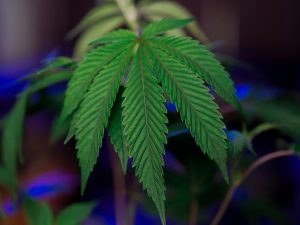
You’ll get better results by matching chemistry to goals, not just relying on the label.
Indica, sativa, and hybrid are category labels, but your experience is driven more by THC/CBD ratios and terpenes than by the label alone.
Indica and sativa differ historically in plant shape and origin; in stores, they’re used as shorthand for calming vs. uplifting, though modern products are mostly hybrids and can blur those lines.
People who are THC-sensitive sometimes report increased tension with very high-THC sativas, while CBD-forward or balanced options and calming terpenes (e.g., linalool, myrcene, caryophyllene) are often chosen for a gentler feel; your response may differ.
Many choose indica-leaning or myrcene/linalool-rich products in the evening because they feel more settling; dose, timing, and your own biology make a big difference.
Hybrid strains combine indica and sativa genetics to target specific effects; read the lab results to understand THC/CBD and terpenes before you decide.
There isn’t a single “best” strain; people often start with lower THC, CBD-forward or balanced options, and calming terpenes, then adjust dose and timing based on personal response.
Sativas are often described as more uplifting/active, and indicas as more relaxing/sedating—but the actual effects depend on dose, THC/CBD, and terpene profile more than the label.
1. https://www.ncbi.nlm.nih.gov/pmc/articles/PMC7480732/
2. https://www.ncbi.nlm.nih.gov/pmc/articles/PMC5576603/
3. https://www.who.int/medicines/access/controlled-substances/CannabidiolCriticalReview.pdf
4. https://www.nap.edu/catalog/24625/the-health-effects-of-cannabis-and-cannabinoids-the-current-state
5. https://www.ncbi.nlm.nih.gov/pmc/articles/PMC3797438/
I’m a stage 2 Pancreatic cancer survivor. Doctors declared that im now cancer free and i’m so glad to hear that. Since then marijuana has been a great help to me so i decided to grow my own marijuana for my personal use only. But growing marijuana requires more knowledge and need to understand its life cycle. I have encountered many different problems in growing myself but that doesn’t help me stop from growing my own herbal medicine
Great article Samantha!
Sign up for our newsletter
Learn the process in your state
All Rights Reserved Veriheal Inc. ©
Terms Privacy Policy Advertising Agreement Content Disclamer


Get your medical marijuana card today
Sign up in under 5 minutes
Start By Selecting Your State
 Alabama
Alaska
Arizona
Arkansas
California
Colorado
Connecticut
Delaware
Florida
Georgia
Hawaii
Idaho
Illinois
Indiana
Iowa
Kansas
Kentucky
Louisiana
Maine
Maryland
Massachusetts
Michigan
Minnesota
Mississippi
Missouri
Montana
Nebraska
Nevada
New Hampshire
New Jersey
New Mexico
New York
North Carolina
North Dakota
Ohio
Oklahoma
Oregon
Pennsylvania
Rhode Island
South Carolina
South Dakota
Tennessee
Texas
Utah
Vermont
Virginia
Washington
West Virginia
Wisconsin
Wyoming
Puerto Rico
Alabama
Alaska
Arizona
Arkansas
California
Colorado
Connecticut
Delaware
Florida
Georgia
Hawaii
Idaho
Illinois
Indiana
Iowa
Kansas
Kentucky
Louisiana
Maine
Maryland
Massachusetts
Michigan
Minnesota
Mississippi
Missouri
Montana
Nebraska
Nevada
New Hampshire
New Jersey
New Mexico
New York
North Carolina
North Dakota
Ohio
Oklahoma
Oregon
Pennsylvania
Rhode Island
South Carolina
South Dakota
Tennessee
Texas
Utah
Vermont
Virginia
Washington
West Virginia
Wisconsin
Wyoming
Puerto Rico