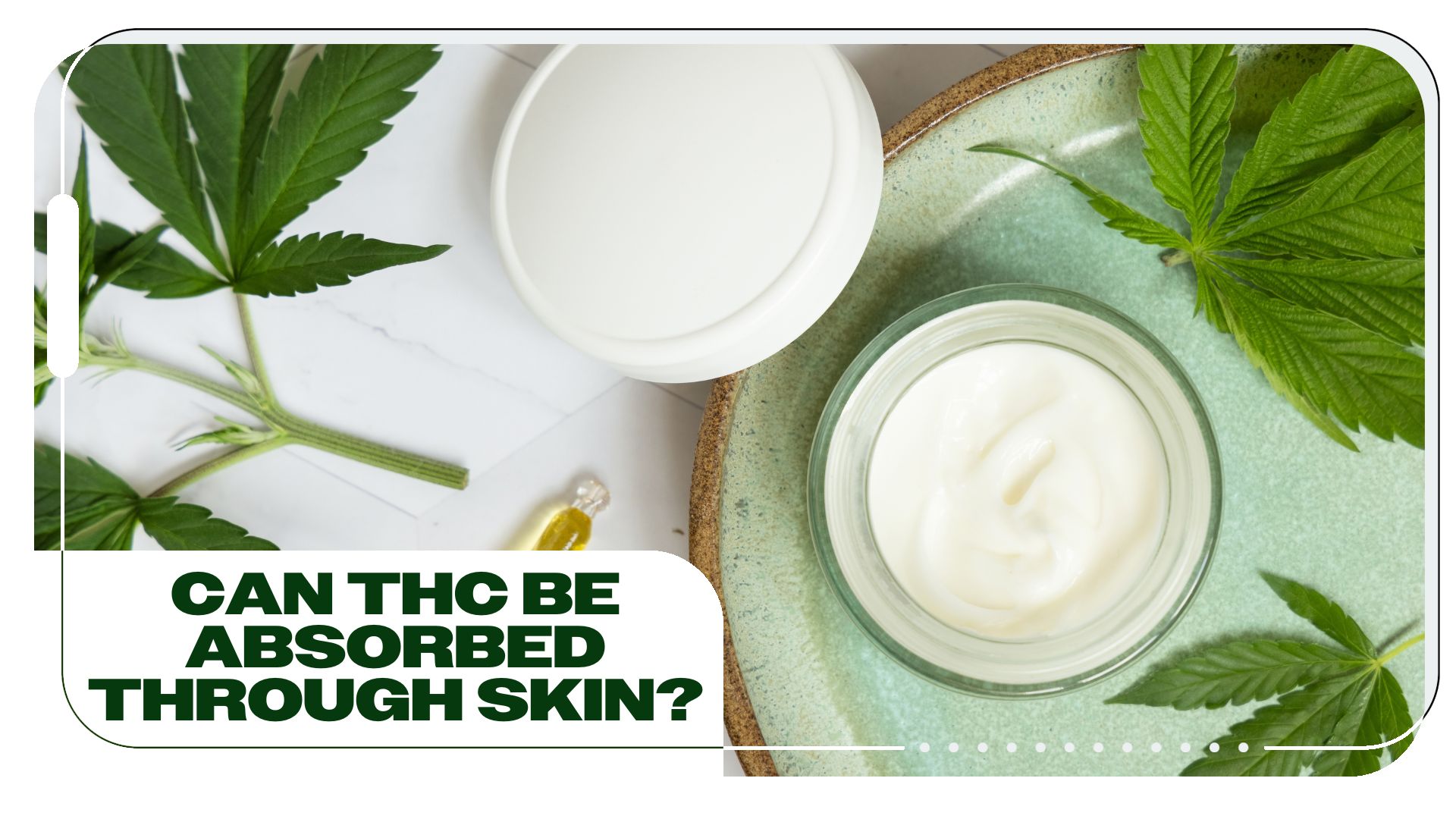
Yes, tetrahydrocannabinol (THC) can be absorbed through the skin, but only in very limited amounts. Most topical cannabis products don’t produce psychoactive effects because the skin acts as a natural barrier that prevents significant THC from reaching your bloodstream.
Your skin’s outer layer, called the stratum corneum, blocks most THC molecules from passing through. This protective barrier keeps topical products working locally on muscles and joints rather than entering your system and affecting your brain.
Top Ways to Consume THC
Cannabis offers several delivery methods, each with different absorption rates and effects. Understanding the bioavailability of cannabis helps you choose the right approach for your needs.
Inhalation provides the fastest onset, with effects appearing within minutes as THC enters your lungs and bloodstream directly. Edibles take longer to work but offer extended effects because THC processes through your digestive system and liver. Sublingual products like tinctures absorb under your tongue, providing a middle ground between speed and duration.
Topical application works differently from these methods because it targets localized areas rather than your entire system. The skin absorption process involves unique factors that determine how much THC actually penetrates your body.
How Do Cannabis Topicals Work?
Cannabis topicals interact with cannabinoid receptors in your skin, muscles, and joints without entering your bloodstream in significant amounts. Your skin contains CB1 and CB2 receptors that respond to THC and other cannabinoids when applied directly to the surface.
Carrier oils and penetration enhancers in topical formulations help cannabinoids move through the outer skin layer. Ingredients like coconut oil, shea butter, and certain alcohols can increase absorption rates by temporarily altering skin permeability. However, even with these enhancers, most THC remains in the localized application area.
The key difference lies in localized versus systemic effects. Topicals work primarily in the tissue where you apply them, targeting specific muscles, joints, or skin areas rather than producing full-body effects.
Topical vs. Transdermal Products
Standard topicals stay near the skin surface and don’t significantly affect your bloodstream. Transdermal patches and specialized formulations use stronger penetration enhancers and higher concentrations to push cannabinoids deeper into your system.
| Feature |
Standard Topicals |
Transdermal Products |
| Absorption depth |
Skin surface and shallow tissue |
Deep tissue and bloodstream |
| Psychoactive effects |
Minimal to none |
Possible with high THC content |
| Duration |
2-4 hours |
6-12 hours |
| Drug test risk |
Very low |
Moderate |
Most products marketed as topicals fall into the first category, designed for local relief without systemic absorption.
The Science of THC Skin Absorption
THC’s molecular structure and size create natural barriers to skin absorption. The molecule is lipophilic, meaning it dissolves in fats but struggles to pass through your skin’s water-based layers. This property limits how much THC can penetrate the stratum corneum under normal conditions.
Research shows that topical THC bioavailability typically ranges from 1-10% compared to other delivery methods. A study on transdermal cannabis absorption found that even specialized patches achieved relatively low systemic absorption rates compared to inhalation or oral consumption.
Several factors affect how much THC your skin absorbs:
- Molecular size: THC molecules are relatively large, making passage through skin cells more difficult
- Skin barrier function: The stratum corneum actively prevents most substances from entering your bloodstream
- Product formulation: Carrier oils, alcohols, and penetration enhancers can increase absorption rates
- Application site: Thinner skin areas like wrists allow slightly more absorption than thick areas like palms
Your body processes absorbed THC differently when it enters through skin versus other routes. The how cannabinoids flow through your system varies significantly based on the entry method and affects both onset time and effect duration.
Why Most THC Topicals Don’t Get You High
THC topicals rarely produce psychoactive effects because of your blood-brain barrier and the limited amounts that actually enter your bloodstream. Even when some THC does absorb through your skin, it typically doesn’t reach concentrations high enough to affect your brain’s CB1 receptors significantly.
The blood-brain barrier acts as a secondary filter, preventing many substances in your bloodstream from reaching brain tissue. This protective mechanism requires much higher THC concentrations than typical topical absorption provides to produce noticeable psychoactive effects.
Local vs. Systemic Effects
Topical THC primarily activates cannabinoid receptors in your skin, muscles, and surrounding tissue rather than throughout your entire body. This localized activation can provide targeted relief without the full-body effects associated with smoking or eating cannabis.
Your skin contains both CB1 and CB2 receptors that respond to THC application. When activated locally, these receptors can influence pain signals, inflammation, and other responses in the immediate area without significantly affecting your brain or central nervous system.
Blood-Brain Barrier Protection
The blood-brain barrier requires specific conditions for THC to cross and produce psychoactive effects. Most topical products don’t deliver enough THC to your bloodstream to overcome this barrier and reach psychoactive thresholds.
Key reasons THC topicals typically don’t cause highs:
- Low absorption rates: Only 1-10% of applied THC typically enters your bloodstream
- Barrier protection: Your skin and blood-brain barrier work together to limit systemic effects
- Localized activity: Most absorbed THC stays in the application area rather than circulating widely
- Concentration thresholds: Psychoactive effects require higher THC levels than topical absorption usually provides
Transdermal patches and specialized high-potency formulations represent exceptions to this rule, as they’re specifically designed to increase systemic absorption and may produce mild psychoactive effects in some users.
Factors That Affect THC Skin Absorption
Several variables determine how much THC actually penetrates your skin when using topical products. Understanding these factors helps you predict absorption levels and potential effects more accurately.
Product formulation plays the most significant role in absorption rates. Higher THC concentrations provide more molecules available for absorption, while carrier ingredients can either enhance or limit penetration through your skin barrier.
Key factors influencing THC skin absorption:
- THC concentration: Products with 100mg+ per ounce typically show higher absorption than lower-concentration options
- Skin condition: Dry, cracked, or irritated skin allows more penetration than healthy, intact skin
- Application site: Areas with thinner skin (inner arms, neck) absorb more than thick skin areas (palms, soles)
- Product base: Oil-based formulations often penetrate better than water-based lotions or creams
- Penetration enhancers: Ingredients like menthol, camphor, or certain alcohols can increase absorption rates
Your individual factors also matter significantly. Skin thickness varies between people and affects how much THC can penetrate. Age, hydration level, and overall skin health all influence absorption rates, making personal experience the best guide for predicting effects.
Application techniques can modify absorption as well. Rubbing products into your skin increases penetration compared to light surface application. Heat from warm baths or heating pads can also enhance absorption by opening skin pores and increasing blood flow to the area.
Do THC Topicals Show Up on Drug Tests?
THC topicals can potentially show up on drug tests, but the risk is generally low with standard products used as directed. The small amounts of THC that absorb through your skin typically stay below detection thresholds for most drug testing methods.
Standard urine tests look for THC metabolites rather than THC itself. Since topical absorption is minimal, most users won’t accumulate enough THC in their system to produce positive results. However, regular use of high-potency products or transdermal patches increases this risk.
Blood tests are more sensitive and may detect recent topical use in some cases, especially if you’ve used multiple products or applied them to large skin areas. The detection window for topically absorbed THC is typically much shorter than for inhaled or ingested cannabis.
Several factors affect your drug test risk when using THC topicals:
- Product potency: Higher-concentration products pose greater detection risk
- Usage frequency: Daily application increases cumulative THC levels in your system
- Application amount: Using large quantities or covering extensive skin areas raises absorption
- Individual metabolism: Your body’s THC processing speed affects how long metabolites remain detectable
- Test sensitivity: Different testing methods have varying detection thresholds
If drug testing is a concern, consider CBD-only topicals or consult with a healthcare provider about your specific situation and testing requirements.
Ready to explore medical cannabis options that fit your lifestyle and needs? Find a qualified doctor who can help you navigate cannabis products safely and legally in your state.
Note: The content on this page is for informational purposes only and is not intended to be professional medical advice. Do not attempt to self-diagnose or prescribe treatment based on the information provided. Always consult a physician before making any decision on the treatment of a medical condition.
Note: Veriheal does not support illegally consuming therapeutic substances such as cannabis but acknowledges that it transpires because of the current illicit status, which we strive to change by advocating for research, legal access, and responsible consumption. Always consult a physician before attempting alternative therapies.
Frequently Asked Questions
How long does it take for THC topicals to work?
THC topicals typically begin working within 15-30 minutes of application. You’ll notice peak effects around 2-4 hours after application, with relief lasting up to 6 hours depending on the product strength and your individual response.
Is THC topical better than CBD?
THC and cannabidiol (CBD) topicals work differently and serve different purposes. THC may provide stronger pain relief through CB1 receptor activation, while CBD offers anti-inflammatory benefits without any psychoactive risk. Many people find combination products most effective.
Will my CBD or THC-based topical show up on a drug test?
Pure CBD topicals shouldn’t trigger positive drug tests since they contain no detectable THC. THC topicals pose minimal drug test risk when used as directed, but regular use of high-potency products may accumulate enough THC metabolites to cause positive results.
How do topical cannabis products work?
Topical cannabis products work by activating cannabinoid receptors in your skin, muscles, and surrounding tissue. The cannabinoids penetrate through your skin layers to interact with local CB1 and CB2 receptors, providing targeted effects without significantly entering your bloodstream.
Author, Share & Comments