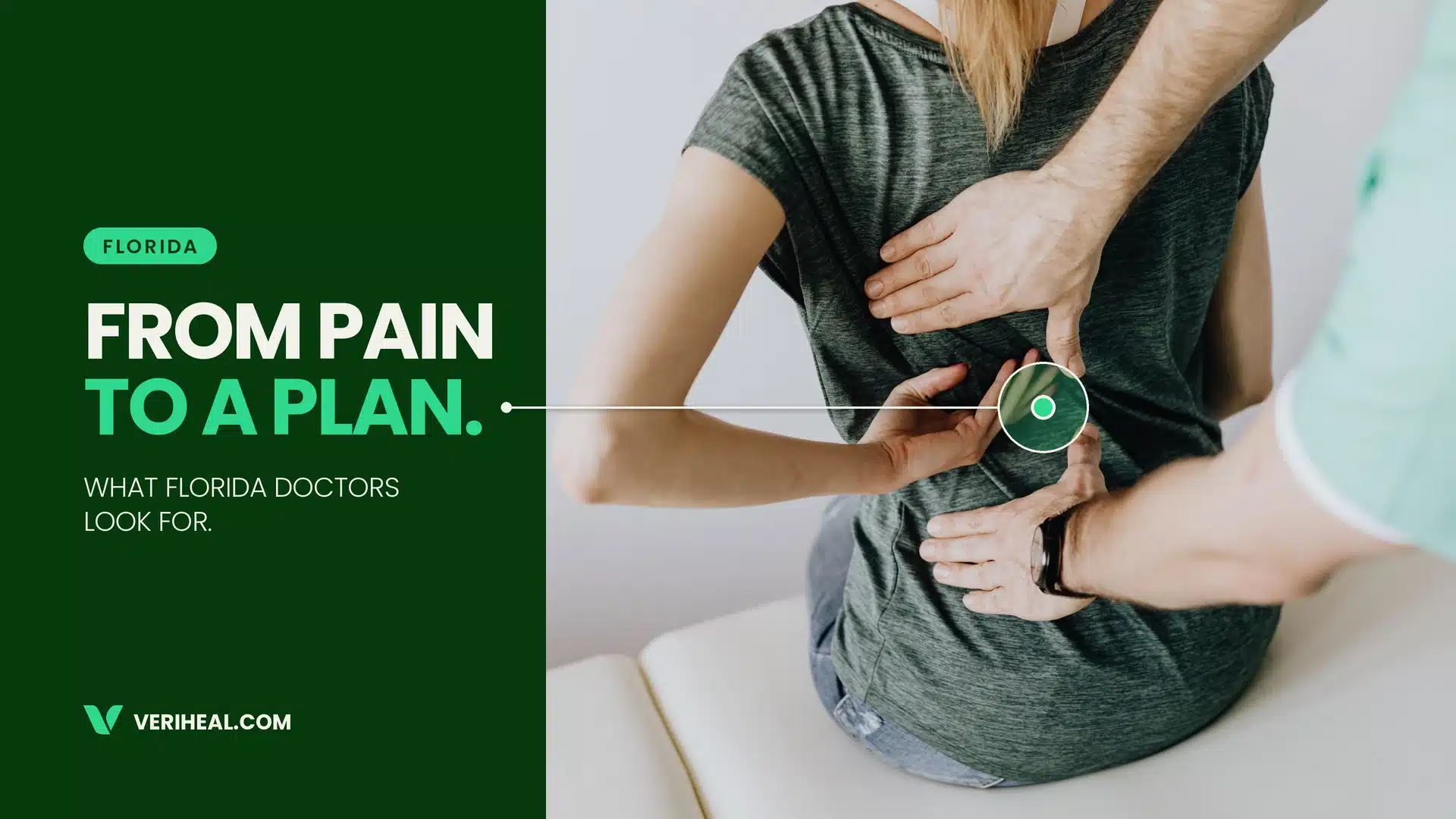
Chronic pain is one of the most common reasons Florida residents seek a medical marijuana card, and the law does account for it, just not in the way most people assume. “Chronic nonmalignant pain” is its own named qualifying condition, but only when it’s caused by or connected to one of Florida’s other named conditions. Pain that stands on its own still has a path forward, just a different one.
Both routes are well-established and used routinely by Florida physicians. Which one applies to you, and what documentation backs it up, is exactly what this article walks through.
Is Chronic Pain a Qualifying Condition in Florida?
Under Fla. Stat. §381.986, the statute names nine core conditions: cancer, epilepsy, glaucoma, HIV/AIDS, post-traumatic stress disorder (PTSD), amyotrophic lateral sclerosis (ALS), Crohn’s disease, Parkinson’s disease, and multiple sclerosis (MS), plus terminal conditions.
“Chronic nonmalignant pain” is defined separately as its own qualifying category, specifically as pain caused by or originating from one of those named conditions, not as a freestanding diagnosis on its own. Beyond that, the statute includes a comparable-condition clause that lets a qualified physician certify a patient whose condition is “of the same kind or class” as one of the named conditions and who would likely benefit from medical cannabis.
In practice, this gives most chronic pain patients one of two routes to certification:
- If your pain is clearly connected to a condition like MS, Crohn’s, or one of the other core diagnoses, it can be certified directly as chronic nonmalignant pain
- If your pain isn’t tied to one of those specific conditions, such as pain from a degenerative disc condition or fibromyalgia with no connection to a named diagnosis, the comparable-condition clause is the pathway a physician would use instead
- Neither route is a loophole, both are deliberate legislative mechanisms built into the program
This answers the question most chronic pain patients are actually asking: yes, your condition very likely qualifies, but which legal pathway applies depends on the underlying cause of your pain and runs through a physician’s clinical judgment rather than a simple checklist. What that judgment looks like in practice, and what you can do to support it, is what the rest of this article covers.
To understand the benefits of a medical marijuana card before you begin the process, that context can help you decide whether certification is the right step for your situation.
How the Comparable-Condition Clause Works Under Florida Law
Amendment 2 Florida (2016) established the framework for the state’s medical cannabis program, and the Legislature implemented it through Fla. Stat. §381.986. The comparable-condition clause sits within that statute and functions as the mechanism through which conditions not explicitly named in the law can still qualify a patient for certification.
To use this pathway, a qualified physician must determine two things: that the patient’s condition is of the same kind or class as a named statutory condition, and that the patient would likely benefit from medical cannabis. Neither determination is automatic. The physician must be certified by the Florida Department of Health, and the patient must be a permanent or seasonal Florida resident with valid documentation of residency.
What “comparable” means in practice is a clinical judgment call, not a rubber stamp. The physician reviews the patient’s medical history, considers the nature of the condition, and evaluates whether it shares the defining characteristics of a named condition in terms of mechanism, severity, or impact on daily function.
This is why documentation matters so much. A well-documented chronic pain case gives the physician the evidence they need to make that determination confidently and to record it in the patient registry accurately. The medical marijuana card state-by-state laws vary significantly, and Florida’s comparable-clause structure is one of the more flexible frameworks in the country for pain conditions specifically.
Types of Chronic Pain Florida Physicians Commonly Certify
Treating chronic pain as a single category misses how differently these conditions present and how differently physicians evaluate them. The documentation expectations, the comparable-condition argument, and even the product conversations at the dispensary differ depending on the type of pain you live with.
Neuropathic Pain
Neuropathic pain, including peripheral neuropathy, diabetic neuropathy, and post-herpetic neuralgia, has a particularly clear certification pathway. When neuropathic pain is caused by multiple sclerosis, one of Florida’s named statutory conditions, it can be certified directly as chronic nonmalignant pain. Neuropathic pain from other causes, such as diabetes or shingles, more often relies on the comparable-condition clause, since diabetes and post-herpetic neuralgia are not themselves named conditions.
For this subtype, physicians will typically want to see records from a neurologist or the treating specialist, documentation of the underlying diagnosis (such as diabetes or a prior shingles infection), and evidence of prior treatment attempts. Research suggests that cannabinoids may reduce neuropathic pain by interacting with receptors involved in pain signal transmission, which is a relevant consideration your physician may raise during the evaluation.
A review of cannabinoid receptors and their role in neuropathic pain pathways describes how CB1 receptors located in key pain-control regions of the nervous system can produce analgesic effects when activated, part of the broader mechanism researchers point to when discussing cannabis for neuropathic pain specifically.
Musculoskeletal and Back Pain
Lumbar radiculopathy, degenerative disc disease, and chronic low back pain are among the most commonly certified pain conditions in Florida. For this subtype, imaging records carry particular weight. MRI and X-ray results that document the structural source of pain help the physician establish that the condition is ongoing, diagnosable, and not acute.
Equally important is a documented history of prior treatment. Records showing that you have attempted physical therapy, corticosteroid injections, or long-term nonsteroidal anti-inflammatory drug (NSAID) use, and that those treatments have provided inadequate relief, strengthen the comparable-condition argument significantly. The physician needs to see that conventional pathways have been exhausted or are insufficient before cannabis is introduced as an alternative.
Inflammatory and Arthritic Pain
Rheumatoid arthritis, psoriatic arthritis, and osteoarthritis all fall within the inflammatory pain category. When arthritic pain is connected to Crohn’s disease, one of Florida’s named statutory conditions, it can be certified directly as chronic nonmalignant pain. Standalone rheumatoid, psoriatic, or osteoarthritis pain not tied to Crohn’s more often relies on the comparable-condition clause instead, since those diagnoses are not themselves named in the statute.
Rheumatology records are particularly useful here. Documentation from a rheumatologist confirming the diagnosis, your disease activity history, and any biologic or disease-modifying antirheumatic drug (DMARD) use establishes the clinical picture the physician needs. Evidence indicating that cannabis may modulate inflammatory pathways relevant to arthritic conditions has grown in recent years, and your certifying physician may reference this during the visit.
Fibromyalgia
Fibromyalgia is frequently certified in Florida, but it requires a more thorough documentation package than conditions with clear structural or imaging evidence. Because fibromyalgia is a diagnosis of exclusion, physicians certifying a fibromyalgia patient under the comparable-condition clause will want to see prior specialist evaluation confirming that other causes of widespread pain have been ruled out.
Evidence of failed conventional treatment is especially important here. Records of trials with medications such as duloxetine, pregabalin, or milnacipran, and documentation of their inadequacy, help establish that the patient’s condition is both chronic and resistant to standard approaches. A rheumatologist’s or neurologist’s notes confirming the fibromyalgia diagnosis carry more weight than a general practitioner’s records alone.
What Florida Physicians Look for When Certifying Chronic Pain Patients
The “will I be approved” question comes down to what a qualified physician can determine from your records. Florida physicians evaluating a chronic pain patient under the comparable-condition clause are typically looking for four things:
- A documented diagnosis from a licensed provider. The condition must be diagnosable and documented, not self-reported without supporting records.
- Evidence that conventional treatments have been attempted. The physician needs to see that standard approaches have been tried and have provided inadequate relief.
- A treatment history showing the condition is ongoing, not acute. Chronic pain certification is for persistent conditions. A single acute injury episode is unlikely to qualify.
- Medical records demonstrating impact on daily function. Notes from your provider describing how the condition affects your quality of life support the physician’s comparable-condition determination.
On the question of patient relationship, Florida DOH guidance requires that the certifying physician be able to review sufficient medical history to make a clinical determination. This does not necessarily mean three months of visits at the certifying practice, but it does mean the physician needs access to records that give them a real clinical picture. Any Florida DOH-certified physician can certify a patient for medical cannabis, not only specialists. Your primary care physician qualifies if they hold the required certification.
The medical marijuana evaluation itself covers your medical history, your current condition, prior treatments, and current medications. Your first evaluation must be completed in person under Fla. Stat. §381.986(4), no platform can complete this step remotely, regardless of what “online appointment” language you see advertised elsewhere.
Once you’ve completed that initial in-person visit and hold an active certification, renewal evaluations can be completed via telemedicine, typically running 15 to 30 minutes.
Documentation to Bring to Your Medical Marijuana Evaluation in Florida
Walking into your evaluation with a complete records package makes the physician’s job easier and strengthens the comparable-condition argument on your behalf. Bring the following:
- Prior medical records showing your chronic pain diagnosis
- Imaging results where relevant, such as MRI, X-ray, or CT scans
- Records of prior treatments and medications you have attempted
- A current medication list
- A valid Florida ID or proof of Florida residency (permanent or seasonal)
- Proof of age (you must be 18 or older; minors require a caregiver designation)
The more complete your records, the stronger the case the physician can make under the comparable-condition clause. A diagnosis alone is rarely enough. What the physician needs is a clinical narrative showing that your pain is real, persistent, and resistant to conventional treatment.
Veriheal connects Florida chronic pain patients with qualified physicians for both initial and renewal evaluations. Your initial evaluation requires an in-person visit under Florida law; once that’s complete and your certification is active, renewals can be completed via telemedicine for medical cannabis. Bring your medical records, meet with a certified physician, and the physician submits your cannabis recommendation to the OMMU if you qualify.
Cannabis Products for Chronic Pain at Florida Dispensaries
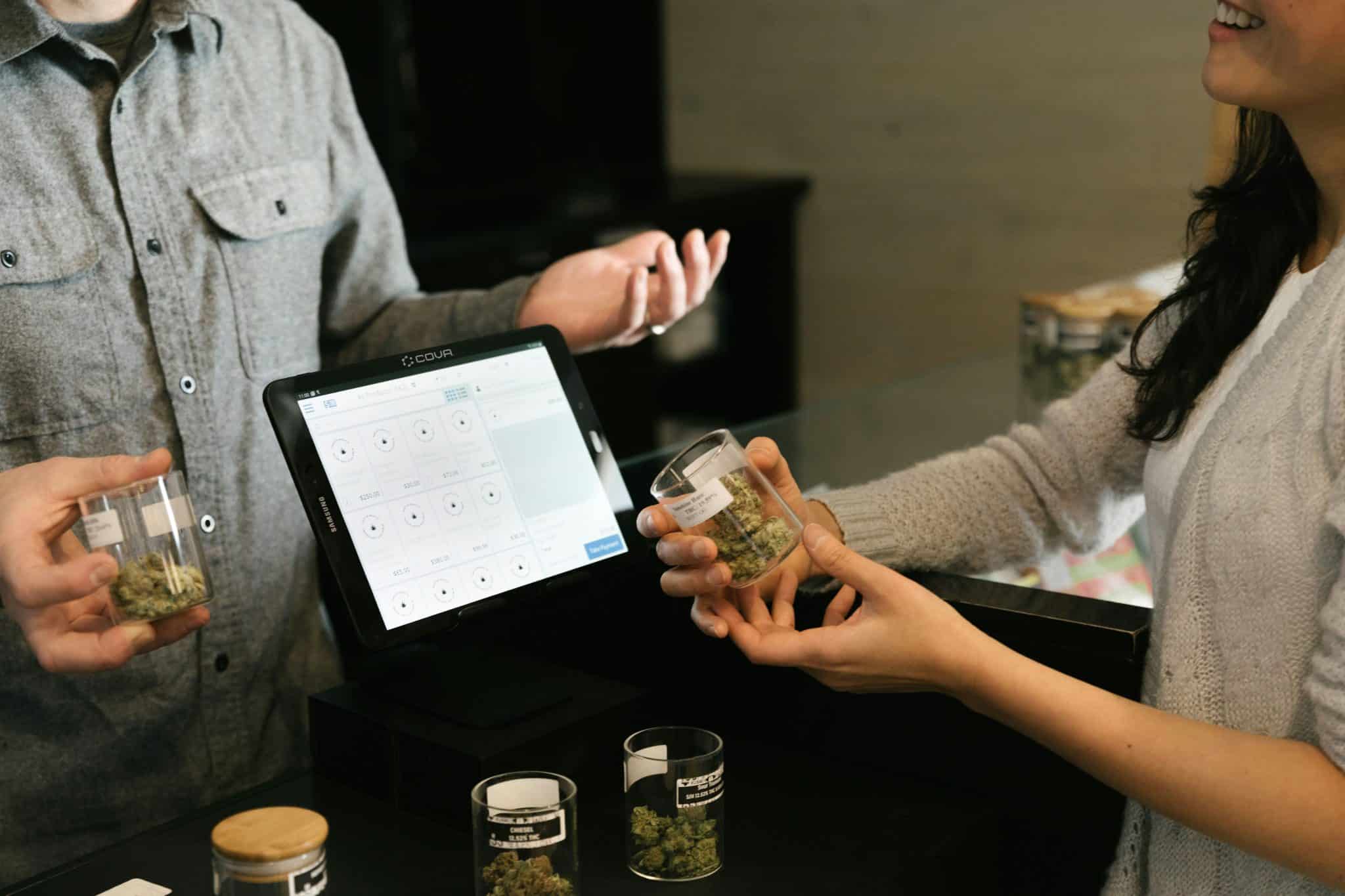
Once you hold a valid MMJ card, Florida medical marijuana treatment centers carry several product formats, and the one that works best for cannabis for pain relief depends on the type of pain you are managing.
| Format |
Onset Time |
Best Use Case |
| Inhalation (flower, vaporizer) |
5 to 15 minutes |
Acute pain episodes; faster relief needed |
| Oral (tinctures, capsules, edibles) |
30 to 120 minutes |
Sustained relief; overnight or daytime management |
| Topical (creams, balms) |
15 to 45 minutes |
Localized musculoskeletal or arthritic pain; no systemic effect |
Inhalation formats suit situations where you need faster onset, such as breakthrough pain episodes or flare-ups. Oral formats are better suited to sustained, all-day or overnight relief because the effect duration is longer. Topicals work well for localized joint or muscle pain without producing the systemic effects associated with inhaled or ingested cannabis, which makes them useful for patients who need targeted relief during work hours.
On THC:CBD ratios, research suggests that higher-CBD formulations may be particularly useful for inflammatory pain conditions such as rheumatoid arthritis. Neuropathic and musculoskeletal pain patients more commonly find benefit from THC-dominant or balanced formulations, though individual response varies.
Your dispensary staff can walk you through available options, and terpenes for pain and inflammation relief is a useful starting point for understanding how the full-spectrum composition of a product may influence its effects. Florida’s purchase limits are set by the OMMU and apply across all product formats.
What to Know Before You Apply: Employment, Licensing, and Drug Testing in Florida
A Florida medical marijuana card does not protect you from every consequence of cannabis use, and for some patients, this is the most important section in the article. Florida Statute §381.986(15) explicitly states that the law does not override employer drug-free workplace policies. If your employer maintains a drug-free workplace policy, a positive drug test can still result in termination or disciplinary action, regardless of your card status.
Understanding whether you should tell your employer about your medical card is the right move depends heavily on your workplace policy.
Three groups face heightened risk that is worth understanding before you apply:
Healthcare professionals. Nurses and other licensed clinicians should review their licensing board’s position on cannabis use before applying. Your MMJ card is not automatically confidential from all regulatory contexts, and board disciplinary proceedings are separate from employment law. For detail specific to this profession, our article on whether nurses can have medical marijuana cards covers the licensing considerations in full.
CDL and DOT-regulated workers. Federal Department of Transportation drug testing standards apply regardless of state law. A Florida MMJ card provides no protection in a DOT-regulated testing context, and a positive result carries serious consequences for your license and employment. Our article on truck drivers using medical cannabis explains the federal framework that applies here.
General private-sector employees. Your rights depend on your employer’s specific drug-free workplace policy and, where applicable, your collective bargaining agreement. There is no universal private-sector protection in Florida.
If you have professional licensing concerns or work in a regulated industry, consult an employment attorney before applying. You may also want to review whether a medical cannabis card shows up on a background check in contexts relevant to your situation. Veriheal’s physicians can discuss these considerations during your evaluation so you can make an informed decision.
How to Get Started with Veriheal in Florida
Veriheal connects Florida chronic pain patients with qualified physicians through a telemedicine for medical cannabis evaluation that can typically be completed the same day. You upload your medical records, meet with a certified physician via video, and the physician submits your cannabis recommendation to the OMMU if you qualify. There is no in-person visit required.
If you are ready to find out whether your chronic pain qualifies, connect with a Florida-certified physician through Veriheal.
Note: The content on this page is for informational purposes only and is not intended to be professional medical advice. Do not attempt to self-diagnose or prescribe treatment based on the information provided. Always consult a physician before making any decision on the treatment of a medical condition.
Note: Veriheal does not support illegally consuming therapeutic substances such as cannabis but acknowledges that it transpires because of the current illicit status, which we strive to change by advocating for research, legal access, and responsible consumption. Always consult a physician before attempting alternative therapies.
Frequently Asked Questions
Does chronic pain qualify for a medical marijuana card in Florida?
Yes. Florida law names “chronic nonmalignant pain” as its own qualifying condition when the pain is caused by or connected to one of the statute’s other named conditions, such as MS or Crohn’s disease. Pain not clearly tied to one of those conditions can still qualify through the statute’s comparable-condition clause, which lets a physician certify a condition that is “of the same kind or class” as a named one.
What types of chronic pain does Florida certify most often?
Florida physicians commonly certify neuropathic pain, musculoskeletal and back pain, inflammatory and arthritic conditions such as rheumatoid arthritis, and fibromyalgia through the comparable-condition clause. Each subtype carries different documentation expectations, so the strength of your application depends on how thoroughly your medical history is documented.
What documentation should I bring to a medical marijuana evaluation in Florida?
Bring prior medical records showing your chronic pain diagnosis, imaging results where relevant, a record of treatments you have attempted, your current medication list, a valid Florida ID or proof of residency, and proof that you are 18 or older. Complete documentation gives the physician the clinical evidence needed to support a comparable-condition certification.
Can a primary care doctor certify me for medical marijuana in Florida?
Any Florida DOH-certified physician can issue a medical cannabis recommendation in Florida. Certification is not limited to specialists. The physician must hold the required DOH certification and must be able to review sufficient medical history to make a clinical determination under the comparable-condition clause.
How long does it take to get a medical marijuana card in Florida?
Once your physician submits your certification to the Office of Medical Marijuana Use, the patient registry processing and card issuance typically takes up to 10 business days. The evaluation itself can often be completed the same day through a telemedicine appointment.
Does a Florida medical marijuana card protect me from drug testing at work?
No. Florida law under Fla. Stat. §381.986(15) explicitly preserves an employer’s right to enforce its own drug-free workplace policy regardless of card status. CDL holders and other federally regulated workers face an even stricter standard, since DOT drug testing rules apply on top of state law.
Author, Share & Comments