Getting a medical cannabis card in Minnesota is more than a healthcare decision. Enrolling puts you in a state registry, and that record can affect your job, your gun rights, a custody case, and your travel plans. Many patients don’t see these effects coming.
The good news is that Minnesota’s program also comes with real legal protections. This guide covers both sides, so you can decide whether a card fits your life before you apply.
What Does It Mean to Be on Minnesota’s Medical Cannabis Registry?
Minnesota does not issue a physical card in the traditional sense. When a licensed practitioner certifies that you have a qualifying medical condition, you receive instructions to complete your enrollment application with the Office of Cannabis Management’s Division of Medical Cannabis. Your certification must be dated within 90 days before you apply, and once approved, your enrollment is valid for three years under Minn. Stat. §342.52. Veterans have a separate alternative certification pathway.
Once enrolled, you receive a patient registry number and a registry verification, which licensed medical retailers use to confirm your status. The registry is confidential under state law, and the state limits who can access your enrollment data. Your practitioner’s records are also protected by federal health privacy rules, which you can read more about in Veriheal’s guide to HIPAA and medical cannabis privacy.
What matters most for the sections that follow is this: being on the registry is a documented legal status, not an informal arrangement. That documentation is why your registration can have consequences in federal agencies, courts, and workplaces. They follow rules that Minnesota law cannot override.
How Minnesota’s Medical Cannabis Card Protects You at Work
Minnesota gives registered patients meaningful workplace protection. Under Minn. Stat. §342.57, employers generally cannot discriminate against you based on your status as an enrolled patient. A 2025 law also added procedural protections for registered patients who test positive. Beyond that, Minnesota protects off-duty cannabis use for all adults as a lawful consumable product. It also limits cannabis testing for most jobs under Minn. Stat. §181.951. Understanding the benefits of a medical marijuana card includes knowing how these protections work together.
These protections do not cover being impaired at work. Employers can still enforce policies against on-the-job impairment and can test for cannabis in safety-sensitive roles and positions where state or federal law requires it. If you are deciding whether to disclose your status, Veriheal’s guide on whether you should tell your employer about your medical card covers the practical considerations.
When Workplace Protections Do Not Apply
Minnesota’s employment protections cannot override federal law, and federal law governs several categories of workers. If you fall into any of the following categories, your medical cannabis card provides little or no employment protection:
- CDL holders and commercial drivers: The Department of Transportation enforces drug testing under 49 C.F.R. Part 382, and a Minnesota card has no effect on a DOT drug test. Veriheal’s guide on whether truck drivers can use medical cannabis explains this in detail.
- FAA-regulated aviation workers: Federal aviation safety rules apply regardless of state cannabis law.
- NRC-regulated nuclear facility workers: Federal nuclear safety requirements take precedence over state employment protections.
- Federal contractors and federal employees: Workers covered by the Drug-Free Workplace Act follow federal standards that Minnesota law cannot change.
- Healthcare professionals in federally regulated settings: Veriheal’s guide on whether nurses can have medical marijuana cards covers how licensing boards and federal facility rules interact with state patient protections.
If your role touches any of these categories, assume your card offers limited workplace protection and consult an employment attorney before enrolling.
Does a Medical Cannabis Card Affect Your Gun Rights in Minnesota?
It can. Under 18 U.S.C. §922(g)(3), it is unlawful for anyone who is an unlawful user of or addicted to a controlled substance to possess, purchase, or receive a firearm. Registry enrollment is a documented record of cannabis use, which is why it matters here.
The federal picture has shifted. State-licensed medical marijuana moved from Schedule I to Schedule III in April 2026, and on June 18, 2026, the Supreme Court ruled unanimously in United States v. Hemani that prosecuting someone under §922(g)(3) for marijuana use alone violates the Second Amendment. The ATF has also rescinded its 2011 open letter that told dealers to treat a medical card as automatic grounds to refuse a sale.
Those changes narrow the risk, but they do not remove it. Section 922(g)(3) is still on the books, and ATF Form 4473, which licensed dealers use for every purchase, still asks whether you are an unlawful user of a controlled substance. A false answer on that form remains a federal crime, and the ATF has not issued replacement guidance, so dealer practices may vary.
This affects more people than you might expect. Rural Minnesotans who keep firearms for hunting or property protection, people who work in private security, and anyone planning a firearm purchase should factor this into their decision. The broader debate over whether federal law should prohibit medical marijuana users from gun ownership is worth reading, and Veriheal’s guide to MMJ and gun rights covers the issue in depth.
Does Minnesota State Law Offer Any Firearms Protection?
No. Minnesota’s patient protections address areas such as employment and custody, but state law cannot override federal firearms statutes. There is no state-level exemption for registered patients seeking to buy or possess firearms, so talk with a licensed attorney if this is a concern for you.
Can Your Medical Cannabis Card Be Used Against You in a Custody Case?
Minnesota family courts decide custody and parenting time based on the best interests of the child under Minnesota Statute §518.17, and a parent’s chemical health can be one of the factors a court considers when it affects the child’s safety or needs. That means cannabis use can still come up in a contested custody proceeding.
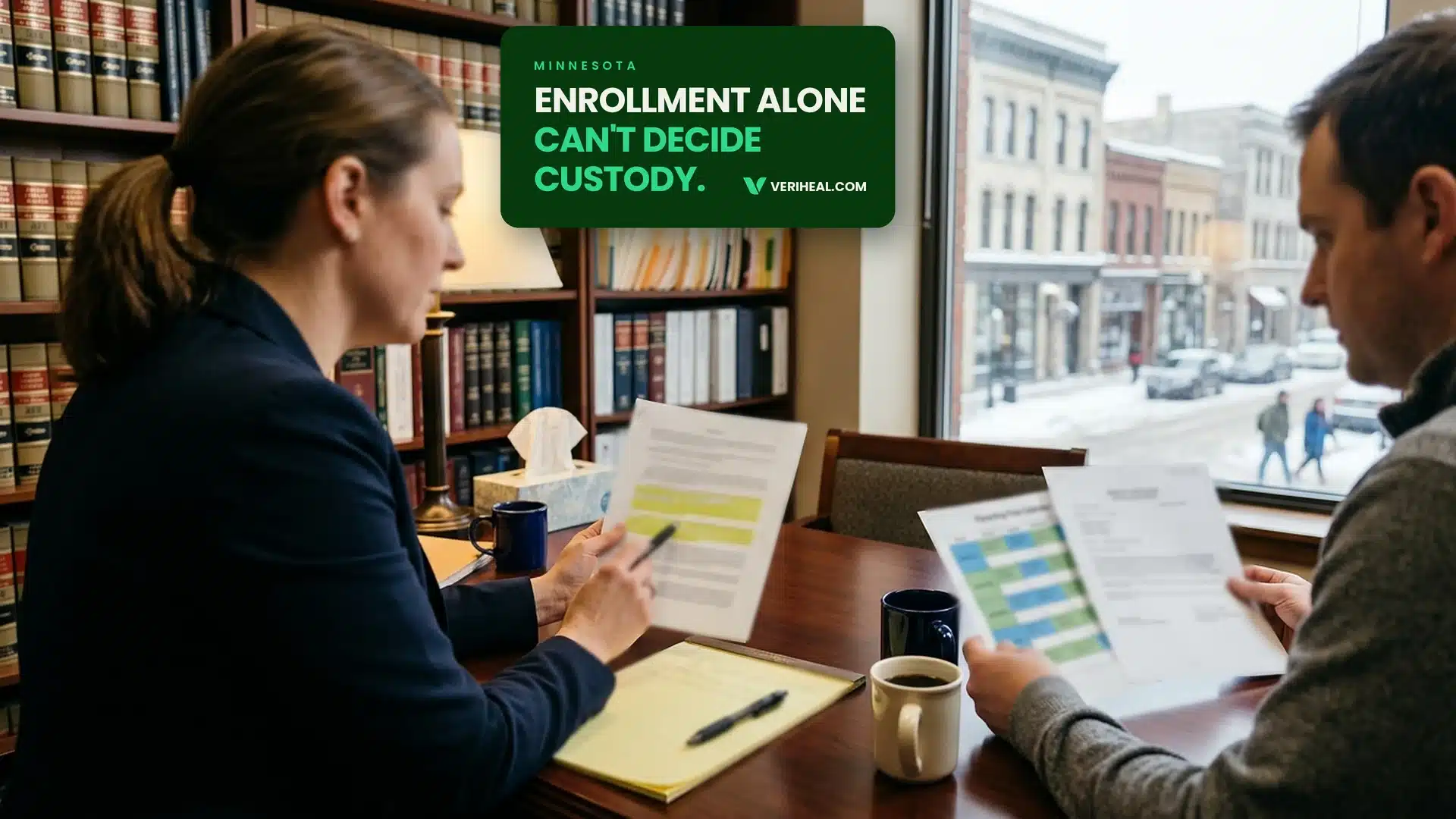
Minnesota also gives registered patients a specific protection. Under Minn. Stat. §342.57, a court may not deny a person custody, visitation, or parenting time based solely on their status as an enrolled medical cannabis patient. Your registry enrollment alone should not decide a custody case.
The distinction between enrollment and conduct matters in practice. A court can still consider evidence of impairment or behavior that affects a child, so a parent who can show stable caregiving and no impairment around their children is in a meaningfully different position than one who cannot. A family law attorney familiar with Minnesota courts is the right person to assess your specific situation.
Does Minnesota Law Protect Registered Patients in Family Court?
Yes, to a point. Section 342.57 bars courts from denying custody, visitation, or parenting time solely because you are an enrolled patient, but it does not stop a court from weighing evidence about how cannabis use affects your parenting. If you are in an active or anticipated custody dispute, consult a Minnesota family law attorney before enrolling.
Does Health Insurance Cover Medical Cannabis in Minnesota?
Generally, no. Medical cannabis is not an FDA-approved prescription drug, so health insurers, including Medicare and Medicaid, do not typically cover it, and that has not changed with its move to Schedule III. Having a medical cannabis card does not change your insurance coverage. Veriheal’s guide on whether medical marijuana is covered by insurance explains why reimbursement remains unavailable.
Health Savings Account (HSA) and Flexible Spending Account (FSA) funds also generally cannot be used for cannabis purchases, because current IRS guidance does not treat cannabis as a qualified medical expense.
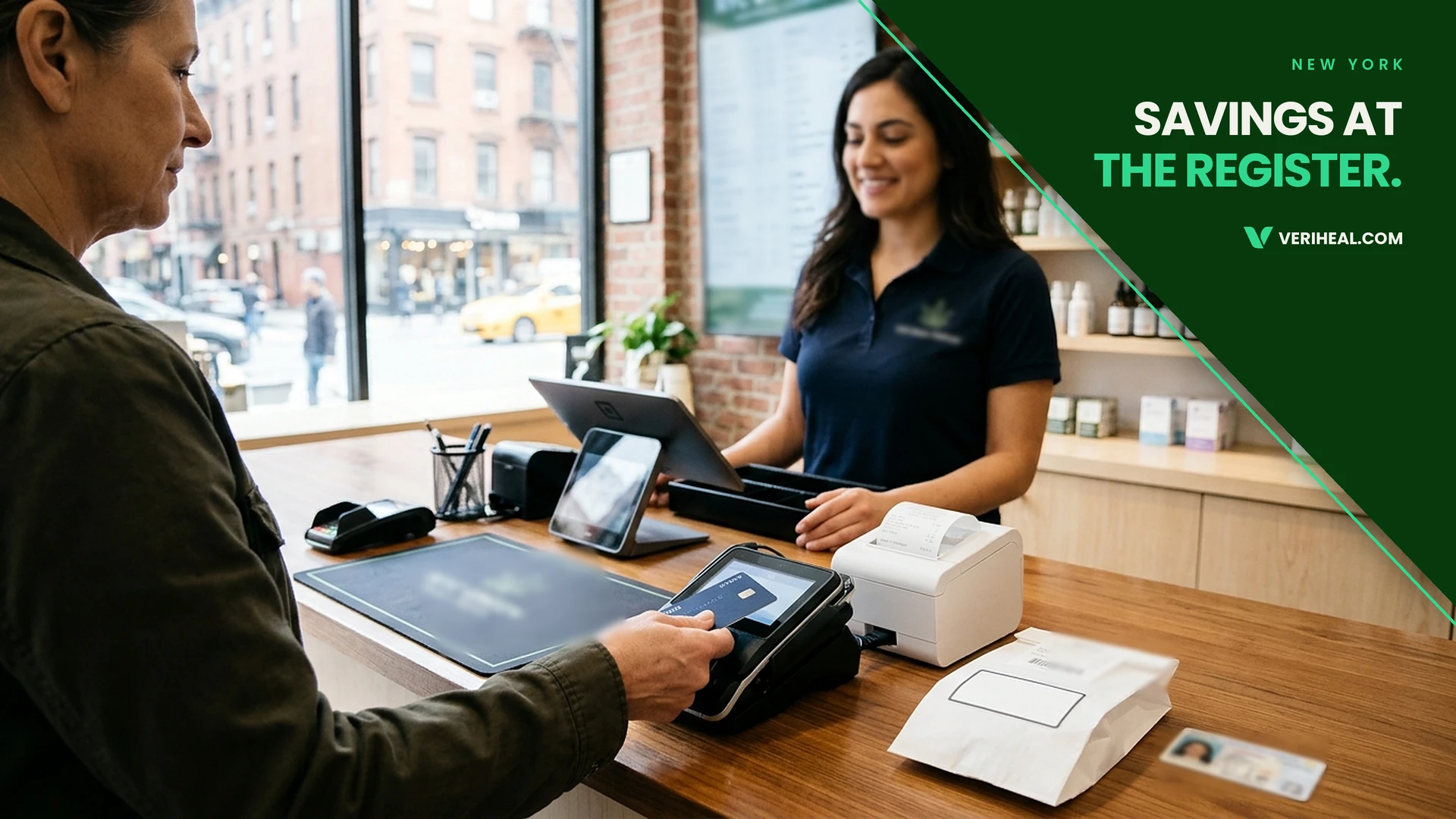
The meaningful cost advantage registration does provide is on taxes. Registered patients are exempt from Minnesota’s 15% cannabis tax on medical purchases, according to the Minnesota Department of Revenue. It is not insurance coverage, but it is a real financial consequence of registration that works in your favor.
What Happens If You Travel Outside Minnesota With a Medical Cannabis Card?
A Minnesota medical cannabis card provides no legal protection outside of Minnesota unless the state you visit chooses to recognize it. Minnesota borders four states: Wisconsin, Iowa, North Dakota, and South Dakota. Each sets its own rules for visiting patients, so check the rules for your destination before you travel. Minnesota itself does allow registered patients from other states to buy medical cannabis as visiting patients.
Crossing state lines with cannabis adds federal risk. Possessing cannabis remains a federal offense under 21 U.S.C. §844 regardless of any state card, and carrying it across a state line takes you outside the protection of Minnesota’s program.
Airports are a specific point of risk. The Transportation Security Administration (TSA) operates under federal authority, and TSA officers who find cannabis during screening can refer it to law enforcement regardless of your card. Veriheal’s guide to which states allow out-of-state patients to buy medical marijuana tracks where your card may be accepted.
If you want to understand the full picture before enrolling, review Minnesota’s medical cannabis program with Veriheal before you apply. Once you’re ready to apply, connect with a Veriheal-qualified physician to know more.
Note: The content on this page is for informational purposes only and is not intended to be professional medical advice. Do not attempt to self-diagnose or prescribe treatment based on the information provided. Always consult a physician before making any decision on the treatment of a medical condition.
Note: Veriheal does not support illegally consuming therapeutic substances such as cannabis but acknowledges that it transpires because of the current illicit status, which we strive to change by advocating for research, legal access, and responsible consumption. Always consult a physician before attempting alternative therapies.
Legal notice: This article is for informational purposes only and does not constitute legal advice. Laws governing medical cannabis, firearms, employment, and family court proceedings are subject to change and vary by individual circumstance. If you are facing an employment dispute, custody proceeding, or firearms-related question, consult a licensed attorney in Minnesota before taking action.
Frequently Asked Questions
What disqualifies you from getting a med card in Minnesota?
You must be a Minnesota resident with a practitioner certification. Under Minn. Stat. §342.52, the office can deny enrollment if you do not submit a certification, do not sign the required disclosure, leave out required information, provide false information, or are enrolled in a federally approved clinical trial for your condition using medical cannabis.
Do you lose your gun rights if you have a medical card in MN?
Not automatically, but real federal risk remains. Federal law still bars unlawful users of controlled substances from possessing firearms, and although the Supreme Court’s 2026 Hemani ruling limits prosecutions based on marijuana use alone, ATF Form 4473 still asks about controlled substance use. You can also read about whether a medical cannabis card shows up on a background check.
What are the rules for using medical cannabis in MN?
Registered patients may buy medical cannabis from businesses with a medical cannabis retail endorsement and possess amounts consistent with program rules. Use while driving or in public places where cannabis use is prohibited is not allowed, so check the Division of Medical Cannabis for current rules.
How much does a med card cost in MN?
Minnesota charges no state enrollment fee, and enrollment lasts three years. The only cost is your practitioner certification visit, which varies by provider.
Does a Minnesota medical cannabis card show up on a background check?
The Minnesota registry is confidential under state law, so your enrollment is not a public record. How it may surface depends on the type of check and who is running it, and federal firearms checks are a separate question from standard employment screening.
Author, Share & Comments