Getting a medical marijuana card in Cleveland starts with one physician visit, and Veriheal offers that visit online. From there, Ohio’s state registry takes over under the Division of Cannabis Control (DCC). The state fee has dropped to $0.01, so the visit is where most of the effort goes.
This guide walks through the steps, the cost, caregiver rules, where to find a dispensary, and renewal. You’ll also see the benefits of a medical marijuana card now that adults 21 and older can buy adult-use cannabis in Ohio, so you can decide whether registering fits your budget.
How Do You Get a Medical Marijuana Card in Cleveland?
Your physician starts the process, since you can’t sign up for the registry on your own. The physician needs a certificate to recommend from the State Medical Board. Here is how it works in the Ohio medical marijuana program:
- Book a physician visit: Schedule an evaluation with an Ohio physician who can recommend medical marijuana.
- Talk through your history: Share your condition and medical history.
- Receive a recommendation: The physician submits one if you have a qualifying condition.
- Activate your registration: Log in to the registry and finish your registration.
A complete registration must reach the DCC within 90 days of your recommendation, under rule 1301:18-10-01. Read Veriheal’s guides on how long it takes to get a medical card, how to get your medical marijuana card online, and telemedicine for medical cannabis.
What Does Registration Cost in Cleveland?
The state fee is $0.01. Ohio charged patients $50 a year and caregivers $25 before March 2024. The Division’s notice to patients says the fee became $0.01 on March 4, 2024, and that the Division planned to eliminate it. That notice dates from 2024, so check the registry for the current charge, including at renewal.
Your physician’s evaluation fee is a separate cost, and insurance generally does not cover it. Read Veriheal’s guide on whether medical marijuana is covered by insurance.
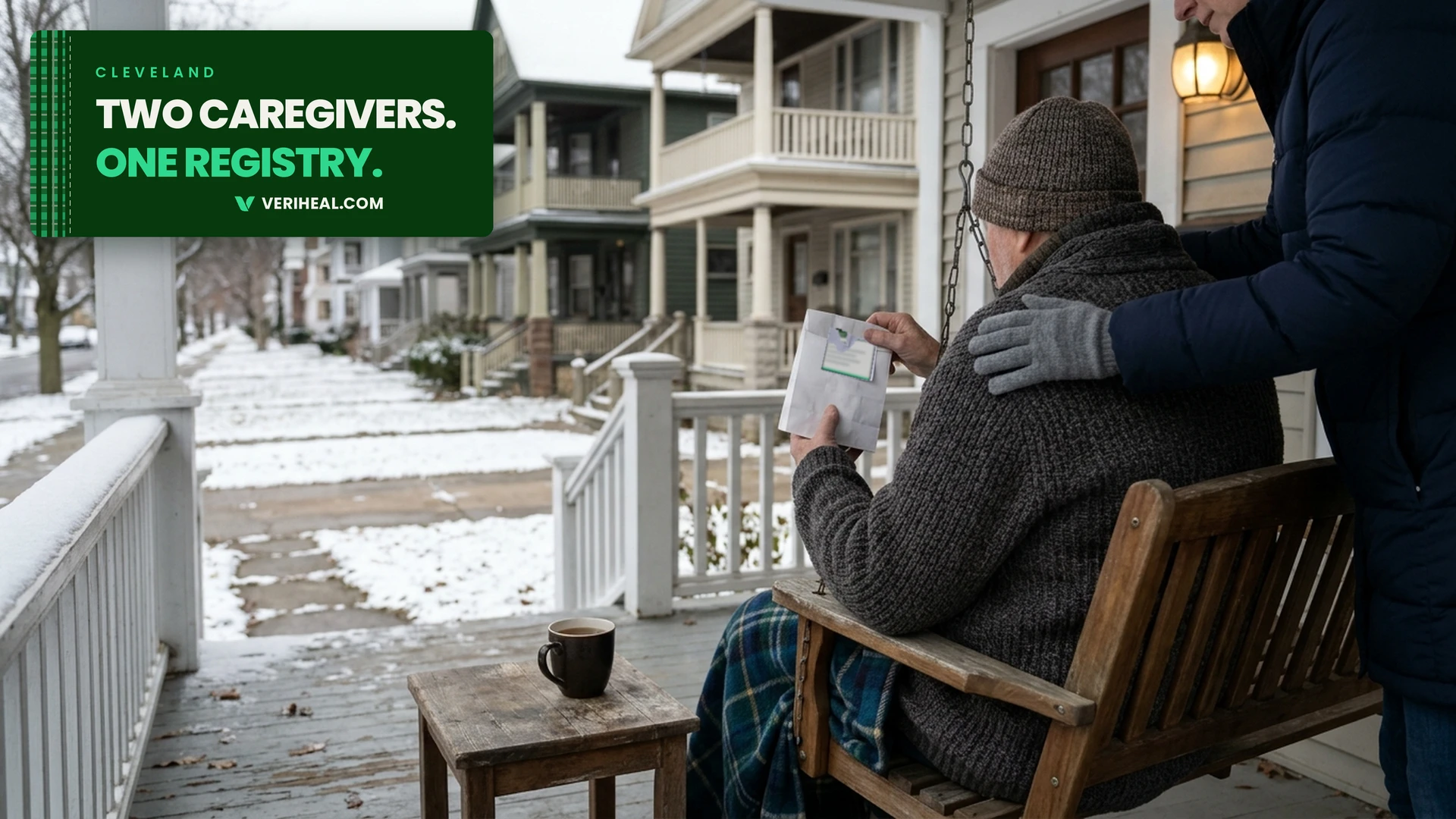
Can a Caregiver Help You in Cleveland?
Yes, a caregiver can help. Ohio registers caregivers in the same registry as patients, and each caregiver needs their own registration. A patient can designate up to two caregivers under rule 1301:18-10-01, and a minor patient’s registration includes a caregiver registration. The Division also publishes a guide for dispensary employees that explains how staff check both groups.
Which Conditions Qualify in Cleveland?
Ohio sets its qualifying conditions in section 3796.01 of the Ohio Revised Code. The list includes:
- Pain: Chronic and severe pain, or intractable pain.
- Mental health: Post-traumatic stress disorder (PTSD).
- Neurological conditions: Epilepsy or another seizure disorder, multiple sclerosis, Parkinson’s disease, Alzheimer’s disease, and amyotrophic lateral sclerosis.
- Other conditions: Cancer, Crohn’s disease, fibromyalgia, glaucoma, hepatitis C, inflammatory bowel disease, HIV, and AIDS.
The list has more entries, and anxiety is not one of them. The State Medical Board can add conditions, and it publishes the current covered conditions. Your physician then decides whether you have one.
How Do You Find a Dispensary Near Cleveland?
The DCC publishes a find a dispensary page with a list and a map, so you can check locations across Cuyahoga County and nearby counties. Ohio dispensaries serve both medical patients and adult-use customers, according to the Division’s guidance on non-medical sales limits. Locations and hours can change, so check before you go.
Before you buy, show your registry identification card and a government-issued photo ID, and carry your registry identification whenever you have medical marijuana, under Ohio rules. Medical patients can purchase up to a 90-day supply, according to the same guidance.
Is a Medical Card Different From Adult Use in Ohio?
Yes, it is. Ohio has allowed medical marijuana since 2016 under House Bill 523, and since voters approved Issue 2 in 2023, adults 21 and older can also buy adult-use cannabis without a card. Still, a few things work differently for medical patients at the counter.
Adult-use purchases carry a 10% excise tax, according to the Ohio Department of Taxation, while the Division says medical sales are exempt, according to its notice to patients. Some dispensaries also offer patient discounts. Program rules can change, so confirm current details with the Division of Cannabis Control. Read Veriheal’s guide on medical versus recreational cannabis taxes.
How Does Renewal Work?
Your registration lasts one year and expires on the last day of the month it was issued. To renew, get a new recommendation from your physician and renew in the registry. The Division sends you a notice 45 days before your expiration date, and you can submit your renewal up to 30 days before it expires, according to its renewing patient registration page. A registration that isn’t renewed expires automatically.
Should You Talk to a Lawyer First If You Own Firearms?
If you own firearms, consult a licensed attorney before you register in Ohio. These four points will make that conversation easier:
- Know what rescheduling covers: On April 28, 2026, a federal final rule moved state-licensed medical marijuana to Schedule III. Marijuana outside a state medical license, or outside a Food and Drug Administration-approved product, stays in Schedule I.
- Know what the Court decided: In United States v. Hemani on June 18, 2026, the Supreme Court unanimously held that a prosecution under Section 922(g)(3) of Title 18 of the United States Code, based solely on marijuana use, was inconsistent with the Second Amendment. The Court called its decision narrow.
- Know where the ATF stands: The Bureau of Alcohol, Tobacco, Firearms and Explosives (ATF) rescinded its 2011 open letter that told dealers a medical marijuana card was grounds to refuse a sale. It has issued no replacement guidance.
- Know what still applies: Section 922(g)(3) remains federal law, and ATF Form 4473 is unchanged, so a false answer to its drug-use question still carries real federal risk.
A licensed attorney can map these points to your situation. Read Veriheal’s guide on medical cannabis patients and gun rights.
How Can Veriheal Help You in Cleveland?
Veriheal connects you with an Ohio physician for an online video evaluation, so Cleveland patients can finish the visit from home. Your physician can tell you whether any in-person follow-up applies to you. The evaluation costs $199, and you can split the fee into interest-free installments. Every Veriheal evaluation comes with a “get approved or your money back” policy.
When you’re ready, find a medical marijuana doctor and book your Ohio evaluation online. You’ll need a new recommendation each year to renew, so it helps to have a physician you can reach from home.
Note: The content on this page is for informational purposes only and is not intended to be professional medical advice. Do not attempt to self-diagnose or prescribe treatment based on the information provided. Always consult a physician before making any decision on the treatment of a medical condition.
Note: Veriheal does not support illegally consuming therapeutic substances such as cannabis but acknowledges that it transpires because of the current illicit status, which we strive to change by advocating for research, legal access, and responsible consumption. Always consult a physician before attempting alternative therapies.
Frequently Asked Questions
How do I get a medical marijuana card in Cleveland?
To get a medical marijuana card in Cleveland, you complete an evaluation with an Ohio physician who holds a certificate to recommend. If the physician finds a qualifying condition, they submit your recommendation to the state registry. You then activate your registration in the registry.
Can I get a medical marijuana card online in Cleveland, Ohio?
Yes, you can get your Ohio medical marijuana evaluation online. Veriheal connects you with an Ohio physician for a video visit, so you can finish it from home, and every evaluation comes with a “get approved or your money back” policy. Once your physician submits a recommendation, you complete your registration in the state registry.
How long does it take to get a medical marijuana card in Ohio?
How long it takes in Ohio depends on when you complete your evaluation and your registry registration. A complete registration must reach the Division of Cannabis Control within 90 days of your physician’s recommendation.
Do I need to be an Ohio resident to get a medical marijuana card?
You generally need to live in Ohio to join the state’s patient registry, unless a reciprocal agreement under section 3796.16 of the Ohio Revised Code applies to you. If you’re curious how other states handle visiting patients, read Veriheal’s guide on which states allow out-of-state patients to buy medical marijuana.
Can a minor get a medical marijuana card in Ohio?
A minor can register as a patient in Ohio, but a parent or legal representative must consent to treatment, and a caregiver registration is required. The caregiver registers separately in the same registry.
Is my medical marijuana information private in Ohio?
The Division of Cannabis Control keeps your Ohio patient registration, and your physician’s evaluation is a medical visit. Read Veriheal’s guides on protecting your privacy under the Health Insurance Portability and Accountability Act (HIPAA) and whether your medical marijuana card shows up on a background check.
How much does a medical card cost in Ohio?
Ohio’s state registration fee has been $0.01 since March 4, 2024. Your physician’s evaluation fee is a separate cost. Veriheal’s online video evaluation with an Ohio physician costs $199, and you can split it into interest-free installments.
Can a caregiver buy medical marijuana for me?
A caregiver can help you buy medical marijuana if you register them in the Ohio registry. Each caregiver needs their own registration, and a patient can designate up to two.
Is anxiety a qualifying condition in Ohio?
Anxiety is not a qualifying condition in Ohio, since it is not on the list in section 3796.01 of the Ohio Revised Code. The State Medical Board can add conditions to that list.
How long does an Ohio registration last?
An Ohio patient registration is valid for one year and expires on the last day of the month it was issued.
Author, Share & Comments