THC can be detected in multiple bodily fluids beyond the commonly known urine, blood, and saliva tests. Recent research has revealed that cannabis metabolites appear in less conventional fluids like semen, cerebrospinal fluid, and even breast milk, expanding our understanding of how long THC and its metabolites remain detectable throughout your body.
Understanding which fluids retain THC helps you make informed decisions about drug testing timelines and detection windows. Different fluids capture THC at various stages of metabolism, which means detection periods vary significantly depending on the test type used.
Traditional THC Testing Methods
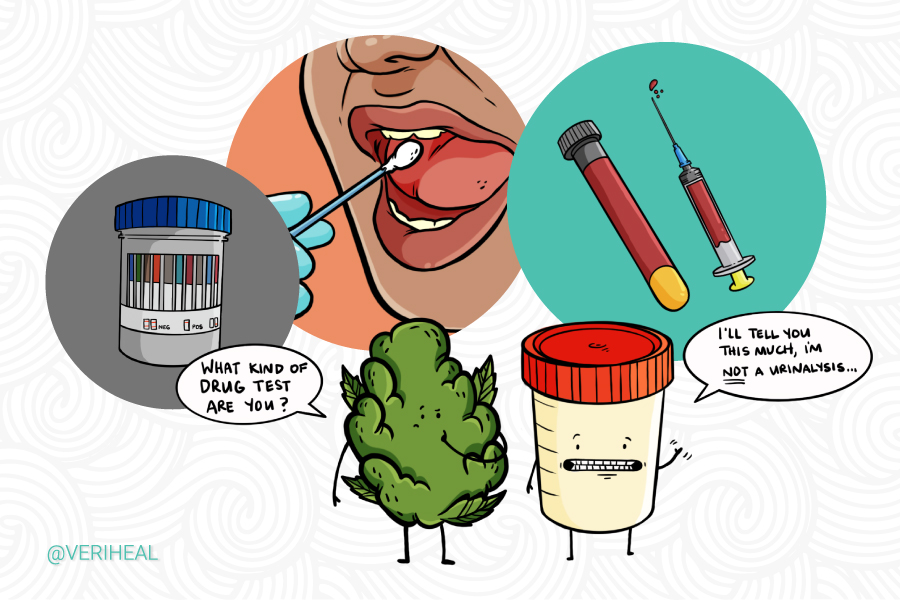
The four primary methods for detecting THC each target different fluids and offer general estimated detection windows. These figures vary substantially depending on frequency and amount of use, product potency, route of administration, assay sensitivity and cutoff values, and individual factors, they should not be read as predictable timelines for any specific person.
| Test Type |
Typical Detection Window (varies by use pattern, dose, and individual) |
Primary Use |
Accuracy Level |
| Urine |
Roughly 3-30 days as a general estimate |
Employment screening |
Presence of metabolites, not impairment or timing of use |
| Blood |
Roughly 1-7 days as a general estimate |
Recent-exposure testing |
Presence of active THC; not a reliable impairment measure on its own |
| Saliva |
Roughly 1-3 days as a general estimate |
Roadside testing |
Recent oral cavity or systemic exposure; not a reliable impairment measure on its own |
| Hair |
Up to approximately 90 days as a general estimate |
Long-term use pattern screening |
Chronic use pattern; unreliable for single-use or very recent use |
Urine tests remain the most common because they detect THC metabolites rather than active THC, providing a longer detection window that employers prefer for workplace screening. These tests measure THC-COOH, the primary metabolite your liver produces when it processes THC from your bloodstream.
Blood tests detect active THC levels, which can indicate relatively recent exposure. However, blood THC concentration does not reliably establish an individual’s degree of impairment, THC pharmacokinetics and individual tolerance vary too much for a blood level alone to serve as a impairment measure. Law enforcement agencies use blood testing because it reflects more recent use than urine testing does, but detecting THC in blood is not the same as proving impairment.
Saliva testing offers a middle ground, detecting both THC and some metabolites for a general estimate of 1-3 days after use. Like blood testing, a positive saliva result indicates relatively recent exposure, not confirmed impairment. Residual THC in the oral cavity after smoking or vaping can also affect saliva results independent of systemic THC levels. The convenience of collection makes saliva tests popular for roadside screening, though they typically capture only recent cannabis use rather than providing the extended detection window that urine tests offer.
Hair follicle testing can capture use patterns over a longer window than other methods, often cited around three months, but this comes with real limitations. Results can be affected by collection site, cosmetic hair treatments, hair characteristics, and environmental contamination, and hair testing is not reliable for identifying very recent use, since it takes time for metabolites to reach growing hair. It also tends to require more consistent use to register positive, making it less suited to detecting occasional consumption.
How THC Moves Through Your Body
When you consume cannabis, THC enters your bloodstream and begins a complex metabolic journey that determines which bodily fluids will retain detectable levels and for how long.
Your liver metabolizes THC into THC-COOH, the primary metabolite that drug tests target. This process creates different detection patterns across various fluids because THC and its metabolites have varying affinities for different biological systems throughout your body.
THC’s fat-soluble nature means it gets stored in adipose tissue, creating a reservoir that slowly releases metabolites back into your bloodstream over time. Body composition is one factor among several, including frequency and chronicity of use, dose, route of administration, and individual pharmacokinetics, that can influence how long metabolites remain detectable. It shouldn’t be treated as a reliable predictor of an individual’s specific detection window on its own.
The concentration of THC metabolites in any given fluid depends on several factors: your frequency of use, metabolism rate, body composition, and the time elapsed since your last cannabis session. Research on THC metabolism shows that chronic users tend to develop different elimination patterns compared to occasional consumers, reflecting the accumulation and gradual redistribution of lipophilic cannabinoids in fat tissue with repeated exposure, rather than fat tissue becoming fully ‘saturated’ in a fixed sense.
Your kidneys filter THC metabolites from your blood and concentrate them in urine, which is why urine tests can detect cannabis use long after the psychoactive effects have worn off. Meanwhile, saliva primarily contains THC that hasn’t been fully metabolized, explaining its shorter detection window that aligns more closely with actual impairment periods.
Lesser-Known Bodily Fluids That Can Detect THC
Beyond traditional testing methods, researchers have discovered THC presence in several biological fluids that most cannabis users never consider during drug test preparation.
Semen represents one of the most surprising detection sites. A small proof-of-concept study from Harvard Medical School examined 12 frequent cannabis users and found detectable THC levels in two participants’ semen samples. This is a preliminary finding from a very small sample, not an established semen detection window or a demonstrated clinically meaningful route of exposure. More research would be needed before drawing broader conclusions from this.
Cerebrospinal fluid offers another detection avenue that researchers have explored in medical settings. THC can cross the blood-brain barrier and appear in the fluid surrounding your brain and spinal cord, though this type of testing remains primarily within research contexts rather than standard drug screening protocols.
Cannabinoids, including THC, pass into human breast milk, creating potential infant exposure. Current medical and public health guidance recommends avoiding cannabis use during breastfeeding, and cannabis use during pregnancy is also discouraged, since THC can cross to the developing fetus.
Research using LactMed, the NIH’s peer-reviewed drug and lactation database, documents THC detection in breast milk ranging from about 6 days to more than 6 weeks after use, depending on the study and consumption pattern. The clinical significance of infant exposure through breast milk isn’t fully understood, which is precisely why the guidance leans toward avoidance rather than a specific ‘safe’ detection cutoff.
Sweat contains trace amounts of THC metabolites, which has led to the development of sweat patch testing for monitoring programs. These patches collect perspiration over several days, providing a detection window that falls between saliva and urine testing timeframes.
The presence of THC in these alternative fluids demonstrates how thoroughly cannabis compounds distribute throughout your body systems. However, testing these fluids requires specialized procedures and isn’t part of standard workplace or legal drug screening protocols.
Understanding that THC appears in multiple biological fluids helps explain why detection windows vary so dramatically between individuals and testing methods. Your body’s unique metabolism, composition, and cannabis use patterns all influence which fluids will test positive and for how long.
What Each Test Actually Measures
Different drug tests detect distinct compounds, which explains why test results can vary dramatically even when samples are collected on the same day.
- Urine tests primarily measure THC-COOH, the inactive metabolite your liver produces after breaking down THC. This metabolite can remain detectable for weeks after your last cannabis use because it gets stored in fat tissue and slowly released back into your bloodstream. The presence of THC-COOH doesn’t indicate current impairment or recent consumption.
- Blood tests detect both active THC and its metabolites, with active THC levels dropping relatively quickly after the psychoactive effects wear off. Law enforcement often uses blood testing because it reflects more recent exposure than urine testing does, measuring THC itself rather than the metabolic byproducts that linger much longer. That said, NHTSA’s own report to Congress concludes that blood THC concentration is not an accurate and reliable predictor of impairment, individual tolerance and pharmacokinetics vary too much for a single concentration to serve as an impairment threshold.
- Saliva tests capture THC that hasn’t been fully processed by your liver, making them a reasonable indicator of relatively recent use. They can also produce false positives from residual THC in your mouth after smoking or vaping, even when systemic THC levels have dropped well below any meaningful level. As with blood, the same NHTSA research found oral fluid THC concentrations don’t reliably predict impairment either, a positive saliva result indicates recent exposure, not confirmed impairment.
- Hair tests measure THC metabolites incorporated into the hair shaft as it grows. This requires consistent use over time, so hair tests are better suited to detecting regular consumption patterns than single-use incidents or very recent use, metabolites simply haven’t had time to reach growing hair yet in those cases. Collection site, cosmetic hair treatments, and environmental contamination can also affect results.
The key distinction across all of these: detection doesn’t equal impairment. Most drug tests measure metabolites that persist long after THC’s psychoactive effects have ended, creating a detection window that far exceeds the actual period of cannabis intoxication. This is why someone can test positive on a urine drug test weeks after their last cannabis use despite having no active THC in their system, and why no single specimen or concentration reliably tells you whether someone is currently impaired.
Modern testing technology continues to evolve, with newer methods attempting to distinguish recent use from historical consumption. Still, the majority of workplace and legal drug screening today relies on tests that detect long-lasting metabolites rather than measuring actual impairment.
A few related things worth knowing:
- Understanding what each test measures helps you make informed decisions about how long a cannabis high lasts versus how long metabolites remain detectable, these are genuinely different timeframes, and the relationship between them varies by individual metabolism and use pattern.
- Some users notice their urine smells like weed even without recent use, typically from concentrated metabolites rather than active THC.
- Questions about THC absorption through skin point to another pathway cannabis compounds can enter the body, each with its own detection pattern across different fluids.
Conclusion
THC detection extends far beyond the familiar urine, blood, and saliva tests that most people associate with drug screening. Research has revealed cannabis metabolites in semen, cerebrospinal fluid, breast milk, and sweat, demonstrating how thoroughly these compounds distribute throughout your body systems.
The key to understanding drug testing lies in recognizing what each test actually measures. While active THC clears your system within hours or days, metabolites can persist for weeks or months in various fluids, creating detection windows that far exceed the period of actual impairment.
Metabolism rate, body composition, frequency of use, and time since last consumption all influence detection patterns across different bodily fluids. This complexity explains why two people with identical cannabis use might produce vastly different test results depending on which fluid gets tested and when.
For those facing potential drug screening, knowing that traditional tests focus on long-lasting metabolites rather than current impairment helps set realistic expectations about detection timelines. The science continues evolving, but current testing methods still reflect metabolic history rather than measuring actual cannabis intoxication levels.
Note: The content on this page is for informational purposes only and is not intended to be professional medical advice. Do not attempt to self-diagnose or prescribe treatment based on the information provided. Always consult a physician before making any decision on the treatment of a medical condition.
Note: Veriheal does not support illegally consuming therapeutic substances such as cannabis but acknowledges that it transpires because of the current illicit status, which we strive to change by advocating for research, legal access, and responsible consumption. Always consult a physician before attempting alternative therapies.
Ready to explore medical cannabis options legally? Find a qualified physician who can evaluate whether cannabis might benefit your health conditions and guide you through your state’s medical marijuana program.
Frequently Asked Questions
How long does THC stay detectable in different bodily fluids?
THC detection windows vary significantly by fluid type. Urine tests can detect THC metabolites for 3-30 days, blood tests detect active THC for 1-7 days, saliva tests work for 1-3 days, and hair tests capture use for up to 90 days.
Can THC be transferred between people through bodily fluids?
Research has found THC in semen and breast milk, confirming that cannabis compounds can be present in fluids exchanged between people. However, the concentrations are typically very low, and transfer through casual contact or saliva exchange would be minimal.
Do all drug tests measure the same thing?
No, different tests measure different compounds. Urine tests primarily detect THC-COOH metabolites, blood tests measure both active THC and metabolites, saliva tests capture unmetabolized THC, and hair tests measure metabolites incorporated into hair shafts.
Why do some people test positive longer than others?
Individual factors like metabolism rate, body fat percentage, frequency of cannabis use, and the potency of consumed products all affect how long THC metabolites remain detectable in various bodily fluids.
Can you test positive from secondhand cannabis exposure?
Secondhand exposure typically produces very low levels of THC metabolites that fall below standard testing thresholds. However, intense exposure in enclosed spaces could potentially result in detectable levels, particularly in sensitive tests.
Which bodily fluid shows the most accurate results for recent use?
Blood tests can provide a relatively good indication of recent exposure because they measure active THC rather than long-persisting metabolites. However, no single fluid or THC concentration reliably establishes an individual’s level of impairment, blood THC levels and actual impairment don’t correlate closely enough to serve as a stand-in for one another.
Author, Share & Comments