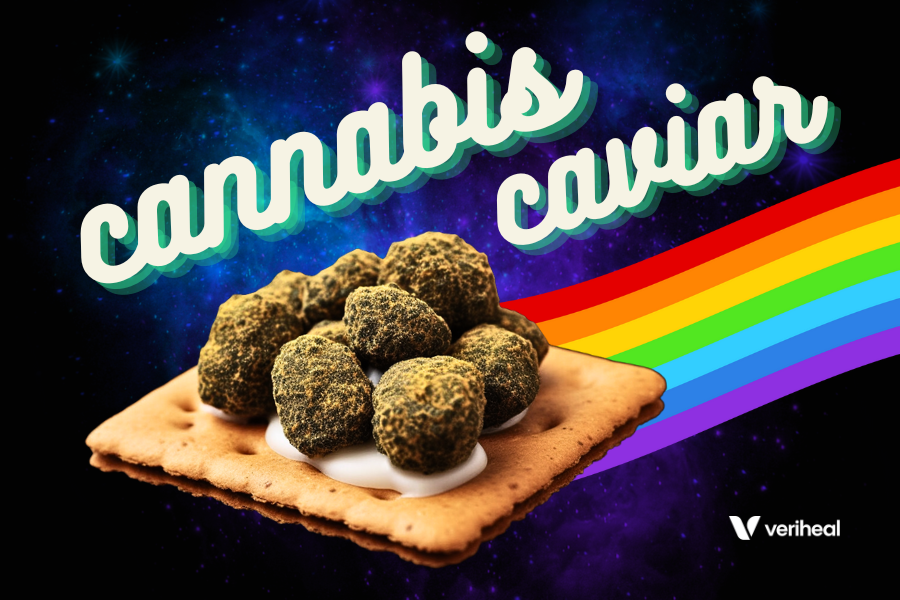
Cannabis caviar is one of the most potent products you can find at a dispensary, and it looks nothing like standard flower. It starts with quality cannabis buds soaked or coated in concentrated hash oil, then sometimes rolled in kief for an extra layer of potency.
The result is a dense, sticky, glistening product that commands premium prices and delivers effects far beyond what regular flower can produce.
What Is Cannabis Caviar?
Cannabis caviar is flower that has been soaked or coated in THC distillate or another form of hash oil, then dried. Some producers take it a step further and roll the oil-coated buds in kief, which is the fine, powdery trichome crystal that collects from dried cannabis. The term “caviar gold” sometimes refers to the oil-coated version without kief, while “cannabis caviar” can describe either version depending on who made it.
That terminological overlap explains why shoppers encounter the same name attached to slightly different products at the dispensary counter.
What sets caviar apart from a pure concentrate is its flower base. It is not an extract, a wax, or a resin on its own. It is a flower-plus-concentrate hybrid, which means it smokes more like flower than a dab but hits considerably harder. The combination of quality buds, live resin or another oil, and optionally kief creates a layered potency that standard flower simply cannot match.
Cannabis Caviar vs. Moon Rocks: What’s Actually Different
The most common point of confusion in the SERP and at the dispensary counter is whether cannabis caviar and moon rocks are the same thing. They are not, though they share a construction logic.
| Product |
Base |
Concentrate Type |
Kief Coating |
Typical THC Range |
Typical Price |
| Cannabis Caviar |
Flower |
Hash oil (butane hash oil/BHO, CO2, distillate) |
Optional |
50 to 80%+ |
$50 to $60/gram |
| Moon Rocks |
Flower |
Hash oil |
Yes, always |
50 to 90%+ |
$30 to $60/gram |
| Hash Holes |
Flower (joint) |
Hash rope or rosin inside |
No |
40 to 70%+ |
$20 to $50/unit |
| Snowballs |
Flower |
Wax or distillate |
Yes, always |
50 to 80%+ |
$25 to $50/gram |
Moon rocks always include a kief coating as part of the definition. Caviar may or may not, depending on the producer. Hash holes are pre-rolled joints with a rope of hash running through the center, which makes them a different format entirely rather than a coated bud product. Snowballs use wax or distillate as the binding concentrate and are consistently kief-rolled, sitting closest to moon rocks in construction.
The practical difference comes down to burn behavior and how you smoke each one. Products with a full kief coat burn more evenly but more slowly, while oil-only caviar can run unevenly if heat is not managed carefully.
How Potent Is Cannabis Caviar?
Standard cannabis flower typically ranges from 15 to 30% tetrahydrocannabinol (THC) by weight. Cannabis caviar typically lands between 50 and 80% THC once the concentrate and optional kief are factored in, placing it firmly in the territory of high-THC cannabis products and potency thresholds rather than everyday flower.
National surveillance data on cannabinoid concentration in U.S. cannabis samples confirm this shift: NIH-tracked data on rising cannabis THC concentrations show that high-THC cannabis has become the dominant type analyzed nationwide over the past decade, which is part of why low-tolerance and first-time users face a real overconsumption risk with products like caviar.
That potency level means the effects may come on faster and last longer than you expect, particularly if your tolerance is built around standard flower. How long a cannabis high lasts depends on consumption method, tolerance, and the specific concentrate used, but caviar sessions can extend well beyond a typical flower high.
Understanding how THC degrades under heat is also relevant here, since high-heat smoking can burn off cannabinoids before they deliver their full effect.
| Product Type |
Typical THC Range |
| Standard flower |
15 to 30% |
| Cannabis caviar |
50 to 80%+ |
| Pure concentrates (wax, shatter) |
70 to 90%+ |
Start with a small amount regardless of your experience level. The combination of flower, oil, and kief means the effect is distributed unevenly across the bud, so one section may hit harder than another.
How to Smoke Cannabis Caviar
Cannabis caviar requires a different approach than standard flower because the oil content changes how it burns. Do not run it through a grinder. The sticky concentrate will coat the grinder teeth and you will lose a significant portion of the product. Break it apart by hand into small pieces instead.
Smoking a Caviar Joint or Blunt
The most popular way to consume a caviar joint is to blend caviar with regular flower rather than rolling pure caviar on its own. Pure caviar in a joint tends to burn unevenly and can canoe, meaning one side burns faster than the other. Adding a base of regular flower gives the joint structure and improves the burn.
Use the technique we’ve shown in our article on how to roll a blunt as a reference, but pack more loosely than usual to allow airflow around the oil-dense caviar pieces.
Using a Bowl or Bong With Cannabis Caviar
A bowl or bong works well for caviar if you pack it loosely and apply low, consistent heat rather than a direct torch-style flame. The oil in caviar responds to heat differently than dry flower, so burning at lower temperatures helps preserve more of the concentrate rather than combusting it immediately.
See our guide on how to pack a bowl for the baseline technique, then adjust by packing roughly half the bowl with regular flower before adding the caviar on top. Dabbing caviar is generally not recommended because the flower base does not vaporize cleanly at concentrate temperatures.
How Much Does Cannabis Caviar Cost?
Cannabis caviar typically sells for $50 to $60 per gram at premium dispensaries, which puts a full ounce at roughly $1,400 or more depending on the state, the dispensary, and the quality of the input flower and concentrate. For context, the cost for an ounce of weed for standard flower runs considerably less, which makes caviar a deliberate luxury purchase rather than a daily driver.
The price reflects the production process. High-quality input flower costs more than trim or lower-grade buds, and the concentrate used, whether it is BHO, CO2 oil, or rosin, adds another layer of material cost on top. Crumble wax is and similar concentrates used in caviar production require extraction equipment, processing time, and testing, all of which feed into the final retail price. State excise taxes and local cannabis regulations affect the dispensary price further, so the $50 to $60 per gram figure is a general benchmark rather than a fixed market rate.
Key cost factors:
- Input flower quality and strain
- Concentrate type used (rosin commands a higher premium than distillate)
- Whether kief is included in the coating
- State tax environment and dispensary markup
How to Make Cannabis Caviar at Home
Making cannabis caviar at home costs significantly less than buying it pre-made and gives you control over every ingredient. You need three things: quality flower, a concentrate such as crumble wax or hash oil, and optionally kief collected from your grinder’s kief catcher.
Warm the concentrate gently until it becomes liquid enough to coat the flower. A double boiler setup or a brief low-heat application works well. Use tongs or a toothpick to roll each bud in the warmed oil until it is evenly coated, then set the coated buds on parchment paper to dry. If you are adding kief, roll the still-tacky oil-coated bud through your collection before it fully sets. Allow everything to dry completely before attempting to smoke it, which typically takes several hours at room temperature.
The home version will not have the same consistency as a dispensary product, but the underlying process is the same. Using a concentrate like live resin rather than distillate will produce a more complex flavor profile, since live resin preserves more of the original terpene content from the plant.
Research on cannabis terpene preservation and the entourage effect suggests that maintaining terpene integrity during processing contributes meaningfully to the overall effect profile of the final product.
If you are exploring high-strength cannabis options and want guidance on what products are right for your situation, speak with a licensed cannabis doctor who can help you navigate your options safely and legally.
Note: The content on this page is for informational purposes only and is not intended to be professional medical advice. Do not attempt to self-diagnose or prescribe treatment based on the information provided. Always consult a physician before making any decision on the treatment of a medical condition.
Note: Veriheal does not support illegally consuming therapeutic substances such as cannabis but acknowledges that it transpires because of the current illicit status, which we strive to change by advocating for research, legal access, and responsible consumption. Always consult a physician before attempting alternative therapies.
Frequently Asked Questions
What is cannabis caviar made of?
It is flower that has been coated or soaked in a cannabis concentrate such as hash oil or distillate, then optionally rolled in kief. The combination of flower, oil, and sometimes kief produces a product with significantly higher THC content than standard flower alone.
How is cannabis caviar different from moon rocks?
It may or may not include a kief coating depending on the producer, while moon rocks always include it as part of their definition. Both use a flower base coated in concentrate, but the terminology and construction details vary enough that they are not interchangeable terms.
Can you smoke cannabis caviar in a joint?
Yes, but blending caviar with regular flower produces a better burn than rolling pure caviar on its own. Pure caviar joints tend to burn unevenly because of the oil content, so mixing it with standard flower gives the joint structure and improves the experience.
How potent is cannabis caviar?
It typically ranges from 50 to 80% THC by weight, compared to 15 to 30% for standard flower. The exact potency depends on the concentrate used, the quality of the input flower, and whether kief is included in the coating.
How much does cannabis caviar cost?
It typically costs $50 to $60 per gram at premium dispensaries, which translates to roughly $1,400 or more per ounce. The price reflects the cost of quality input flower, the extraction and processing of the concentrate used, and state tax rates, which vary significantly by market.
Author, Share & Comments