Your medical cannabis journey simplified: find partnered dispensaries, explore pricing options, earn rewards, and get answers to FAQs, all in one spot.
In the United States, women have outnumbered men since 1946. Despite this, women have long been excluded from medical trials. Factors like historical bias, policies designed to protect unborn children, and difficulties in recruiting and retaining women kept the medical community from working to better understand how illnesses, medications, and health innovations impact 51% of the population.
It wasn’t until 1993 that Congress passed a law requiring the inclusion of women in clinical research. That law set things on the right track, but women still only make up 41.2% of participants in all medical trials, according to one study. This means that there is a huge need for more work to be done in order to understand how to properly treat diseases in women, especially when those diseases are gender-specific.
Conditions like endometriosis and fibroids are perfect examples of gender-specific disorders that affect large swaths of the population, but are grossly understudied. According to the Endometriosis Foundation of America, at least an estimated 1 in 10 women in the US have endometriosis, yet it remains notoriously difficult to diagnose and has no standard treatment options or targeted medications.
Hopefully, as endometriosis gains more recognition through research, advocacy, and public awareness campaigns, that will all start to change. There are signs that this is already happening: recently, the scientific community has begun exploring whether cannabis could be an effective tool for managing endometriosis and fibroids.
What Is Endometriosis?
Before we get into those findings, and whether cannabis could be an effective treatment for endometriosis and fibroids, we need to look at what exactly endometriosis is and what doctors think causes it.
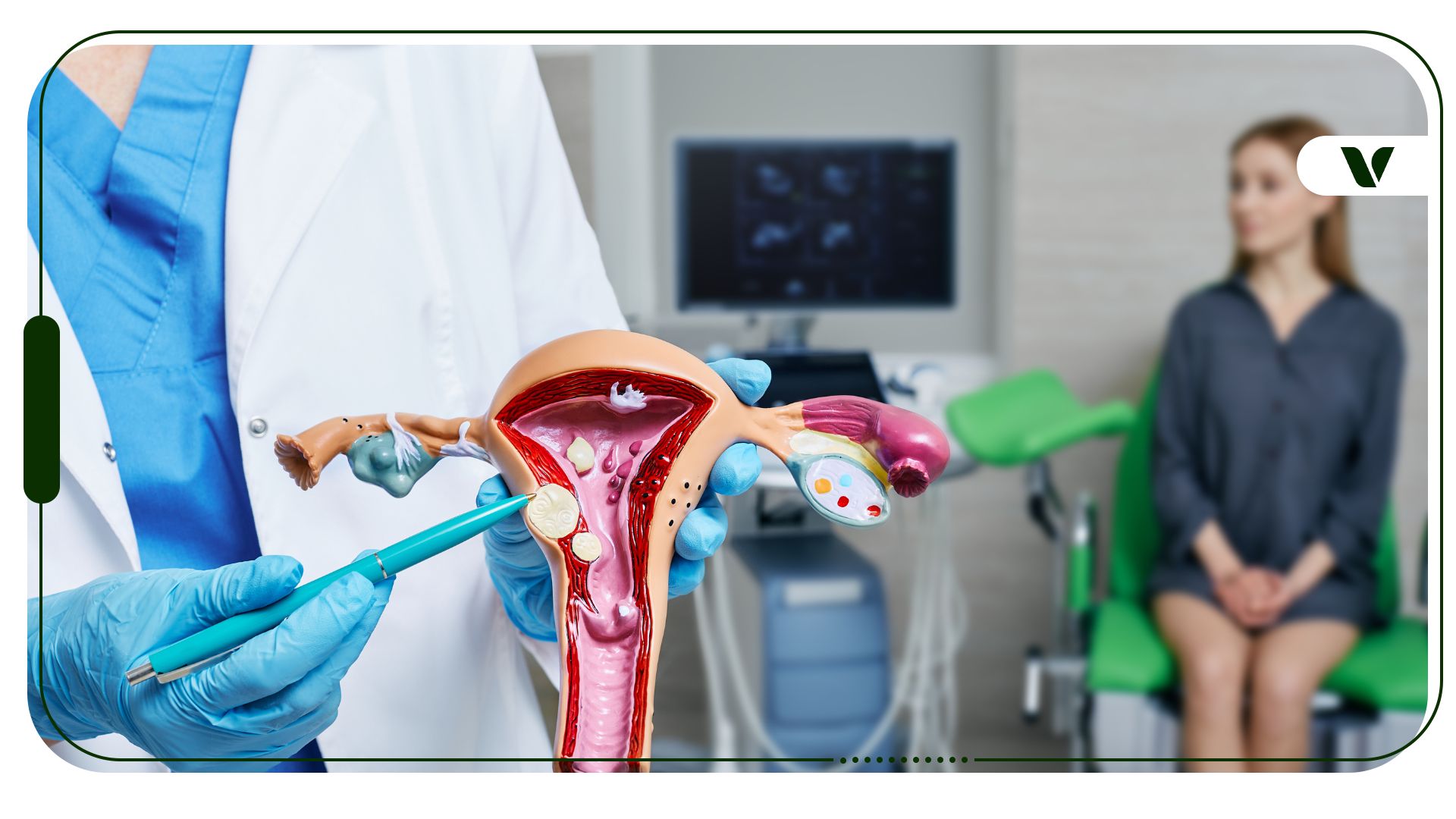
According to Johns Hopkins Medicine, endometriosis occurs when the tissue that lines the uterus, called the endometrium, grows outside the organ. It most often grows on or around other reproductive organs like the fallopian tubes, the ovaries, around the outside of the uterus, or in the lining of the pelvic cavity, though it can also develop on the bladder, cervix, intestines, stomach, and rectum.
Typically, healthy endometrial tissue that lines the uterus will shed during each menstrual cycle. However, the endometrial tissue that grows in other places does not leave the body after it sheds, but builds up over time, causing inflammation, scarring, and painful cysts.
The condition can have a bunch of symptoms, including, but not limited to, pelvic pain, painful periods and sexual intercourse, and infertility.
What Are Fibroids?
Fibroids share many symptoms with endometriosis, like painful periods, pelvic discomfort, and pain during intercourse. Some will have heavy menstrual bleeding, or cause structural issues and symptoms involving the nearby bladder or rectum. However, the two conditions aren’t directly related.
Fibroids are noncancerous tumors that develop in the uterus. According to the Office on Women’s Health, between 20 and 80% of women will develop fibroids by the time they turn 50. These tumors can vary in size from as small as an apple seed to as large as a grapefruit, and in many cases, an individual may not even realize that they have fibroids.
Like with endometriosis, doctors aren’t totally sure what causes fibroids. Though it is thought that genetic factors and imbalances in hormones like estrogen and progesterone could be contributing factors.
How Can Cannabis Help?
Because we don’t yet understand the root causes of endometriosis and fibroids, there is currently no way to cure or prevent these conditions. Doctors have, however, figured out several ways to treat one of the chief symptoms of the conditions: pain.
Currently, the most common treatment options include hormone therapy, prescription pain medications, conservative surgeries to remove the endometrial tissue or tumors, and even hysterectomies.
See If You Qualify For Medical Marijuana -Select Your State!
Select Your State
Alabama
Alaska
Arizona
Arkansas
California
Colorado
Connecticut
Delaware
Florida
Georgia
Hawaii
Idaho
Illinois
Indiana
Iowa
Kansas
Kentucky
Louisiana
Maine
Maryland
Massachusetts
Michigan
Minnesota
Mississippi
Missouri
Montana
Nebraska
Nevada
New Hampshire
New Jersey
New Mexico
New York
North Carolina
North Dakota
Ohio
Oklahoma
Oregon
Pennsylvania
Rhode Island
South Carolina
South Dakota
Tennessee
Texas
Utah
Vermont
Virginia
Washington
West Virginia
Wisconsin
Wyoming
Never miss a post
Get updates on cannabis culture, new research, and expert insights
Women who have endometriosis suffer from what one 2017 review of studies calls “diffuse and poorly localized severe pain.” The authors argue that endometriosis-associated pain may be targeted through the endocannabinoid system and several other complex pain mechanisms that cannabis affects.
New research like this seems to indicate that the endocannabinoid system is a relevant target for the management of endometriosis-related pain. A complex network of chemical signals and cellular receptors, the endocannabinoid system is not yet fully understood, but experts believe it plays a role in a variety of bodily processes like mood, appetite, pain modulation, motor coordination, and memory. Beyond this, the greater endocannabinoidome explains the full range of actions that cannabinoids can take in the body beyond CB1 and CB2.
When discussing the endocannabinoid system and pain management, it’s important to note that there are essentially three main categories of endometriosis pain: nociceptive (which arises from damage to body tissues outside the nervous system), inflammatory (which arises from inflammation in the body, which is often caused by tissue damage), and neuropathic (which arises from damage to the nervous system).
The endocannabinoid system has been shown to “interact with specific mechanisms associated with pain establishment, such as inflammation, cell proliferation and cell survival,” the review of studies says.
An updated 2024 review on endometriosis reviewed hundreds of studies and confirms these therapeutic avenues, plus relaxing muscles. This means that the endocannabinoid system likely plays a role in all three types of pain, and managing it could go a long way in managing the overall pain levels of those with endometriosis.
The earlier 2017 review even found that several studies call endometriosis an “endocannabinoid deficiency condition,” highlighting the fact that women with endometriosis have lower levels of endocannabinoid receptors in the uterus. Some experts have suggested that the reduced levels of endocannabinoid receptors could also be causing the excessive growth of endometrial tissue that causes the condition. Therefore, targeting it could not only help with pain management but also with the root causes of the disorder.
Is Cannabis Effective?
Knowing that cannabis could theoretically help with endometriosis pain management by interfering with the endocannabinoid system is all well and good, but does it actually help?
Current evidence says yes. One study conducted with participants in Australia and New Zealand found that respondents who substituted cannabis for more traditional pain management options “self-reported positive outcomes…demonstrating a therapeutic potential for medical cannabis.”
Another study done during the pandemic found that 55% of respondents used cannabis for endometriosis-related pain management, concluding that “cannabis consumption, especially for symptom relief, was relatively common among those with endometriosis.”
A 2024 analysis of multiple studies said that “cannabis consumption for symptom relief was common among women with endometriosis, and some even reported that the use of cannabis reduced their use of [painkillers].”
While there are valid concerns that come with self-reported data, which many of the current studies about cannabis and endometriosis pain rely on, it’s clear that many who have the condition feel strongly that cannabis does help manage their pain in a real and meaningful way.
Of course, cannabis is going to have a different effect for everyone. Those considering using it to treat the physical pain of endometriosis or fibroids should speak with their doctor before implementing it in their treatment plans to ensure it will not negatively impact any other pain medications or hormone treatments. Those looking to use cannabis to help with the emotional and mental impacts of the conditions would also do well to speak with their doctors before beginning regular cannabis use.
When faced with chronic conditions like these, the most important thing to do is to be gentle with yourself and open to trying a variety of solutions to find what works best for your specific case and overall quality of life.
Madison Troyer is a Brooklyn-based freelancer with 10 years of experience covering pop culture, entertainment, lifestyle, and wellness content. Her work has appeared in outlets like The Chicago Tribune, Newsweek, and a host of other places. When she's not at her desk, you can find her training for her next marathon or reading.
I never put my cannabis infused coconut oil in food. After I strained it, I pour it into ice cube trays let it cool and put it in the freeze in a freezer bag. Then when I want some, I take out a frozen block, cut off a piece and put it under my tongue.. preferably when I have not been eating food. much faster absorption.
Enjoy
In the confusing landscape of state-by-state medical marijuana legalization and federal prohibition lies a patient’s pursuit of a better quality of life, balanced with an unrestricted financial livelihood. In workplaces across many different medical marijuana legal states, no law guarantees that a valid, card-carrying MMJ patient status exempts an employee from termination or discrimination stemming…
It feels like every other day, a fresh slang term pops up in the cannabis lexicon, and today, we’re looking at an entry that’s all over TikTok and Reddit – Yart! Spoiler alert: it has everything to do with the humble vape cart (and how challenging it is to talk about cannabis on social media). …
The final stage of life often brings profound challenges for both patients and their families. For patients in hospice and palliative care, common symptoms not only affect the physical body but also their mental well-being. While traditional medications may dull pain, they often come with heavy sedation, confusion, and loss of clarity. Fortunately, medical cannabis…
If you’re planning to get a medical marijuana card in 2026, you might be wondering whether you need to meet with a certified cannabis doctor—either online or in person. Still, finding a qualified medical marijuana doctor near you can feel overwhelming and confusing if you’re not sure where to start. This guide shows you exactly…
Cannabis consumers in the legal market rely on proper analysis and testing as a matter of knowledge and safety regarding the composition of the weed they’re purchasing. One of the main differences between the state-run legal market and the black and gray cannabis markets is how they handle testing. Those of us in medical and…
The statements made regarding cannabis products on this website have not been evaluated by the Food and Drug Administration (FDA). Cannabis is not an FDA-approved substance and is still illegal under federal law. The information provided on this website is intended for educational purposes only and is not intended to diagnose, treat, cure, or prevent any disease. It is not intended as medical advice and should not be considered as a substitute for advice from a healthcare professional. We strongly recommend that you consult with a physician or other qualified healthcare provider before using any cannabis products. The use of any information provided on this website is solely at your own risk.